
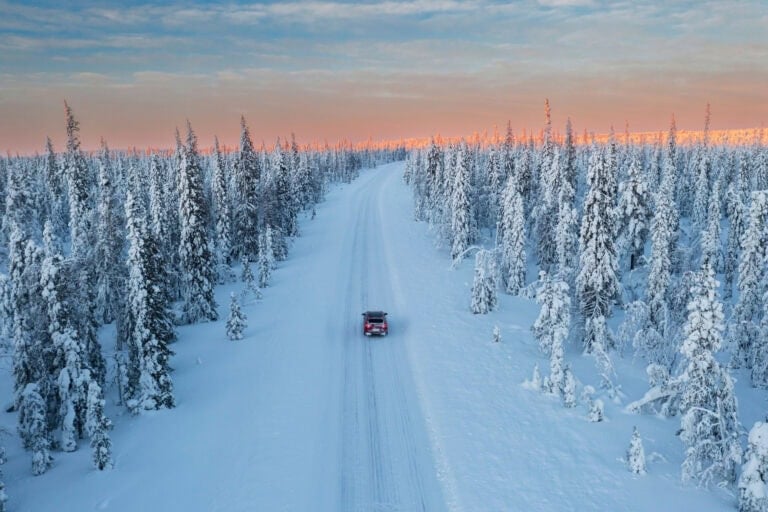
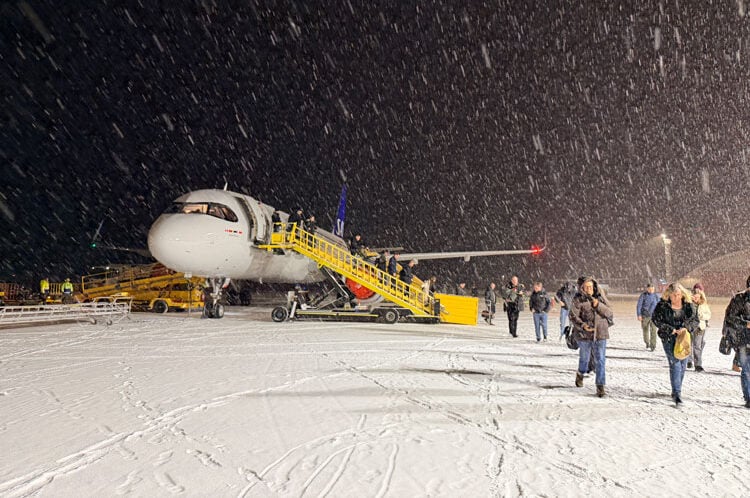
The plane descends in swirling snow, and at 3 PM, it’s pitch black outside my window. We land in Kiruna, Sweden, a town of 18,000 deep in the Arctic Circle, and the darkness feels absolute. This far north in early December, the sun grants you about two hours of full daylight before disappearing again.
Swedish Lapland had been calling to me for years—the Arctic Circle, the wide-open spaces, the intimacy of small towns far from everything. The irony isn’t lost on me: I hate being cold.
Yet here I am, stepping off the plane with several friends for a five-day winter road trip, breathing air so sharp it stings my lungs.
Our host, Johan, meets us at the airport and loads our luggage—packed with everything I need for Arctic survival: thermal layers, snow pants, insulated boots, thick gloves. The drive from Kiruna to Kangos, roughly 1 hour and 45 minutes east, happens entirely by headlights.
I press my face to the window, trying to make out the landscape. There’s nothing—just blackness punctuated by the occasional lit window of a distant house, each one glowing like a beacon in an endless void. Johan navigates the snowy roads with ease while I’m still trying to adjust to this complete absence of light. The temperature reads -12°C (10°F).
Lapland Guesthouse in Kangos
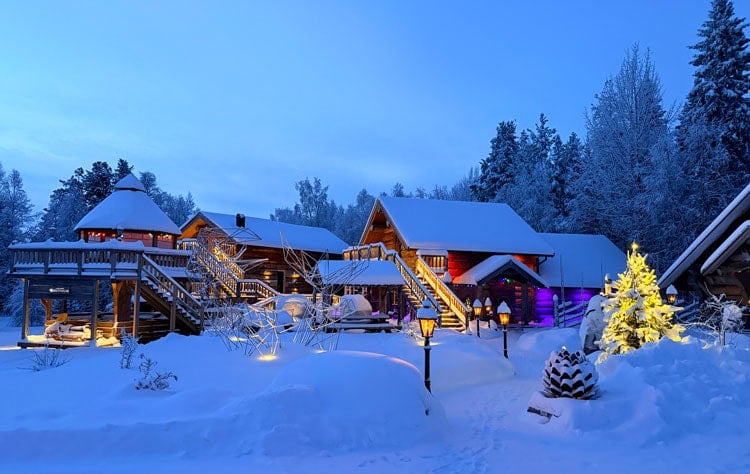
Then, through the falling snow, I see them: lights. Not just lights—twinkling, golden lights everywhere. We turn into Lapland Guesthouse, and suddenly the darkness transforms into something magical.
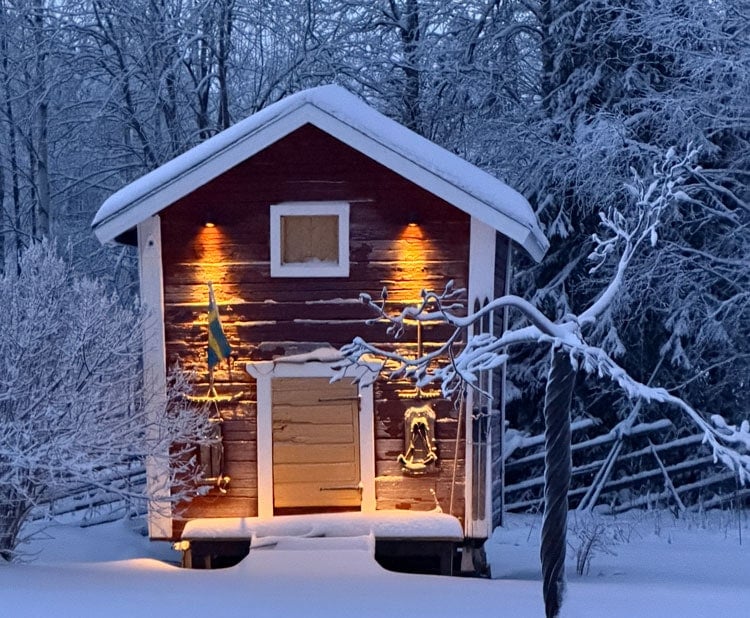
Each guest cottage is outlined in light, glowing like lanterns scattered across the snowy property. Path lights guide the way. Electric candles shine in the windows, a Swedish tradition that turns each pane into a beacon.
We’re each shown to our own cabin or guest room across the property. When I step into mine, a fire roars in the wood-burning stove. The warmth envelops me immediately—not just from the flames, but from the amber lamps glowing against pine walls.
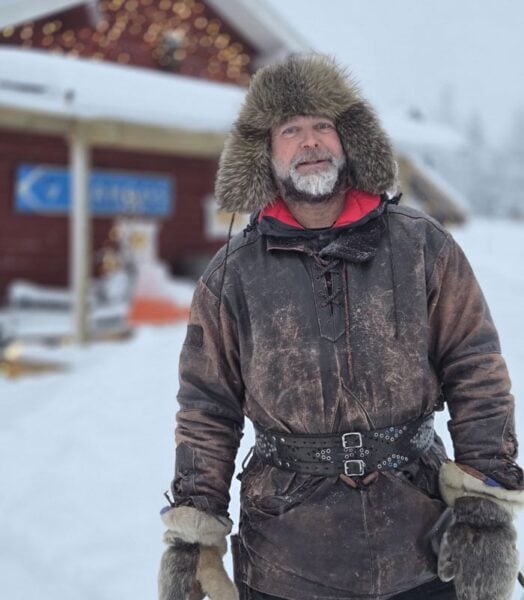
Johan and his wife Eva are the souls behind this intimate guesthouse, which typically hosts about 18 guests. Johan built each cabin using wood from 38 old Swedish houses and storage barns, giving each structure a sense of history.
View my video of Lapland Guesthouse on Instagram
This is typical of Swedish Lapland—most hotels here are family-run. The person who greets you is the person who owns the hotel, who built the cottages, and who will see you each morning. There’s no corporate distance, no layers of management. Just people sharing their own version of home.
Where is Swedish Lapland?
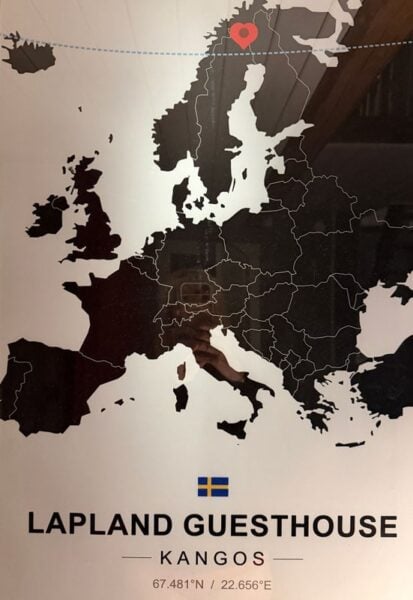
As Johan shows us around, we learn more about the Heart of Lapland, a region in eastern Swedish Lapland. Lapland itself stretches across the northern reaches of Sweden, Norway, Finland, and Russia—a territory roughly the size of Germany that sits above the Arctic Circle.
Swedish Lapland makes up nearly a quarter of Sweden’s landmass but is home to less than 3% of its population, creating a vast wilderness where nature still dominates.
He smiles at our wide-eyed adjustment to the darkness. “You’ve arrived during the time when the sun goes on holiday,” he jokes.
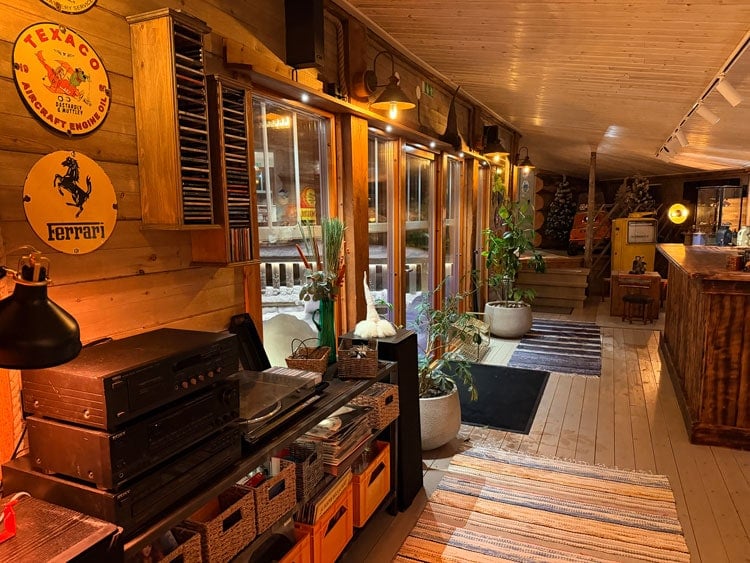
That evening, we gather for dinner. My friends and I all have the same slightly dazed expression. We’re adjusting. Recalibrating. Learning to read light instead of clock time.
The Swedish Prescription
During our trip in Swedish Lapland, I’m hoping to learn more about a bold claim—that Sweden is the first country in the world to be prescribed by doctors. The idea is based on scientific evidence that time spent in Swedish nature and embracing the Swedish lifestyle can genuinely support mental and physical health.
The “Swedish Prescription” program encourages doctors to write prescriptions for time spent in Swedish nature as treatment for stress, anxiety, and modern burnout.
I’ve packed my thermal underwear and warm boots. What I didn’t prepare for was discovering something unexpected in a place with the least natural light—that the warmth would come not just from fires and heated rooms, but from something deeper.
Standing in my cozy cabin later that night, watching snow fall past my window, I’m struck by a strange realization: This might be one of the coziest places I’ve ever been. It’s one of the darkest places I’ve visited, yet somehow, it feels luminous.
I go to bed at 9:00 PM, the wood stove still crackling. I sleep more deeply than I have in months.
Dog Sledding in Swedish Lapland
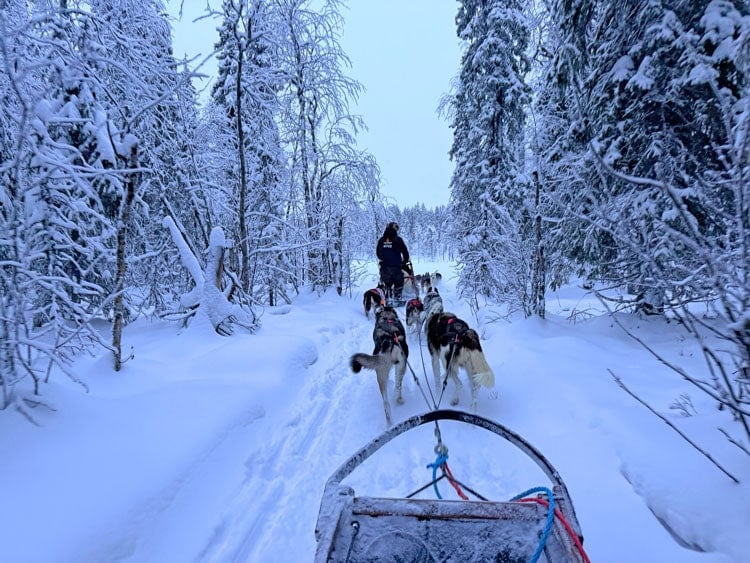
The next morning, we’re going dogsledding during the two precious hours of daylight—a window from roughly 10 AM to noon where the sun appears, low and angular, turning everything silver-blue. The dogs live in their own warm huts with outdoor runs, and they jump with excitement as they’re brought out to the sleds, their energy infectious.
After a brief lesson from our guide at Explore the North, my friend Tina and I are assigned to our own dog-sled team. I’m a little nervous when I step onto the sled as the first driver, but the dogs are so well-trained and responsive that driving becomes an immediate thrill.
View my dogsledding video on Instagram
Gliding through the snow-covered trees, I hear the quiet whoosh of the sleigh as it glides over the snow, punctuated with shrieks of happiness from Tina (and me). My mind becomes completely absorbed in the dogs’ rhythmic running, in the way the landscape flashes past, and in the wide expanse as we soar across a frozen lake.
My breathing slows. My body relaxes in this moment of being out in nature. I know this will be a highlight of my trip.
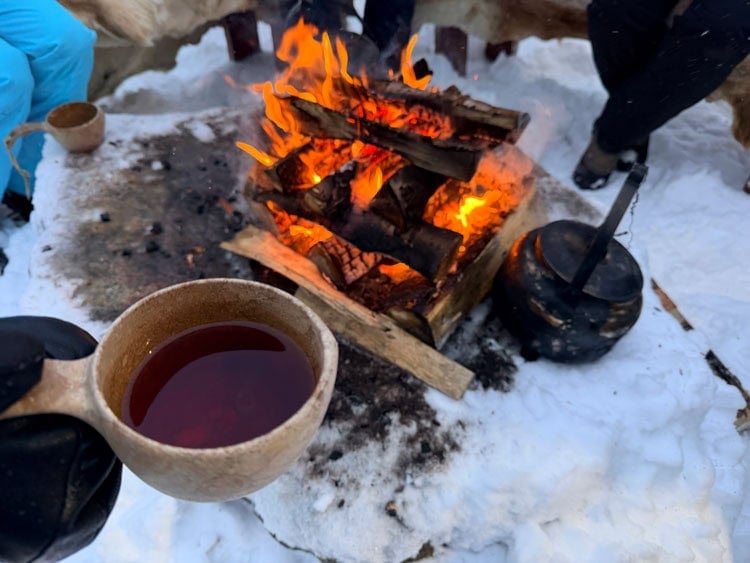
When we return, our guide has built an open fire and serves us hot lingonberry juice cooked over the flames. It’s so delicious and warming, the perfect antidote to the crisp air.
I almost have to pinch myself. I’m in the Arctic, drinking hot lingonberry juice around an open fire with friends. It’s a simple moment of pure contentment.
Exploring the Torne Valley
That afternoon, as we drive south toward Övertorneå, our phones start flipping between Swedish and Finnish cell towers. We’re near the Torne River and the border between Finland and Sweden.
This region is home to the Tornedalians, an ethnic minority who live in the Torne Valley. Their language, Meänkieli, is closely related to Finnish but distinct enough to be considered a separate language.
Painting Sámi Kåtas at Mukka Matarengi
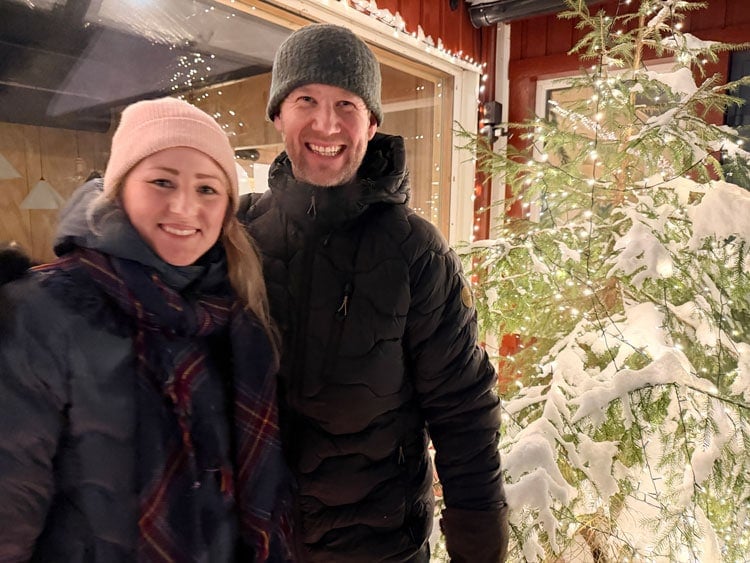
In the small town of Övertorneå, we stop at Mukka Matarengi, a handicraft studio and gathering place whose name reflects the region’s Tornedalian roots. Owners Simon Mukka and Ida Brännström have created a warm, welcoming place that feels like home with twinkling lights, warm candles, and a welcoming fireplace.
At this unique art and gathering space, creating together is the norm. For the next two hours, we each get to paint a miniature Sámi kåta.
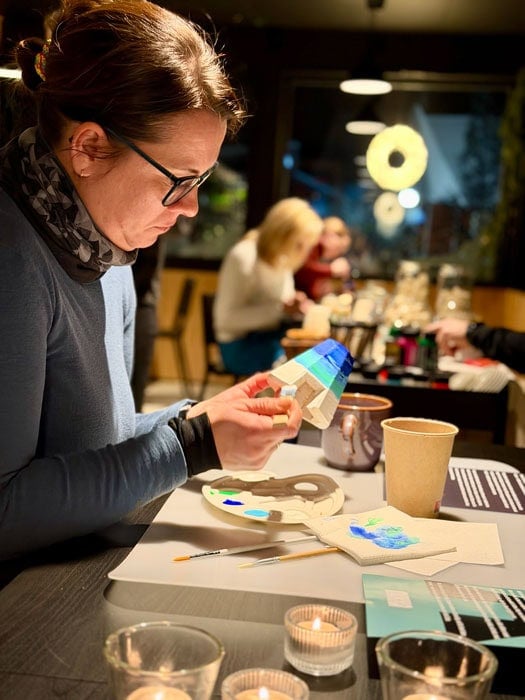
The kåta is one of Lapland’s oldest dwelling forms, used by Sámi families during reindeer migrations and as a temporary shelter for hunting, fishing, haymaking, and long journeys.
While we paint, Ida and Simon share stories about the region’s cultural heritage—the Tornedalian people, the Sámi traditions, and the Meänkieli language spoken here alongside Swedish and Finnish.
Traditional Sauna Experience at Kukkolaforsen

By evening, we arrive at Kukkolaforsen, a resort on the Torne River where we’ll experience another beloved Swedish tradition—sauna culture.
The sauna is a sacred place in Swedish culture where family and friends gather, and it’s especially inviting in winter. The resort has 16 saunas, and I can’t wait to try some of them.
When we arrive at 6 PM—in full darkness—the entire resort is lit like a winter village from a storybook. Path lights guide the way between buildings. Window candles glow in every guest room. The main lodge blazes with light that spills out onto the snow.
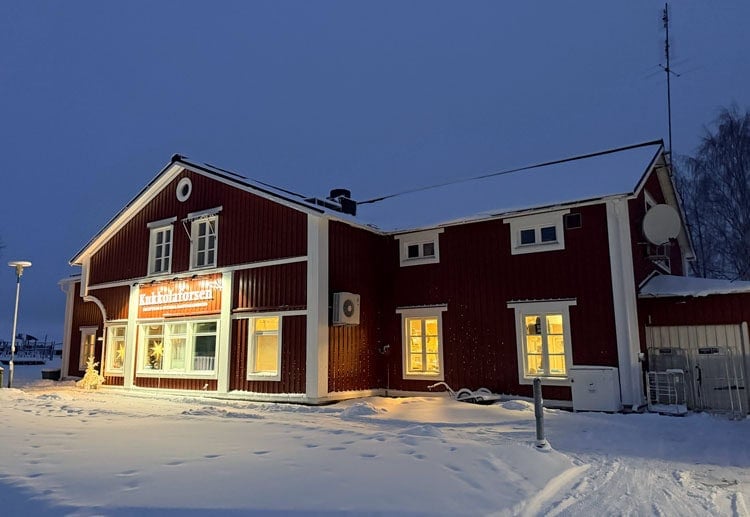
That evening, we have dinner at the sauna, Kukkola style—and a Tornedalian sauna session. We start with a delicious meal in the relaxation area, then my friends and I enter the traditional wood-fired sauna together.
I know the protocol: enter the hot room, rush out to roll in snow or plunge in cold water, return to the sauna, repeat. What I hadn’t anticipated was the sensation—the way the heat penetrates so deeply that you feel it reorganizing something at a cellular level. The way stepping out into the night air feels not shocking but clarifying.
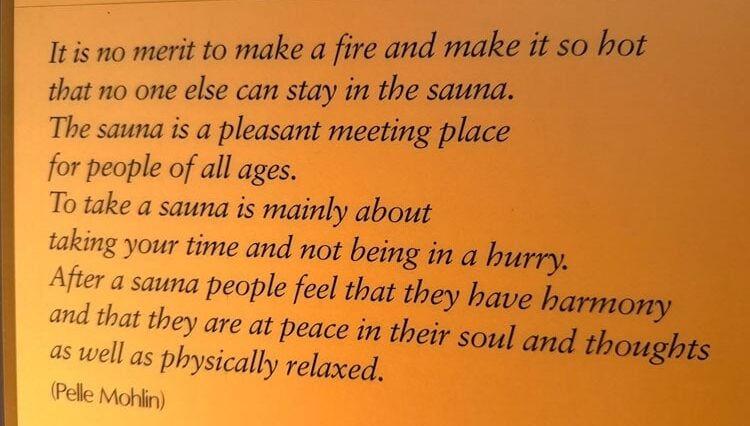
We cycle through the routine maybe five or six times. At some point, standing outside between rounds, steam rising from my skin into the frozen night, I stop tracking discomfort. I’m just there. Present. The experience becomes a texture, a sensation, a partner in the ritual.
Kukkola Fishing Village and Torne Valley Culture
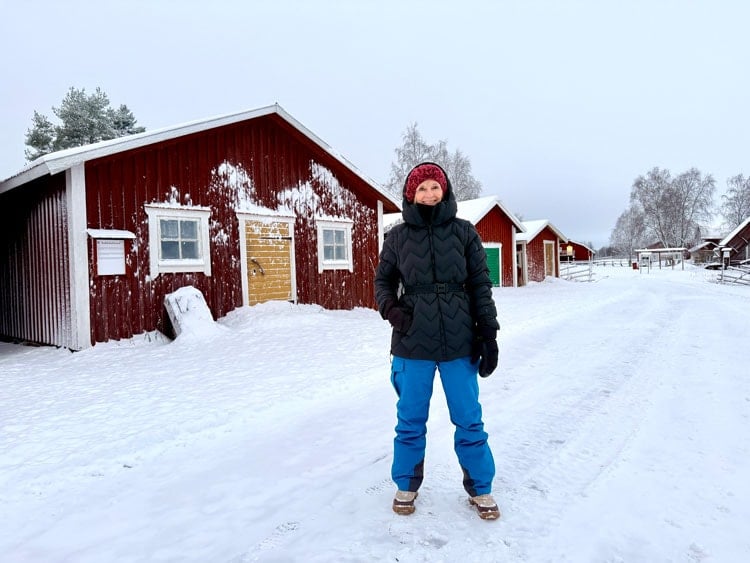
The following morning, the air is bitterly cold, but my warm coat and boots keep me comfortable on our guided tour of the Kukkola fishing village. We learn about dip-net traditions and the unique culture of the Torne Valley. The snow and frozen Torne River along the village bring a magical grey light to the scene. Across the river is snow-covered Finland.
Arctic Dining at Kattilakoski Restaurant
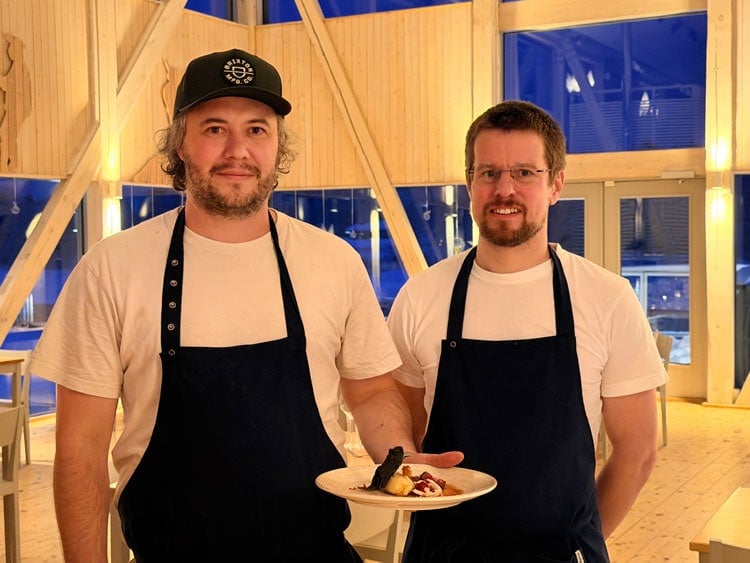
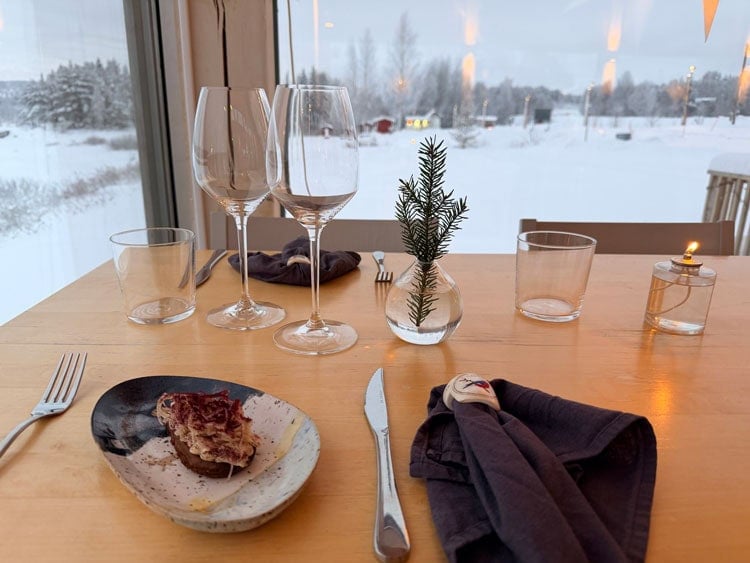
For lunch, we head to Kattilakoski Restaurant, perched on the banks of the Torne River. The floor-to-ceiling windows offer panoramic views of this vital waterway.
Australian chef Taz Huggins and Swedish sommelier Henrik Berg have created a special dining experience—course after course of refined Arctic flavors prepared with the region’s hyperlocal ingredients.
One unexpected delight is how they pair each course with a local berry drink, from sparkling cloudberry juice to blueberry and lingonberry.
Winter Adventure at Jockfall
Later that afternoon, we arrive at Jockfall, where a powerful waterfall never freezes. The region is one of Sweden’s premier fishing and recreation destinations, although we won’t be fishing at this time of year.
It’s completely dark at 3:15 PM when we check in at Jockfall Fishing and Activities, but the property is beautifully lit. We can see the nearby waterfall itself illuminated by discrete lighting that makes the ice glow blue.
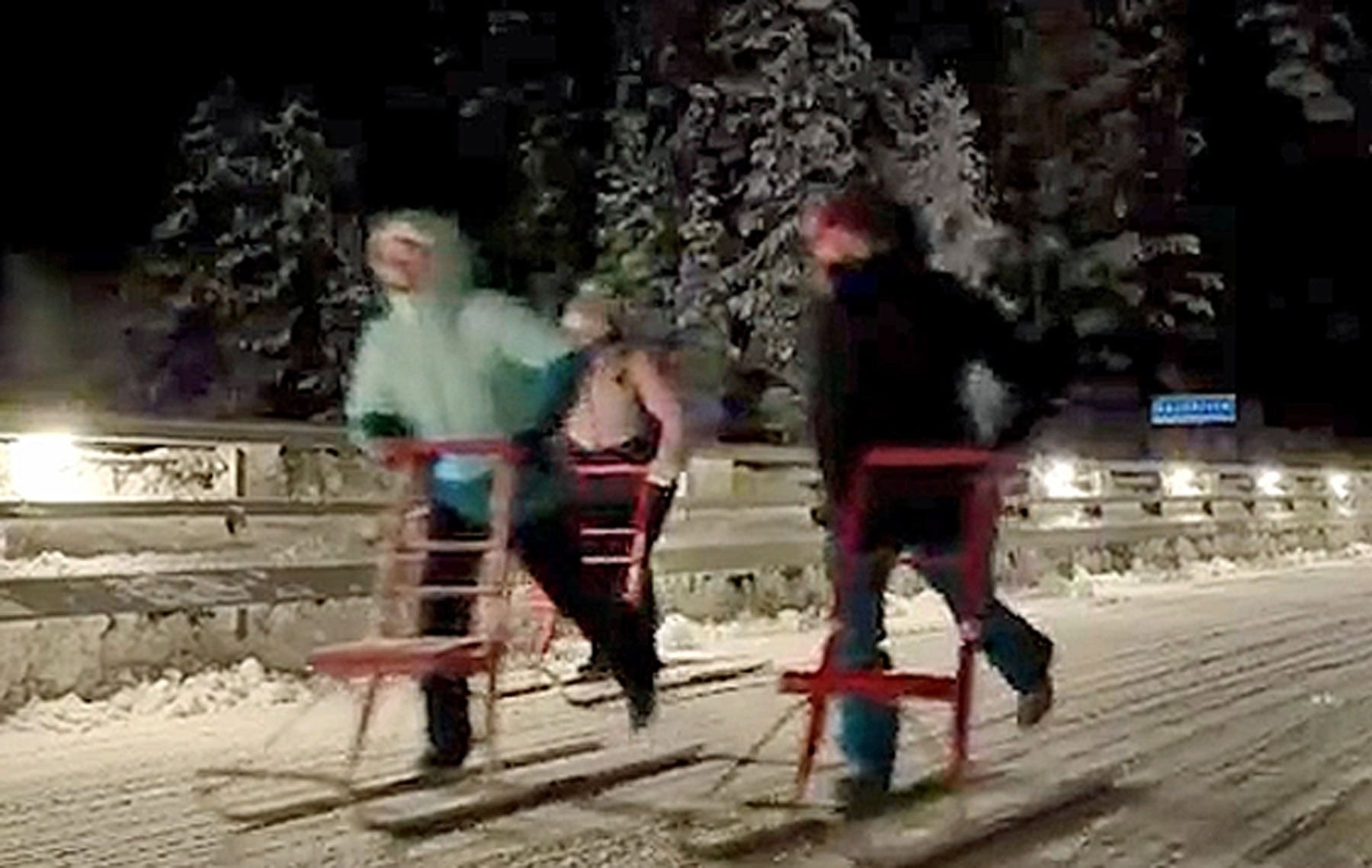
Walking out to see the waterfall, two friends and I discover kicksleds leaning against one of the buildings—a kind of Swedish scooter-sled hybrid that locals use to navigate the snow.
Although it takes us a little practice to get the hang of balancing and pushing, we’re soon racing each other on the road along the waterfall, laughing as we glide through the falling snow under the glow of the resort’s lights.
Snowmobile Tour Through Lapland’s Forests
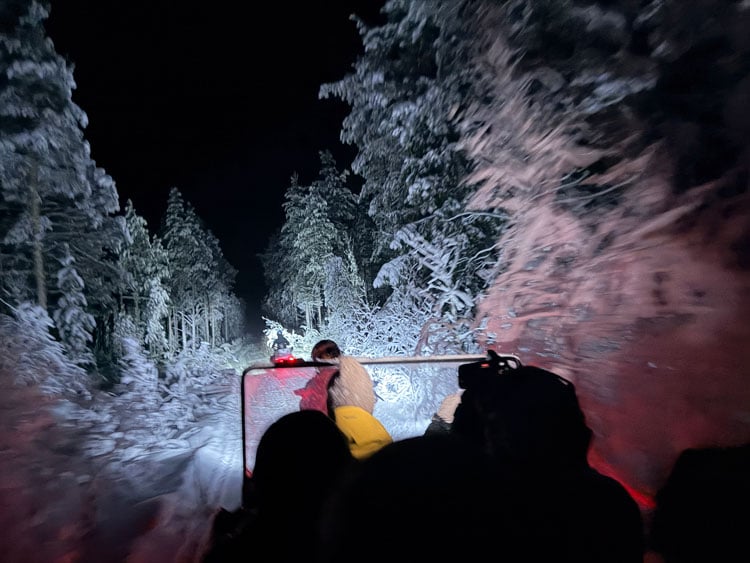
At 4 PM, we gear up for a snowmobile sled tour. The guides wrap us in furs and heavy blankets, and we take off into the darkness. The forest landscape flashes past in our headlights as our guide shares stories of the region. Later, we pause on a frozen lake for outdoor fika—thermoses of hot coffee, cookies, and conversation. Standing there on the ice, I feel completely present. Alert. Alive.
Dinner at Jockfall is a happy affair, with good conversation and excellent food. It’s warm and comforting inside, while the snow swirls outside.
Meeting Reindeer at Kaatis Farm
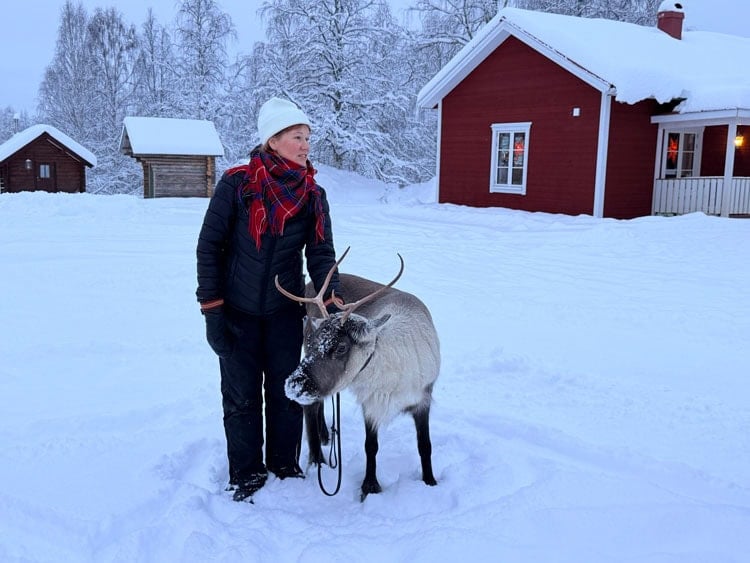
The next day, we visit Kaatis Reindeer and Moose. In Swedish Lapland, reindeer herding isn’t tourism—it’s a 10,000-year-old way of life for the Sámi people, Europe’s only recognized indigenous population.
Anna-Lena Kaati, a Sámi herder, offers something hard to find these days: an unfiltered look at her culture and the animals central to it. She greets us with Hilda, a reindeer she hand-raised after the calf’s mother died.
View my video from Kaatis Farm on Instagram
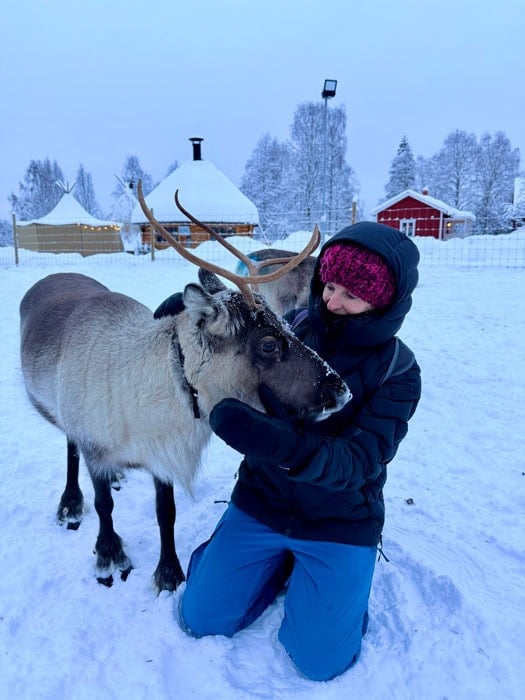
She explains why reindeer are such an important part of Sámi culture—not just as a livelihood, but as a spiritual connection to the land and to ancestral traditions. It is a protected, treasured part of life here.
She shares that the Sámi are so attuned to their environment that they recognize eight seasons instead of four—from spring-winter to autumn-winter, each with its own character and demands. This intimate knowledge of nature’s rhythms has allowed them to thrive in the Arctic for thousands of years.
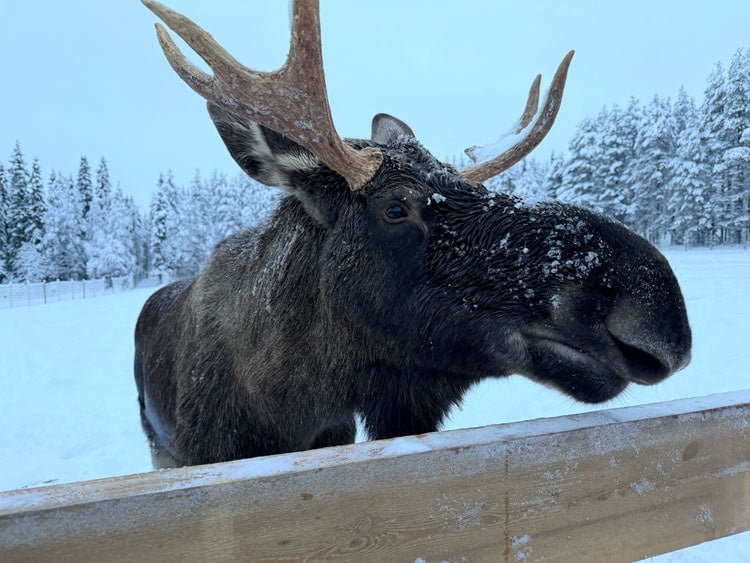
Then, she takes us in to meet some of her herd up close. Reindeer, we quickly learn, love moss, and many come up to nibble on the morsels we offer. Nearby, in large, strong pens are several moose that have been rescued. We all keep our distance, but share carrots through the railing.
Feeding the reindeer, their warm breath visible in the air, their thick winter coats perfectly designed for the cold, I understand something profound: we’ve become so disconnected from natural environments that we’ve forgotten our own capacity for adaptation. I’m in awe of those who call this part of the world home—they have not only adapted but thrive in this Arctic environment.
Huuva Hideaway: A Cozy Sámi Retreat
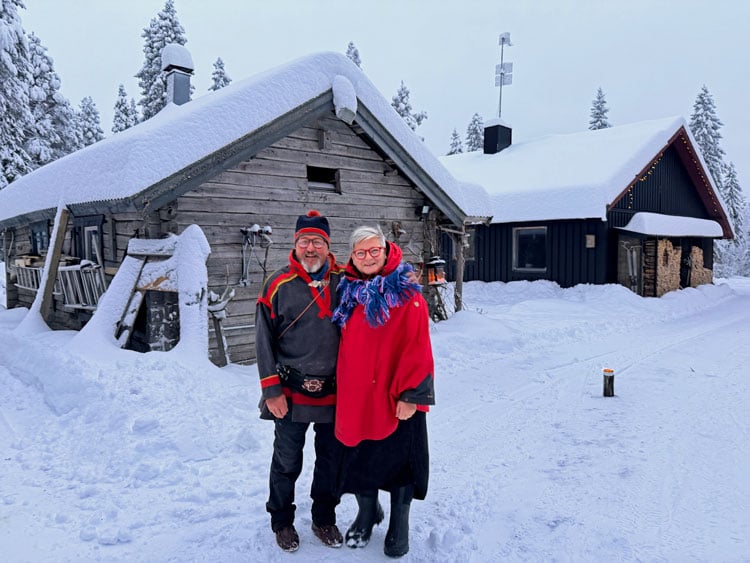
From Kaatis, we drive to Huuva Hideaway in the tiny village of Liehittäjä for lunch. Pia and Henry Huuva’s family place feels less like a visit and more like coming home—filled with laughter, stories, and the kind of welcoming hospitality that immediately puts you at ease.
We hear stories about Arctic food traditions, about survival in extreme conditions, about keeping Sámi culture alive in the most authentic, unfiltered way.
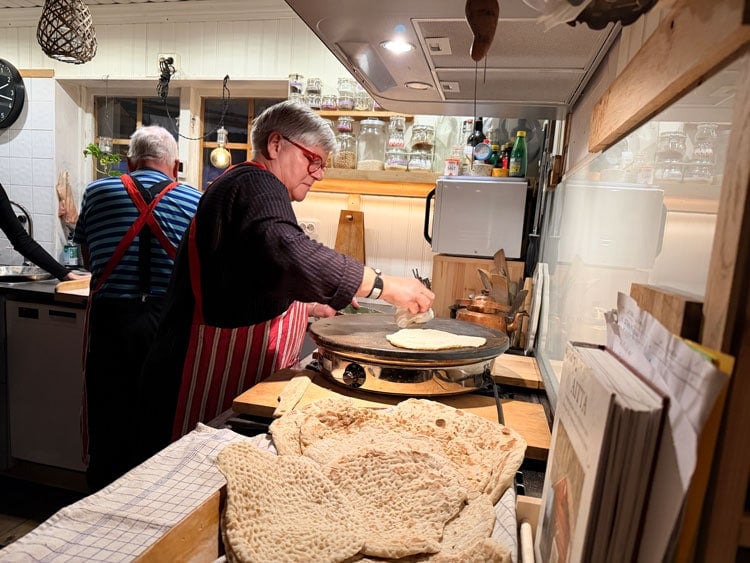
While some of my friends help Pia bake Sámi flatbread beside the wood stove, Henry shows the rest of us how to carve our own Swedish butter knives.
My mind enters that flow state that comes with repetitive handwork. But the real magic is the joy and spirit these two bring to everything they do—from sharing their Arctic lifestyle to making us feel like family.
When the bread is ready, we gather around the table for an Arctic tapas lunch: the flatbread we’d made, smoked fish, preserved berries, and reindeer meat.

Sitting there with new friends, in a warm house filled with candles in the middle of December darkness, I feel something click into place. This isn’t wellness tourism. This is simply life lived with intention. This is the kind of travel that stays with you long after you leave—slow, meaningful, and rooted in real human connection.
Final Night at Arthotel Tornedalen
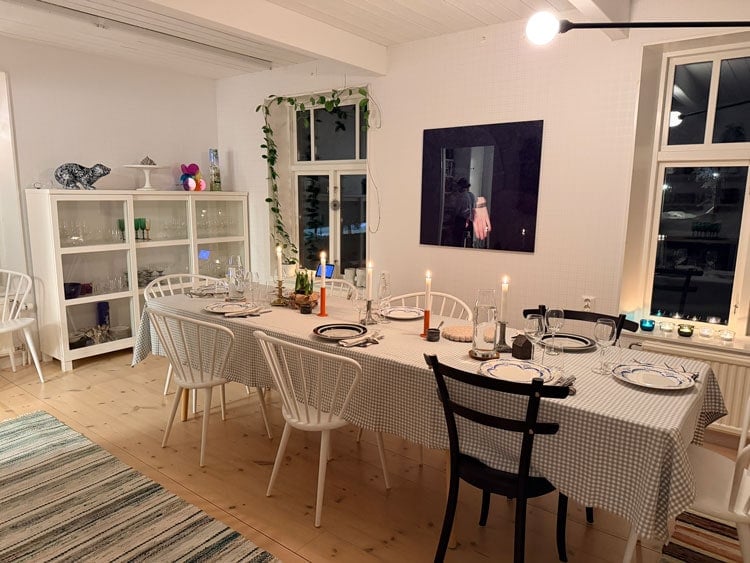
That evening, we arrive at our final accommodation: Arthotel Tornedalen, a boutique hotel on the banks of the Torne River.
Owner Gunhild Stensmyr has created something special here—the aesthetic is elegant: white walls, blonde wood, exquisite pieces from her private art collection displayed throughout. And candles. Everywhere. Plus, perfect lighting design that makes every space glow.
What began as an art hotel has now grown into a larger dream: Gunhild is working to open her own gallery right on the Torne River, the Konsthall Tornedalen.
Night Snowshoeing in the Arctic Forest
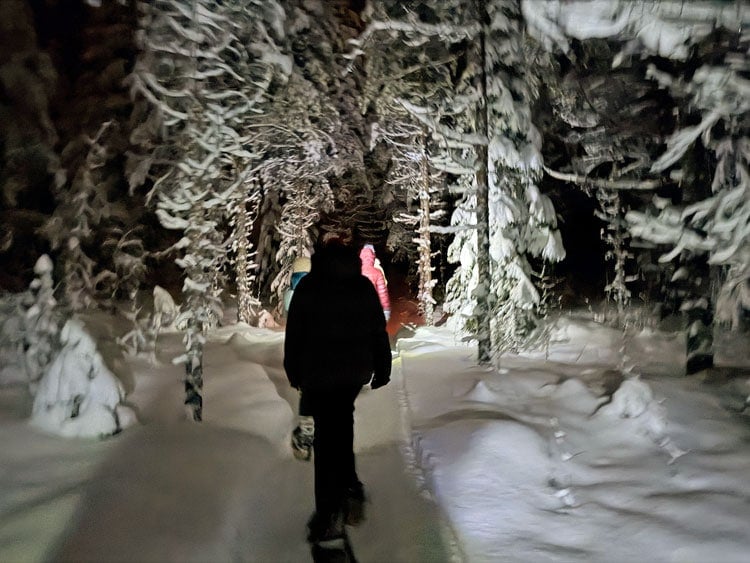
After dinner, the nature guide at Arthotel suggests a night snowshoe adventure in the forest. We’re not too sure about it—we’ve been going all day and it’s really dark. But if a Swede asks you to go for a winter hike at night in the forest, you should always say yes. We bundle up and head out.
My headlamp cuts a narrow beam through the darkness. Snow crunches under my feet. We walk through the trees for about an hour before I stop in a small clearing and turn off my headlamp.
The darkness is deep. I stand there for several minutes, letting my eyes adjust. The forest slowly reveals itself in shades of black and deep blue.
I take a long, deep breath and realize my worries from back home have calmed and dimmed. The air here is different—sharp, clean, crystalline. And then I take inventory of my body.
Every part of me: warm. Comfortable. Present.
And then the realization hits me with the force of revelation:
I have not been cold once this entire trip.
Five days in the Arctic Circle. Five days in temperatures ranging from -10°C to -15°C. Five days with only two hours of daylight. And not one single moment of worry about the cold.
The warmth was always there to return to—fires, candles, hot lingonberry juice, warm rooms, welcoming people. I’d been surrounded by people who’d mastered the art of not just surviving winter but genuinely thriving in it.
Lessons in the Arctic

Standing there in the forest, breathing that impossibly clean air under the cloudy night sky, I finally understand what the Swedish Prescription is really about.
It’s not complicated. It’s this: standing still in the cold, breathing air so pure it clarifies something in your chest, and feeling your body relax. Nature doesn’t heal by distracting us—it heals by bringing us back to ourselves.
But there’s something else my time in Swedish Lapland has made clear: Even one small light can transform the darkness. One candle in a window. One fire in a stove. One kind word shared. One moment of warmth offered freely. It’s true here in the Arctic, and it’s true in life.
Up ahead on the forest trail, I hear the laughter of my friends as their headlamps light the trees. So I continue my walk and follow their light.
If You Go to Swedish Lapland
Getting There: I flew to Stockholm, then connected to Kiruna Airport. From there, it’s about a 1-hour and 45-minute drive east to the Heart of Lapland region. Alternatively, you can fly into Luleå Airport and drive north from there.
Best Time to Visit: Early December through March offers the best chance to experience the polar night darkness and winter activities. The two hours of daylight occur from roughly mid-November through mid-January.
What to Pack: Thermal layers are important. Bring a good winter coat and snow pants. Don’t forget insulated boots rated for extreme cold, thick gloves, and a warm hat.
Plan Ahead: Many family-run guesthouses and tour operators have limited capacity and book up months in advance, especially during peak winter season. Reserve accommodations and activities early.
For More Information: Visit Heart of Lapland at https://heartoflapland.com/

- Quietcations: 12 Places to Step Into Nature and Recharge - September 10, 2026
- Slow Travel on the Seine: Exploring Normandy in Style on the Scenic Gem - September 7, 2026
- Three Generations, One Island: A Multigenerational Maui Adventure - September 4, 2026
Planning another trip soon? ✈️
Add GoWorldTravel.com as a preferred source on Google. Click the button below so our local guides, packing hacks, and hidden-gem itineraries always show up first when you search!
Add to Preferred Sources
Love this Janna!