
-via-Canva-1-768x512.jpg)
To say that Vietnamese people love eating noodles is an understatement. Their culinary reputation has traveled far and wide. From the footage of Anthony Bourdain slurping vermicelli noodle soup in a rowdy market to Lonely Planet’s insider scoop on hidden locations and various authentic pho restaurants opening all over the world. And yet, that barely captures the full spectrum of Vietnamese noodles.
Unlike Italian pasta, our noodles are relatively uniform in shape: they stay, more or less, as long strands – some round, some square, lithe and elastic, soft with a little bite. But don’t be mistaken by the simplicity. Their power lies in the broth and the sauces that are distinct to every Vietnamese region.
Wet Noodles
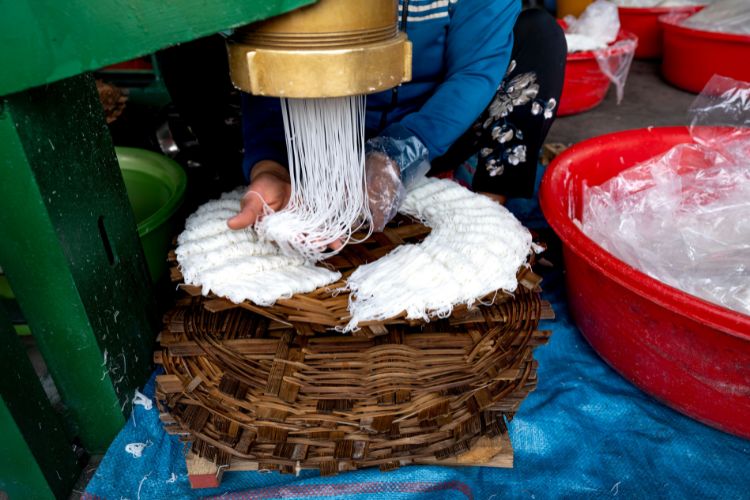
Vietnamese noodles are often made from a blend of rice flour and tapioca starch (derived from ground cassava roots). By changing the ratio of ingredients, the drying process, and sometimes adding natural coloring, different types of noodles are created. Each variety then serves as the foundation for a wide range of Vietnamese noodle dishes.
The most well-known dish is undoubtedly phở (pronounced /fuh/). It’s a steaming bowl of rice noodle soup in bone broth that has been simmered for 12 hours, served with rare beef and brisket. Almost every Vietnamese person has a strong opinion about phở. Overall, we have two popular schools: Northern-style phở and Southern-style phở.
First, let’s discuss the original. Northern Vietnam is the birthplace of the legend. The broth is mild and harmonious, with an emphasis on restraint, but it’s no less flavorful and complex than a bowl of consommé. You have a narrow choice of proteins: rare tenderloin, cooked brisket, tendon, and sometimes chicken.
Since the broth is considered perfect as-is, adding lime or chili is debatable. Even sriracha or hoisin sauce is often discouraged. You, as a customer, are under the command of the chef. Some claim that’s the traditional and righteous way, but Southern-style phở begs to differ.
The flavor of Southern-style phở is generally stronger and sweeter, with diverse modern interpretations: vegan phở, roasted duck phở, phở in a stone bowl, and wagyu phở. The only limitation is your imagination – a motto that could make traditionalists cry out in indignation.
I prefer the Southern style since I’m used to strong flavors, but from speaking with other locals and tourists, it’s by no means a universal choice. Only you can experience and decide for yourself. Nowadays, phở has gone beyond its humble origin. You can find phở in high-rise restaurants, international establishments, humble alleys, or from an old lady with a mobile cart.
Dry Noodles
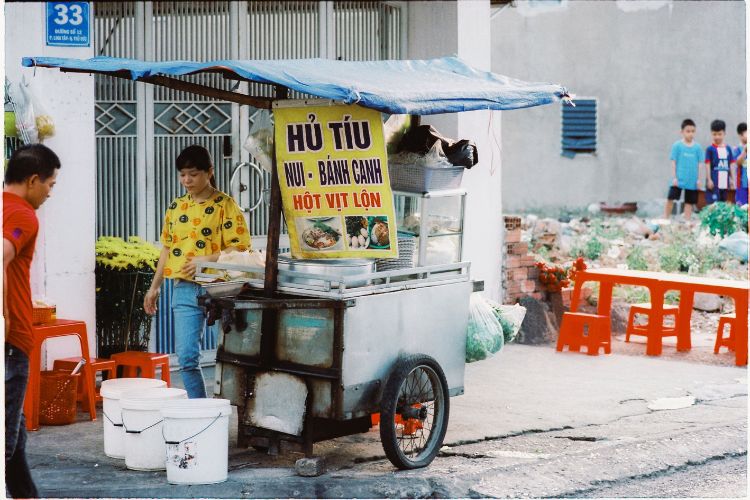
Noodle dishes aren’t just good in broth. Dry noodle dishes have also become a mainstay of the modern Vietnamese food map. The composition of dry noodle dishes resembles that of a noodle salad. From this basic idea, many regions have offered their own takes. There’s the dry version of sour phở in Lạng Sơn Province, made with regular phở noodles, char siu, fried sweet potato, and a special sour sauce. Meanwhile, in Ho Chi Minh City, there are instant noodles. Instant, but elevated.
Instant noodles are a staple in Vietnamese home kitchens – we are the country with the fourth-highest consumption of instant ramen in the world. They’re a way of life, and you have no fewer than a hundred ways to tweak and revamp them.
One such method is replacing the basic MSG packet with a thick sauce made from honey, soy sauce, oyster sauce, sriracha, and minced garlic. It’s topped with pork crackling, sunny-side-up eggs, and bok choy. Simply delectable for something so deceptively humble.
Every Province Has Its Own Noodle Dish
Like each American state, each Vietnamese region possesses a distinct culinary rhythm. To catch a glimpse of that rhythm, a visitor can always rely on its specialty noodle dishes.
From Huế City, where the last Vietnamese feudal dynasty resided, we have bún bò (pronounced /buːn bɔː/). It’s a vermicelli rice noodle soup – seemingly similar to phở, but the broth is usually punchier. It’s spicy, it’s hot, and it’s sweaty. It has won the hearts of Vietnamese people and international chefs alike, as seen in the compliments from Anthony Bourdain.
“I would definitely bring my date here, because if she doesn’t like this, there’s no hope of a relationship.”
Only Bourdain could make something so mundane sound so romantic. But I would like to object to that sentiment, because at the center of bún bò is an ingredient that has no place on a romantic first date: fermented shrimp paste.
The local small shrimps are fermented for a few months until they turn purple-reddish, with a pungent aroma and an aggressively salty taste that few words can fully describe. After being diluted with water, it becomes one of the four pillars of the broth (besides fish sauce, chili, and lemongrass). The protein toppings include beef shank, brisket, pork hock, crab cakes, and blood cakes – yes, you read that right.
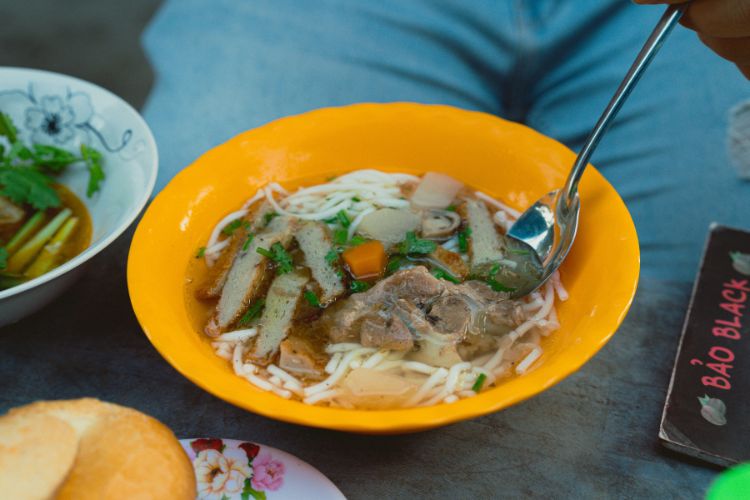
Next, we’ll travel south to the rivers of the Mekong Delta. Here, almost everything good comes from water. With what they sow and grow, the folks create another form of noodle dish: bánh canh (pronounced /baɲ kaɲ/). Funnily enough, the name is literally translated as “cake soup.”
It’s one of my favorite noodle dishes ever. Due to the rice variety they use, the noodle strands are chewier. The difference lies not only in the noodle texture but also in the broth, which is simmered from snakehead fish bones (a local fatty freshwater fish) and coconut milk.
Trust me, it doesn’t taste fishy at all. The broth is considerably denser than pure ox bone broth and, combined with the fatty fish flesh and the natural heat from black pepper, creates an amazingly hearty soup. I feel warm just by imagining it.
In fact, the Mekong Delta isn’t the only place where bánh canh and fish noodle soup are popular. Other coastal towns have their renditions. For example, the central Vietnamese version is slightly spicier and often eaten with fried fish cakes.
Read More: Kagawa, Japan Is the Udon Capital—Where to Eat Sanuki Noodles and How to Get There
The Etiquette of Eating Noodle Dishes in Vietnam
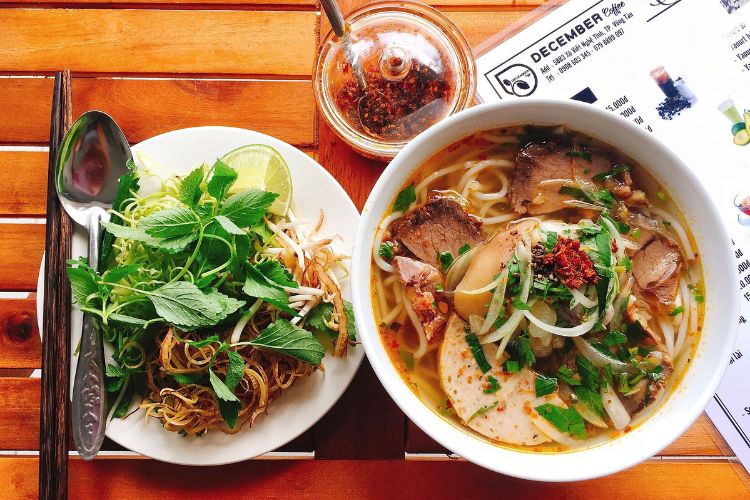
Since many Vietnamese noodle dishes demand overnight bone broth and long preparation processes, we don’t normally cook them at home. The most satisfying bowl of noodles is often enjoyed right at the restaurant.
If you want to join, are there any etiquette rules you should take note of? First, you should understand the vegetable accompaniments. It’s extremely uncommon to encounter a Vietnamese meal without some type of greens on the side. Noodles are no exception. Depending on the flavor profile, each noodle dish goes well with certain types of vegetables and aromatic herbs.
On the more familiar end, we have lettuce, shredded banana blossom, morning glory, mint, and bean sprouts. On the more specialized end, you will sometimes see prostrate knotweed, a kind of astringent vegetable, to balance out some fish noodle soups (a practice that I, honestly, often ignore because of its bitterness).
Additionally, there’s a tray of condiments and spices, including but not limited to black pepper, fish sauce, soy sauce, pickled garlic, chili oil, and fresh chili. Before you add anything to your bowl, please give it a taste first. Nothing is more disastrous than enthusiasm mixed with too much fish sauce.
Should I Slurp or Should I Not Slurp?
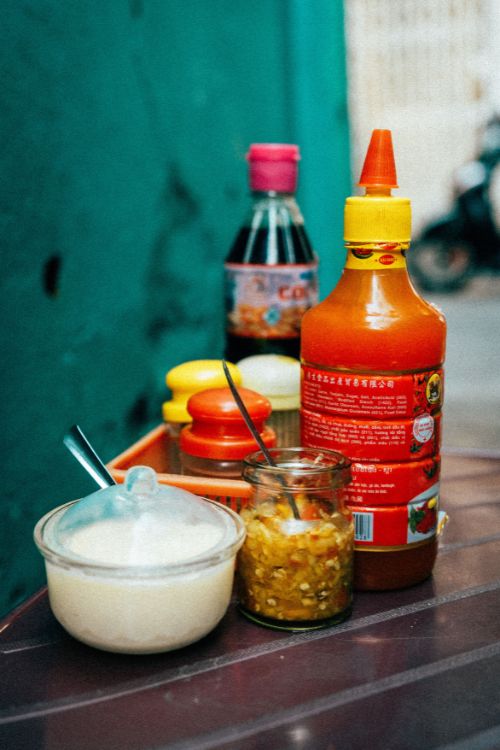
Image by Phan Cuong via Pexels
Slurping noodles is a sensitive topic in some Asian countries. Some, like Japan, value it as an appreciative gesture toward the chef. Others deem it an impolite behavior that makes everyone at the table lose their appetite. What do Vietnamese people have to say about that?
Interestingly, in Vietnam, we don’t have a conclusive view on the act of slurping. Some regions disapprove, while others don’t care. The best advice I can give you is that you can slurp a big bite of noodles without making a disruptive noise (the kind that makes other patrons turn and stare at you). In fact, there’s a big factor that stops me from trying to slurp: the noodles are often very hot.
Another hurdle that tourists, especially Westerners, often encounter when eating noodles is the use of chopsticks. Chopsticks in Vietnam are made from wood, bamboo, and sometimes plastic, since these materials make for a tighter grip when eating noodle soups. If you’re not comfortable using chopsticks, you can ask the chef for a fork or use the plastic band trick to tie the ends of the chopsticks together.
If You Go
Noodles in Vietnam are something that transcends all generations and borders, uniting people in the art of delicious eating. Below are a few famous places you can try.
- Phở Thìn Lò Đúc, one of the most famous traditional phở brands in Hanoi City
- Phở Lệ, Ho Chi Minh City
- Bún Bò Huế Mệ Kéo, Hue City
Need a hand planning your trip? Here are the sites and services we rely on most, from booking tools to travel products we love.
Inspire your next adventure with our articles below:
- 3 Types of Coffee Representing the Spirit of Saigon (Vietnam)
- From Hanoi to Ho Chi Minh: Navigating the Labyrinth of Vietnam’s Vibrant Landscape
Author Bio: Norah Vo is a cultural writer between East and West who wants to tell exciting stories about their country and the world at large.
Want to discover more hidden gems and helpful travel tips? Join our free newsletter for the latest travel secrets and travel articles.
We are reader-supported and may earn a commission on purchases made through links in this article.

- A Guide to Noodles in Vietnam: How to Slurp Like a Local - September 30, 2026
- Travel Guide to Japan - September 29, 2026
- Laos for Backpackers: Vientiane, Vang Vieng and Luang Prabang on a Slow-Travel Route - September 29, 2026
Planning another trip soon? ✈️
Add GoWorldTravel.com as a preferred source on Google. Click the button below so our local guides, packing hacks, and hidden-gem itineraries always show up first when you search!
Add to Preferred Sources