
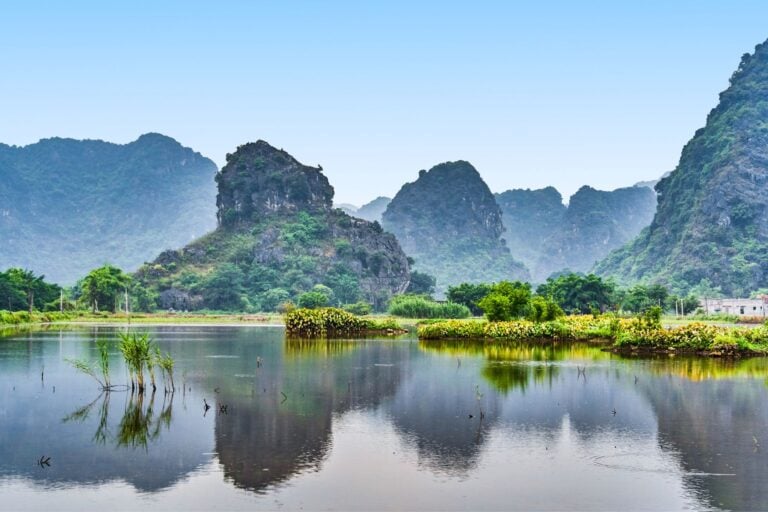
Ninety kilometers south of Hanoi, the land changes its mind. The flat delta gives way to limestone karsts rising without warning from rice fields, and the rivers stop going anywhere in particular and start moving in slow green circles through valleys that feel cut off from the rest of the century.
A Capital the Country Forgot
Most travelers pass through Ninh Binh on the way to somewhere else. The train stops, they look out the window at the mountains, and they keep going. That is probably the most common mistake made in northern Vietnam, and it is made daily.
This is not a destination that announces itself. There is no famous beach, no single monument that appears on every Vietnam itinerary. What Ninh Binh has instead is a landscape so layered geologically, historically and spiritually that two days here tend to quietly rearrange the hierarchy of a trip.
People arrive expecting a detour. They leave, reconsidering everything that came after it in their plans.
Before Hanoi, There was Hoa Lu
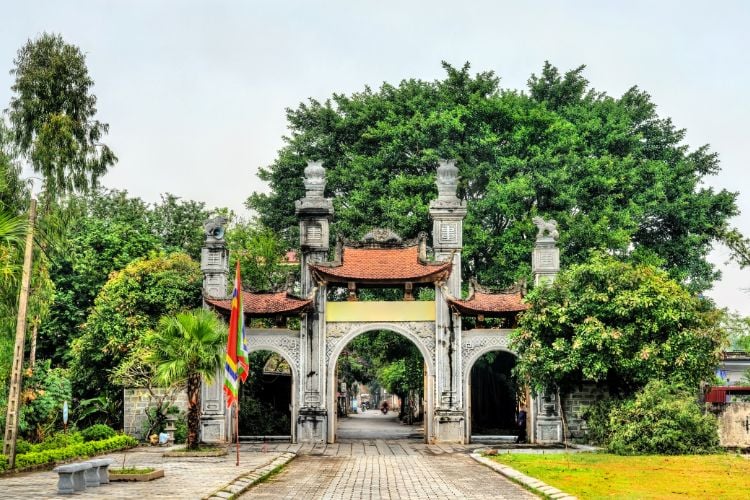
In the 10th century, Hoa Lu served as the capital of Dai Co Viet under the Dinh and Early Le dynasties, marking Vietnam’s independence after more than a thousand years of foreign rule.
The king who built it, Dinh Bo Linh, was not a man who trusted open ground. He chose this location because the citadel and the surrounding limestone hills provided natural defense, walls the earth had already built for him.
In 1010, the next dynasty moved the capital north to Thang Long, modern Hanoi, and Hoa Lu became the ancient capital. The palaces were dismantled. The stones went north to build new things. What remained were two royal temples, the mountains and a silence that has settled so completely into the place that it now feels intentional.
Walking through the temple grounds at Hoa Lu on a weekday morning, with incense burning in the courtyards and the karsts rising behind the curved rooftops, you get a particular feeling that is rare in Vietnam’s more-visited historical sites: the sense that the place is not performing for you. It was here before tourism, and it will be here after.
The Boat That Goes Into the Mountain
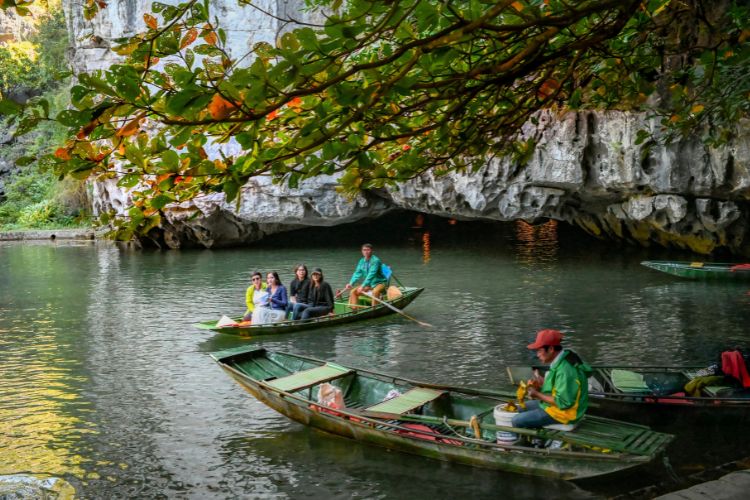
Trang An is where Ninh Binh’s landscape reveals its most extreme trick.
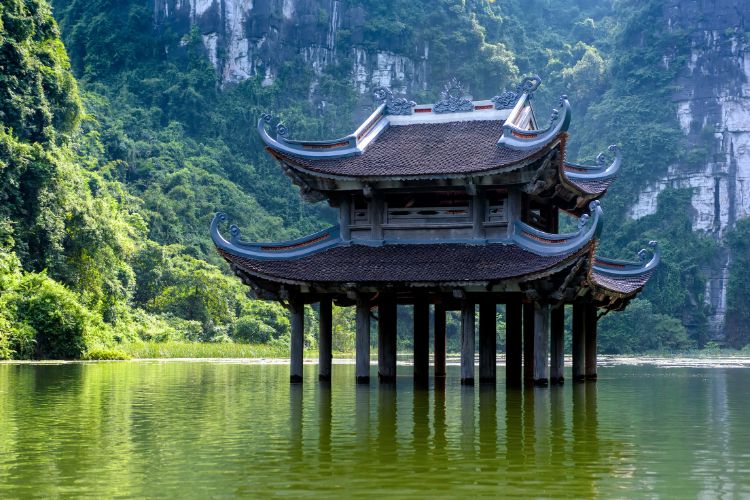
The Trang An Landscape Complex holds a network of 48 ancient caves, many accessible only by boat. You board a small wooden sampan at the wharf, which is low in the water and moved by a single rower who takes you into the karsts rather than around them. The mountains part. A cave mouth opens in the rock face ahead. The boat goes through.
Inside, the darkness is not total. Light filters through cracks in the ceiling forty meters up, catching the water in ways that change with every curve of the passage.
Some caves last thirty seconds. Others stretch for several minutes, with stalactites close enough to touch if you reach up and are willing to accept the consequences.
Then the cave ends, and you emerge into a hidden valley enclosed on all sides by cliffs, open only to the sky, rice growing at the base of sheer rock walls that have not seen a road in a thousand years.
Along each route, the boat docks at ancient spiritual sites. Temples honoring loyal mandarins of the Dinh dynasty, shrines built into cliff faces, stone steps leading upward into the rock toward altars that have been receiving offerings since before the current capital existed.
The whole journey takes about three hours. It does not feel like three hours. Time moves differently when you are inside a mountain.
Five Hundred Steps to Understand the Valley
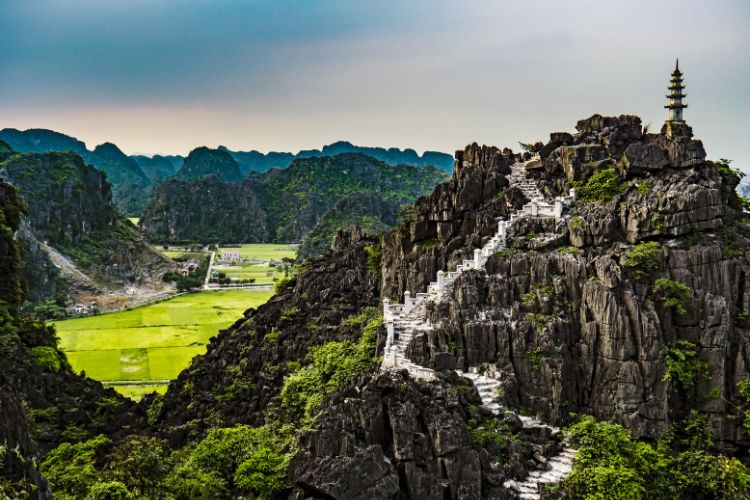
Hang Mua, the Dancing Cave, takes its name from a Tran dynasty king who came here in the 13th century to watch performers dance at the mountain’s base. The king is long gone. The view he came for is still there.
The stone steps number around five hundred, climbing the ridge of Ngoa Long Mountain above a lotus lake surrounded by rice fields. The climb is not technical, but it is steep enough to make conversation difficult and slow enough to feel deliberate.
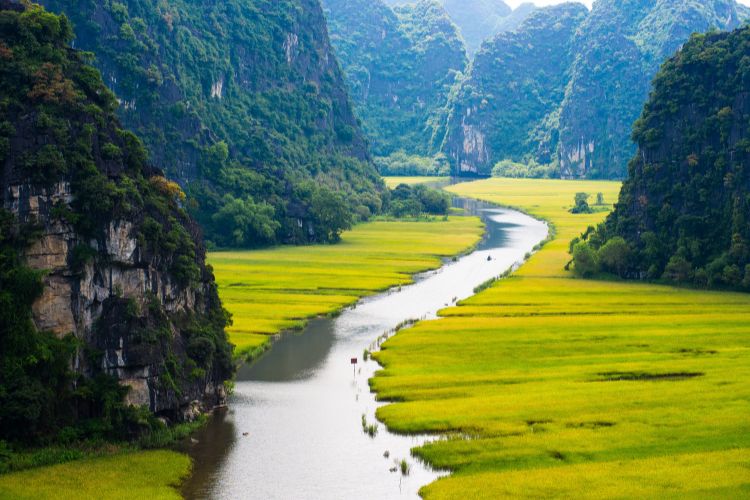
About halfway up, the valley below starts to become visible between the rock faces: green rectangles of paddy, divided by narrow paths, a river curving through the middle, the other karsts rising beyond.
At the top, everything opens at once. Tam Coc spreads below in every direction, the full karst landscape, the river threading through it, the boats on the water so small from here that they look like leaves moving in a current.
On clear mornings, mist sits in the valleys between the mountains. During harvest season, from May through June, the rice turns gold and the whole view shifts color like something lit from inside.
The descent takes half the time and twice the concentration. Your knees will have opinions about the steps. They are right.
Van Long: The One Without Crowds
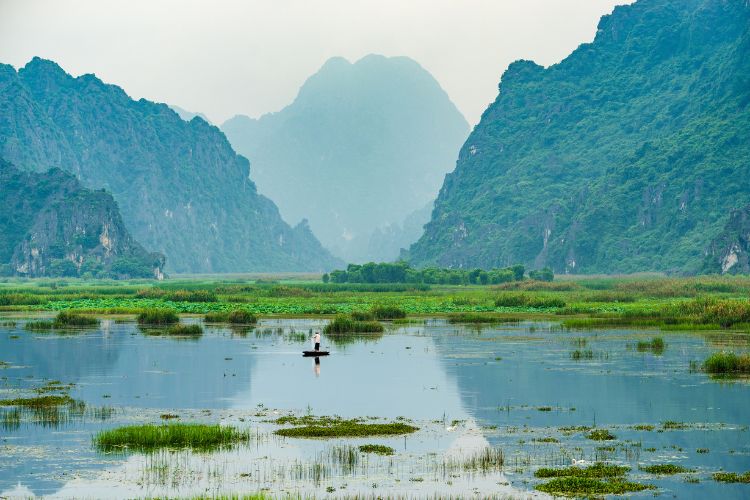
Fifteen kilometers north of Tam Coc, Van Long Nature Reserve exists in a different register entirely.
Van Long is Northern Vietnam’s largest freshwater wetland reserve. It’s a quiet, glassy expanse where visitors drift past limestone cliffs in flat-bottomed boats. There are no caves here, no temples, no film-set landscape.
What there is instead: water buffalo standing chest-deep in the river, egrets lifting off from the reed banks, and, if you are quiet and the light is right, the Delacour’s langur, one of the rarest primates on earth, moving through the karst forest on the cliff faces above.
Most people who visit Ninh Binh do not come to Van Long. Most people who come to Van Long wish they had stayed longer.
The boat here costs less, the crowds are a fraction of Trang An’s, and the silence is of a quality that is genuinely difficult to find anywhere near a city of Hanoi’s size. Bring nothing that makes noise.
What You Eat Here
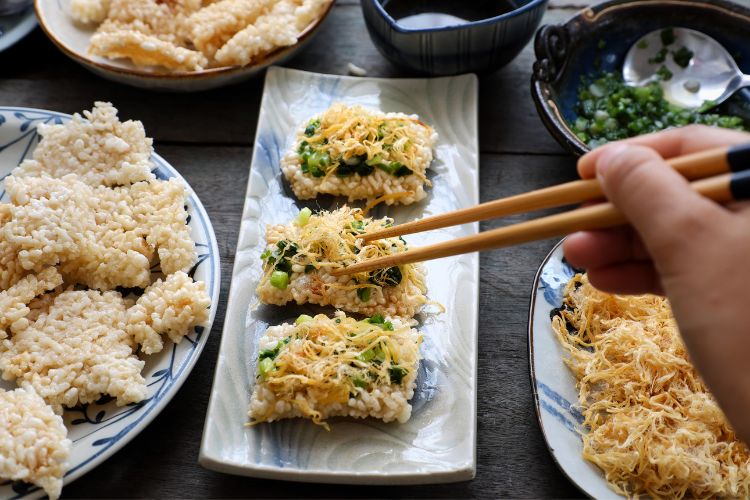
Image by xuanhuongho from Getty Images via Canva
Food in Ninh Binh is not designed for attention. It is shaped by land, limestone, and routine.
The signature dish is com chay, which is scorched, crispy rice, golden and brittle, served with a rich goat meat sauce. The contrast is immediate: crunch against softness, simplicity against depth.
The goat itself is local, mountain-raised, grazing across karst slopes, its flavor shaped by terrain rather than feed. It appears in multiple forms: grilled over charcoal, simmered in hotpot, or infused with ginger and herbs in dishes served without ceremony but with confidence.
Meals here are often communal, served in village restaurants without menus, where pointing replaces ordering and trust replaces translation. What arrives is what the place is eating that day, and that is usually enough.
The Question of Timing
Ninh Binh on a weekend in peak season is a different experience from Ninh Binh on a Tuesday in October. The landscape does not change. The number of boats on the Trang An waterways absolutely does.
Early morning is the most honest version of Mua Cave. It is cooler, emptier, and the valley below is still carrying mist before the tour groups arrive from Hanoi.
The same is true of Trang An: the first boats go out around seven, and the waterways before nine have a quality of stillness that disappears by midday.
The most common mistake is treating Ninh Binh as a day trip. It is close enough to Hanoi to do that, two hours by car or train, but the place rewards staying.
The afternoon light on the karsts is different from the morning light. The villages are different after the day-trippers leave.
The rice fields at dusk, when the farmers are coming in and the birds are going out and the mountains are turning grey at the edges, that is not something you see if you are already on the road back north.
Stay two nights. You will use both of them.
If You Go
Where to Stay
Emeralda Resort Ninh Binh sits directly beside Van Long Nature Reserve, close enough that guests can watch the karsts change color from the property’s own lakefront. The resort has three restaurants, indoor and outdoor pools and a spa built for unwinding after a day of climbing Hang Mua’s five hundred steps.
Recommended Tour
The Hoa Lu, Trang An and Mua Cave day trip covers the three sites at the heart of this piece in a single outing from Hanoi, including the sampan ride through Trang An’s caves, the temple grounds at Hoa Lu and the climb to Hang Mua’s viewpoint, with lunch and an English-speaking guide included.
Travel Insurance
Given the boat travel through low cave passages and the steep, unrailed climb at Hang Mua, a travel insurance policy is worth having in place before departure. SafetyWing and Squaremouth both offer plans built for international trips like this one.
Staying Connected
An Airalo eSIM is an easy way to stay connected in rural Ninh Binh without hunting down a local SIM card on arrival.
Need a hand planning your trip? Here are the sites and services we rely on most, from booking tools to travel products we love.
Inspire your next adventure with our articles below:
- Ultimate Guide to the Top 15 Things to Do in Vietnam
- From Hanoi to Ho Chi Minh: Navigating the Labyrinth of Vietnam’s Vibrant Landscape
Author Bio: D.M. Mahmood is a travel writer and storyteller specializing in immersive, locally grounded narratives created through collaboration with contributors from different cultures and destinations around the world. Over the past two years, her work has covered nearly 40 destinations through a blend of travel features, destination guides, visual storytelling, and culturally driven narratives that focus on atmosphere, human detail, and the everyday rhythm of a place beyond traditional tourist experiences.
Want to discover more hidden gems and helpful travel tips? Join our free newsletter for the latest travel secrets and travel articles.
We are reader-supported and may earn a commission on purchases made through links in this article.

- Chasing the Light: Winners of Our Golden Hour Photo Contest - September 20, 2026
- The Ins and Outs of Tokyo’s Kabuki Theater - September 20, 2026
- How to Mix Gold Rush Roots with Wine Country Soul in El Dorado County, California - September 19, 2026
Planning another trip soon? ✈️
Add GoWorldTravel.com as a preferred source on Google. Click the button below so our local guides, packing hacks, and hidden-gem itineraries always show up first when you search!
Add to Preferred Sources