
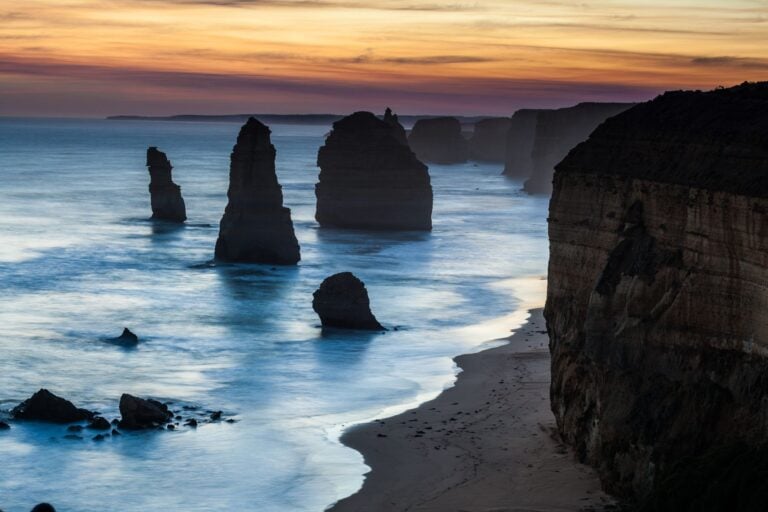
Australia is an ancient land. Home to some of the oldest rocks on Earth, this is a land sculpted by billions of years of activity. So ancient is this land that the engines of tectonic activity, volcanism, orogeny (mountain formation) and glaciation have all died down.
The fact that this land is so sparsely populated further ensures that the landscapes look primeval, as if time itself has wound back by millions of years.
In this ancient landscape, it is not uncommon to find rock formations patiently chiselled by the artistic forces of nature, which are as bizarre as they are fantastic.
Uluru, also known as Ayers Rock, is undoubtedly the crown jewel, but it shouldn’t surprise you to find many more gems strewn across this country. Why not visit the oldest continent to gaze upon its most superb rock formations, perfected over millennia, long before humans, or even dinosaurs?
Let’s dive into a geological tour and marvel at the most remarkable rock formations of this beautiful land.
Uluru, Northern Territory
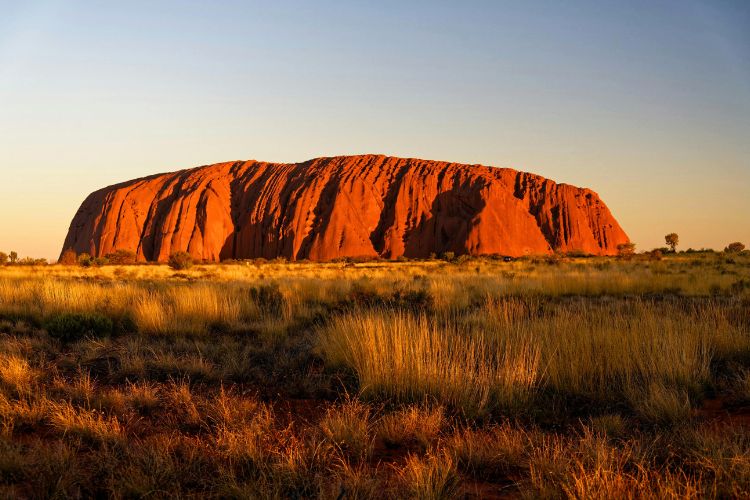
Uluru, part of Uluru–Kata Tjuta National Park, was inscribed on the UNESCO World Heritage List in 1987 for its extraordinary natural significance. Sacred to the Aṉangu people, it is perhaps the continent’s most iconic geological landmark.
One of the world’s largest and most celebrated inselbergs, an immense “island mountain” rising dramatically from the desert plains, Uluru stands about 348 metres above the ground. Yet geologists estimate that nearly two and a half kilometres of the rock extend underground, meaning most of its mass lies hidden beneath the earth’s surface.
Uluru reveals two completely different personalities through the seasons, and to truly appreciate its magic, it should be experienced twice.
In the dry season, beneath cloudless desert skies and intense sunlight, the rock burns with fiery colours, glowing ochre, crimson, rust and deep red, constantly shifting with every passing hour of the day.
During the summer storm season, roughly November to March, Uluru can become even more dramatic. Dark clouds gather overhead, rain drenches the ancient monolith and silver waterfalls stream down its sides. Rain here is never guaranteed, which makes this a spectacle few visitors are lucky enough to witness.
One of the most enriching experiences is the Cultural Base Walk around Uluru, a 10.6-kilometre trail that circles the rock. Along the walk, visitors encounter sacred sites, ancient rock art, waterholes and interpretive areas where Aṉangu stories, traditions and desert ecology are explained.
As night falls, yet another attraction comes to life in the desert with the mesmerising Field of Light installation by artist Bruce Munro. More than 50,000 glowing stems of coloured light spread across the desert plains, creating a dreamlike sea of illumination beneath a canopy of stars.
To watch the lights give way to dawn, this sunrise tour picks you up from your Ayers Rock Resort hotel in the dark, walks you through the installation and serves hot drinks as the sun rises over Uluru.
How to Reach Uluru
Located in the Northern Territory within Uluru–Kata Tjuta National Park, Uluru lies about 450 kilometres southwest of Alice Springs. The easiest way to get there is to fly into Ayers Rock Airport at Yulara.
Travellers driving in from Alice Springs often spot Mount Conner, nicknamed “Fool-uru” or “Fuluru”, a flat-topped mesa that is frequently mistaken for Uluru from a distance.
Many travellers also pair a Red Centre trip with time in Darwin, Australia’s northernmost capital and a gateway to Kakadu and Litchfield.
Kata Tjuta, Northern Territory
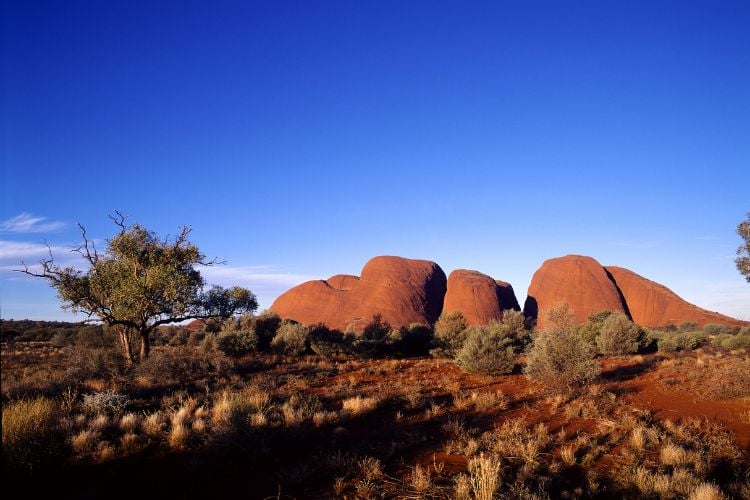
In the same national park as Uluru lies Kata Tjuta, also known as the Olgas. This is a spectacular group of 36 massive domed rock formations rising from the desert plains of Australia’s Red Centre.
Kata Tjuta means “many heads” in the local Pitjantjatjara language, reflecting the cluster of rounded, ochre-colored domes that contrast dramatically with Uluru’s solitary form. Its tallest dome rises about 546 metres above the surrounding plain, even higher than Uluru itself.
Located about 50 kilometres from Uluru, it is easily accessible by road from Yulara and offers breathtaking walks such as the Valley of the Winds through rugged gorges and desert scenery.
Karlu Karlu (Devils Marbles), Northern Territory
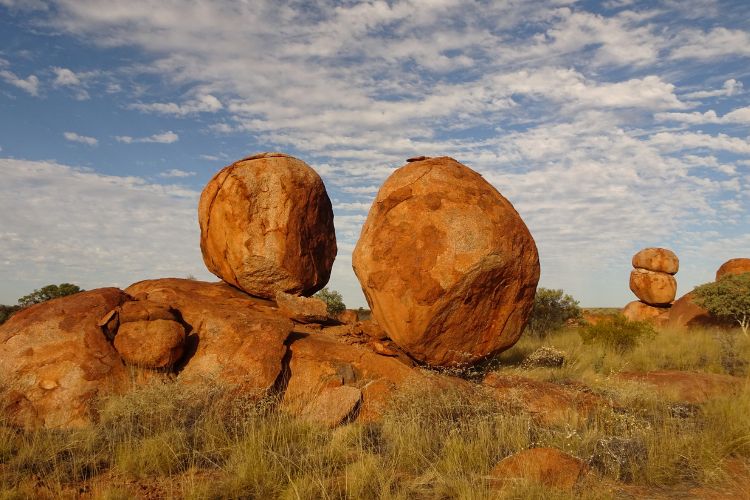
Further north in the Northern Territory are the remarkable Devils Marbles. Traditionally known as Karlu Karlu, these enormous granite boulders are scattered across the landscape near Tennant Creek. Some appear delicately balanced on top of one another, creating an almost surreal sight as though placed there by a giant hand.
Sacred to several Aboriginal groups, the marbles are closely linked to Dreamtime stories and are believed in some traditions to be the eggs of the Rainbow Serpent.
Formed over millions of years through erosion and weathering, the rocks glow fiery red at sunrise and sunset, making Karlu Karlu one of the most fascinating natural wonders of the Australian outback.
The Three Sisters, New South Wales
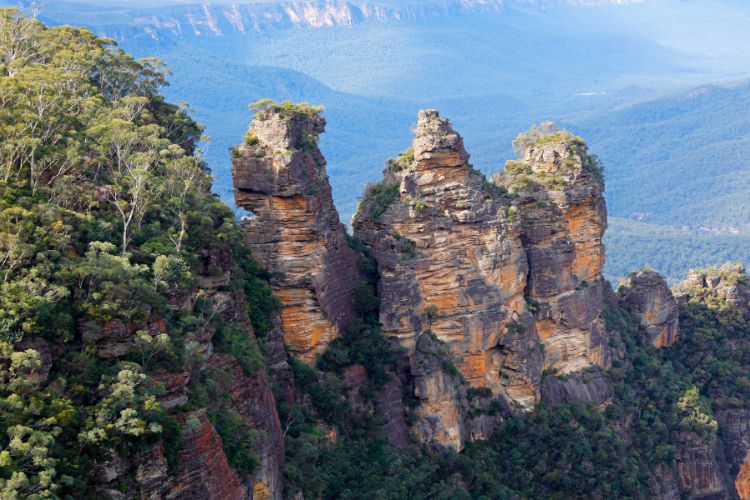
West of Sydney, the Three Sisters are one of the Blue Mountains’ most iconic natural landmarks. These three distinct sandstone rock spires rise dramatically from the cliffs above the Jamison Valley near Katoomba, shaped over millions of years by wind, rain and water.
Sacred to the land’s traditional custodians, the Gundungurra and Darug peoples, the Three Sisters hold profound spiritual significance. A popular legend tells of three sisters turned to stone to protect them during a battle, though historians have traced that version to the 1930s. The Gundungurra people have their own story connected to the formation.
Easily visited as a day trip from Sydney, the lookout points at Echo Point offer sweeping views of the valley and escarpment, making the Three Sisters one of the most memorable natural landmarks in the Blue Mountains.
Stay until sunset to see a magical glow on these amber-colored cliffs that reminds you of timelessness in the mountains.
Ball’s Pyramid, Lord Howe Island, New South Wales
Around 600 kilometres off the New South Wales coast lies one of Australia’s most beautiful islands: Lord Howe Island. Close to this island paradise lies Ball’s Pyramid, the world’s tallest volcanic sea stack (a pillar of rock that stands isolated in the ocean), rising dramatically from the Pacific Ocean.
Formed from the eroded remains of an ancient shield volcano, it stands around 562 metres high and appears as a narrow, blade-like spire surrounded by open ocean, making it one of the most remote and visually striking rock formations on the planet.
Once thought to be completely lifeless, Ball’s Pyramid gained scientific fame when the supposedly extinct Lord Howe Island stick insect was rediscovered clinging to its slopes, highlighting its unique ecological significance.
Access is strictly controlled due to its fragility and challenging conditions, with visits only possible via guided boat tours from Lord Howe Island, itself reached by flights from Sydney or Brisbane. Nonetheless, do keep a lookout for this rocky wonder if you are hiking to any of the island’s hilltops such as Malabar Lookout or Mt. Gower.
Twelve Apostles, Great Ocean Road, Victoria
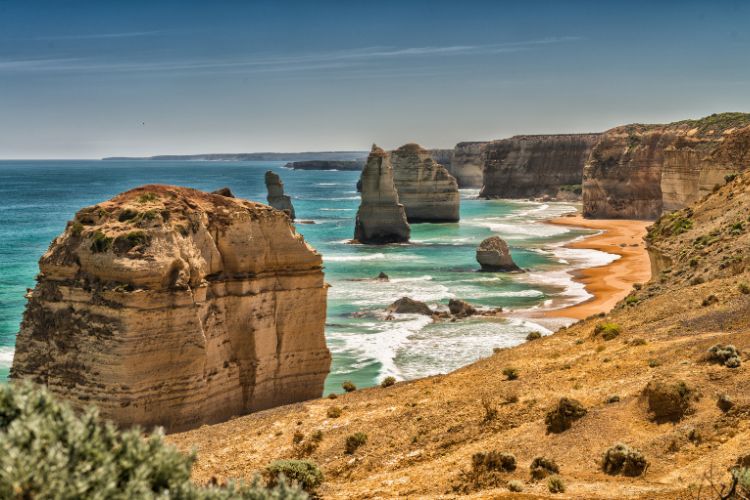
The Twelve Apostles are one of a series of dramatic limestone stacks rising from the Southern Ocean along Australia’s most iconic road trip, the Great Ocean Road, starting near Melbourne at Torquay.
Formed over millions of years as relentless waves and winds eroded the surrounding cliffs, these towering formations were gradually separated from the mainland, creating an isolated and cinematic seascape.
Despite the name, there were never actually twelve stacks. At their peak there were nine, and seven stand today.
The wonders do not end with the apostles, though. There are other landmarks with wonderful names such as the Razorback, Gog and Magog and London Arch, strewn along the 240 km road trip from Torquay to Warrnambool.
Remarkable Rocks, Kangaroo Island, South Australia
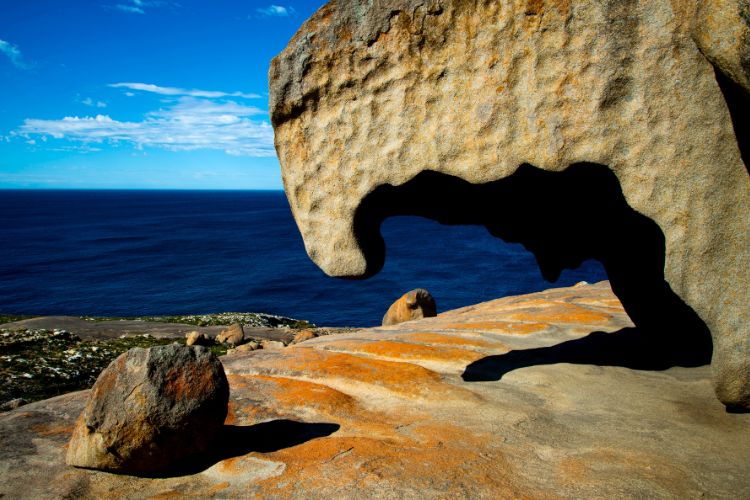
The Remarkable Rocks are located on the southwestern tip of Kangaroo Island in South Australia. They sit inside Flinders Chase National Park, perched on a dramatic cliffside overlooking the Southern Ocean.
The granite formed some 500 million years ago, and wind, rain and salt spray have since sculpted it into surreal shapes, arches, rounded curves and precariously balanced blocks that look almost artificially carved. Their vivid orange and red tones come from a coating of lichen, which becomes especially striking at sunrise and sunset when the granite glows against the ocean backdrop.
For comic lovers, the heavily eroded rocks will remind you of “Phantom’s Skull Cave,” only calmer and distinctly Australian in its open, wind-swept beauty.
Kangaroo Island can be reached by flight from Adelaide or by ferry from Cape Jervis, south of the city.
Bungle Bungle Range, Western Australia
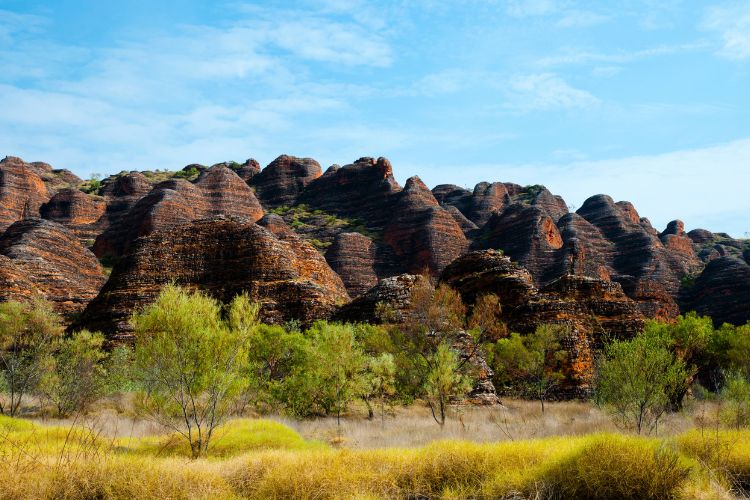
Image by Photon-Photos from Getty Images via Canva
Located within Purnululu National Park, the Bungle Bungle Range is another bizarre natural wonder, famous for its beehive-shaped sandstone domes banded in vivid orange and dark grey.
These unique stripes are formed by layers of cyanobacteria living on the rock surface combined with iron-rich sandstone, creating a pattern found almost nowhere else on Earth.
Known to the traditional Indigenous custodians for thousands of years, the range only came to wider public attention after aerial surveys in 1983 revealed its vast scale and extraordinary formations.
Situated in the remote Kimberley region of Western Australia, it can be reached by a rugged 4WD journey or scenic flight, typically from Kununurra, making it one of the most remote and visually unforgettable landscapes in Australia.
The easiest way in is from above. This day trip from Kununurra flies over the domes and Lake Argyle, then lands inside the park for a guided three-kilometre walk through Piccaninny Creek to Cathedral Gorge.
Note: Purnululu is generally open only in the dry season (roughly April to November), when the roads are passable.
Wave Rock, Western Australia
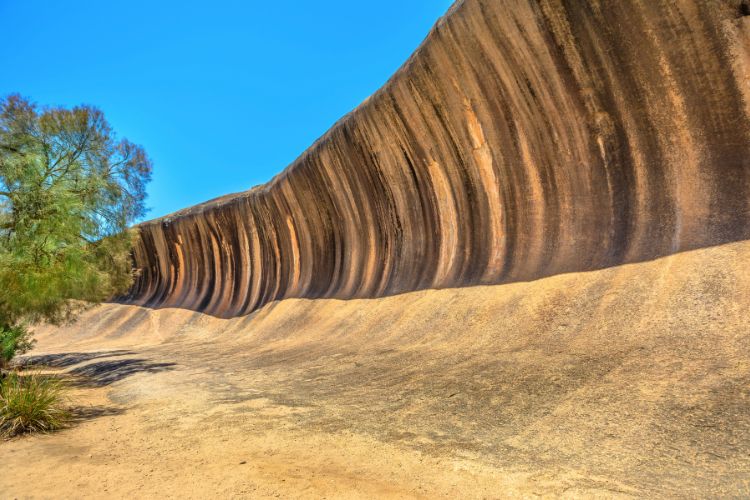
Wave Rock is a remarkable natural formation that resembles a giant frozen ocean wave, complete with a curling crest.
Rising about 15 metres high and stretching roughly 110 metres long, its unusual shape has been carved over millions of years through gradual weathering and water erosion. These natural forces have sculpted the granite into its smooth, flowing form.
Located near the town of Hyden, around 340 kms southeast of Perth, Wave Rock is easily accessible by car. It is one of Western Australia’s most iconic inland natural landmarks located in the country’s Wheatbelt.
The Nut, Tasmania
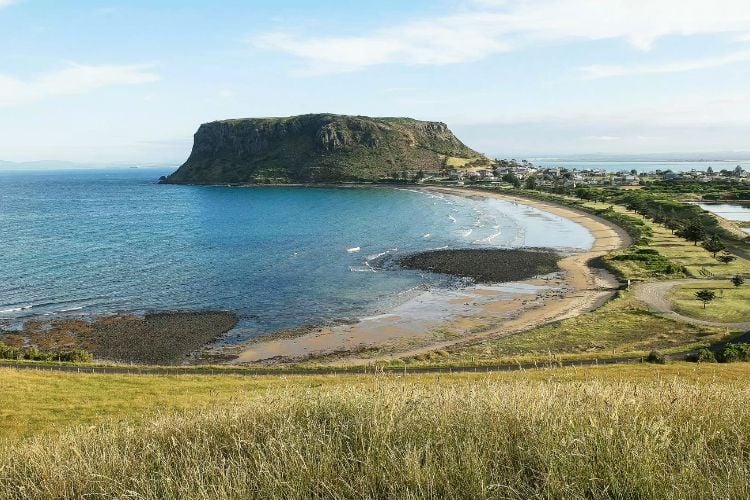
The Nut is a striking flat-topped volcanic plug that rises abruptly above the coastal town of Stanley, creating one of Tasmania’s most distinctive landmarks.
Formed from the hardened core of an ancient volcano, it features steep, near-vertical cliffs and a surprisingly level summit. This summit offers sweeping views over Bass Strait, the surrounding coastline, and the historic village below.
Visitors can reach the top either by a steep walking track or via a chairlift, both providing a dramatic ascent from sea level to the windswept plateau above. However, the chairlift is closed in the winter (June to August).
The Pinnacles, Western Australia
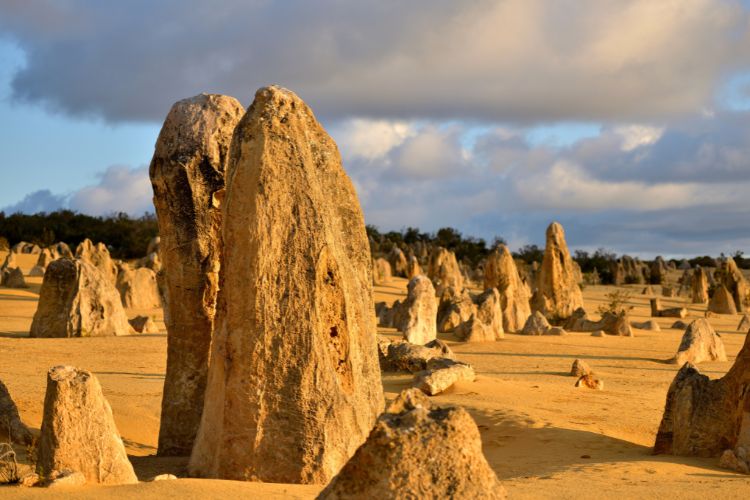
Pinnacles Desert is an extraordinary landscape where thousands of limestone pillars rise out of golden desert sands, creating a surreal, almost alien environment. They were formed from ancient seashell deposits that were buried, compacted and then exposed by wind erosion.
These striking rock spires vary in size and shape, giving the desert an eerie, sculpted appearance that changes dramatically with shifting light.
Located within Nambung National Park, about 200 kms north of Perth, the Pinnacles are easily reached by car and are especially popular at sunrise and sunset. At these times, long shadows intensify their otherworldly atmosphere, making them a frequent filming and photography location.
This popular sunset tour from Perth continues after dark for dinner and stargazing among the pillars.
Hamelin Pool, Western Australia
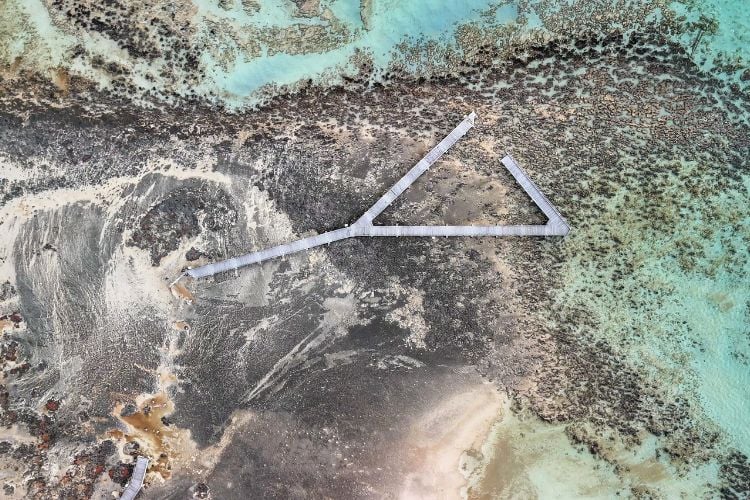
Hamelin Pool is located within the Shark Bay World Heritage Area in Western Australia. It is home to the world’s most diverse and extensive colony of living stromatolites: rock-like structures built over thousands of years by microscopic cyanobacteria.
These living fossils closely resemble the organisms that existed 3.5 billion years ago and directly produced the oxygen that allowed complex life to evolve on Earth.
The ancient formations thrive here because a natural seagrass barrier restricts ocean circulation, creating hypersaline water (twice as salty as normal seawater). This keeps predators like sea snails at bay.
Growing at a painstaking rate of less than a millimetre per year, these dome-shaped structures offer scientists a rare, literal glimpse back into the very dawn of our planet’s history.
Reaching this geological wonder requires a classic outback road trip, travelling roughly halfway up the coast of Western Australia.
Note: A cyclone damaged the original viewing boardwalk in 2021, and a longer replacement is under construction. Check the Parks and Wildlife Service site for its opening date before you go.
Where Geology Meets Heritage
These remarkable formations reveal Australia as a vast natural gallery, where deep geological time, relentless weathering and rich Indigenous cultural narratives have shaped landscapes found nowhere else on Earth.
From coastal stacks and ancient volcanic remnants to desert domes and sculpted granite waves, each site tells a story of transformation stretching across millions of years. More than just geological wonders, these places are living cultural landscapes, deeply connected to Aboriginal peoples, whose songlines and traditions continue to give them meaning.
Together, they highlight Australia not only as a continent of striking natural beauty, but as a place where Earth’s history and human heritage are inseparably intertwined.
Need a hand planning your trip? Here are the sites and services we rely on most, from booking tools to travel products we love.
Inspire your next adventure with our articles below:
- Wild Dingoes and a Beach Highway: Why Australia’s K’gari Is Like No Other Island
- 8 Scenic Sydney Ferry Rides to Bays, Island Communities and Waterfront Walks
Author Bio: Ayan loves travelling, writing and photography; he has travelled to over 30 countries and has published multiple books on travel and poetry.
Want to discover more hidden gems and helpful travel tips? Join our free newsletter for the latest travel secrets and travel articles.
We are reader-supported and may earn a commission on purchases made through links in this article.

- Australia’s Most Remarkable Rock Formations and Where to Find Them - November 12, 2026
- Where to Ski This Holiday Season: 6 European Resorts Made for Winter Getaways - November 12, 2026
- Top Things to Do in Pula, Croatia, Where Roman Ruins Meet the Adriatic - November 12, 2026
Planning another trip soon? ✈️
Add GoWorldTravel.com as a preferred source on Google. Click the button below so our local guides, packing hacks, and hidden-gem itineraries always show up first when you search!
Add to Preferred Sources