
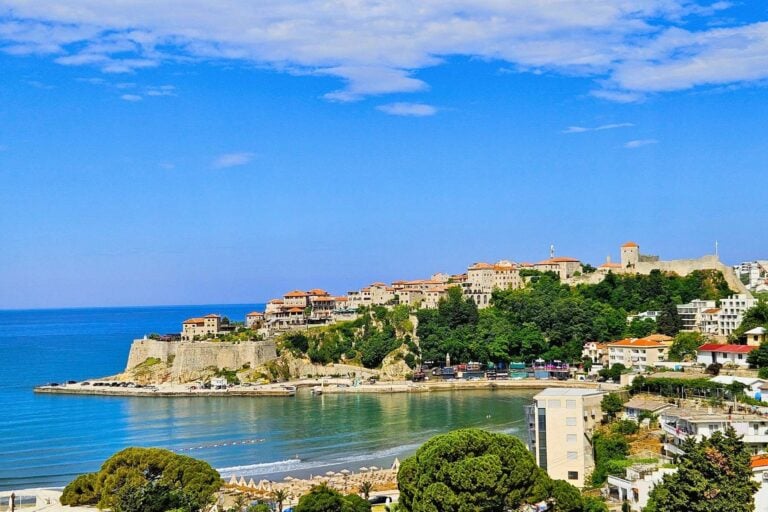
Directly across the Adriatic Sea from Italy, and nestled just below Croatia, the small Balkan nation of Montenegro has long been famous for its soaring peaks and deep, fjord-like northern bays. But follow the coast to its southernmost tip, and you leave the luxury grid behind for something far more peaceful and untamed.
Here, the dramatic cliffs soften. The Adriatic blends with the Bojana River, shaping the triangular island of Ada Bojana. Life slows down around the river-shacks, where fishermen still lower massive nets from wooden stilts. It is a place rooted in myth, especially at the nearby sulfur springs, where generations of women have gathered to bathe in the healing, mineral-rich waters.
Just up the coast sits Ulcinj. A history of pirates and empires is etched into its shiny white stone houses high on the sea rocks. Beyond the ancient walls, a vast grove of millennium-old olive trees gives way to smaller, wilder beaches. Sun-bleached, laid-back, and still half-wild—this is the Montenegro the brochures miss, the one I came to find.
Read More: Discovering the Splendor of Montenegro’s Beaches: A Guide to the Best Coastal Gems
Echoes of Empires
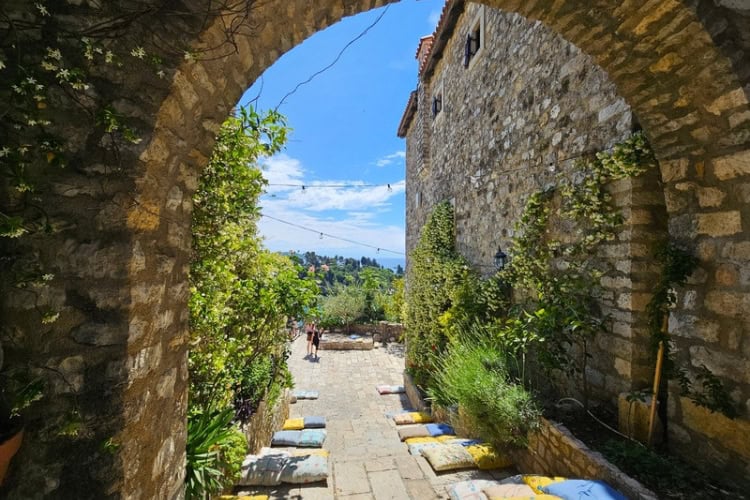
At the southern tip of Montenegro’s coast, just a few miles north of the Albanian border, Ulcinj waits out the final days of May. The summer crowds are a month away, leaving the ancient stone entirely yours to explore. Passing through the Citadel’s eastern gate takes you over 2,500 years of history—a limestone fortress built by Illyrians, refortified by Venetians, and once ruled by Algerian pirates who kept Spain’s greatest author, Miguel de Cervantes, in chains long before he would write Don Quixote.
A Minaret Rising From an Old Church
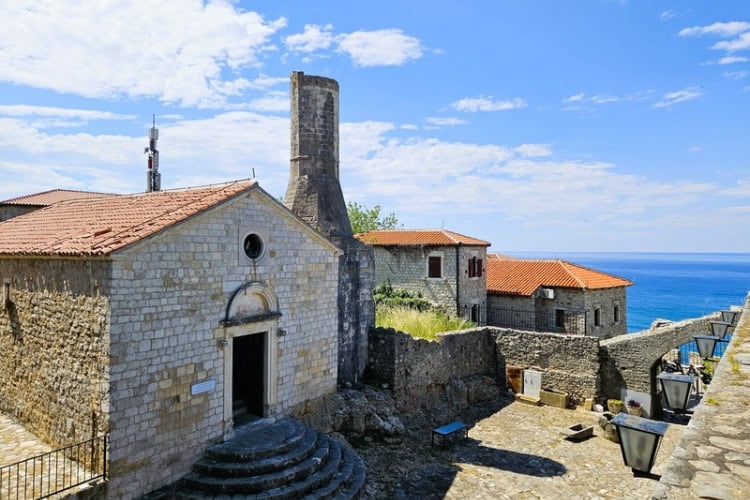
Narrow alleys twist sharply to cheat the summer heat. Deeper inside, a stone minaret rises from a church-turned-mosque that now houses the Archaeological Museum. It is a fitting symbol for Montenegro, a land where Eastern Orthodox Christianity and Islam have peacefully overlapped for centuries.
Coffee Under the Olive Tree
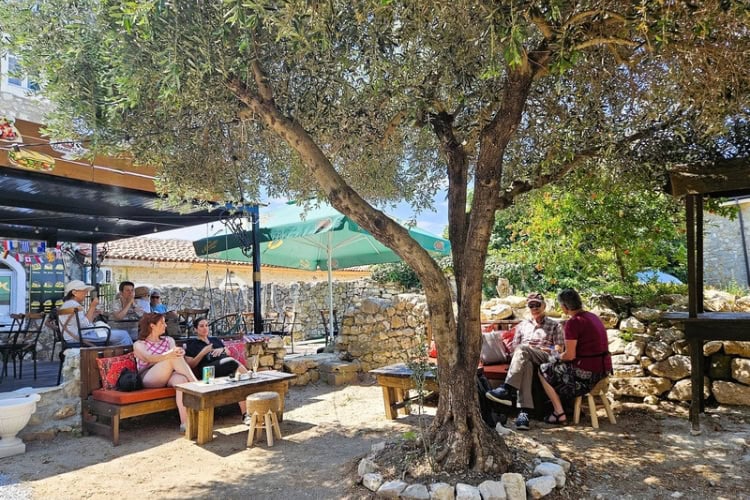
Nearby, locals, including the mayor, sit on low stools with colorful cushions under an olive tree, nursing thick Turkish coffee poured from copper pots. Look over the crumbling Illyrian ramparts, where the cliff drops into the turquoise deep, and you’ll spot a diver waiting with a spear.
The Pirate History in Stone
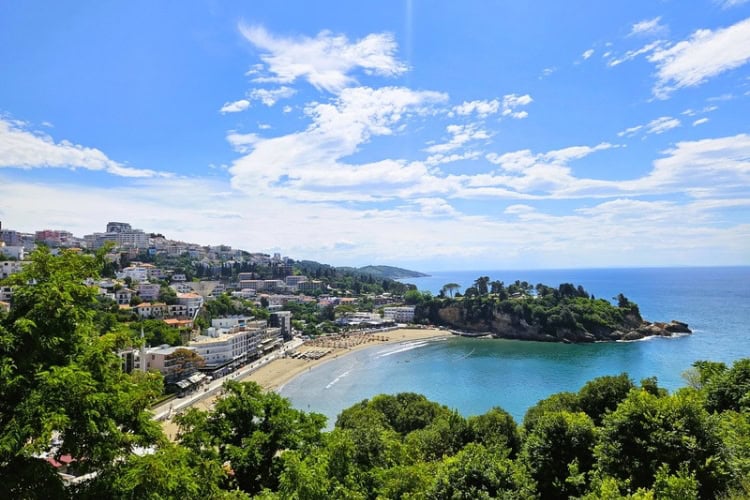
That quiet layout, however, is a hard-won rebirth. In April 1979, a devastating earthquake tore through the coast, claiming over a hundred lives—including 31 in Ulcinj—and flattening the five-star hotel that once crowned the opposite cliff. The tragedy caused damage to the stone houses, but a few years of careful restoration eventually brought its Venetian-era character back to life.
Tucked into these resilient walls is Palata Venezia. Built during the 15th and 16th centuries under Venetian rule, this Gothic-Renaissance structure served as the governor’s residence and a strategic customs house overlooking the bay. The Ottomans later claimed it as an administrative court; today, the complex operates as a luxury hotel.
A Jasmine Scented Terrace
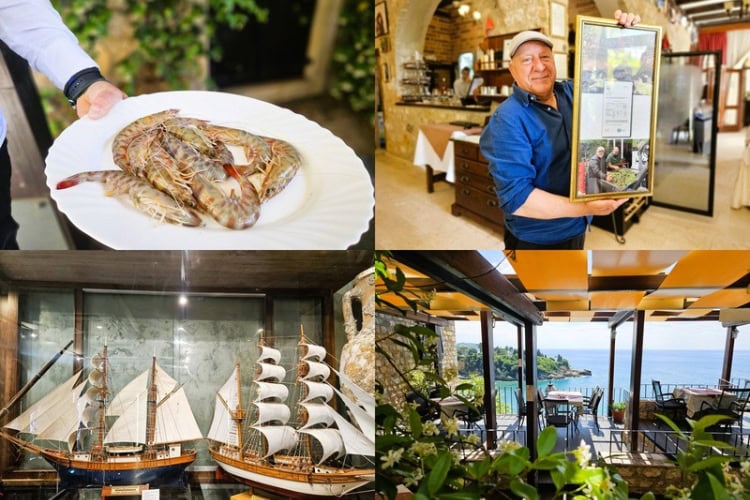
On the open terrace, the sweet scent of blooming jasmine cuts through the air, framing views of the sea and the crescent beach of Mala Plaža below. The kitchen serves only the morning’s catch brought in by local fishermen, while the owner, Gani, pours extra virgin olive oil and a smooth, estate-pressed Cervantes wine from his family harvest.
To mark the 20th anniversary of Montenegro’s independence, Gani’s son, Ćazim, opened the on-site Pirates Museum, showcasing more than 230 authentic artifacts—from ancient amphorae to weapons—that preserve the town’s maritime legacy.
Where Vines Turned to Olives
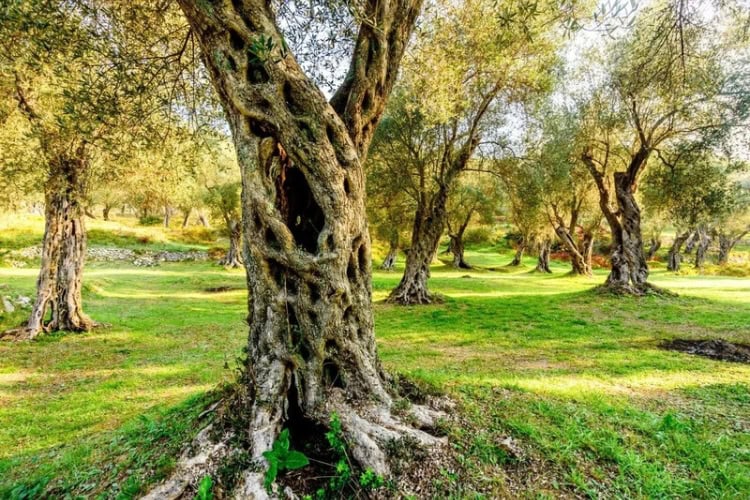
Climbing out of the old town through the second remaining stone gate, contemporary Ulcinj dotted with shops and cafés quickly gives way to the steep hillsides of Valdanos. This deep valley is blanketed by more than 80,000 ancient olive trees.
“Before Ottoman rule, these slopes were heavy with vineyards, but centuries of shifting priorities traded grapes for olives, leaving behind groves that are now over 300 years old,” says the local guide Anton.
Along the narrow asphalt, the car slows down as a shepherd guides a flock of goats across the road.
Nearby stands Uljara Katana, the community mill where families bring their harvests to press their own oil. “I own around 400 olive trees; I bring my olives here all the time,” says Valon, a local grower. “We don’t sell the oil, we use it for our own consumption; my grandma even used to make soap out of the olive oil.”
The road ends at Valdanos Bay, a pebble beach enclosed by rocky ridges. This was once a primary stronghold for Ulcinj’s pirates and the site of bloody sea battles. In the 1980s, the bay was a restricted, elite military resort for the Yugoslav army. Today, it is open to everyone, preserving a rugged environment for swimmers and water sports enthusiasts alike.
Where the River Meets the Sea
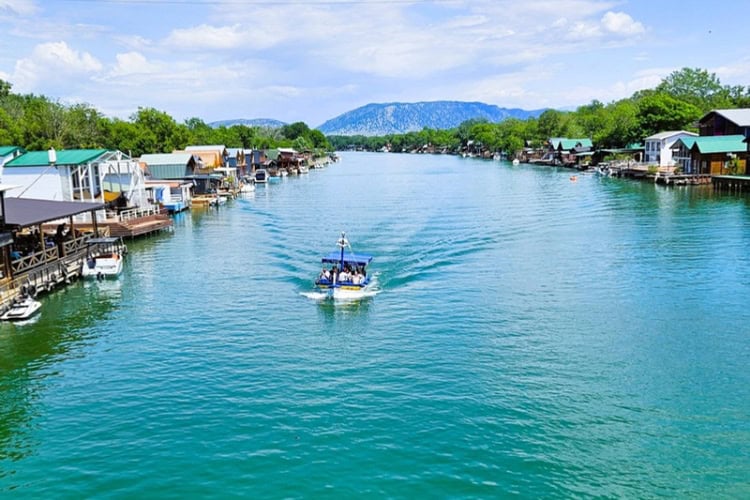
The journey south from the quiet olive groves takes about 30 minutes by car, a scenic drive that opens up into a completely different landscape. Ahead lies Ada Bojana, a triangular river island formed where the Bojana River splits into two branches before emptying into the Adriatic Sea.
Life on the Bojana
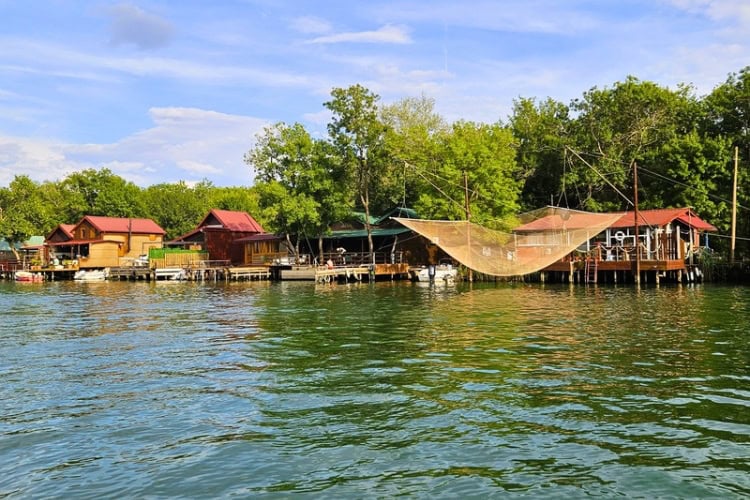
Along the riverbanks, a vibrant community of wooden stilt houses and fishing cabins lines the water. They are diverse and colorful, yet they all share a singular architectural focus: a spacious wooden patio built directly over the slow-moving current, offering immediate access to the river.
The atmosphere here is slow and carefree, which is what drew pop star Rita Ora—whose family roots tie back to the region’s Albanian heritage—to rent a cabin here and spend the summer diving straight off her deck.
Read More: Secrets of the Bay of Kotor: Montenegro’s Most Dramatic Coastline
Long Sands and Healing Springs
After soaking in the river’s slow rhythm, a brief loop back along the coast opens up into Velika Plaža, an unbroken 12-kilometer stretch of fine sand that stands as the longest beach in Montenegro. The vast, wide-open expanse is a world-renowned haven for kitesurfers, but it also serves as a pristine ecosystem where flocks of migratory birds gather at the coastal wetlands.
Just a short distance away lies Ženska Plaža (Ladies’ Beach), a secluded, pine-shaded cove accessible only to women. For centuries, a legendary mystique has surrounded this hidden shore due to its natural sulfurous sea springs, which local folklore credits with deep healing properties and the power to grant fertility to women who bathe in its warm waters.
A Flaming Feast
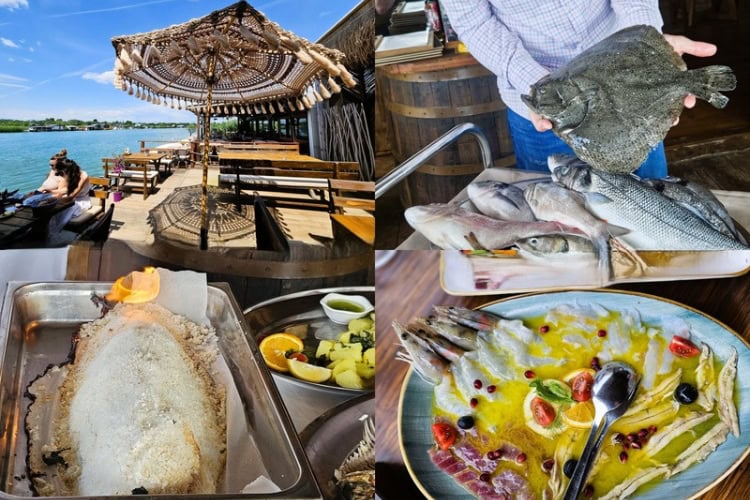
To truly understand the flavor of life on the river, lunch at Tika’s Restaurant is essential. Stepping onto its open-air wooden terrace, you are enveloped by an exotic ambiance shaped by rustic furniture, lush greenery, and a massive glass window looking directly into the open kitchen.
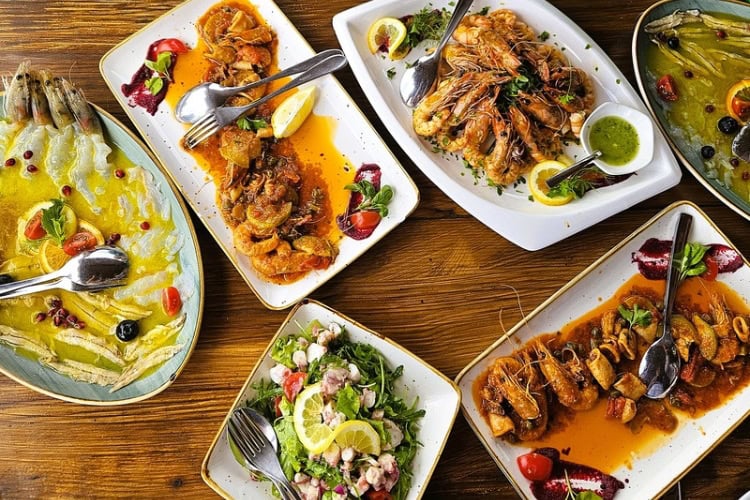
The experience begins as the table starts to be flooded with a tuna carpaccio, gamberi crudo, and fresh octopus salad. Sensing the raw seafood might give some guests pause, the waiter jumps in, “You don’t need any worries; we use a professional abbattitore shock-freezer that flash-freezes the catch to kill any possible bacteria in under a minute, keeping it perfectly fresh.”
As the starters clear, the feast continues with more grilled seafood and fish—including rich dentex, turbot, and sea bream. But the star of the table is a whole branzino encased in a thick, hardened dome of sea salt. After dousing the white crust in a strong Skënderbeu cognac, the waiter strikes a match, setting the entire dish ablaze in a brilliant flash of blue flame. Once the fire burns down, they crack open the salt shell to reveal the perfectly tender fish inside.
From Tikas’ open patio, you can step straight into a boat to begin a lazy loop around Ada Bojana, including a few meters across the invisible border into Albanian waters.
From Salt Pans to Lake Cities
The easternmost coast of Montenegro around Ulcinj is an absolute paradise for swimming. For those wishing to explore closer destinations, a quick drive opens up more fascinating local treasures—from the ruins of medieval Stari Bar to the pristine salt pans of the Solana Ulcinj reserve, where you can watch flocks of wild pink flamingos resting in the wetlands.
Heading inland leads to the medieval lake-city of Svač, where, as local folklore claims, there were once as many churches as there are days in a year.
This southern edge of coastal Montenegro feels like a secret. On this very spot, where the Adriatic meets the river, Montenegro proves that it can tell many different stories on the very same shore.
If You Go
Where to Stay:
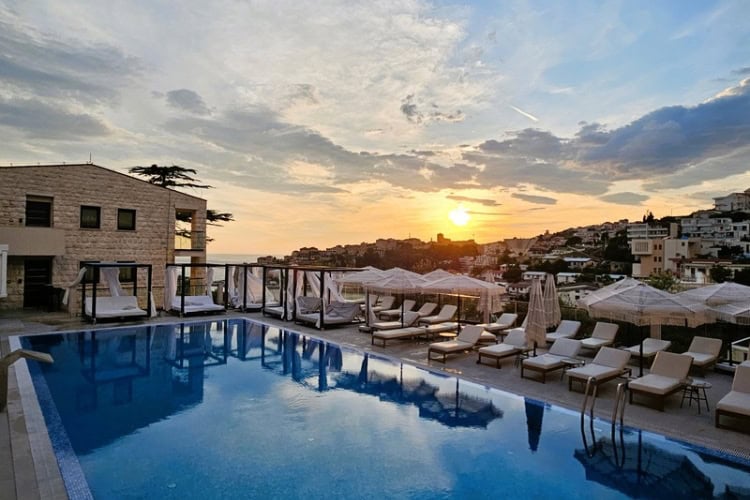
Hotel Mediteran Ulcinj: A premium 4-star hotel located just a short walk from the beach, offering comfortable apartments, two swimming pools, and sweeping views of the Old Town.
Palata Venezia Ulcinj: A unique hotel-museum inside the citadel. Features elegant rooms, a sauna, an outdoor pool, and family heritage exhibits alongside the Pirates Museum.
Where to Eat:
Restaurant Miguel De Cervantes: Located in Ulcinj’s Old Town with a sweeping terrace, serving high-quality seafood and local cuisine paired with the owner’s private Cervantes wine.
Tikas Restaurant: Known for its fresh daily catch and a tropical atmosphere on wooden water pillars, Tikas offers dining right on the Bojana River. Grab an outdoor table right at sunset for the best experience.
More Information on Montenegro: visit-montenegro.com
Need a hand planning your trip? Here are the sites and services we rely on most, from booking tools to travel products we love.
Inspire your next adventure with our articles below:
- Why a Croatian Sailing Charter Is the Perfect Family Vacation
- 10 Affordable Countries in Europe Worth Adding to Your List
Author Bio: Zuzana Zimmermannova is a globally experienced freelance journalist with a passion for storytelling who shares her perspective through articles in magazines, newspapers, and online publications. With a portfolio built across 50+ countries, she delivers compelling travel stories, in-depth interviews, and insightful reports. Her work has appeared in Forbes, GEO, Go World Travel Magazine and other leading publications. She loves uncovering authentic local stories through food, culture, and adventure.
Want to discover more hidden gems and helpful travel tips? Join our free newsletter for the latest travel secrets and travel articles.
We are reader-supported and may earn a commission on purchases made through links in this article.

- Slow Down on Prince Edward Island: A Relaxed Four-Day Itinerary of Dunes, Seafood and Seaside Inns - September 25, 2026
- Two Sides of Cape Town: Table Mountain Trails, Winelands Dawn and Township Voices - September 25, 2026
- St. Pierre and Miquelon: Visit France Without Leaving North America - September 25, 2026
Planning another trip soon? ✈️
Add GoWorldTravel.com as a preferred source on Google. Click the button below so our local guides, packing hacks, and hidden-gem itineraries always show up first when you search!
Add to Preferred Sources