
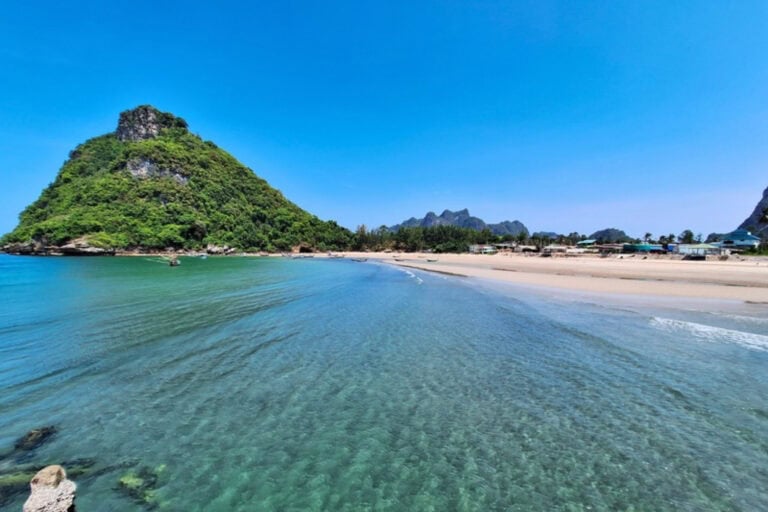
Most visitors experience Thailand’s Gulf Coast through island ferries, beach resorts, or long highway drives between destinations. Yet between the provincial city of Chumphon and the seaside town of Prachuap Khiri Khan lies a remarkably overlooked stretch of coastline — a landscape of fishing villages, coconut plantations, empty beaches and local communities that many travellers simply pass by.
Having spent the past decade living in Thailand and exploring much of the country by road, we thought we knew coastal Thailand reasonably well. The Royal Coast proved otherwise.
As two travellers in our 60s embarking on our first multi-day bikepacking adventure, we chose what seemed the slowest possible way to explore Thailand’s Royal Coast Road: by bicycle.
Over seven days, we travelled roughly 250 kilometres (155 miles) northward along quiet coastal roads, secondary lanes, and village streets.
A Different Side of Thailand
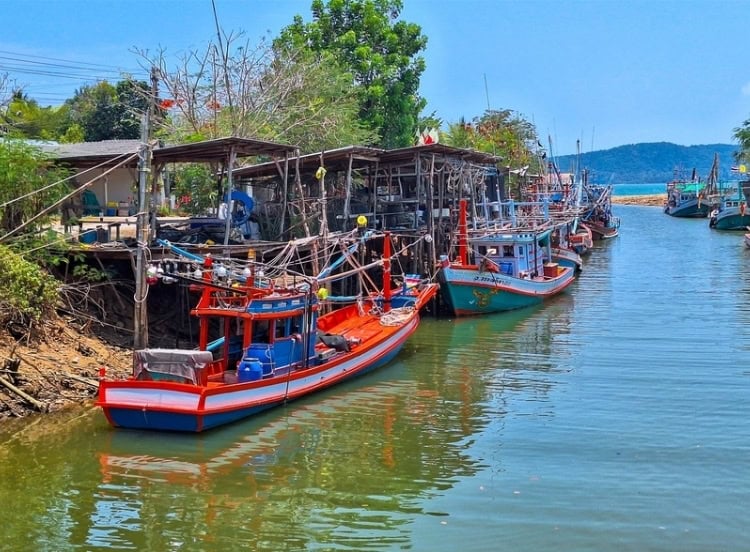
Leaving Chumphon behind, we quickly settled into a landscape that seemed to move at its own pace.
The roads were surprisingly cyclist-friendly, with wide shoulders and little traffic. Palm oil and rubber plantations stretched across the countryside. Small fishing boats rested in sheltered waterways. Water buffalo moved beside a canal while farmers worked nearby.
A Detour to Nong Yai
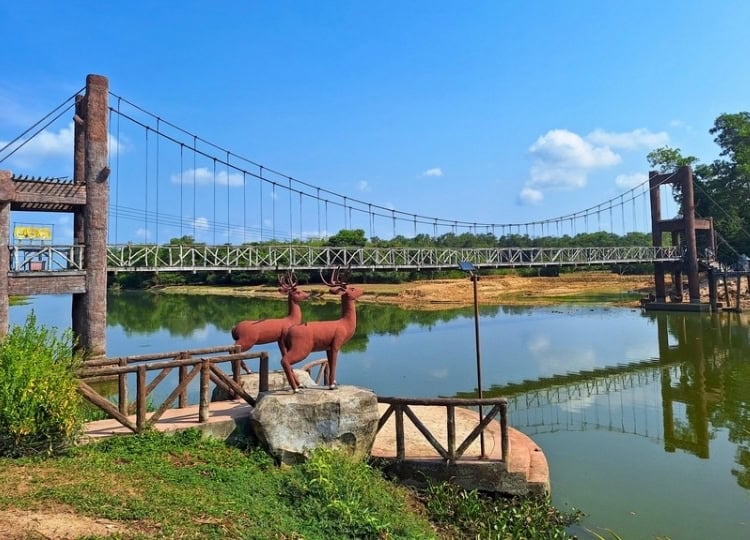
One of our earliest stops was the Nong Yai Royal Development Project, created after devastating floods struck the region in 1989. Pedestrian suspension bridges crossed tranquil reservoirs while deer wandered among the islands. It was peaceful, green, and almost entirely absent of tourists.
Slowing Down to See More
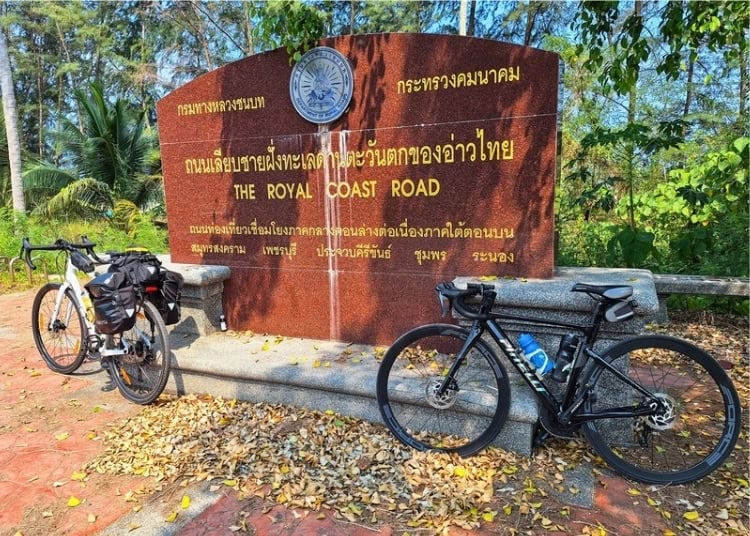
Travelling by bicycle immediately changed how we experienced the landscape.
Distances that would have vanished in minutes by car unfolded gradually. We noticed roadside shrines tucked beneath trees. Children eating brightly coloured ice blocks outside village stores. Fishermen mending nets beneath nipa palms. The ordinary details of daily life became part of the journey.
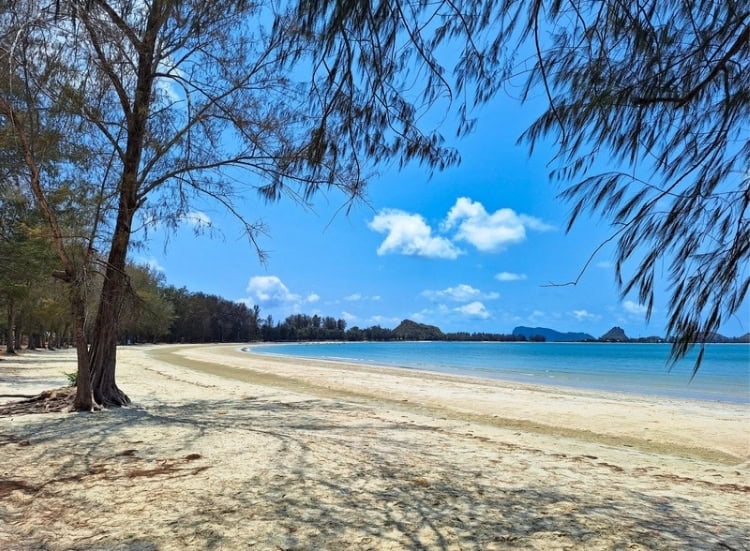
By late afternoon, we rolled into Thung Wua Laen Beach, where the Gulf of Thailand shimmered beneath a line of swaying coconut palms. The golden sand beach stretched for two kilometres, yet only a handful of people were enjoying the clear, calm waters and wide stretches of fine sand.
It would not be the last time we found ourselves wondering where everyone was, given the natural beauty of the location.
Beaches Without Crowds
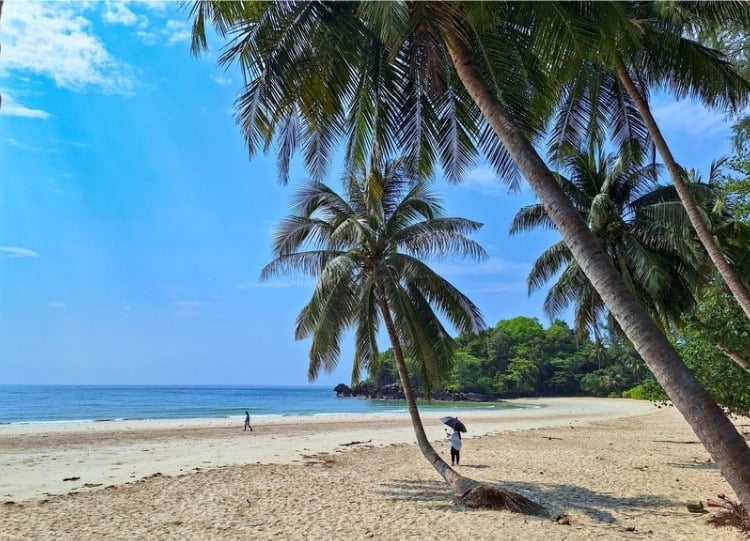
Thailand’s beaches are famous worldwide, but many of the country’s best-known coastal destinations now struggle with the pressures of popularity.
Along the Royal Coast, we discovered something increasingly rare: space.
North of Chumphon, we reached Yai Ai Bay and its adjoining Khai Nao Beach, a broad crescent of pale sand framed by low headlands and shaded by coconut palms and casuarina trees. Apart from a few construction workers, we had the entire bay to ourselves.
Further north, Bang Boet Beach revealed an even more surprising sight. For miles, white sand stretched alongside protected dunes and coastal forest with virtually no development. Royal conservation initiatives have helped preserve much of this coastline, allowing it to remain remarkably unchanged while other beaches elsewhere have filled with resorts and commercial activity.
Some afternoons we cycled for long stretches accompanied only by the gentle sound of waves and the rustle of wind through the trees.
There were no jet skis. No beach clubs. No rows of sun loungers. Just coastline.
The absence of development became one of the region’s greatest attractions.
The Thailand Between the Attractions
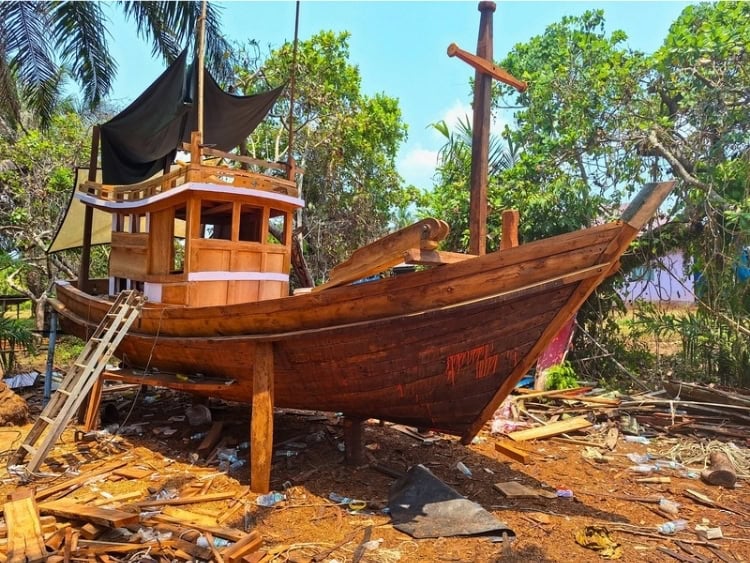
The most memorable moments often occurred far from beaches and viewpoints.
One morning, we stopped to watch local craftsmen constructing a wooden shrimp boat beneath a grove of coconut palms. The vessel stood far from the sea, its timber skeleton slowly taking shape through months of skilled labour. Language barriers prevented lengthy conversation, but smiles and gestures communicated enough.
The Day’s Catch
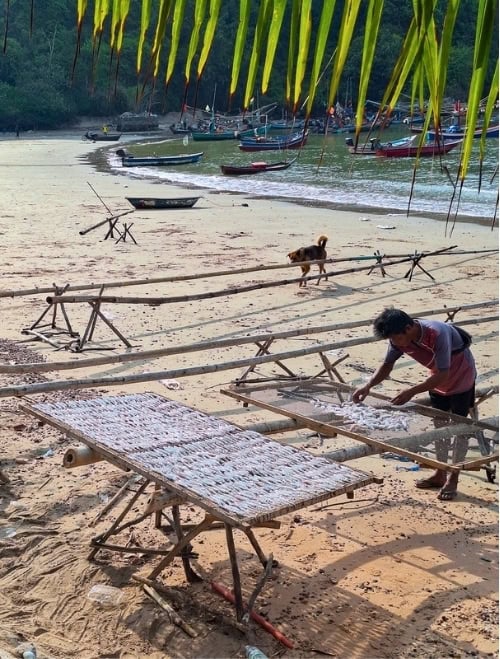
Elsewhere, we encountered fishermen drying squid on racks right on the beach, women making offerings at spirit houses, and families sorting the morning’s catch in driveways overlooking the sea.
In one village, we stumbled upon a group of workers harvesting coconuts with trained monkeys. Watching the animals climb towering palms and send mature coconuts crashing to the ground with loud thuds was fascinating, and offered a glimpse of a tradition still practised in parts of southern Thailand.
These weren’t experiences listed in guidebooks. They simply appeared because we were moving slowly enough to notice them.
Again and again, the Royal Coast revealed itself not through major attractions but through everyday life.
Lunch in a Fishing Village
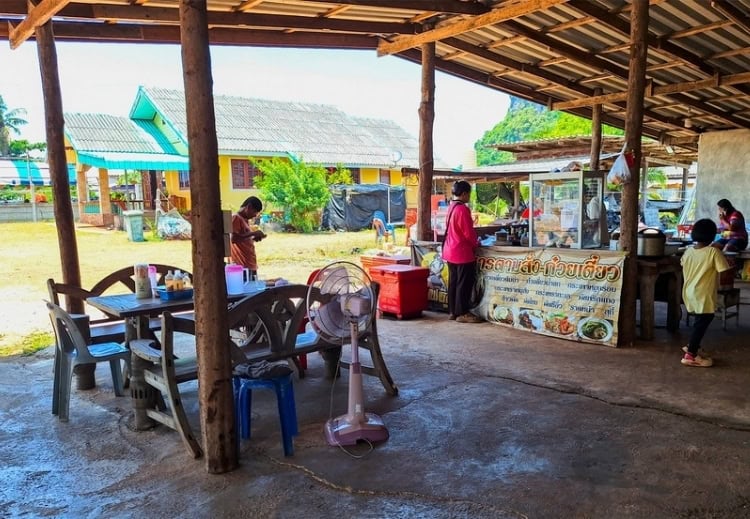
One of our favourite discoveries came in the small fishing village of Ban Thun Thong.
After a hot morning in the saddle, we arrived hungry and unsure where we might find lunch. Google Maps suggested a few possibilities, but the village was small enough that options appeared limited.
Eventually, we found a simple roadside establishment that functioned simultaneously as a convenience store, takeaway outlet, and local eatery.
There was no menu. Little English was spoken.
Rustic timber tables and chairs sat beneath a corrugated roof as local patrons chatted over lunch.
Thanks to Vivien’s basic Thai language skills, we managed to order bowls of noodle soup loaded with fresh prawns. Within minutes, steaming bowls arrived, fragrant with broth and packed with noodles, vegetables, and seafood.
As we lingered over lunch, village life unfolded around us.
People stopped by to collect takeaway meals. Delivery drivers dropped off online shopping parcels. Neighbours gathered to chat while waiting for food.
Experiences like this became a recurring theme along the Royal Coast. On another day, we watched a fisherman arrive at a roadside stall carrying a tub of freshly caught blue swimmer crabs. Within minutes, the catch was being weighed and sold directly to customers. Vivien promptly secured 200 grams for us to take away, delighted by both the quality and the price. It was a small moment, but one that perfectly captured the close connection between local communities and the sea.
Nothing about these encounters had been designed for visitors. That was precisely what made them special.
Read More: A Reset in Phuket: Finding Stillness on Thailand’s Andaman Coast
Heat, Humility, and Flexibility
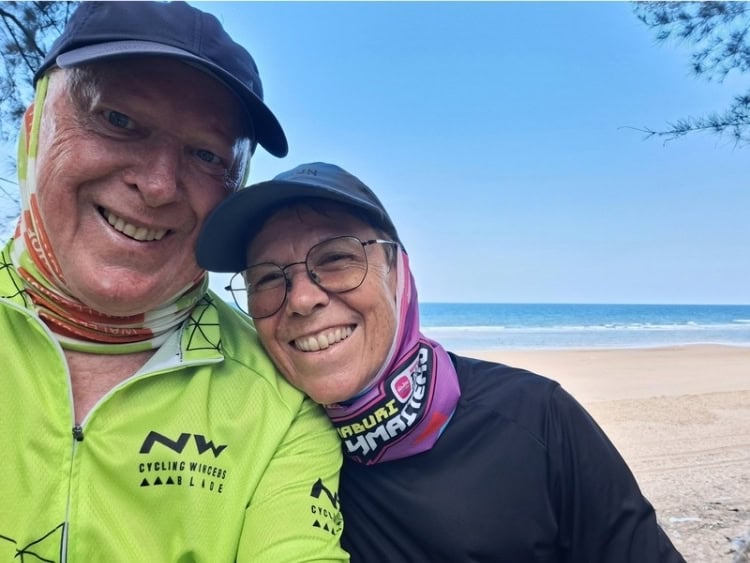
Travelling Thailand’s Gulf Coast in April, the country’s hottest month, came with challenging heat.
Day after day, temperatures climbed above 35°C (95°F), accompanied by relentless humidity and intense tropical sunshine.
One particularly exposed stretch near Bang Saphan proved especially difficult. For nearly fifteen kilometres (9+ miles), we pedalled through the hottest part of the day with little shade and almost no breeze.
On arrival, we retreated to the shaded steps outside a convenience store, drinking water, replenishing electrolytes, and consuming whatever snacks happened to catch our attention.
It was not one of the trip’s most glamorous moments. It was, however, one of its most instructive.
Travel often unfolds differently than planned. The most successful journeys are not necessarily those that proceed perfectly but those where travellers remain flexible enough to adapt.
That afternoon, we abandoned several planned sightseeing stops and chose a shorter route to our accommodation.
The coastline would still be there tomorrow.
Travel insurance is essential for any trip, offering peace of mind and protection. Explore options with SafetyWing or SquareMouth to find the coverage you need.
The Rhythm of Slow Travel
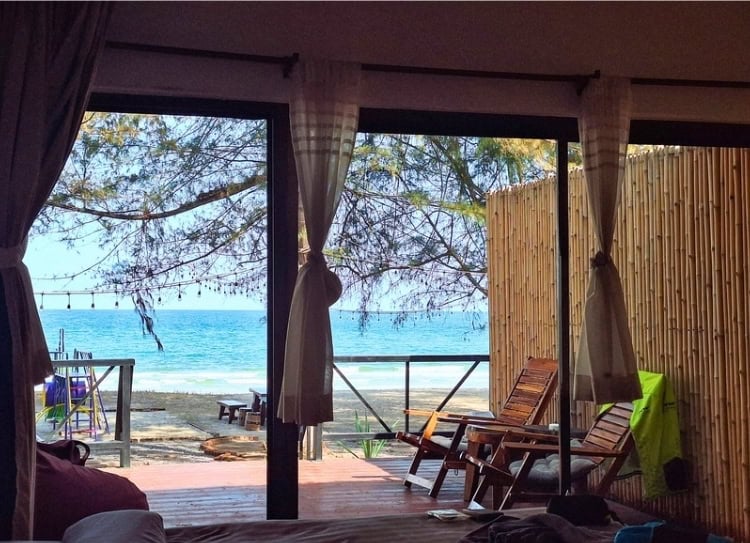
As the days passed, a rhythm emerged.
Mornings began with coffee, route planning, and discussions about the day ahead. On the road, we rode at a conversational pace, stopping whenever something caught our attention.
Sometimes it was a viewpoint. Sometimes a fishing pier. Sometimes it was simply a roadside stall selling freshly cut local fruit.
Travelling slowly encouraged curiosity.
We discovered architectural surprises, including a remarkable treehouse-style café complex hidden among mature coastal forest. We explored markets where stallholders seemed mildly puzzled by two heavily sun-protected foreign cyclists wandering among the produce vendors. We stopped to watch workers husking mountains of coconuts and found ourselves researching Thailand’s coconut industry later that evening.
The journey never felt rushed. And because it wasn’t rushed, it felt richer.
Each evening, we checked into small locally run resorts and guesthouses, most averaging around 1,500 baht (about US$40) per night. They were simple, clean and comfortable, and often just steps from the beach—another reminder that exploring this coastline need not be expensive or complicated. Altogether, it felt far more accessible than the word “bikepacking” might suggest.
An Unforgettable Train Ride
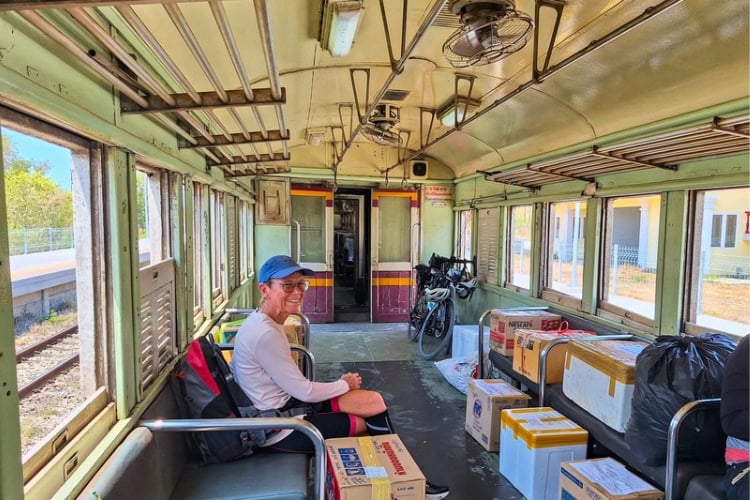
One of the most memorable episodes of the trip involved getting out of the saddle—at least temporarily.
Approaching Hat Wanakon National Park, we encountered an unavoidable problem. The coastal route disappeared, forcing travellers onto a section of Thailand’s busy Highway 4 corridor.
For two first-time bikepackers in their 60s riding loaded bicycles, the highway felt unnecessarily risky.
Instead, we boarded a local State Railway of Thailand train for the short journey between Huay Yang and Waghor.
The train consisted entirely of basic third-class carriages, while our bicycles travelled in the freight compartment among sacks, parcels, coolers, and assorted cargo. Station staff carefully positioned us on the platform and instructed us to load and secure the bikes ourselves using the rope we had brought for exactly that purpose.
When the train finally rattled into Huay Yang station, there followed a brief flurry of lifting, tying, and hurried organisation before we climbed aboard. The entire process felt delightfully improvised.
The journey lasted barely fifteen minutes and only a handful of stops, yet it became one of the trip’s most memorable experiences. Sitting among local freight, with the windows open to the tropical heat, felt less like a transport solution and more like a brief step into another era of travel. For another perspective on slow travel by rail, see Sri Lanka’s Most Beautiful Train Journey.
Arriving in Prachuap Khiri Khan
When we finally rolled into Prachuap Khiri Khan, the destination almost felt secondary.
The town itself is charming, with its sweeping bay, fishing harbour, and relaxed atmosphere. Just before arriving, we passed through nearby Ao Manao, one of the most unexpected places on the entire route. The beautiful crescent-shaped bay sits within the grounds of Royal Thai Air Force Wing 5, meaning visitors enter through a military checkpoint before emerging onto a beach backed by dramatic limestone hills. Families picnicked beneath casuarina trees while dusky langurs moved through the surrounding woodland — an unlikely combination of military infrastructure and natural beauty that somehow works perfectly.
Yet what lingered most strongly in our memories was everything that had come before.
The empty beaches. The fishing villages. The roadside noodle stalls. The coconut groves.
The conversations, observations, and countless small encounters that would have been invisible from a car window.
Along the Royal Coast, we discovered that some of Thailand’s most rewarding experiences are not found at famous attractions at all. They are found in fishing villages, roadside eateries, quiet beaches, and the countless small moments in between.
For another go-slow coastal escape, read Go Slow in Gozo: Unplugging On One of Europe’s Most Peaceful Islands.
If You Go
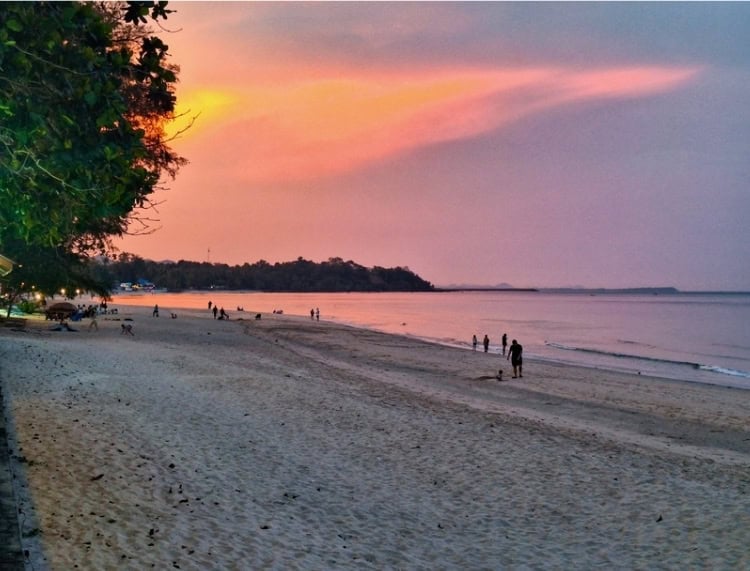
Thailand’s Royal Coast runs along the Gulf of Thailand through the provinces of Chumphon and Prachuap Khiri Khan. While the route can be explored by car, bicycle, or motorcycle, travelling slowly allows time to appreciate the fishing villages, quiet beaches, and local communities that define the region.
The cooler months between November and February offer the most comfortable weather. April, when we travelled, brings intense heat but generally clear skies.
Highlights include Thung Wua Laen Beach, Bang Boet Beach, Ban Krut, Ao Manao, and Prachuap Khiri Khan. Accommodation is plentiful and affordable, with many locally run beachfront resorts and guesthouses available throughout the route.
Need a hand planning your trip? Here are the sites and services we rely on most, from booking tools to travel products we love.
Inspire your next adventure with our articles below:
- Thailand’s Famous Party Island Has a Secret Wellness Scene Worth Knowing About
- Krabi’s Quiet Side: Overwater Villas at Venice Krabi Villa Resort and a Hong Islands Speedboat Day
Author Bio: Michael Cullen is an Australia-born travel writer based in Thailand. His work focuses on slow travel, regional destinations, luxury hospitality, and authentic cultural experiences throughout Southeast Asia. He writes regularly for international travel and lifestyle publications.
Want to discover more hidden gems and helpful travel tips? Join our free newsletter for the latest travel secrets and travel articles.
We are reader-supported and may earn a commission on purchases made through links in this article.

- Exploring Nanjing, China: 48-Hour Trip That Changed My Perspective - October 13, 2026
- Buzzing into Sustainability: How Hotels Are Embracing Beekeeping Initiatives - October 13, 2026
- The Perfect Bay Area Day Trip: Why Sausalito Should Be Your Next Weekend Escape - October 13, 2026
Planning another trip soon? ✈️
Add GoWorldTravel.com as a preferred source on Google. Click the button below so our local guides, packing hacks, and hidden-gem itineraries always show up first when you search!
Add to Preferred Sources