
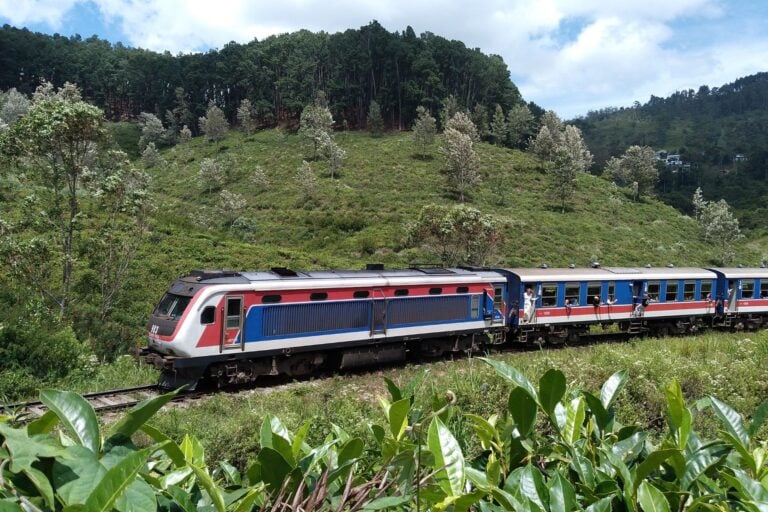
There are train rides people take because they need to get somewhere. Then there are train rides people remember years later because the journey itself quietly became the destination. Sri Lanka’s famous hill country railway belongs entirely to the second category.
The train journey between Kandy and Ella has become one of Asia’s most photographed travel experiences, but the reality of the ride is more layered than the cinematic social media clips that made it famous. It is slower, quieter, greener, and far more atmospheric in person.
The beauty is not concentrated in one dramatic moment. It unfolds gradually through fog, tea fields, mountain curves and long stretches where the outside world feels suspended in soft green silence.
Leaving Kandy Behind
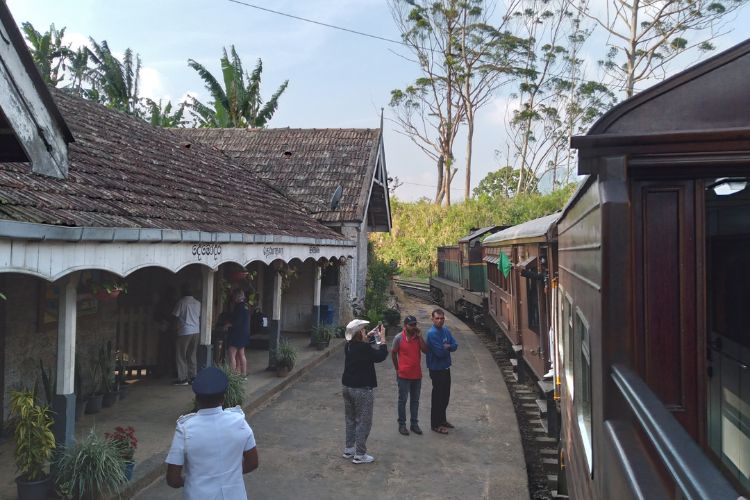
The journey begins in Kandy, Sri Lanka’s cultural capital and one of the country’s most important historic cities.
The station itself feels wonderfully unpolished. Vendors move through the platforms carrying snacks and tea. Families wait beside piles of luggage. Old signs hang above crowded benches while blue train carriages sit beneath the mountain air that already feels cooler than Colombo.
Nothing about the station suggests that this railway route has become globally famous. That is partly why it still works.
As the train slowly leaves Kandy behind, the city disappears surprisingly quickly. Buildings begin thinning into forested hillsides. The air changes. Palm trees gradually give way to pine, eucalyptus and endless rows of tea plantations climbing the mountains like carefully painted textures across the landscape.
This is where the journey begins earning its reputation.
Through Tea Fields and Mountain Mist
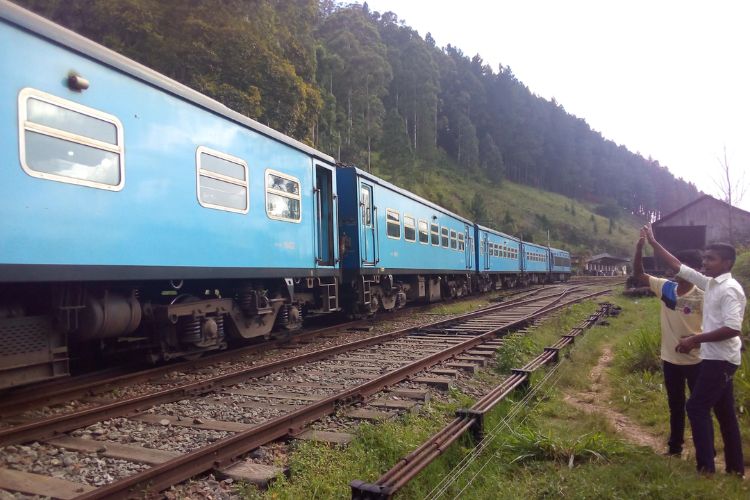
The train does not rush through the hill country. It curves around mountains slowly enough for passengers to watch clouds move across valleys and tea workers appear briefly between the rows of green before disappearing again behind mist.
At one bend in the track, a group of children standing beside a narrow roadside stopped what they were doing just long enough to wave enthusiastically at the passing train before vanishing again behind the tea fields.
Moments like that appear constantly throughout the journey, quietly reminding travelers that this is still a living railway rather than a curated tourist attraction.
Sometimes the train passes waterfalls hidden deep inside the jungle for only a few seconds before the forest closes again. The slowness matters. Modern travel often treats movement as something to minimize.
Flights shrink countries into distances measured only by airport waiting times. Sri Lanka’s hill country railway does the opposite. It stretches the experience intentionally. Travelers are not separated from the landscape here. They move through it at a human pace.
Some sections of the route feel almost impossibly green. Near Nuwara Eliya, the landscape begins resembling something closer to the Scottish Highlands than tropical South Asia. Tea plantations cover nearly every visible hill while fog drifts across the valleys in soft layers.
The temperature drops noticeably here. Small colonial-era buildings occasionally appear between the fields, reminders of the British influence that helped shape Sri Lanka’s tea industry during the nineteenth century.
Life Inside the Train
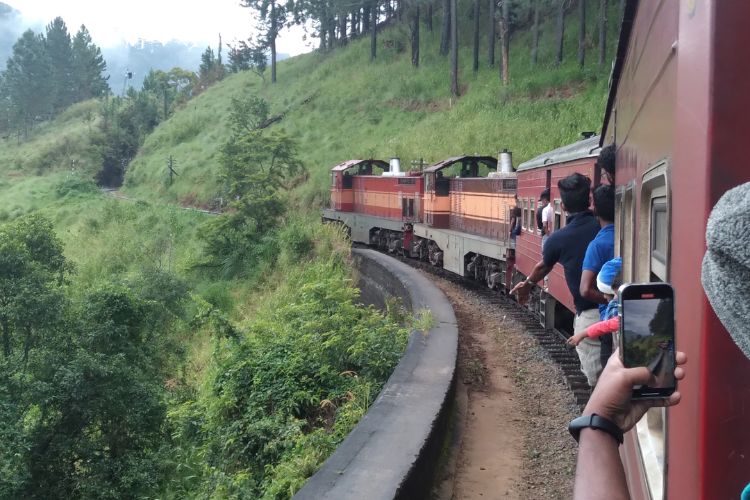
Inside the train, the atmosphere becomes part of the experience itself. Windows remain open. Cool mountain air moves constantly through the carriages, carrying the smell of rain, tea leaves, and damp earth.
Some passengers lean quietly against the windows while others stand near the open doors watching the tracks bend through the hills ahead. The open train doors have become one of the defining images of Sri Lanka’s railway culture.
On paper, it sounds chaotic. In reality, it feels strangely peaceful. Travelers gather near the doorway not simply for photographs but because it offers the clearest connection to the scenery outside.
Mountains appear without glass between them and the viewer. Wind rushes through the carriage. The rhythmic sound of steel wheels against old tracks becomes hypnotic after several hours.
Tea remains deeply connected to the rhythm of the region. Throughout the journey, workers carrying baskets can sometimes be seen moving carefully across the steep plantations. Small roadside tea stalls appear near stations, selling hot cups strong enough to cut through the mountain cold.
The weather changes constantly in the hill country, often within the same hour. Bright sunlight may suddenly disappear behind clouds before rain sweeps briefly across the mountains and vanishes again.
Rather than diminishing the experience, the shifting weather gives the journey much of its atmosphere. The mist softens distant hills until the train appears to move through layers of watercolor landscapes.
Crossing the Nine Arches Bridge
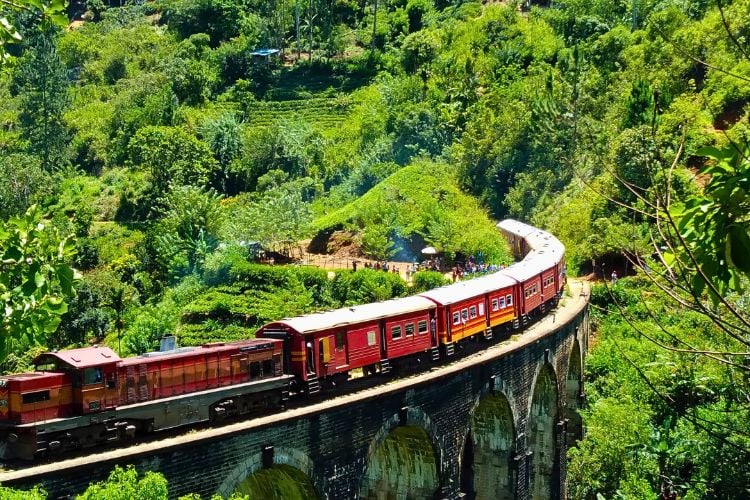
Eventually, the train reaches one of the route’s most famous landmarks: the Nine Arches Bridge near Ella. Hidden among thick jungle and tea-covered hills, the massive colonial-era stone bridge curves elegantly through the landscape as trains slowly cross above the forest floor below.
The surrounding greenery nearly swallows the structure entirely during certain seasons. What makes the bridge memorable is not simply its architecture but its setting. Everything around it feels cinematic without seeming artificial.
The sound of the approaching train echoes through the valley long before the blue carriages appear between the trees. Unlike many globally famous travel spots, the bridge still retains a sense of quiet wonder.
Even with cameras waiting along the hillsides, the atmosphere somehow remains calm once the train finally appears and slowly rolls across the arches.
Ella and the End of the Journey
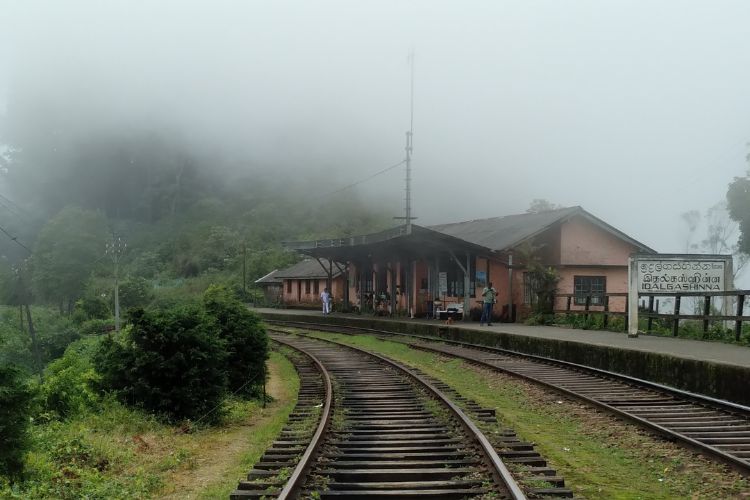
Ella itself has transformed significantly over the years. What was once a quiet mountain town has become one of Sri Lanka’s busiest traveler hubs. Cafés, guesthouses, and rooftop restaurants now line many of its streets.
Yet despite the tourism growth, the surrounding landscape remains remarkably beautiful. The town sits among rolling hills covered with jungle, tea fields and hiking trails leading toward viewpoints like Little Adam’s Peak and Ella Rock.
Mornings often begin under heavy fog before the mountains slowly emerge as sunlight cuts through the clouds.
By the time the train finally reaches Ella, many travelers realize something unexpected: they are in no hurry to leave the station. After hours spent watching mountains drift past open windows, the rhythm of the railway becomes difficult to abandon immediately.
For many visitors, the destination remains memorable. But the journey itself is what lingers.
Why the Journey Still Feels Special
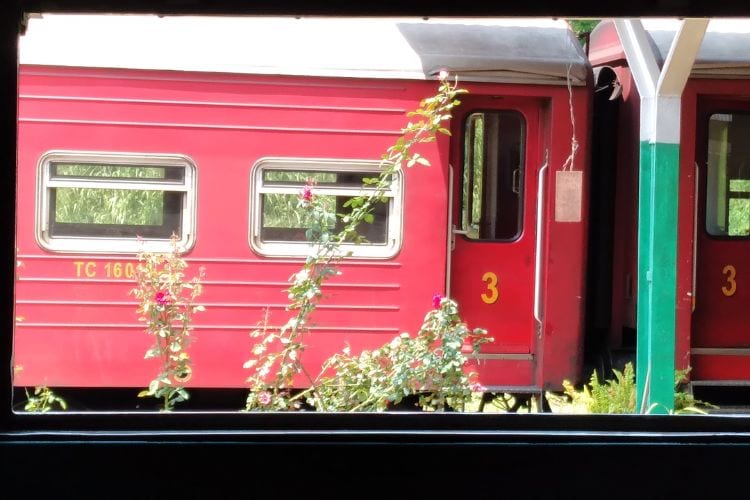
Part of what makes Sri Lanka’s hill country railway special is how little it feels engineered purely for tourism. This is still a functioning railway used daily by locals traveling between towns and villages.
Commuters share space with backpackers carrying cameras. Schoolchildren board at small stations. Vendors continue moving through the aisles selling snacks and tea exactly as they have for years. The experience feels lived-in rather than staged.
That authenticity becomes increasingly rare in globally famous travel destinations. Many scenic journeys eventually become so commercialized that the original atmosphere disappears beneath the performance of tourism itself.
Sri Lanka’s trains have certainly become popular, but they still retain enough unpredictability, imperfection, and local life to feel real.
Beauty Found in Slow Travel
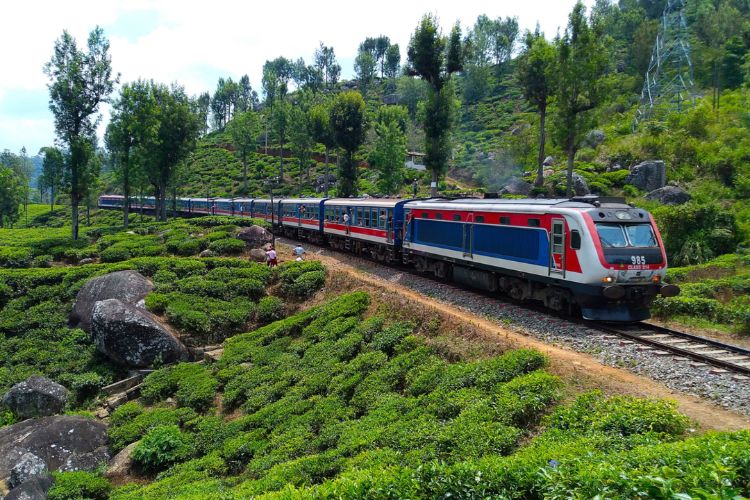
The journey also reflects something broader about travel in Sri Lanka itself. The country rarely reveals its beauty all at once. Its landscapes unfold gradually through changing climates, shifting elevations, and slow transitions between coastlines, forests, mountains, and villages. The train ride through the hill country captures that rhythm perfectly.
By the end of the route, passengers often realize they spent hours doing something surprisingly simple: watching the world pass slowly outside a train window. And somehow, that simplicity becomes unforgettable.
In an era dominated by rushed itineraries and aggressively optimized travel schedules, Sri Lanka’s hill country railway offers something quieter. Not luxury or speed. Not a spectacle every second. Just mountains, mist, tea fields, old railways and the rare feeling that the journey itself was enough.
Note: As of mid-2026, the Kandy to Ella line has been affected by cyclone damage. Travelers should check Sri Lanka Railways for current schedules before planning this journey.
Need a hand planning your trip? Here are the sites and services we rely on most, from booking tools to travel products we love.
Inspire your next adventure with our articles below:
- Inside Galle Fort: Sri Lanka’s Most Beautifully Preserved Colonial City
- Inside Sri Lanka’s Tea Plantations and Elephant Sanctuaries
Author Bio: D.M. Mahmood is a travel writer and storyteller specializing in immersive, locally grounded narratives created through collaboration with local contributors from different cultures and destinations around the world. Over the past two years, her work has covered nearly 40 destinations through a blend of travel features, destination guides, visual storytelling, and culturally driven narratives that focus on atmosphere, human detail, and the everyday rhythm of a place beyond traditional tourist experiences.
Want to discover more hidden gems and helpful travel tips? Join our free newsletter for the latest travel secrets and travel articles.
We are reader-supported and may earn a commission on purchases made through links in this article.

- Along the Gambia River: Markets, Crossings and Chimpanzees - September 14, 2026
- Kagawa, Japan Is the Udon Capital—Where to Eat Sanuki Noodles and How to Get There - September 14, 2026
- Inside the Vatican: An Exclusive Walk Through the Pope’s Private Corridors - September 14, 2026
Planning another trip soon? ✈️
Add GoWorldTravel.com as a preferred source on Google. Click the button below so our local guides, packing hacks, and hidden-gem itineraries always show up first when you search!
Add to Preferred Sources