
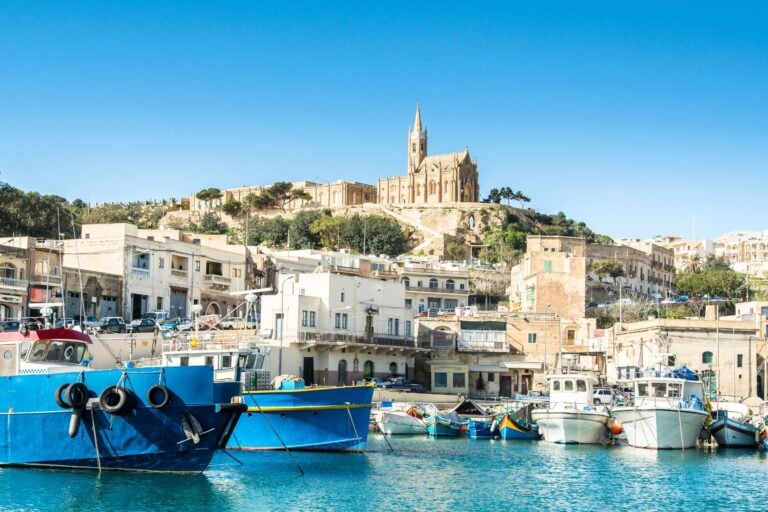

Gozo, Malta’s understated sister island, has quietly earned a reputation as one of the last bastions of serenity, renowned for its relaxed vibes, breathtaking scenery, and laid-back lifestyle.
The slower pace attracts a mixture of older people and clued-up solo travellers, many of whom see Gozo as a welcome antidote to the bustling, overcrowded, more traditional Mediterranean hotspots.
Getting There
Malta and the surrounding islands are served by a single international airport in the town of Luqa, southwest of the Maltese capital, Valletta. From there, it is a 40-minute bus or car transfer to the Cirkewwa Ferry terminal and a mere 25-minute crossing to Gozo.
Ferries leave this port every 15-45 minutes (depending on the time of day) around the clock and are free. You pay a modest fee of €4.65 per foot passenger on the return leg instead.
There is also an alternate route that travels directly from the ferry terminal in Valletta, but it takes longer and is much less frequent.
Rest Stop
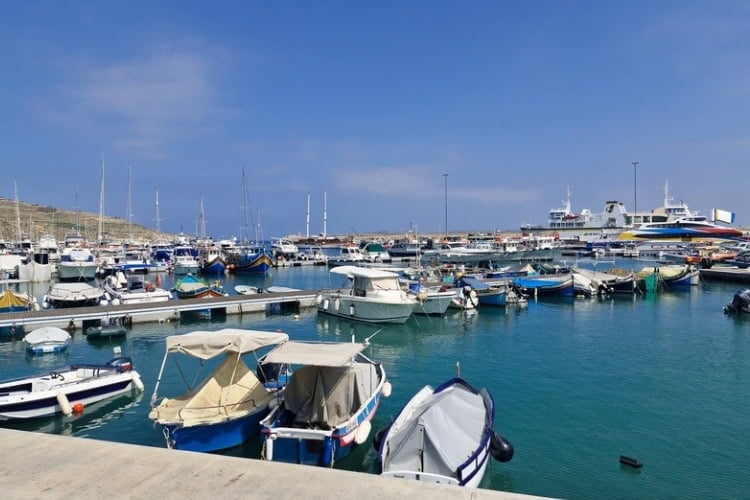
Both ferry options arrive at Mġarr Harbour, Gozo’s gateway to the world, and it’s here your adventure begins.
The north end of the harbour is home to Mġarr Marina, filled with luxurious yachts and fishing boats of all descriptions, and the waterfront is lined with bars and restaurants to suit every taste and pocket. As a general guide, a coffee will set you back around €1.50, and a slice of the traditional Maltese street food, pastizzi, around €0.75.
There are quite a few hotels, guesthouses, and Airbnbs around the harbour area, so a lot of visitors use it as a base. The harbour area is also where you can arrange boat trips and other excursions.
The iconic local beer, Cisk, can be found in almost every establishment, including perhaps the island’s most famous tavern, Gleneagles Bar, reportedly established way back in 1732.
It was heavily damaged by German bombs during World War II, but faithfully rebuilt using local limestone after the war. In more recent history, it was a favourite haunt of thriller writer AJ Quinnell, best known for Man on Fire.
Vantage Points
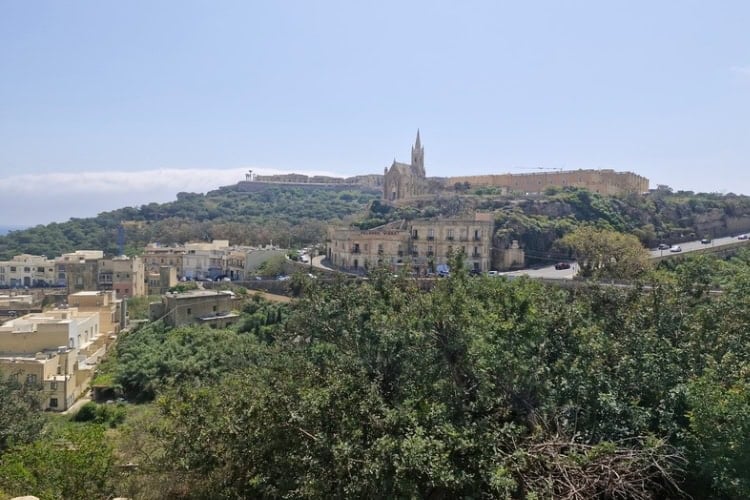
Overlooking Mġarr Harbour is the impressive neo-Gothic Lourdes Chapel, so-called because locals believed that rock formations at the site closely resemble the famous grotto of Lourdes in France.
Following a blessing by Bishop Pietro Pace, a campaign was launched to build a chapel, with construction of the main building eventually coming to an end in 1893.
A statue of the Virgin Mary, known colloquially as ‘Our Lady of Lourdes,’ sculpted by Antonio Busuttil, stands in a natural cavity in the cliffs below the chapel.
Just yards away from Lourdes Chapel is Fort Chambray. It was built in the mid-18th Century by the Order of Saint John (also known as The Knights of Malta), which has close parallels with the Knights Hospitaller, a Catholic military order that rose to prominence in the 12th Century.
Today, a mixture of residential properties and historical landmarks, the stronghold owes its name to legendary French privateer Jacques-François de Chambray, once a Governor of Gozo.
Coastal Walk
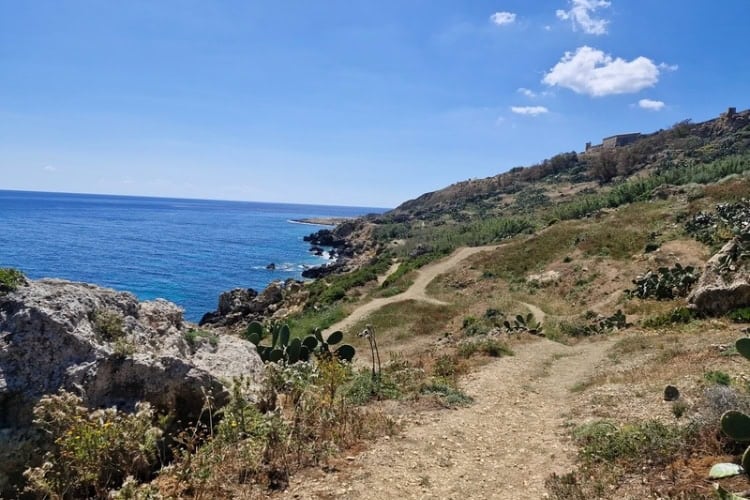
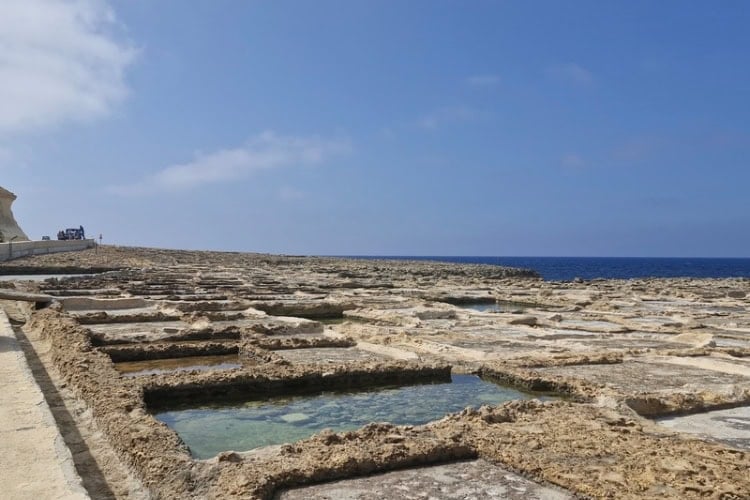
If hiking is your thing, prepare to be spoiled for choice on Gozo. One of the most popular paths takes you from Mġarr Harbour along the rugged coast for a couple of miles to Xatt I-Ahmar salt pans. Be warned, however, that there are dozens of paths and not all can be considered a good time.
Some take you deep into cactus fields, then stop abruptly, stranding you in a prickly predicament, while others lead right off the edges of cliffs. Keep your wits about you, and remember part of the fun is not knowing where the path you’ve chosen is going to take you.
Though the island’s most famous salt pans are situated at Xwejni Bay to the north, the ones at Xatt I-Ahmar offer a convenient, less crowded alternative. And let’s face it, what’s a salt pan between friends?
Both sites consist of a ‘geometric chequerboard’ of shallow, rectangular hand-carved pools. Seawater is channelled into the pools, and when the water evaporates in the sunshine, it leaves behind a crystallised salt residue, which is still harvested and sold today.
Step Back in Time
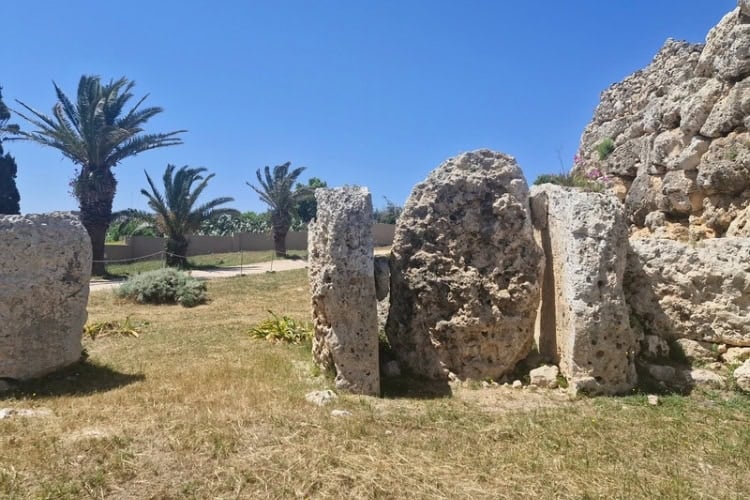
Perhaps the most famous attraction of all on the island of Gozo is Ġgantija Archaeological Park, a megalithic temple complex and UNESCO World Heritage site.
Believed to be the remnants of a ceremonial site used in a fertility rite, the partly-excavated temples were erected during the Neolithic period. This would put them at over 5,500 years old, much older than the Great Pyramid of Egypt, for example, making it among the oldest religious structures on Earth.
The site stands at the edge of the Xagħra plateau facing south-east and encompasses two temples and an incomplete third, along with a small museum, cafe, and gift shop.
Sand and Sea
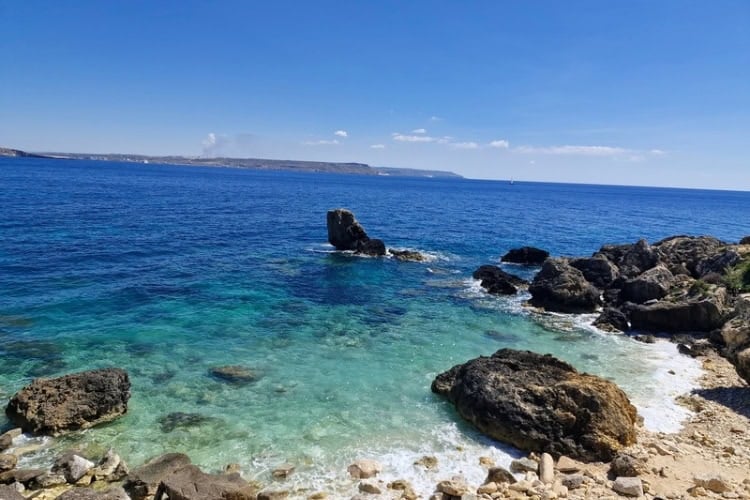
Just down the coast from Ġgantija Archaeological Park lies Ramla Bay, probably Gozo’s most popular beach and known for its distinctive red sand.
However, you would have to get out to Dwejra on the opposite side of the island to investigate the world-famous Blue Hole, widely recognised as one of the most famous diving spots on the continent.
For the uninitiated, it is a spectacular natural limestone sinkhole measuring about 10 meters wide and 15 meters deep, featuring an underwater archway leading to the open ocean.
If you’re a certified diver, the Two Morning Dives in Gozo on Viator is a great way to experience the area up close — small groups, all equipment included, and guides who know every corner of the site.
Situated right next to the Blue Hole is Dwejra Inland Sea, which isn’t really a sea at all, but rather a landlocked saltwater lagoon. From there, you can dive through an incredible 80-meter-long natural rock tunnel out into the open ocean.
Dwejra Bay was also the location of the Azure Window, also known as the Eye of the World, a natural limestone arch formed by collapsing sea caves.
The area once served as a filming location for Game of Thrones and is one of the most iconic images of Gozo. However, sadly, the Azure Window is no more, having fallen into the Mediterranean during heavy storms in 2017.
Victoria
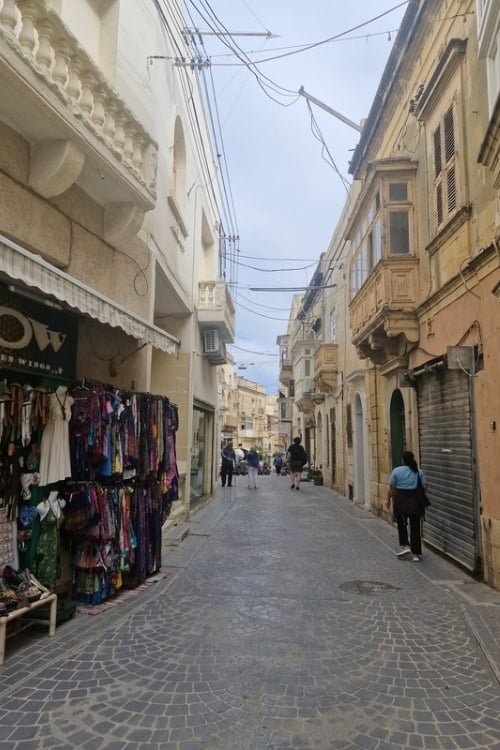
All the exposure to nature and historical sites might give you a yearning for the comfort and security of a built-up area, or as built-up as an area is likely to get in Gozo.
The capital, Victoria, also known as Rabat, is home to less than 7,000 people and has positioned itself as a central hub where rich medieval history blends seamlessly with the modern Maltese lifestyle. It is positively bustling with cafes and small local businesses all set within a rabbit’s warren of sandstone streets and alleys.
At the heart of the town is the Cittadella, which was first fortified during the Bronze Age, and St George’s Basilica, built in the 1670s, also brings the crowds.
Villa Rundle Gardens, a leafy public park situated between Republic Street and the main car park, is another site well worth a visit.
Victoria also functions as something of a transport hub, where you can get local buses to your next destination.
Refuelling
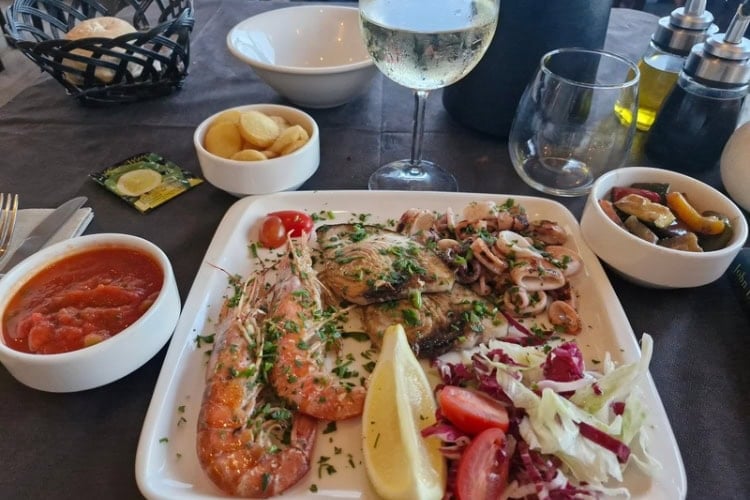
As with Malta, there is a heavy Italian influence on Gozo. You’ll find an abundance of seafood-infused pasta options, alongside the catch of the day and more traditional Maltese fare like the national dish, stuffat tal-fenek (slow-cooked rabbit stew).
One of the most popular restaurants on the island is called Country Terrace, located in Għajnsielem, where the average price per person for a two-course meal with drinks is €35-60. Indeed, the place is so popular you will probably have to call ahead to make a reservation.
If pizza is more your thing, just minutes away from Country Terrace is a relatively new enterprise called Pizza & Co No Limits, which offers delicious all-you-can-eat pizza packages at very reasonable prices.
If You Go
Summers are extraordinarily hot, so the best time to visit is during spring or early autumn.
I stayed at the Grand Hotel Gozo, a 4-star clifftop hotel located directly above Mgarr Harbour with sweeping, panoramic views of the Mediterranean Sea, Comino, and mainland Malta. I found the location perfect for a stay of up to 3-4 days, possibly as part of a wider European trip.
There is a wellness centre on site with a spa and an indoor pool, as well as several restaurants and a cafe/bar. More details and booking information can be found here.
Need a hand planning your trip? Here are the sites and services we rely on most, from booking tools to travel products we love.
Inspire your next adventure with our articles below:
- Malta’s Top 13 Experiences: From Timeless Temples to Coastal Charm
- Malta – A Jewel of the Mediterranean With a Distinctly English Flavour
Author Bio: Chris Saunders is a writer and editor from Wales. He spent several years teaching English in China and has worked extensively in the publishing industry, holding desk jobs ranging from staff writer to associate editor, and is currently employed at a trade publication. His work has appeared in hundreds of magazines, ezines and anthologies around the world, while his books have been both traditionally and independently published. He writes fiction as C.M. Saunders.
Want to discover more hidden gems and helpful travel tips? Join our free newsletter for the latest travel secrets and travel articles.
We are reader-supported and may earn a commission on purchases made through links in this article.

- Darwin, Australia’s Northernmost Capital, Combines Vibrant Markets, Waterfront Life and Access to Kakadu and Litchfield - October 25, 2026
- Paarl: South Africa’s Secret Winelands Escape Where You Can Stay in Historic Wine Tanks - October 25, 2026
- A Quest for the Best Frango Assado in Portugal’s Algarve - October 24, 2026
Planning another trip soon? ✈️
Add GoWorldTravel.com as a preferred source on Google. Click the button below so our local guides, packing hacks, and hidden-gem itineraries always show up first when you search!
Add to Preferred Sources