
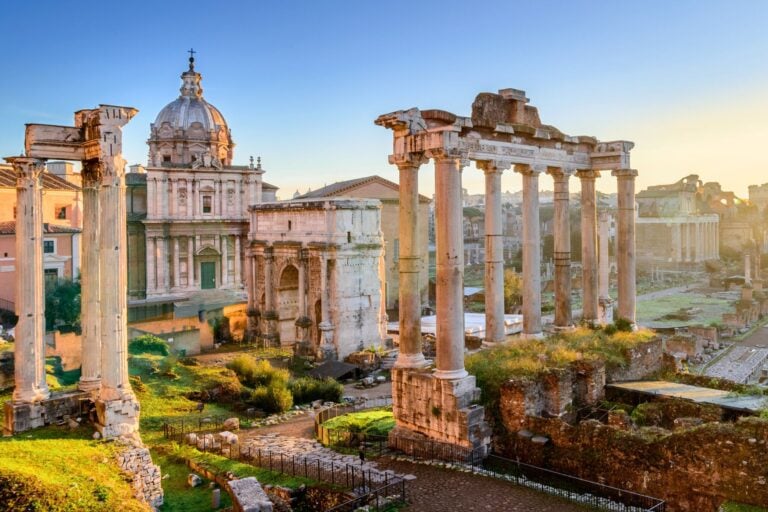
Rome is known as the Eternal City. Its ruins and monuments, covering a massive 3,000 years of history and culture, make it an exciting place for tourists. This fascinating capital city of Italy has so much to offer visitors that return trips may be needed to explore its innumerable sights.
But what if this is your first time in Rome and you want to see as much as possible? You would then need an itinerary that covers all the unmissable spots.
This guide will take you to the main attractions of Rome that are not to be missed if you are on your first or only visit to this great city.
Begin In Ancient Rome
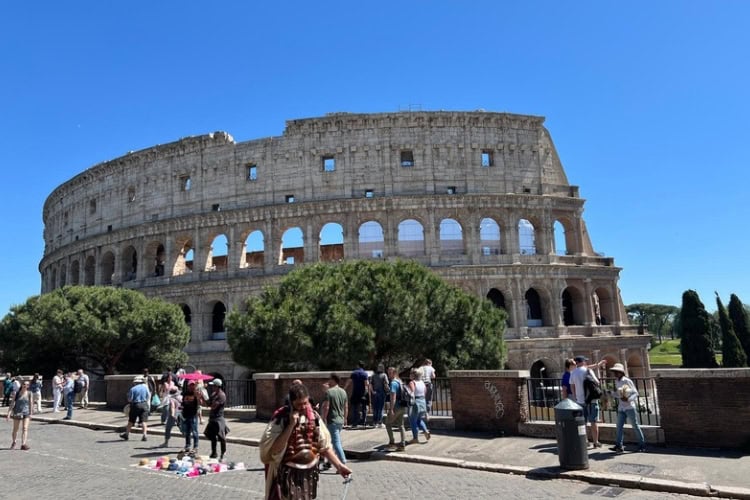
Our first visit to Rome began with the exploration of the Colosseum, certainly the most well-known Roman sight. We visited in prime tourist season, which means there was an inundation of visitors from around the world. But just like us, with some prior planning involved, you too can enjoy your trip to this iconic sight.
The Colosseum, or Amphitheatrum Flavium, opened in AD 80. It could seat around 55,000 spectators who would gather to watch gladiator contests, wild animal hunts, public executions and staged battles.
Walk through this architectural marvel built of massive stone blocks with 80 arched gate entrances and feel transported into that ancient world.
It is essential to book your tickets ahead of time and wear comfortable shoes (there is a lot of walking involved). Also, plan to arrive early in order to navigate the lines of visitors.
Continue To Palatine Hill
After the Colosseum visit, it’s just a short walk to a trio of super attractions.
Start at the Arch of Constantine. This massive triumphal arch was built in AD 315 by Emperor Constantine to mark his military victory.
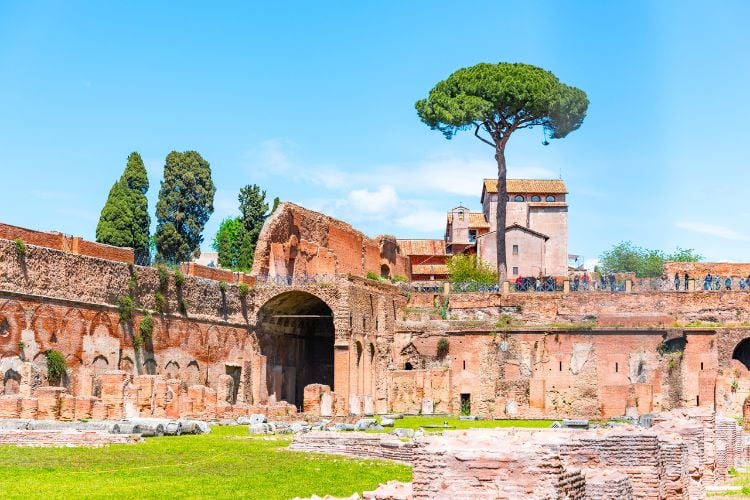
Continue on to Palatine Hill, the centermost of the famous seven hills and the birthplace of Rome. Here you can take in magnificent views of the city. Legends say that this is where Romulus decided to found the city of Rome after murdering his brother, Remus.
Walk through the ruins of the ornate Imperial Palace built by Emperor Domitian (AD 81–96), which also became the residence of all successive Roman emperors.
Here you will find the Palatine Museum, housing archaeological treasures; the Palatine Stadium, which is more of a garden; the House of Augustus, the first Roman Emperor; and the House of Livia, the third wife of Augustus.
The Roman Forum
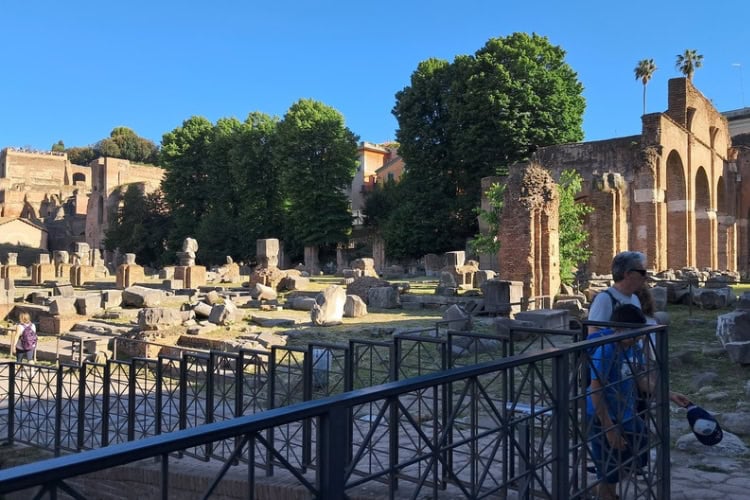
Finally, the prime attraction in this archaeological park is the Roman Forum. This was the political, religious and economic heart of ancient Rome.
It is a surreal feeling to see the Temple of Caesar, where Julius Caesar was cremated, to walk along the Via Sacra, the ancient main street and be among the marvelous ruins of temples, basilicas, gates and government buildings.
My favorite was the House of the Vestal Virgins. This was where the priestesses who tended to the eternal flame lived.
Marvel Of The Pantheon
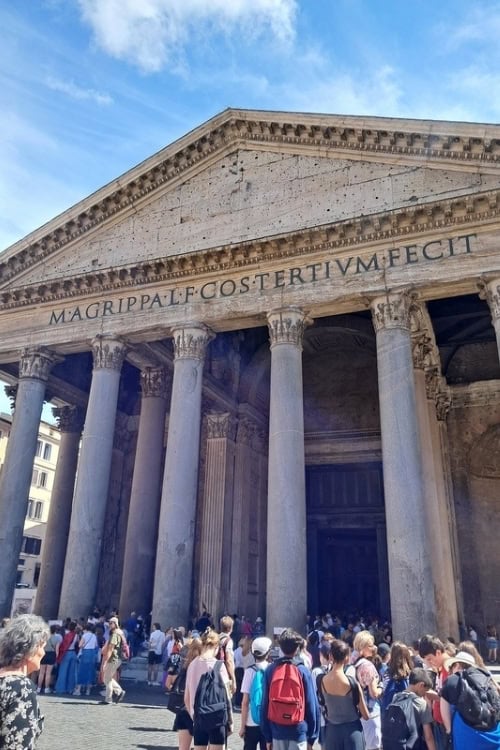
Our ancient Rome tour concluded with a visit to the other ancient architectural marvel, the Pantheon. Once again, it is important to book your tickets early and arrive early to beat the crowd.
Originally built around 27 BC, the Pantheon is one of the best-preserved buildings of the ancient Roman world. The Pantheon that we see now was rebuilt by Emperor Hadrian around AD 125 and is now the Basilica of Santa Maria ad Martyres.
Once inside, you will see its most famous feature, the largest unreinforced concrete dome in the world, and the oculus on top to let in light and air.
Baroque Era Rome
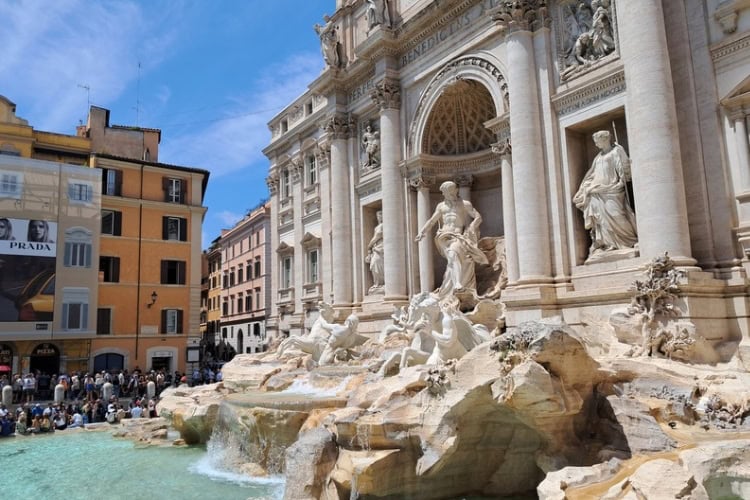
The Pantheon is the perfect springboard into Baroque-era Rome. You are now a short walk from Piazza Navona and Trevi Fountain. The fountain is arguably the most popular tourist spot in Rome after the Colosseum.
Piazza Navona, a public plaza, is built on the remnants of the 1st-century AD Stadium of Domitian. It follows the oval shape of the ancient racetrack.
Feast your eyes on the regal Fountain of Four Rivers designed by Bernini. Also, admire the Baroque church of Saint Agnese in Agone as you sit in one of the many cafes in the area.
Our next stop, Trevi Fountain, photos and videos of which I had seen countless times before, was truly spectacular. Completed in 1762, this highly ornate fountain depicting the sea god Oceanus on a seashell chariot is the largest Baroque masterwork in Rome.
You can still view the fountain for free from the surrounding areas. However, visitors are now charged a fee to enter the inner perimeter.
We completed our Baroque era tour with a stop at Spanish Steps, just a 10-minute walk away. This 135-step colossal staircase from 1725 connects the Piazza di Spagna at the bottom to the Piazza Trinita dei Monti, which is up the steep slope.
If you have the time or the energy, do visit the Trinita dei Monti church, which dominates the skyline at the top.
At the bottom, also enjoy the pretty Barcaccia fountain designed like a moored boat by Pietro Bernini in 1627. Its water source is an aqueduct from 19 BC.
Capitoline Museums Of Rome
Although Rome itself can be thought of as an open-air museum, there are a variety of museums that cover the illustrious history of this city. Museum lovers must include a visit to some of the most important ones.
We started with the Capitoline Museums, or Musei Capitolini, established in 1471 after Pope Sixtus IV bestowed a few bronze statues to the people of Rome.
The museums consist of two buildings: Palazzo Nuovo and Palazzo dei Conservatori. They face each other across the Piazza del Campidoglio, a square that is atop the summit of the Capitoline Hill, the most important of the seven hills of Rome.
The square and the magnificently expansive stairway were designed by Michelangelo. However, the entire construction took so long that Michelangelo did not live to see his completed masterpiece.
Inside the museum, you will see the gigantic bronze statue of Marcus Aurelius, the replica of which graces the square outside. Take a look at the many invaluable sculptures, statues, mosaics and paintings.
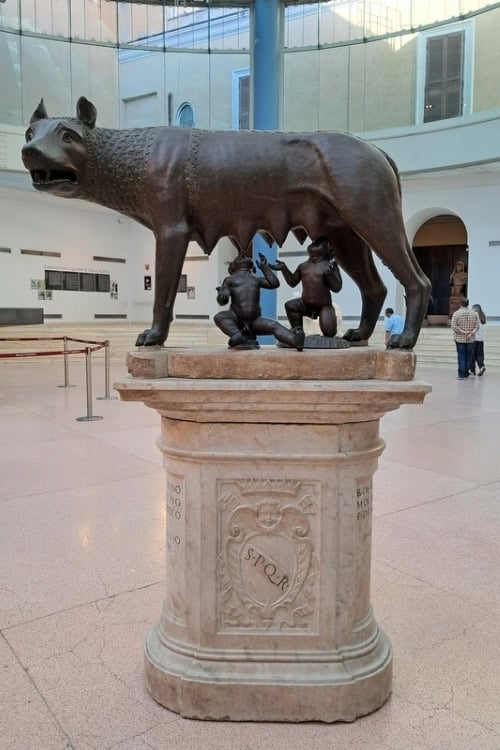
My favorite was the Capitoline Wolf sculpture, which depicts a she-wolf suckling Rome’s mythical founders, Romulus and Remus. It has long been attributed to the 5th century BC, though modern dating methods suggest a medieval origin.
Step Into Villa Borghese
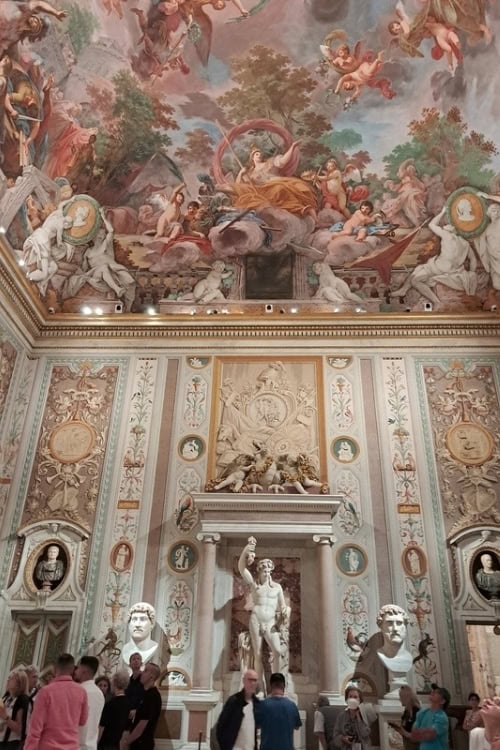
For a very different kind of museum visit, our next destination was Villa Borghese, one of Rome’s largest public parks. The sprawling complex, built between the 17th–20th centuries, consists of many historic buildings, parks and beautiful gardens with sculptures and monuments.
We enjoyed our visit to the Galleria Borghese, which exhibits an eye-popping collection of Renaissance and Baroque art and sculptures. All of which is housed in equally magnificent palace rooms.
After the gallery, we took a garden tour for a glimpse of the 80 hectares of green areas originally developed by Cardinal Borghese in 1606.
Following a complete redesign in the 19th century, the gardens now showcase beautiful English gardens, piazzas, monuments, a lake and garden sculptures.
Visiting Vatican City
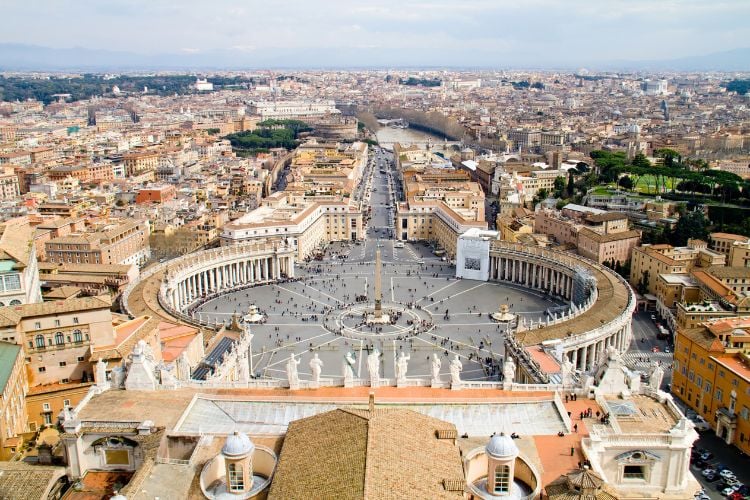
A visit to Rome is incomplete without exploring Vatican City. This is the world’s smallest country and is completely enclosed by the city of Rome.
We started at the Vatican Museums. Our experience began with walking along the impressive Vatican walls, and soon we were part of a huge crowd with timed entry tickets that were lining up for the security check. Thankfully, that did not take too long.
This is one of the largest museums in the world and there is a lot to see inside. Everything here, from the floors to the exhibits to the ceilings, is stunning. We had to have a spring in our step to not miss masterpieces like the incredible Raphael Rooms and the fantastic Animal Hall.
Our Vatican Museums visit was completed with a visit to the iconic Sistine Chapel. This is where the cardinals gather in conclave to elect a new pope, most recently in May 2025.
Leave enough time to appreciate the magnificence of Michelangelo’s ceiling, especially The Creation of Adam. Other highlights are his painting of The Last Judgment and the many frescoes and biblical paintings that form the decor.
Photography is prohibited here, but sadly we saw people surreptitiously clicking pictures.
Basilica And Square
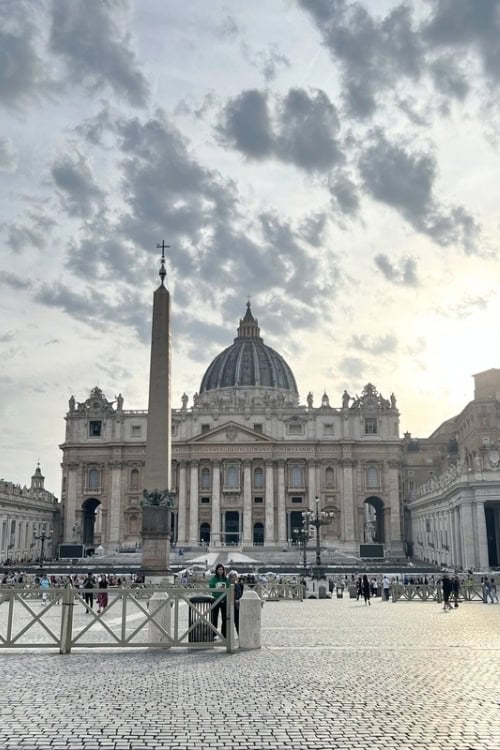
Photo by Susmita Sengupta.
Exit the museums to head to the 16th-century St. Peter’s Basilica, for which you have free entry. Once again, be aware of the extremely long lines to enter. Surprisingly, the lines were not that long for us during our midday entrance.
Admire the dome by Michelangelo, the bronze canopy built by Bernini for St. Peter’s tomb, and, of course, Michelangelo’s Pietà, the lovely masterpiece of Mary holding Jesus after his crucifixion.
We completed our Vatican visit at St. Peter’s Square. The stunning open space and entrance forecourt for St. Peter’s Basilica were designed by Bernini in the 17th century.
This is the plaza where papal blessings and papal masses are held. Try to get there early, as the crowds are formidable in the summer months, as we found out.
Enjoy a look at the Egyptian obelisk, the gorgeous fountains, and the magnificent Doric colonnades that frame the square.
If You Go
Where to Stay
- Antico Albergo del Sole al Pantheon: this four-star hotel sits right on Piazza della Rotonda, facing the Pantheon, with most of the sights in this itinerary within walking distance. Learn more here.
- Hotel Navona: a three-star hotel a short walk from Piazza Navona and the Pantheon. Guests consistently praise the staff and the location. Learn more here.
Tours and Experiences
- Colosseum, Roman Forum and Palatine Hill Guided Tour: entry to all three sites with a licensed guide, backed by more than 25,000 reviews. Learn more here.
- Vatican Museums, Sistine Chapel and St. Peter’s Basilica Tour: priority entry, 20 guests or fewer and the Scala Regia shortcut into the basilica. Learn more here.
- Borghese Gallery and Gardens Small-Group Tour: guaranteed entry to one of Rome’s hardest tickets to get, with a group capped at 15. Learn more here.
- Pantheon Small-Group Tour: an hour inside with skip-the-line entry and a guide. Learn more here.
Tickets and Timing
- Colosseum tickets are issued in your name and cover the Roman Forum and Palatine Hill for 24 hours. Bring matching photo ID.
- The House of the Vestals and House of Augustus are SUPER sites and need the Forum Pass SUPER or a Full Experience ticket.
- The Pantheon, Galleria Borghese and Vatican Museums all use timed entry, so reserve ahead.
- The Vatican enforces a dress code: cover your shoulders and wear pants or skirts that reach the knee.
- It costs a small fee to step down into the Trevi Fountain basin during the day. Viewing from the piazza is free.
Need a hand planning your trip? Here are the sites and services we rely on most, from booking tools to travel products we love.
Inspire your next adventure with our articles below:
- Naples, Italy: The City I Didn’t Expect to Love (But Did)
- Why Art Lovers Are Calling This Florence Gallery ‘Better Than the Louvre’
Author Bio: Susmita Sengupta, an architect by background, from New York City, loves to travel with her family. She writes frequently for Go World Travel and other online travel magazines such as GoNomad, Matador Network, Travel thru History, In the Know Traveler and others.
Want to discover more hidden gems and helpful travel tips? Join our free newsletter for the latest travel secrets and travel articles.
We are reader-supported and may earn a commission on purchases made through links in this article.

- Essential Rome for First-Time Visitors: Colosseum to Vatican in One Smart Itinerary - September 26, 2026
- Shipwrecks, Sea Turtles and a Civil War Fort: A Seaplane Day Trip to Dry Tortugas - September 26, 2026
- Slow Down on Prince Edward Island: A Relaxed Four-Day Itinerary of Dunes, Seafood and Seaside Inns - September 25, 2026
Planning another trip soon? ✈️
Add GoWorldTravel.com as a preferred source on Google. Click the button below so our local guides, packing hacks, and hidden-gem itineraries always show up first when you search!
Add to Preferred Sources