

Booking a Crystal Cruise that begins in Mumbai, India, crosses the Indian Ocean, and ends in Mombasa, Kenya, gave us the perfect excuse to spend several days exploring Mumbai.
We had already traveled extensively through northern India and welcomed the chance to experience the challenges of another region. Visiting this major coastal city in Maharashtra felt like an exciting beginning to the journey ahead.
Arrival in Mumbai
The four flights spanning 36 hours from Guadalajara, Mexico, to Mumbai, India, left my husband and me depleted. We tottered to the Mumbai International Arrivals Hall at 5 a.m.
Perspiration pooled, then streamed down my wrinkled blouse in the stifling terminal. We ached for speedy relief. However, joining the three-hour line to process our Indian visas, we knew we had to summon patience and practice Hindu prayers.
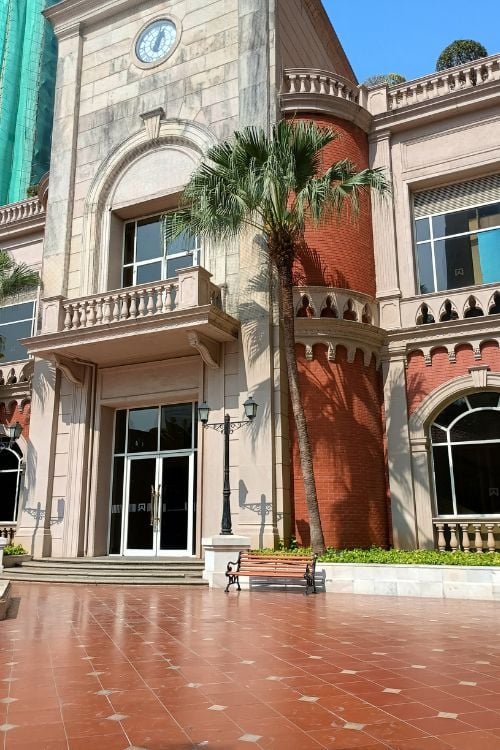
Our eventual respite was the ITC Grand Central Hotel Mumbai. Reminiscent of British Colonial splendor and Victorian Renaissance architecture, it cocooned us in luxury. Joining other well-heeled international guests for high tea in Frederick’s Lounge, I felt whisked back to the glory of late 19th-century Bombay.
First Morning
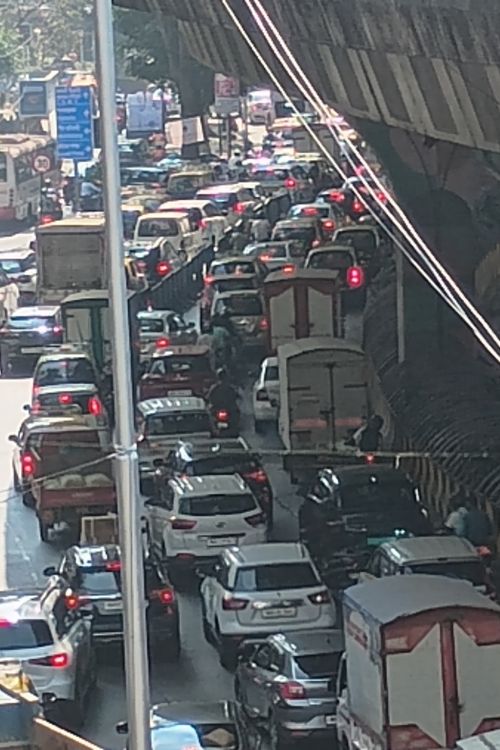
The next morning, from the cupola overlooking the manicured lawn, I looked at the chaotic happenings on the streets outside the hotel walls. Cars, motorcycles, trucks, buses and tuk-tuks jammed to a standstill, horns blaring, sirens wailing and frustrated motorists shouting. Just routine Mumbai road rage.
I dreaded leaving the confines of this sanctuary. However, the Dharavi Slums, the largest slum in Asia, waited to be seen, heard, smelled and experienced.
Leaving our gleaming refuge with white-gloved staff, off we went with our hired driver into the snarled traffic and the real life in Mumbai, to meet our Dharavi guide.
From Film Image to Live Reality
While in the planning stages of our trip to Mumbai, India, we reflected on the 2009 Academy Award Best Picture, Slumdog Millionaire. The film, which won eight Academy Awards, including Best Picture.
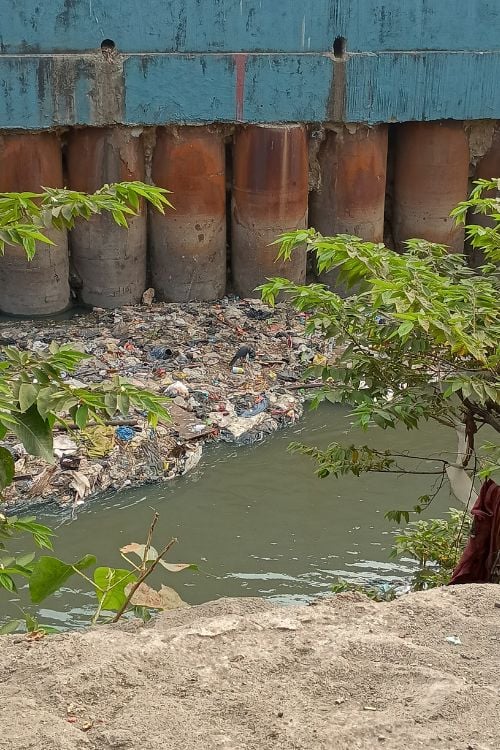
Cinematographers captured unforgettable and unforgiving scenes in the neighborhoods of Mumbai’s Dharavi Slums. These included child exploitation, poverty, crime, violence and masses crossing a bridge into their world of hurt. One scene showed a young Jamal jumping into Mahim Creek, clogged with rotting garbage and brown sludge.
With the movie’s acclaim, these slums became an unlikely attraction.
Meeting Our Guide
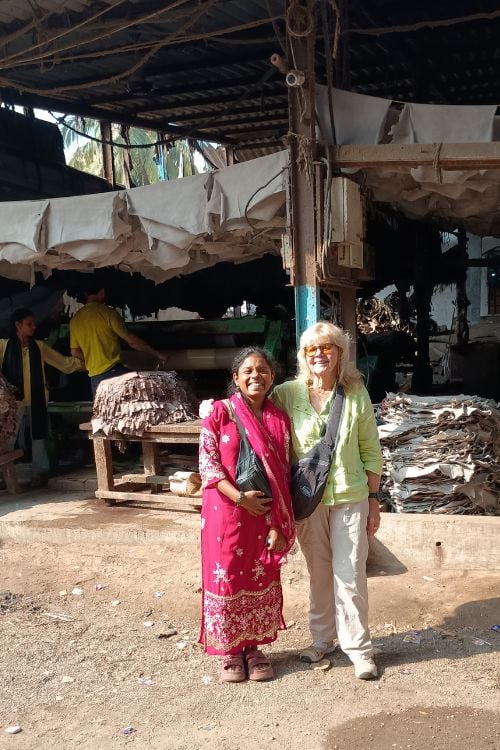
We met Pooja, a petite beauty, outside the office of Magical Mumbai Tours after she got off her husband’s motorcycle, and the two shared a quick kiss. They looked like teenagers, but life in the slums had clearly taken its toll.
Born and raised in Dharavi, Pooja welcomed us with the traditional Hindu greeting of namaste. She said she was proud to guide us through her community and reveal the positive side of the 2.1-square-kilometer area of reclaimed mangrove swamp, which she shares with a million other residents.
The three of us crossed the bridge above a wide expanse of railroad tracks. We then went down an incline into the staggering Dharavi Slums, wedged between the Western and Central Railway stations.
The emotional crossover proved significant. My husband and I immediately felt we had entered a world incapable of sustaining human habitation.
First Impressions of Dharavi
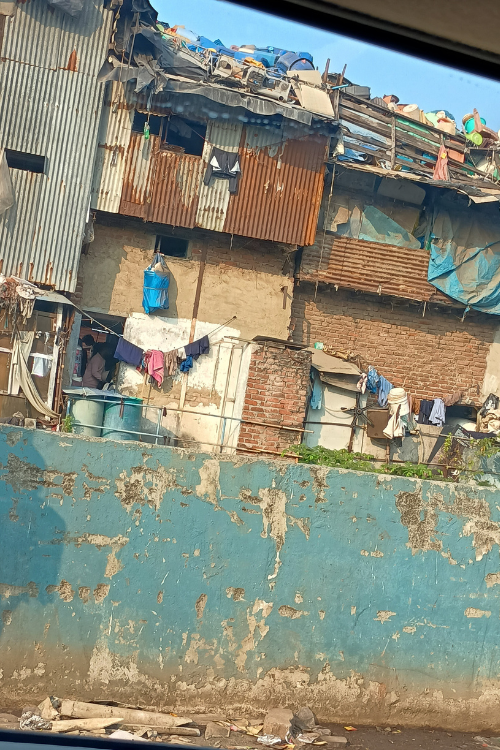
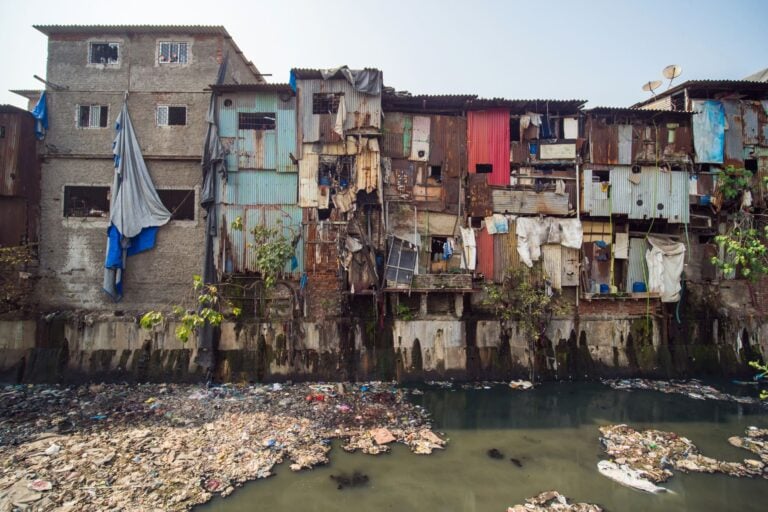
At first sight, corrugated-tin shacks, built one atop another, lined the Mahim Creek. Blue tarpaulins covered large sections of collapsed walls to shield residents from rain and sun. Clothes hung from dangling ropes against crumbling structures.
These makeshift dwellings, most housing multi-generational families, clung to the embankment of the stream. The stream itself was littered with garbage, raw sewage and waste from unimaginable shreds of life.
The visible poverty and stench overwhelmed me, but for Pooja, this was home.
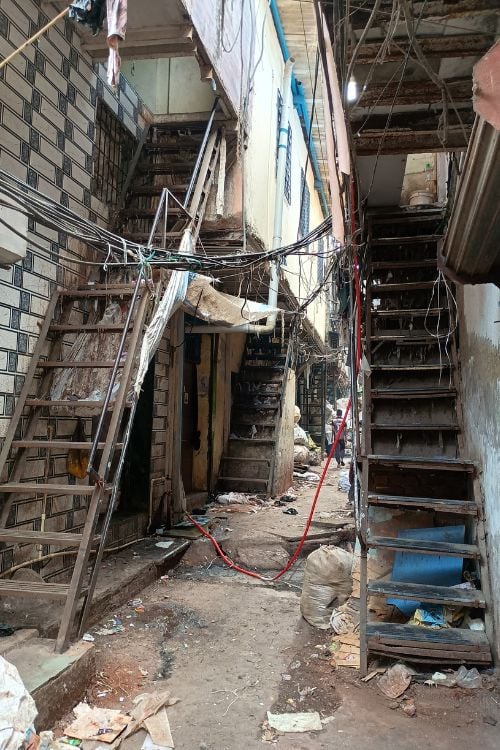
We inched through the narrow, winding corridors of the slum’s interior. We shared the ribbon walkway with piles of wrecked car parts, men carrying bundles twice their size on their heads, loaded-down carts, cats and inches-thick trash underfoot.
Pooja talked with pride about the booming informal economy and 15,000 small factories that create over one billion dollars of product turnover per year. The employees work twelve hours a day for low wages, while the business owners reap huge profits.
Industry, Working Conditions and Daily Life
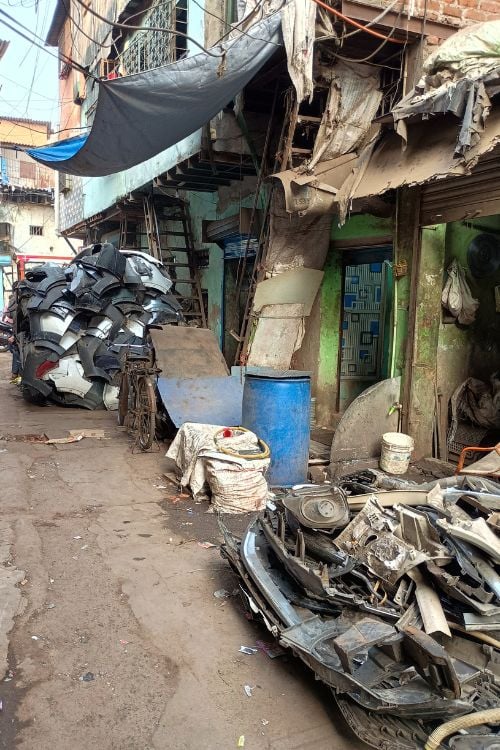
As we continued deeper into the slum, Pooja led us into selected one-room workshops with harsh working conditions.
Dharavi is considered the recycling capital of India. An estimated 250,000 young men and boys throughout the slum sort through mounds of recycled material. They then grind it into reusable particles, dust filling their lungs as they work.
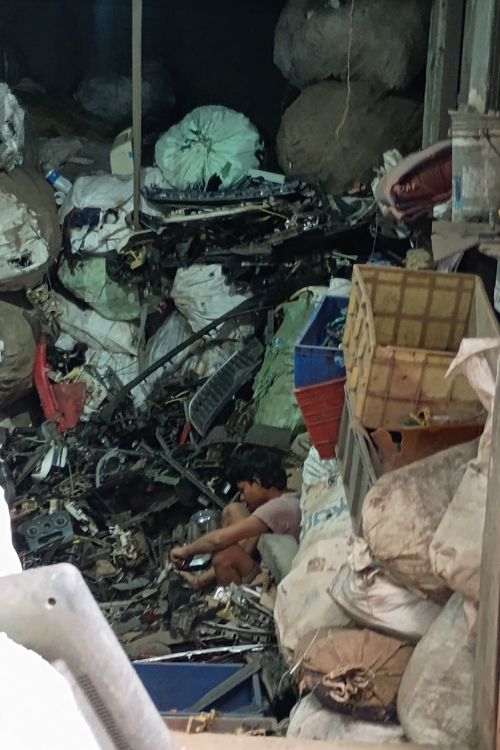
We stopped to observe the process in a compact, windowless structure. Pooja said that the men working here also sleep here. Factories become homes and homes become factories.
The most gripping image for me was a young boy, about twelve, wedged in the center of floor-to-ceiling recyclables. There was no airflow or space to move around. Pooja said, “This is where he lives.”
The slum area is divided into sections by trade. Pooja showed us leather tanneries, textiles, pottery and vegetable soap workshops.
We talked with the boys manually constructing luggage. We also spoke with a young guy at a sewing machine, sewing seams on precut blouses. These will eventually be sold at high-end retail fashion shops.
Pooja stressed that Dharavi’s community of multicultural, multinational groups lives in harmony.
Schools, both public and private, churches, mosques and Hindu and Buddhist temples provide services for families. Alley barbershops thrive. Small kitchens throughout the slum prepare cauldrons of rice to feed the workers three times a day.
Infrastructure and Public Health Challenges
Pooja avoided focusing on the dreadful slum realities. However, when I asked directly about the obvious lack of public health sanitation, she offered these grim facts:
- Since the British began reclaiming swampland to build Dharavi in 1884, the government has made no effort to invest in infrastructure for sewers, drainage or safe drinking water. This, even after the population exploded with thousands of rural Indian emigrants.
- Water is pumped for only three hours per day. Few homes have toilet facilities, and the ratio of toilets to people at public lavatories is 1:1,400.
- Levels of lung cancer, contagious disease and tuberculosis run high due to poor sanitation and air-polluting industries such as recycling and tanneries. Illegal electricity hook-ups, needed for hand-held tools used in manufacturing, cause concern about fire.
Above, I saw a tangled snarl of wires engulfing a single pole. It seemed like such an enigma to me. Nearly one million people crammed into 2.1 square kilometers, without the benefit of public sanitation, without infrastructure, without comfort. Yet they work hard in the gravest of conditions and somehow survive despite the squalor.
I studied Pooja, her smile, her pride, her struggle to go to university to obtain her guide’s license. I felt uplifted amid this abject poverty.
Returning to the Film Shots
Having walked through Pooja’s life for three hours, I remembered the reason for arranging this tour – the movie Slumdog Millionaire.
We asked Pooja to show us the most famous film locations. A frequent request, she guided us to the alley where the two boys had been running, with the stairs, the filth, the space so narrow that the sun could not even peek through. It looked the same as it did fifteen years ago when the scenes were filmed.
Pooja saved the most iconic image for last: Jamal jumping into the thick, brown muck. Pooja commented, “The film director had this stream filled with peanut butter to make the image of the boys jumping into it more disgusting.” To me, it looked disgusting enough without peanut butter.
Leather Work Offers a Different View of Dharavi
Our final stop in Dharavi focused on the leather tanning trade, one of the few local industries that employs women.
Since cows in India are considered sacred, workers only turn sheep and goat skin hides into soft, workable material. Manufacturing leather handbags, coats, boots, and hats is labor-intensive and contributes to serious air and water pollution.
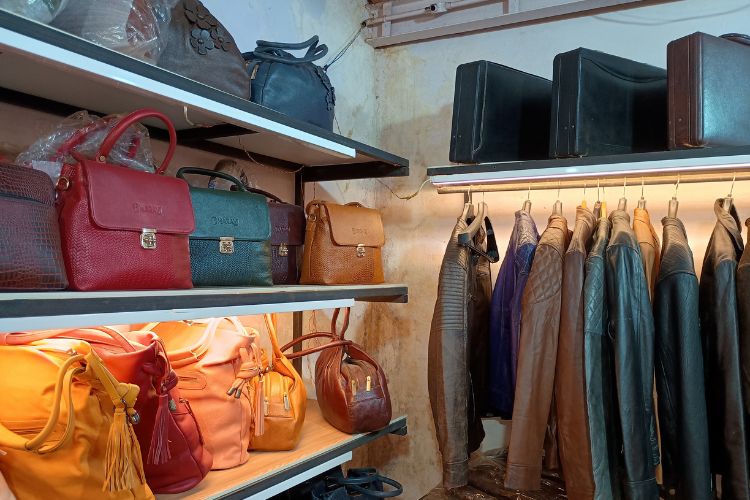
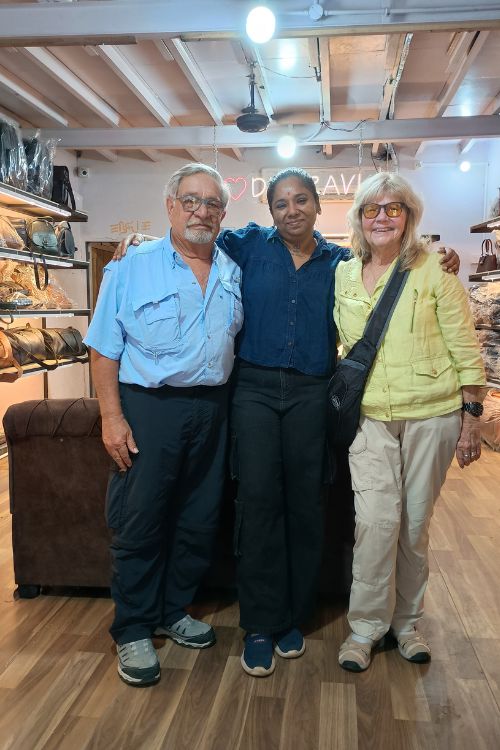
However, at the end of the tour, Pooja surprised us with a visit to an upscale shop within the slum, where elegant leather bags and coats were beautifully displayed.
I found it amazing that these refined goods were the final products from the outdoor tannery we had just visited.
The shop’s proprietor shared her story. She was born and raised in Dharavi; she worked her way up through the tannery trade and now owns and operates this high-end business. As we talked with her and admired her accomplishments, I felt that Pooja had fulfilled her promise.
Despite Dharavi’s hardships, she showed us that it could also be a place of industry, resilience and upward movement out of the darkness.
Two Must-Visit Sites Near Dharavi
In the vicinity of Dharavi, Pooja took us to two ‘not-to-be-missed’ sites in the Maharashtra region of Mumbai. Both have been operating continuously for 150 years, dating back to the British Colonial period. They depict fascinating Indian cultural practices and offer visual explosions and intoxicating aromas.
Dhobi-Ghat Laundry
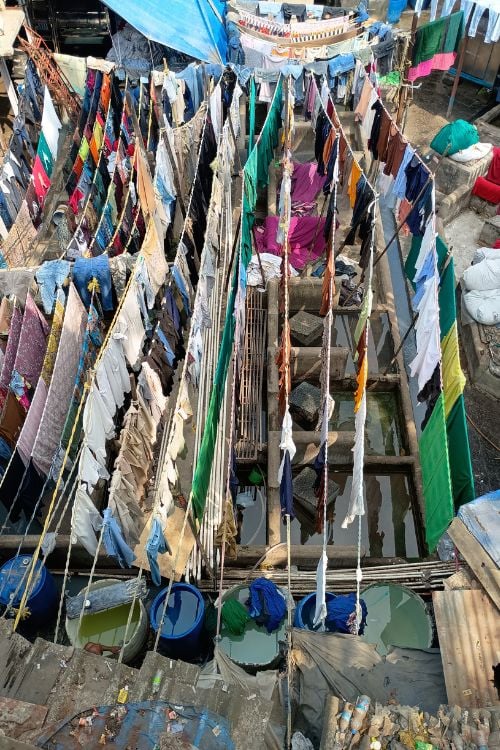
Dhobi-Ghat, the largest open-air laundry in the world, began operating in 1890. Presently, over 7,000 individuals, known as Dhobis, wash by hand over 100,000 pieces of laundry per day for local families, hotels and hospitals.
Pooja explained the history before we arrived at this popular tourist site for foreign visitors.
Dhobis flog, scrub and bleach items on concrete wash bins and hang them on long wash lines. They then iron, fold, and deliver the clean articles. The workers of this skill, passed from one generation to the next, belong to the specific Indian Dhobi caste.
My husband and I squeezed through the crowd to the viewing area, and we both were ‘speechless.’ Acres of hanging laundry of jeans, linens, towels and shirts sprawled before us.
Pooja informed us that there is no paperwork system to track orders. That seemed incomprehensible, considering the technology we rely upon every day for simple things.
Flower Market Dadar
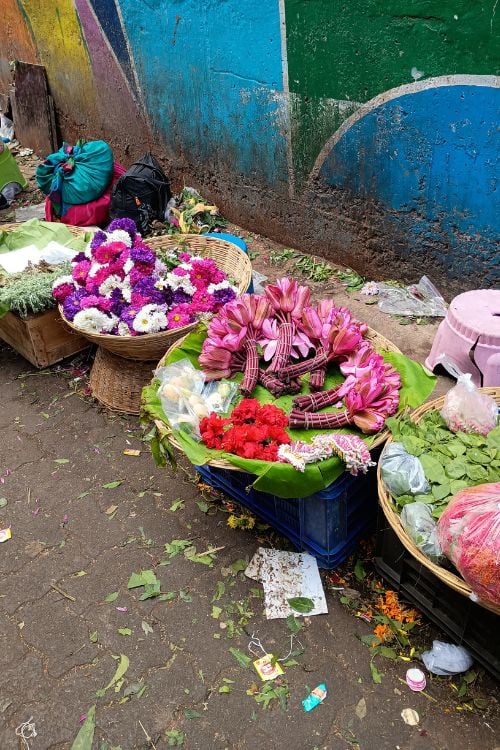
Previously known as Phool Gully, Flower Market Dadar, a narrow lane alongside the Western train tracks, unfolds every day at 5 a.m. It’s a chaotic scene of bustling, bargaining flower merchants buzzing with excitement.
Bundles of marigolds, roses, chrysanthemums, loose petals, religious garlands, door hangings and exotic flower arrangements sell fast at absurdly low wholesale and retail prices.
An explosion of color across the rainbow’s spectrum and intoxicating fragrances emanating from each stand sent my senses into overload.
Pooja bent down to confer with an old woman sitting cross-legged among red roses and dried baby’s breath. Within minutes, the deal done, Pooja handed me a sweet-smelling bouquet as a remembrance of her.
Reflections on Mumbai
It took me several days to process the complexities and contradictions of Dharavi and Mumbai. What stayed with me most was how the city’s energy and inequalities exist side by side.
- The struggle for space: This tension seems woven into life. There are highways clogged with vehicles, trains packed with commuters, one-room huts sheltering ten people and workers sleeping among piles of recyclables.
- Sharp contrasts: Mumbai’s extremes were impossible to ignore, from the luxury of the Grand Central Hotel to the poverty that defines so much of Dharavi.
- Resilience and ambition: Across every economic level, the city feels alive. Dharavi’s residents showed remarkable resilience and ingenuity as they worked to improve their lives.
In that sense, they reminded me of the dreamers in Slumdog Millionaire: people determined to move forward, whatever their circumstances.
Pooja embodied that spirit. She measured her life through hope and possibility, and people like her are what make Dharavi a strong and supportive community.
Need a hand planning your trip? Here are the sites and services we rely on most, from booking tools to travel products we love.
Inspire your next adventure with our articles below:
- Exploring the Backwater Wonderlands of Kerala, India
- What It’s Really Like to Take an Overnight Train in India (Delhi Belly and All)
Author Bio: Carol has taught English to Mexican adults and disadvantaged local children for the past 20 years. She writes for local, international, online, and print publications. Using her adventures to over 120 countries, she has captured a niche in travel writing, and her stories have been featured in Go World Travel Magazine. A frequent contributor to El Ojo del Lago, the largest English-language distribution magazine in Mexico, she’s won several literary awards from that publication. Her psychiatric field work netted a contribution to the anthology, Tales from the Couch. Recently she has also been featured in two more anthologies, Insider’s Guide to the Best of Mexican Holidays and Bravados, Life, Love and Living in Lake Chapala, Mexico, all available on amazon.com.
Want to discover more hidden gems and helpful travel tips? Join our free newsletter for the latest travel secrets and travel articles.
We are reader-supported and may earn a commission on purchases made through links in this article.

- Why New Zealand’s Coromandel Peninsula Belongs on Your Itinerary: Whitianga and Cathedral Cove by Boat - September 22, 2026
- Galicia, Spain: Coastal Fortresses, Celtic Traditions and the Camino de Santiago - September 22, 2026
- The East Coast’s Most Epic Fall Road Trip: 1,500 Miles of Peak Autumn Colors - September 22, 2026
Planning another trip soon? ✈️
Add GoWorldTravel.com as a preferred source on Google. Click the button below so our local guides, packing hacks, and hidden-gem itineraries always show up first when you search!
Add to Preferred Sources