
The Crystal Cruise’s tender boat, crowded with shore excursion passengers, banged against the dock’s tire bumpers. The incoming high tide intensified the vessel’s bobbing.
I gasped at the waves slapping against the oyster-lined wall of the Zanzibar City wharf. I was petrified to make the jump from boat to pier. Firm hands of the crew whisked me across the scary void to dry land.
I steadied my sea legs, ready for the shore visit my husband and I had selected. We were about to take a walking tour of Stone Town, the oldest section of Zanzibar City.
These ancient environs have had such prominent historical and artistic importance in East Africa since the 8th century that UNESCO declared the area a World Heritage Site in 2000.
The Journey Begins
Our odyssey of cruising across the Indian Ocean began three weeks previously in Mumbai, India.
Exotic stops included Mormugao and Goa, India; Colombo, Sri Lanka; Male, Maldives; Praslin, La Digue Islands, and Mahé, Seychelles; Antsiranana and Nosy Be, Madagascar; and Dar Es Salaam, Tanzania. Prior to disembarking in Mombasa, Kenya, our last and favorite port call was Zanzibar.
The Excitement of Zanzibar City

In comparison to the luxurious tone felt throughout the ship’s public venues, the port commotion outside the Customs building smacked of excitement.
The locals seemed to accept the daily chaos of Zanzibar City’s traffic snarls, the noise of horns blaring, and the rush of thousands of people streaming off the daily ferry from Dar Es Salaam. They then fought for space in the cheapest public transport, dala-dala shared minivans.
As our group left the bedlam behind, we were escorted to a waiting van to weave through oncoming motorbikes and tuk-tuks.
Exploring Stone Town
When we reached the edge of Stone Town, we went on foot to explore this former capital of the Zanzibar Sultanate. This was the center of the Asian African spice route. It was also the peak of the Indian Ocean Slave Market from the early to mid-19th century.
During that time, tens of thousands of enslaved people passed through Stone Town each year. History shows itself in every alley and structure. Also, in the face of the multicultural mix of Swahili, Arab, Asian, and European people who have called Stone Town home for centuries.
The transformation in this ancient neighborhood felt almost sacred. I heard the loud din of the city fade. It was replaced by melodic chants of the call to prayer from atop mosque minarets and by bell chimes from St. Joseph’s Roman Catholic Cathedral that heralded mass.
A Peaceful Haven
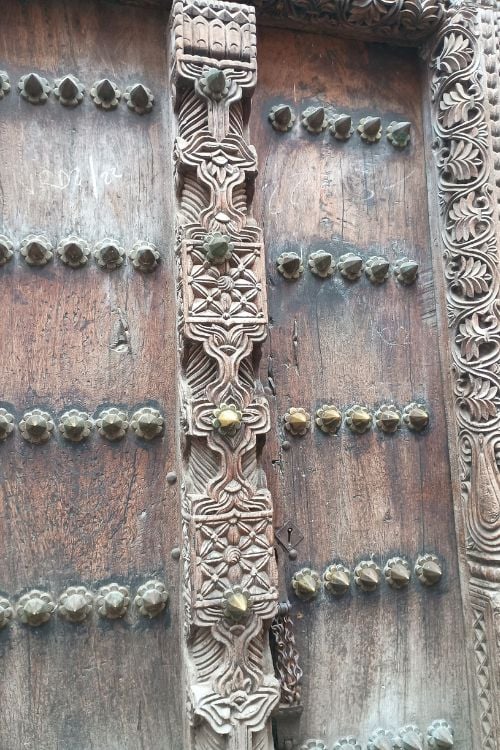
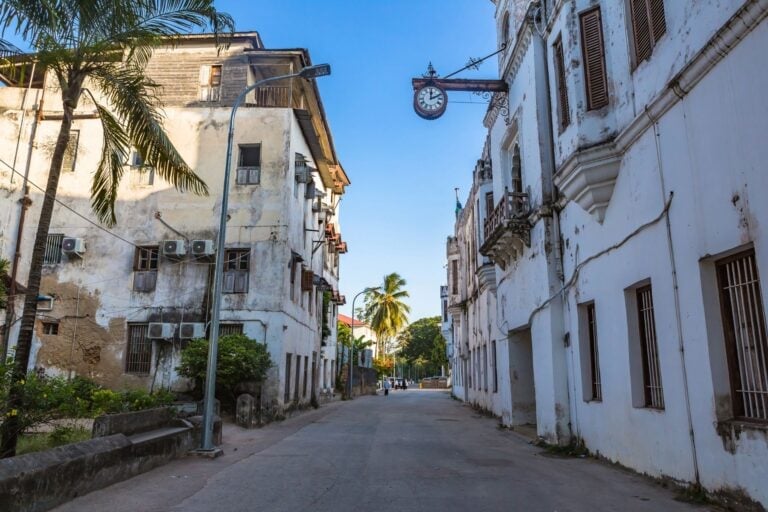
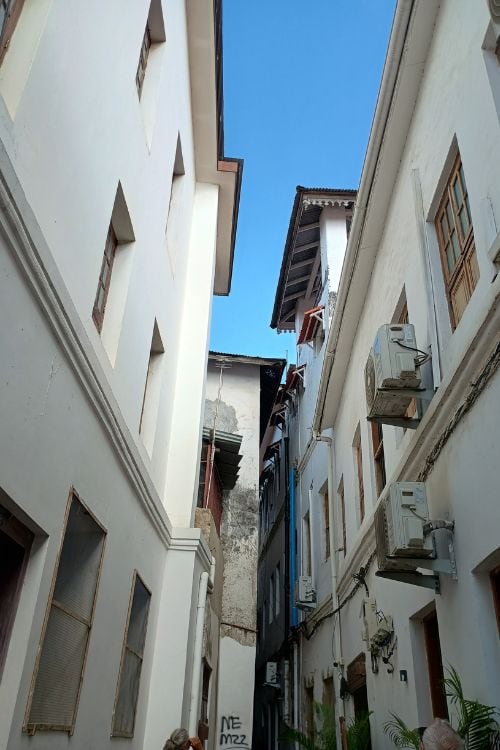
Leaving the clogged wide avenues behind, I relished the quiet, narrow passages of Stone Town, too restricted to accommodate car traffic.
Merchants pushing carts and donkeys pulling them, along with bicycles and scooters maneuvering through the narrow alleys, provided the backdrop for our walking tour. Muslims, Christians, Buddhists, and Zoroastrians seemed to mingle without menace.
Shops, boutiques and two-story homes that line the maze have been constructed of coral stone. This is what gives this neighborhood its original name and its warm, reddish color. The physical environment of these passageways reminded me of Valletta, Malta, the Medina in Tunis, and the Kasbah in Tangiers.
Arab influence from years of Sultan of Oman rule inspired the architecture, with carved double wooden doors framing the property entrances. Walking through this labyrinth among multinational locals, I felt I had been transported to a peaceful haven, just steps from the chaos of modern-day life.
The Slave Market Memorial
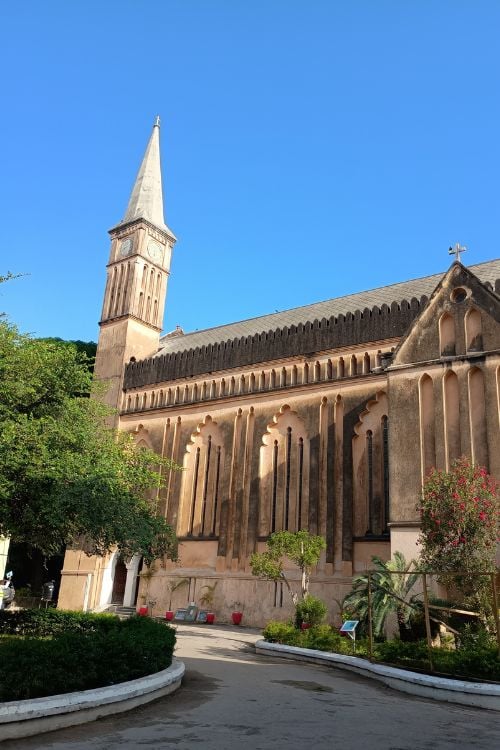
We were guided to the place where Stone Town’s dark chapter of African/Arab slave trade unfolds in a sobering memorial: the powerful Heritage Complex.
We visited the Anglican Christ Church Cathedral, built in 1874 to acknowledge the final days of the slave trade. The altar is positioned to align with the exact spot of the Slave Market’s whipping post.
Two underground chambers where the enslaved masses were crammed prior to their being auctioned were difficult to process, both emotionally and physically.
The lack of ventilation, low ceilings, concrete slabs and drainage ditches made me feel like I couldn’t breathe after only five minutes. I pictured the agony of hundreds of souls occupying these inhospitable pens for days.
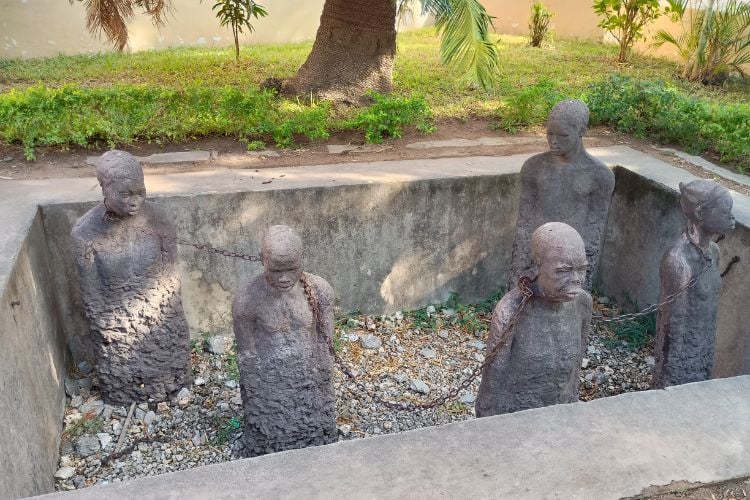
Adjoining the church, the East Africa Slave Museum provided photographs and narratives, documenting Zanzibar’s role in the slave trade.
The most dramatic exhibit of the complex was the memorial of carved stone statues of slaves standing in a pit, harnessed with original chains around their necks and hands.
These tributes and visuals provided such truth that slavery in Zanzibar will not be forgotten. Not by me, not by anyone who visits this display of its enduring images.
Stone Town captures both ends of the continuum. It served as East Africa’s main slave trading port for a thousand years. However, through the abolitionist efforts of David Livingston, this sadistic act of selling humans was outlawed in 1897 during British Protectorate rule of Zanzibar.
The Market and Rich Culture
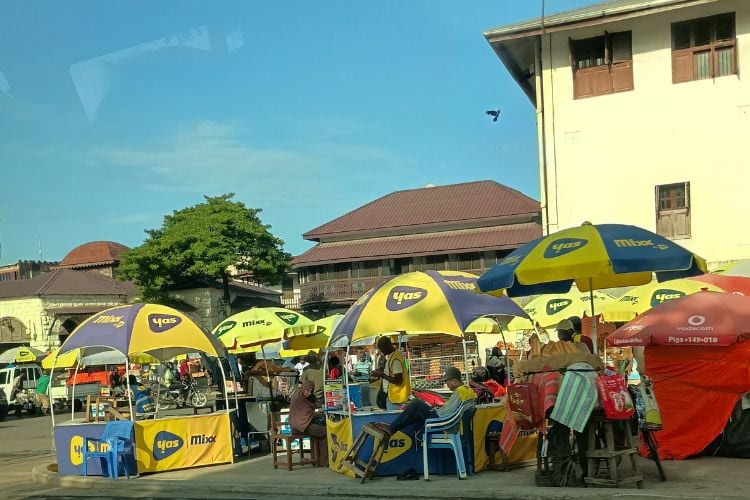
On to the City Market. Here, vibrant colors, bartering, bustling activity and rows of neatly stacked vegetables and tropical fruits filled the space. A special treat, reminiscent of the centuries of spice trade between Africa and Asia, awaited.
The orange hues and green tints sparkled. Aromas of cardamom, cinnamon, paprika, and mint wafted through the air. We stopped to inhale the offerings of spice vendors.
Our guide, concerned that the sights and smells of the daily fish market might offend Crystal Cruise passengers, recommended that we skip entering the building where the fishermen, the buyers, and the fish crowded the hall.
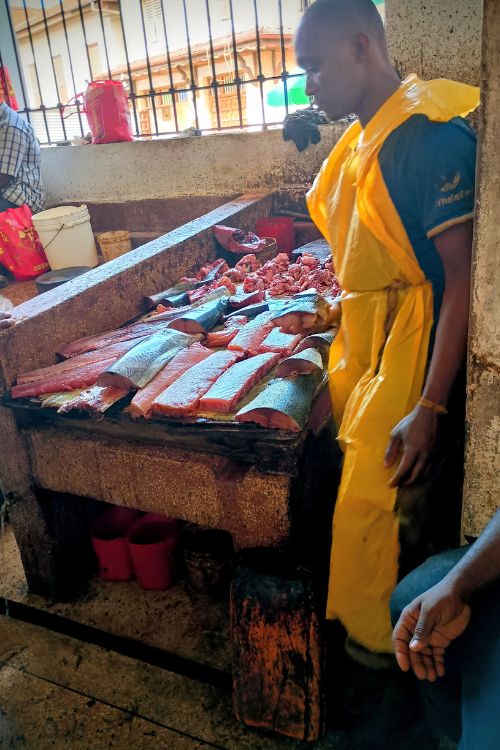
Preferring the close-up view, rather than one from afar, we strolled through the smelly, slippery stalls of fresh catch.
I witnessed workers slicing tuna and dorado and women in full black bourkas sloshing through the muck in knee-high rubber boots. There was camaraderie between fishermen and customers buying their daily ration of seafood due to a lack of house refrigeration.
I absorbed this Stone Town experience, where real-life images surfaced and sanitized visuals for tourists did not exist.
Read More: Experience the Flavors of Zanzibar with a Cooking Class on a Spice Farm
Finding Freddie
We walked past an elegant Hammam Persian Bath, the Sultan’s Palace Museum and Jaw’s Corner. This is the local gathering spot where people congregate to exchange political views and gossip over strong, black Zanzibar coffee.
I silently wondered, “When are we going to reach the spot on my ‘must see’ list?”
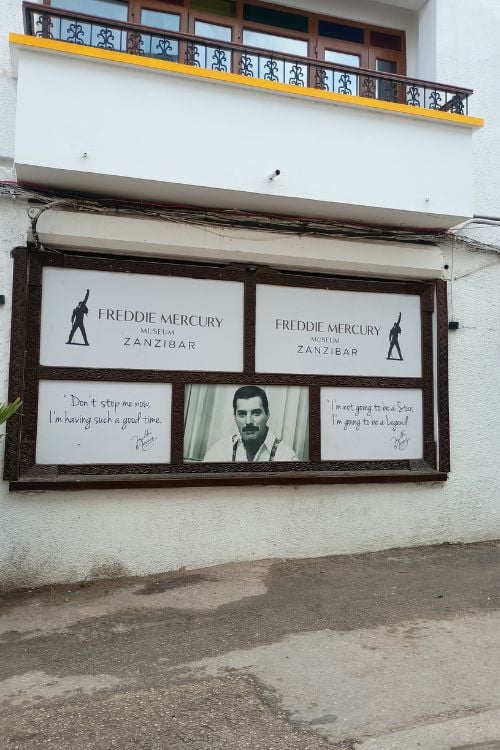
Then, I spied it. A street-level billboard on Kenyatte Road covered the entire front of a Swahili/Arab coral stone house. Pictures of Queen idol, Freddie Mercury, popped off the canvas.
One of the most fascinating stories in the world of rock music started right here in Stone Town, Zanzibar, with the birth of Farrokh Bulsara on September 5, 1946.
Freddie Mercury’s Roots
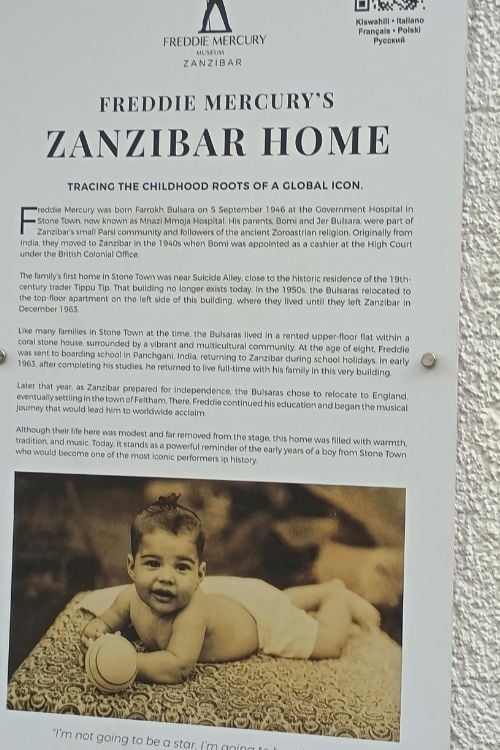
Although tourists cannot enter the house, the first floor has been converted into a small bar and restaurant. Here, photos and Queen memorabilia are on display.
I was thrilled to learn about Freddie Mercury’s youth in Zanzibar and to stand where the origins of his brilliance developed.
The billboard’s printed content summarized the early years of Freddie Mercury, who revolutionized rock music.
Reflection
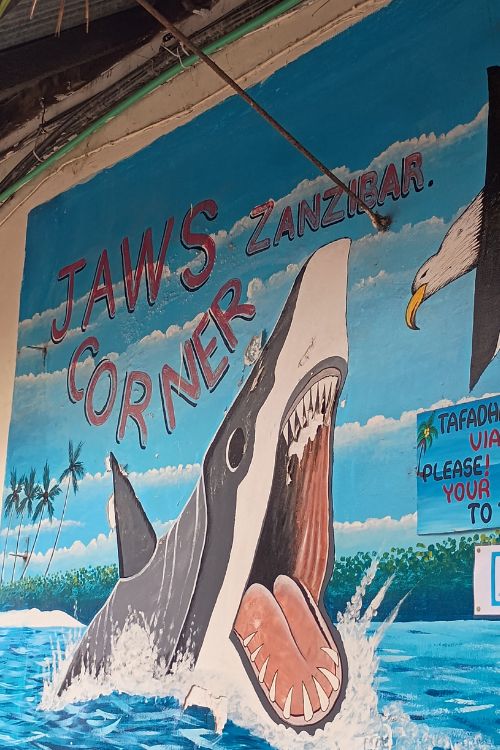
Photo by CBowman
Our final stop in Stone Town, the Zanzibar Serena Hotel, offered refreshments, relaxation, and reflection. I needed all three.
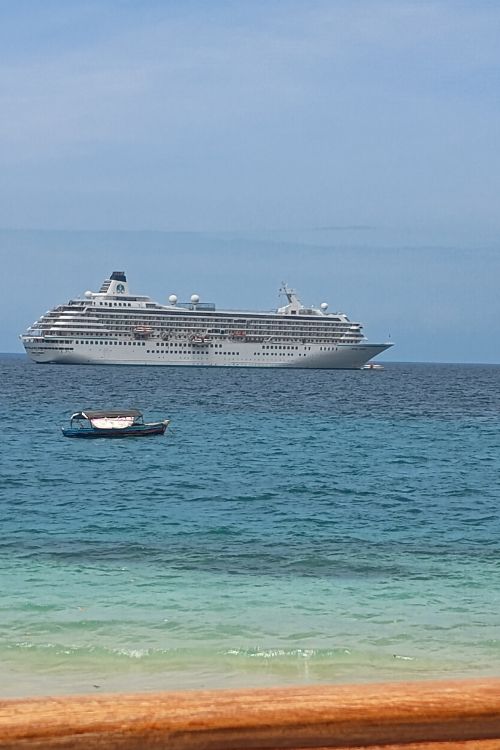
We sat on the veranda on padded chairs, with the Indian Ocean and our cruise ship in view. Warm breezes came off the water, cooling the steamy late afternoon heat. With an ice-cold Sparletta ‘Stoney’ beer in hand, and a basket of US-made Pringle potato chips to munch, I sat there thinking about the day, trying to take it all in.
Indeed, the complexities, layers, colors, sounds, aromas, incredible history, both dark and spicy, and a famous citizen, made Stone Town, Zanzibar, a place I didn’t want to leave. It’s a place I wanted to sit at Jaw’s Corner with a cup of Jo and listen to the gossip.
Note: Cruise itineraries involve multiple countries, ports, and variables that are hard to predict. SafetyWing offers flexible travel medical coverage well-suited to multi-stop voyages, and Squaremouth lets you compare comprehensive policies side by side to find the right fit before you sail.
Need a hand planning your trip? Here are the sites and services we rely on most, from booking tools to travel products we love.
Inspire your next adventure with our articles below:
- Slipping into Africa by the Backdoor: A Cruise on the Swan Hellenic Diana
- Honeymoons That Break the Mold: Adventure, Culture and Cool Over Cliché
Author Bio: Carol has taught English to Mexican adults and disadvantaged local children for the past 20 years. She writes for local, international, online, and print publications. Using her adventures to over 120 countries, she has captured a niche in travel writing, and her stories have been featured in Go World Travel Magazine. A frequent contributor to El Ojo del Lago, the largest distribution English magazine in Mexico, she’s won several literary awards from that publication. Her psychiatric fieldwork netted a contribution to the anthology Tales from the Couch. Recently, she has also been featured in two more anthologies, Insider’s Guide to the Best of Mexican Holidays, and Bravados, Life, Love and Living in Lake Chapala, Mexico, all available on amazon.com.
Want to discover more hidden gems and helpful travel tips? Join our free newsletter for the latest travel secrets and travel articles.
We are reader-supported and may earn a commission on purchases made through links in this article.

- 10 Essential Tips for Surviving Major Flight Disruptions - October 22, 2026
- Helicopter-Access Hiking at Durrand Glacier Chalet in British Columbia’s Selkirk Mountains - October 22, 2026
- An Artist’s Safari: Seeing the Soul of the Wild in Black and White - October 22, 2026
Planning another trip soon? ✈️
Add GoWorldTravel.com as a preferred source on Google. Click the button below so our local guides, packing hacks, and hidden-gem itineraries always show up first when you search!
Add to Preferred Sources