
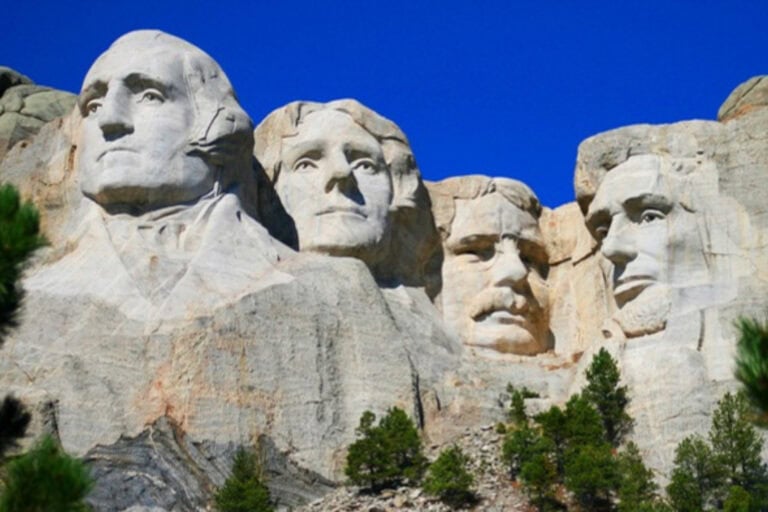
It’s hard to ignore the national symbolism that Mount Rushmore exudes. This colossal sculpture showcases the iconic faces of four former US presidents intricately carved into a mountain in South Dakota’s Black Hills.
I couldn’t help but feel it myself as I awaited night to fall.
Dusk was enveloping the mountain. A couple of dozen onlookers mingle about, standing in small groups, a few taking advantage of the amphitheater benches that descend in semi-circular fashion to the small stage at the base of the large pile of tailings consisting of gravel and chipped rock.
Murmurings of quiet conversations mix with the light breeze. A few children race each other across the concourse.
A faint glow began to wash the stoic faces that dominate the skyline as though painted by the last rays of the day’s sun.
The day slowly eases into its nightly cloak until, suddenly with a dramatic flair, all goes dark, save the four famed granite faces adorning Mount Rushmore of South Dakota, USA.
The illuminated faces are stunning.
Seeing With New Appreciation
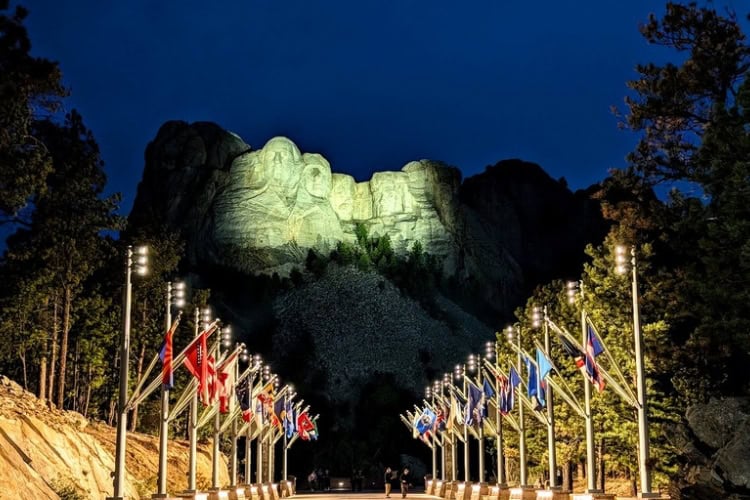
The massive 60-foot-tall busts, emblazoned on the towering granite mountain, are impressive enough in their own right. Adding the dark frame of a black night with the pinpoint illumination of bright spotlights only enhanced the impressive sight.
We had arrived late in the afternoon after the visitor center had closed, taking advantage of the setting sun to enjoy Mount Rushmore at night. This was not our first visit to the famed sculpture; in truth, it had been over a decade since our last visit, but I believe that I admired it even more this time around.
The first time I laid eyes on Mount Rushmore, I was in awe, not only because I was finally seeing it in person, but also because of the sheer enormity of the carvings.
This time, however, I began to appreciate the artwork, the vision that had created the eyes that seemed to look down upon us with such indifference. Or is it disappointment?
The Artist
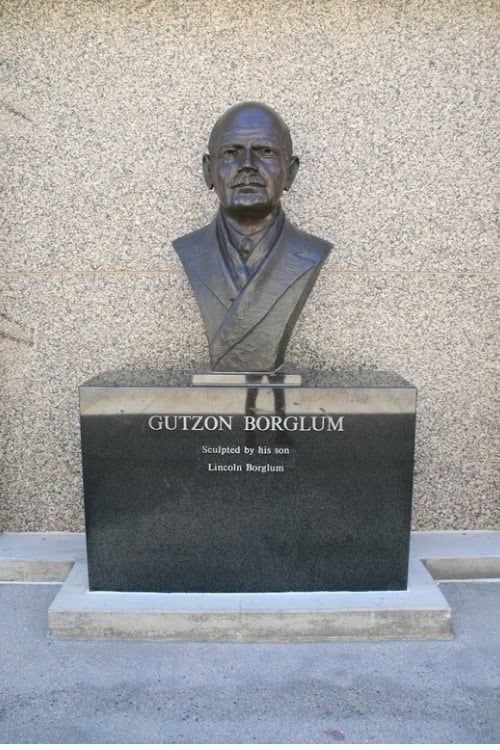
Gutzon Borglum, a noted sculptor, was not a shy individual, nor was he without controversy. But he was a man of big dreams, and he saw the Dakota Hills as worthy of his talent.
His project prior to the South Dakota adventure was Stone Mountain in Georgia, a vast sculpture of famed generals of the Confederate States. While there isn’t proof that Borglum ever joined the Ku Klux Klan, he nonetheless worked closely with them on funding.
Eventually, infighting and his own difficult personality led to his termination from the project, leaving him open to an overture from out west.
The Vision
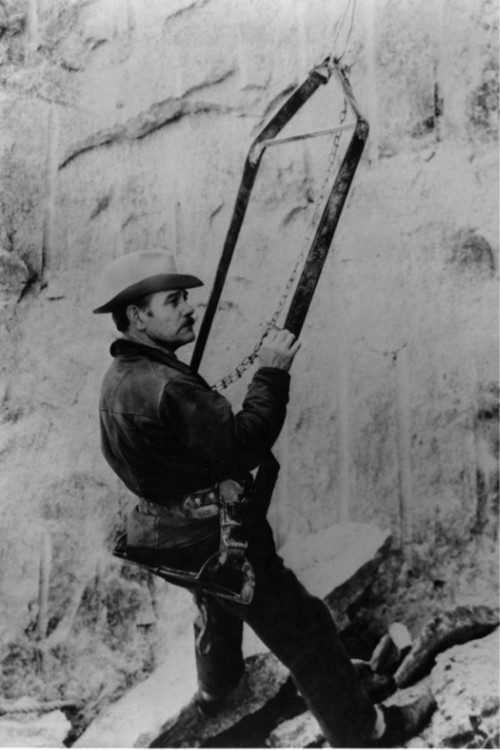
At the behest of South Dakota state historian Doane Robinson, who was seeking a way to stimulate tourism to the area, the irascible Borglum stood on the summit of Mount Rushmore in 1925 and envisaged his sculpture.
Dismissing Robinson’s idea of Western heroes, Borglum, wishing to create a monument celebrating the nation, decided to carve the presidents.
With the assistance of Senator Peter Norbeck, federal funding was secured and the project was begun in 1927. Closely supervised by Borglum, some 400 workers dangled precariously off the side of the mountain, blasted away the granite with dynamite, and finished with pneumatic hammers and chisels. Over the course of 14 years, 450,000 tons of rock were removed in creating the sixty-foot countenances.
Today, the stone debris still lies in a heap near the base of the mountain while nearly three million visitors come each year to ogle the massive busts, each as tall as a six-story building.
The Faces
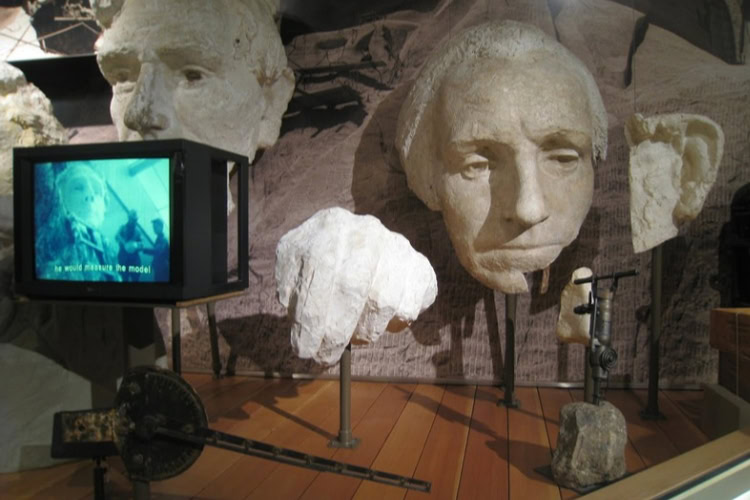
Photo by Frank Hosek
The morning following our absorbing evening, we returned to complete our visit. The Lincoln Borglum Visitor Center let me delve a little further into the carving of Mount Rushmore while Kathy went to the bookstore.
There are exhibits filled with tools and models; even more enlightening is the 14-minute film “Mount Rushmore: The Shrine,” with historic film footage of the work.
Most of us can name the four presidents adorning the mountain, but few, including myself, are aware of why. Why have these four individuals become irrevocably associated with a mountain named for an obscure New York lawyer?
It was actually Borglum who selected which four faces would be carved into his masterpiece. He felt they would best represent the first 150 years of American history.
George Washington, the country’s first president, would symbolize its birth. Thomas Jefferson stood for its westward expansion, with his famed purchase of the Louisiana Territory.
Theodore Roosevelt, who pushed for the Panama Canal, was a symbol of economic growth. Abraham Lincoln was selected for having fought to preserve the nation in the Civil War.
Hiking the Presidential Trail
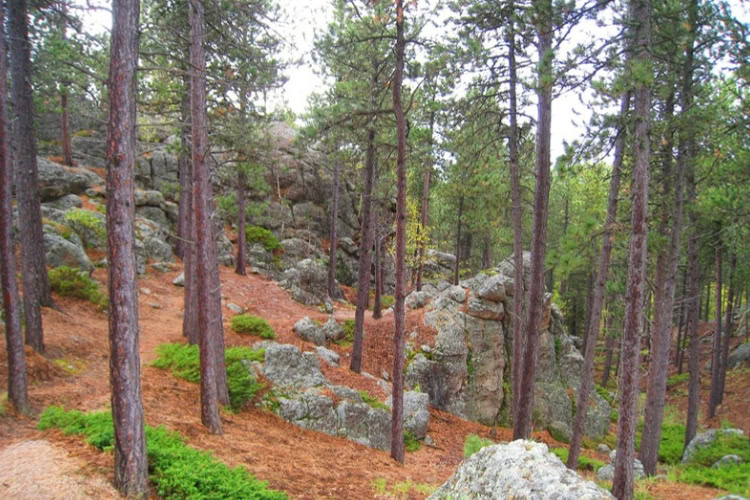
For the closest possible access to the Presidents, we walked the Presidential Trail, which takes you to the base of the immense mound of carved rock just below the heads. Roughly a ½ mile long with 422 stairs, the trail offers a unique angle of the unyielding expressions. If you plan to tackle the stairs and uneven terrain, here are some pro hiking tips to keep you safe.
The trail is a loop. We started from the east end, which meant, unbeknownst to us, that we would be climbing UP virtually all 422 steps. If you wish to save the strain on your calves, start at the west end.
As the morning sun played across the faces, their features changed and came alive. Seeing the contours of the faces created vitality and imbued them with life that is simply not imagined from pictures.
From a distance, there is an effect that makes you believe the features are as smooth as marble. However, up close, the nuances become more prevalent. You can see the details of the carving activities, the striations, and the finishing impact made by the pneumatic hammers.
The Sculptor’s Studio
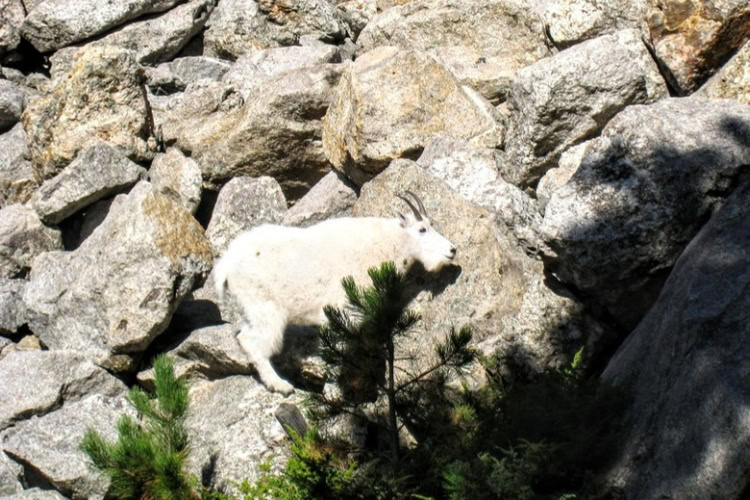
Photo by Frank Hosek
As we continued along, as if to remind us that we were several thousand feet above sea level, we unexpectedly came across a trio of mountain goats who seemed not at all perturbed by our presence.
The trail ran past Borglum’s original Sculptor’s Studio, where we learned from the ranger on hand that the original vision of the monumental Mount Rushmore figures was very different from the carving as it stands today.
The faces were to have been full statues, including clothing detail, arms, and hands. When WWII interfered and funding dried up, and it became clear that there wasn’t enough space, the current forms became the final forms.
Borglum did not live to see the finishing touches, passing away in 1941.
Hollywood
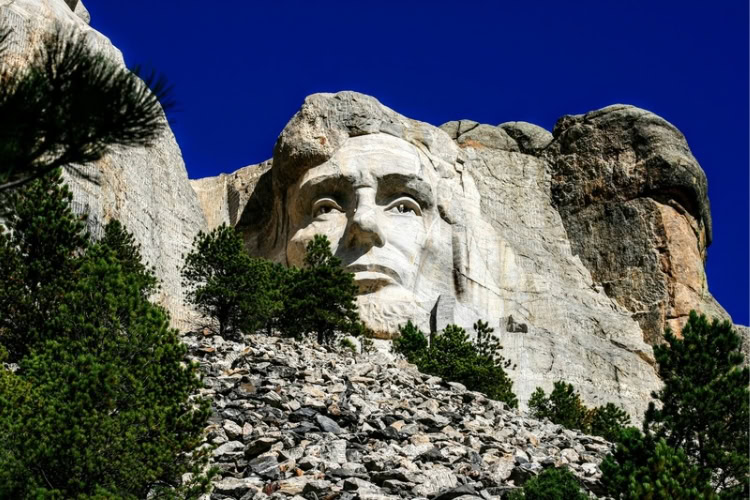
Contrary to Alfred Hitchcock’s suggestion in his iconic film North by Northwest, the trail is the closest visitors can get to the famous heads.
The climactic chase in Hitchcock’s 1959 thriller North by Northwest has Cary Grant and Eva Marie Saint being pursued by foreign spies around and over the faces of George Washington, Abraham Lincoln, Thomas Jefferson, and Theodore Roosevelt.
I asked a ranger about that scene. He smiled, or maybe it was a wince, and replied that one of the most frequently asked questions is about tours to the top of the heads. Don’t bother asking.
Climbing on the memorial has been officially prohibited since work ended there in 1941. And although Hitchcock did film some scenes near and in the visitor center, even he had to settle for a near-perfect replica on a Hollywood sound stage.
In National Treasure: Book of Secrets, Nicolas Cage utilizes the Hall of Records as an elaborate entrance to a treasure trove. There is, in fact, a Hall of Records, located in a small ravine behind the head of Lincoln.
Borglum envisioned the chamber for documents and artifacts most central to American democratic history. Although an 80-foot tunnel was carved out of the side of the mountain, again, it was never completed. And Mr. Cage aside, it is not open to the public.
Not Without Controversy
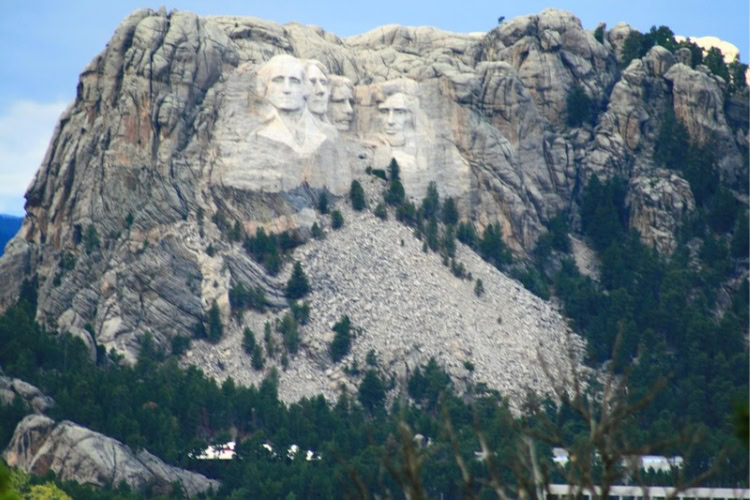
Mount Rushmore is located in the Black Hills region of South Dakota, near Keystone. Before it became known as Mount Rushmore, the Lakota, a Native American tribe, referred to the mountain as Six Grandfathers Mountain. The region was an important source of food, medicinal plants, and building materials.
Then gold was discovered in the region and, in 1877, the U.S. broke all treaties and took over the land. The monument was carved on what was considered sacred land. It is an ongoing issue with the Indigenous people.
Today, the park is attempting to do a better job of informing visitors of the history of the Native lands.
A Final Surprise
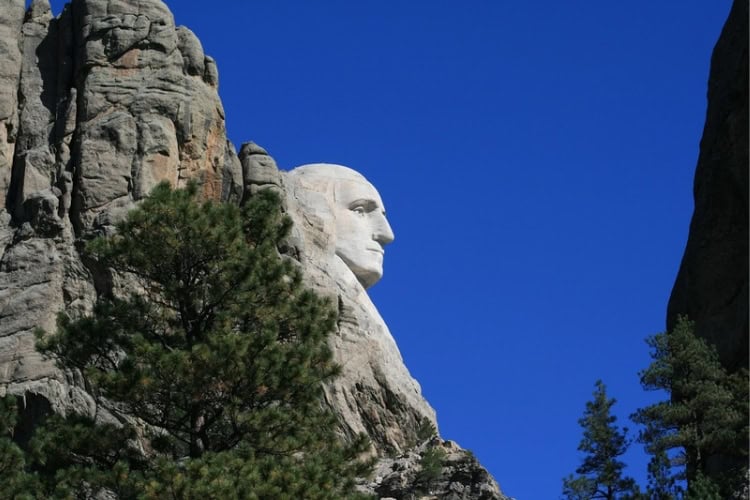
Leaving the parking lot, we turned onto South Dakota Highway 244, which clings to the side of the mountain. Rounding a bend, a surprising and distinctive profile came into view. The one-of-a-kind sight was the profile of George Washington framed by the surrounding rock outcroppings.
It is, in fact, the Mount Rushmore George, but it is so out of context, without his comrades, that, for a brief moment, I thought it was a totally different sculpture that I was not aware of.
Mount Rushmore, in this year of the country’s 250th celebration, continues to amaze.
If You Go
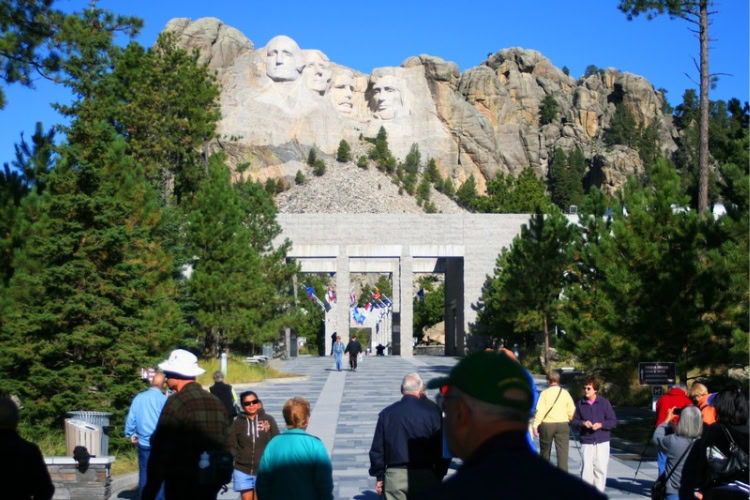
Photo by Frank Hosek
Getting There: Mount Rushmore National Memorial sits in the Black Hills of South Dakota, roughly 30 miles southwest of Rapid City. The nearest airport is Rapid City Regional Airport, about a 47-minute drive from the memorial. For getting around the Black Hills at your own pace, book a rental car through Discover Cars.
Entrance and Parking: There is no entrance fee for Mount Rushmore National Memorial, though parking fees apply: $10 per vehicle, $5 for seniors 62 and older, and free for active duty military.
Where to Stay: Ramada by Wyndham Keystone Near Mt Rushmore puts you steps from the Keystone City Boardwalk, with the Presidential Trail and Sculptor’s Studio within easy reach. For a quieter, pet-friendly option, Baymont by Wyndham Keystone Near Mt. Rushmore is a short drive from the memorial with an indoor pool and spa tub for unwinding after a day on the trail.
Guided Tours: For travelers who’d rather skip the driving and see the faces lit up after dark the way this piece describes, book the Black Hills evening tour with the Mount Rushmore Lighting Ceremony, which also covers Custer State Park, Sylvan Lake, and Needles Highway.
Recommended Reading: For more on Borglum’s complicated legacy and the mountain’s history as Lakota land, pick up A Biography of a Mountain: The Making and Meaning of Mount Rushmore by Matthew Davis.
Official site: mtrushmorenationalmemorial.com
Inspire your next adventure with our articles below:
- Get Away From the Crowds: 6 Underrated National Parks in the USA That You Won’t Want to Miss
- Utah’s Arches National Park: Where Nature Carved Over 2,000 Stone Masterpieces
Author Bio: Frank Hosek relishes traveling with his wife, Kathy. He enjoys discovering new experiences, meeting the people that make those experiences memorable, and sharing their adventures with others. He has written for Go World Travel Magazine, The Daily Journal, News Gazette and Lifestyles magazine. Frank has won awards from NWPA and IWPA for his travel writing. He looks toward the horizon for the next adventure.
Want to discover more hidden gems and helpful travel tips? Join our free newsletter for the latest travel secrets and travel articles.
We are reader-supported and may earn a commission on purchases made through links in this article.
- The Great Lakes Shipwreck Museum: Honoring the Legend of the Edmund Fitzgerald - September 11, 2026
- Driving I-90 Across South Dakota: Badlands, Wall Drug and Roadside Icons - September 2, 2026
- Gettysburg National Military Park: A Visit to Hallowed Ground - August 31, 2026
Planning another trip soon? ✈️
Add GoWorldTravel.com as a preferred source on Google. Click the button below so our local guides, packing hacks, and hidden-gem itineraries always show up first when you search!
Add to Preferred Sources