
What is one thing most people hope for when they travel? Good weather, right?
My husband and I are on a 12-day Holland America Mediterranean cruise with our longtime friends, Don and Sue Fisher. Thankfully, the weather gods have heard our prayers. Although rain has been forecast in almost every destination, we have dodged it in all eight ports. Will Malta be our ninth?
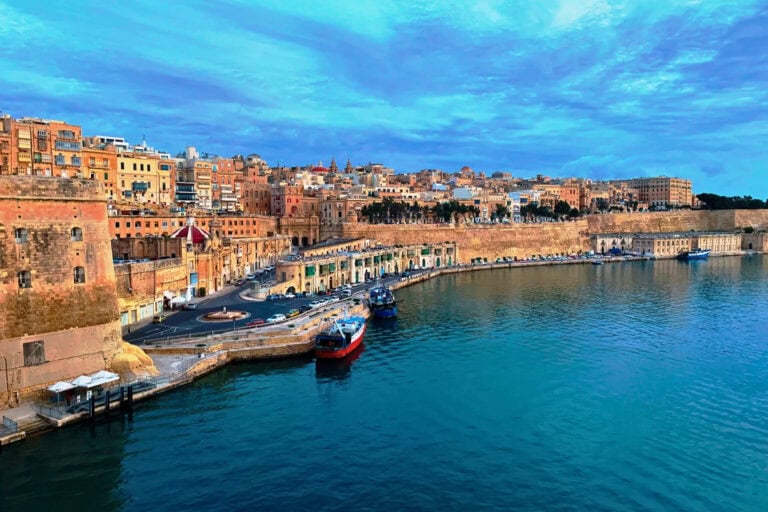
Based on the ominous clouds hanging over Valletta as our ship glides into Grand Harbour, we’re not so sure. Even beneath grey skies, Malta’s capital makes a dramatic first impression. Honey-colored buildings rise above the waterfront, backed by massive fortifications that have defended this strategic Mediterranean harbor for centuries.
“I’ve brought an umbrella, just in case,” our guide, Anna Grech Sant, says when she meets us. “But whatever the weather, I wouldn’t want you to miss a thing.”
It’s immediately clear that Anna is passionate about her homeland. For 44 years, she has been educating visitors about Malta’s history and culture.
Located south of Sicily and north of Africa, the Maltese archipelago consists of three inhabited islands: Malta, Gozo and Comino. Its position in the center of the Mediterranean made it a valuable prize. Phoenicians, Romans, Arabs, Normans, Sicilians, Spanish, the Knights of St. John, the French and the British all left their mark.
The British influence is still evident. English is one of the country’s official languages, and vehicles travel on the left side of the road. Malta became part of the British Empire in 1814, gained independence in 1964 and became a republic in 1974.
With our driver, Ron, behind the wheel, we escape the cruise crowds. By the time we reach Upper Barrakka Gardens, the clouds have magically dispersed and we’re bathed in sunshine.
Valletta From Above
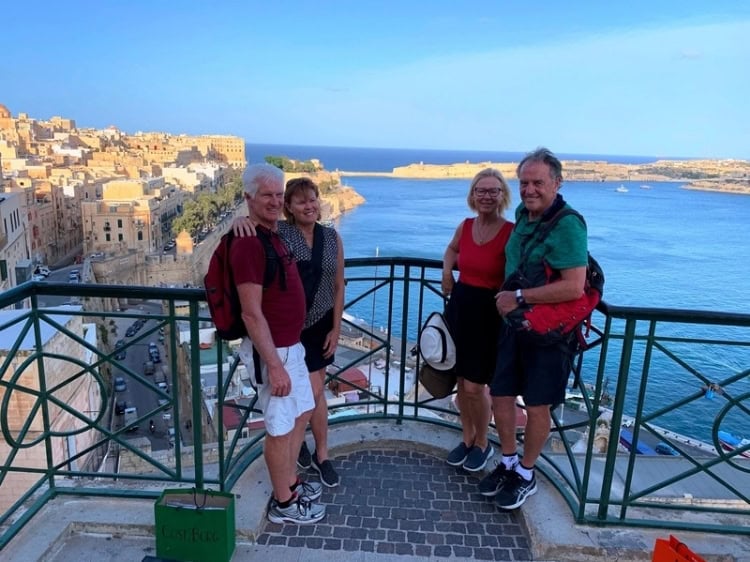
Perched above Grand Harbour, Upper Barrakka Gardens offers one of the finest views in Valletta. From the terrace, we gaze across sapphire water toward the fortified Three Cities of Vittoriosa, Senglea and Cospicua.
The gardens were created in 1661 as a private retreat for knights belonging to the Italian langue of the Order of St. John. Opened to the public in 1824, they later suffered extensive damage during the Second World War.
Today, the colonnaded terrace, fountain, flowerbeds and shady pathways provide a peaceful contrast to the imposing bastion walls below. Statues, plaques and monuments commemorate prominent people and events from Malta’s past, while the nearby Saluting Battery recalls Valletta’s military history.
Exploring Old Town Valletta
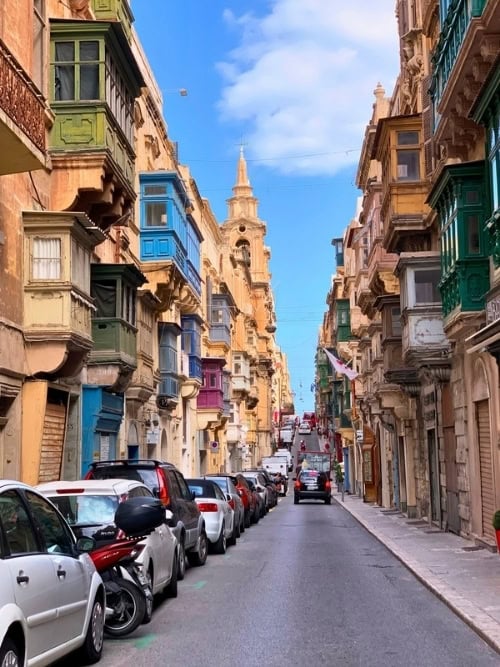
From this scenic perch, we enter the old city, where nearly every street reveals another architectural treasure.
Valletta was established after the Great Siege of 1565, when the Knights of St. John and the Maltese people resisted an Ottoman invasion. The fortified city was named for Grand Master Jean Parisot de Valette, who led its defense.
Now a UNESCO World Heritage Site, Valletta is one of Europe’s smallest capital cities. Its narrow streets are lined with Baroque churches, ornate palaces, colorful doors and traditional enclosed balconies. Many lanes descend toward tantalizing glimpses of the sea.
Fountains and Knights’ Lodgings
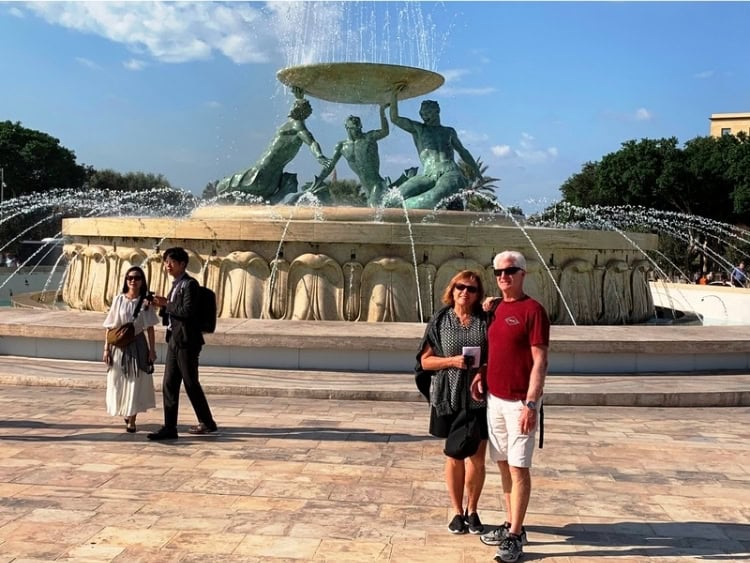
The historic architecture shares the city with bold contemporary design. Near Valletta’s entrance, the Renzo Piano-designed City Gate, Parliament Building and open-air theatre, created within the ruins of the Royal Opera House, add a striking modern presence.
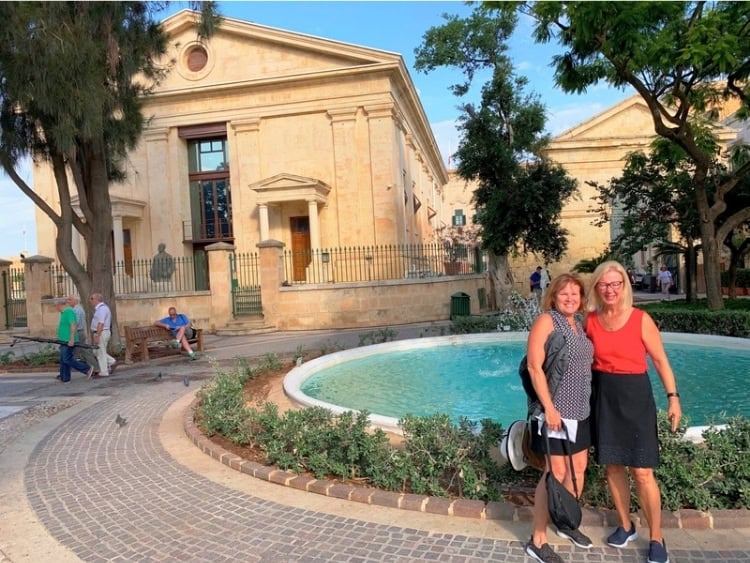
We pose beside the flowing Triton Fountain and pause near the Auberge de Castille, once home to knights from Castile, León and Portugal and now the office of Malta’s prime minister. Republic Street, Valletta’s main pedestrian thoroughfare, is bordered by boutiques, cafés and shoe stores. But we bypass the shopping. Something much older is waiting.
Malta’s Prehistoric Treasures
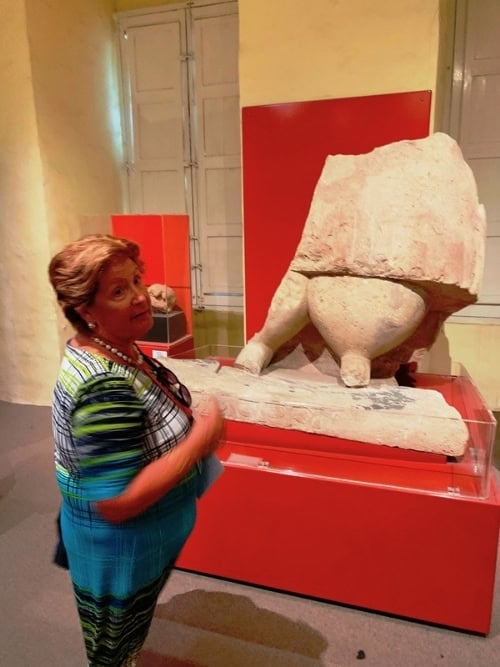
Inside the National Museum of Archaeology, Malta’s past stretches back thousands of years. The museum is housed in the Auberge de Provence, a 16th-century building that once accommodated knights from the Provençal langue.
“These artifacts reveal just how ancient Malta is,” Anna says as we explore the galleries. Displays contain tools, pottery, amulets and carved figures recovered from the islands’ temples and burial sites. Some objects date to around 5200 BC, when Malta’s earliest farming communities began establishing settlements.
The star attraction is the Sleeping Lady, a tiny clay figure discovered in the Ħal Saflieni Hypogeum. Reclining on her side, she appears to be resting on a couch. She may represent sleep, death, fertility or a passage into another world, but her meaning remains a mystery.
Nearby are the Venus of Malta and several rounded human figures with generous hips and thighs. Were they goddesses, symbols of abundance or images of real people? Thousands of years later, they are still keeping their secrets.
“At our next stops, you’ll see where some of these treasures originated,” Anna says.
Cliffs and Caves at the Blue Grotto
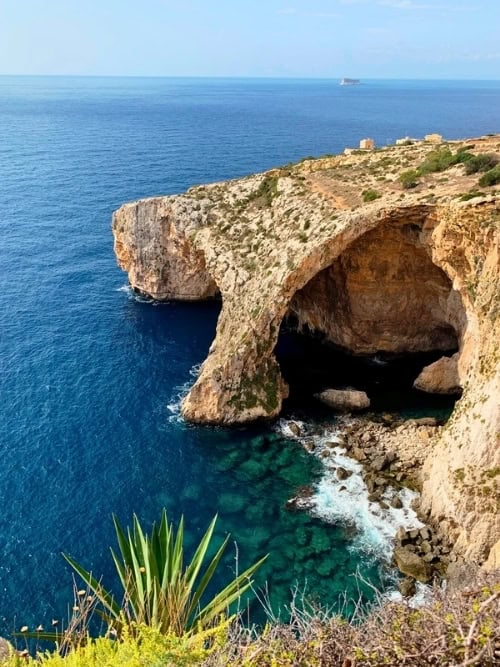
Before delving further into Malta’s prehistoric past, we stop at a cliff-top viewpoint overlooking the Blue Grotto on the island’s southern coast.
Far below, clear turquoise water shimmers beneath a natural limestone arch. Centuries of wind and waves have sculpted the coastline into caves and sheltered inlets. Boat excursions take visitors inside when sea conditions permit. Although we don’t have time for a cruise, the elevated viewpoint provides a spectacular photo opportunity.
The Ancient Temples of Ħaġar Qim
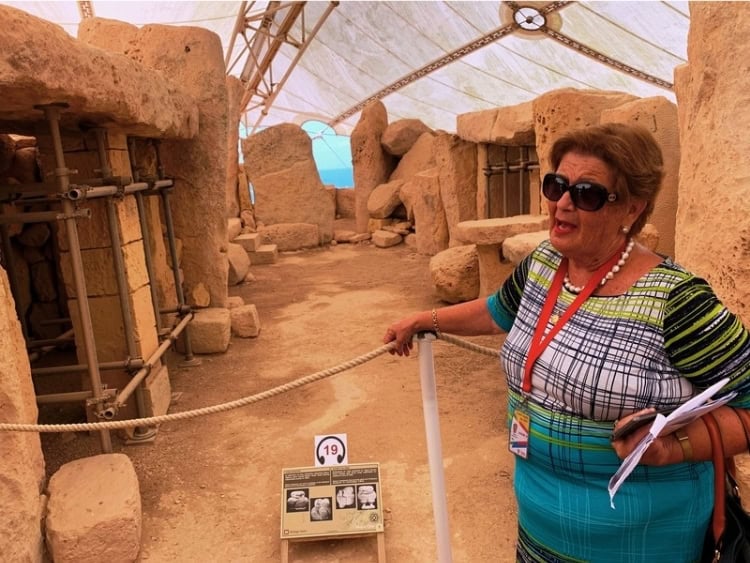
A short drive away, the megalithic temple complex of Ħaġar Qim is even more impressive. Built between approximately 3600 and 3200 BC, it is older than both Stonehenge and the Egyptian pyramids at Giza.
A visitor centre and audiovisual presentation prepare us for the site, but nothing compares with standing before the temples themselves.
Protected beneath a huge canopy, the complex consists of interconnected chambers, curved walls, doorways and altars assembled from enormous blocks of limestone. Some stones weigh many tons, and the largest is estimated to weigh more than 20 tons.
We follow pathways through the site, trying to imagine how prehistoric builders quarried, moved and raised these massive stones without modern machinery. Stone spheres found nearby may have been used as rollers, but much about the construction remains unknown.
The temples stand on a ridge overlooking the Mediterranean. As we walk between their weathered walls, Malta no longer feels like a simple cruise port. It feels like one of the world’s great archaeological puzzles.
Beneath the Streets of Paola
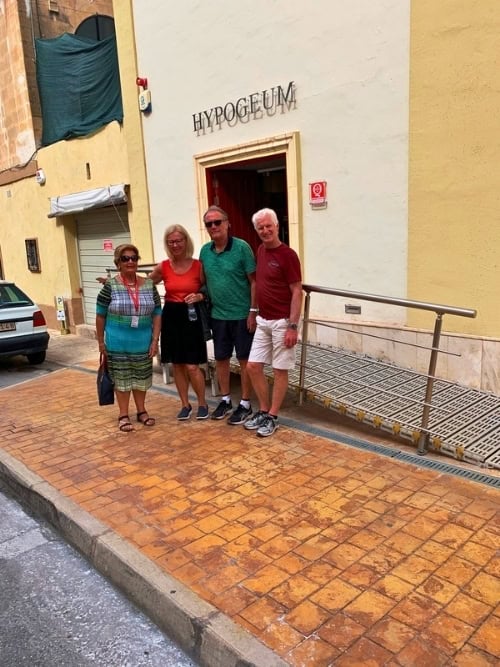
Our next destination is hidden below an ordinary-looking street in the community of Paola. From the outside, the entrance to the Ħal Saflieni Hypogeum gives little indication of the extraordinary world beneath it.
Discovered during construction work in 1902, this subterranean complex was carved from limestone during the Neolithic period. It was used between approximately 4000 and 2500 BC, first as a sanctuary and later as a communal burial place.
To protect its fragile environment, admission is strictly controlled. Only 10 visitors enter on each tour, and tickets frequently sell out months ahead. Advance reservations are essential.
After an introductory presentation, we put on audio headsets and descend into the earth. Walkways lead through a maze of chambers, corridors and carved openings spread across three underground levels.
Some rooms imitate the architecture of Malta’s above-ground temples, complete with lintels, curved walls and doorways—all painstakingly carved using stone and bone tools. Red ochre spirals decorate one ceiling, while another chamber, known as the Holy of Holies, features an entrance resembling a temple doorway.
In the Oracle Room, sound reverberates through the rock with eerie intensity. I’m tempted to test the acoustics with a few notes, but the silence feels sacred. Thousands of people were once buried here with pottery, beads, amulets and figurines, including the Sleeping Lady we saw earlier.
Enveloped in the stillness of this prehistoric sanctuary, we feel suspended somewhere between the ancient past and the present.
Baroque Beauty in Valletta
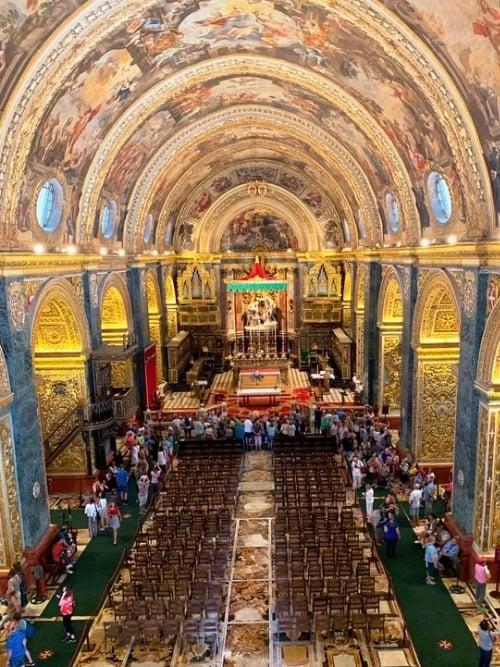
Back in Valletta, we conclude our sightseeing at St. John’s Co-Cathedral. Its relatively restrained 16th-century exterior offers little warning of the extravagance waiting inside.
Nearly every surface is decorated with gilding, marble, carved stone or colorful paintings. The barrel-vaulted ceiling features scenes from the life of St. John the Baptist by Mattia Preti, while eight lavish chapels represent the different langues of the Knights of St. John.
Underfoot, hundreds of elaborate marble tombstones commemorate knights and other members of the order. Angels, skeletons, coats of arms and symbols of mortality are worked into the colorful designs.
The cathedral’s greatest artistic treasure is Caravaggio’s The Beheading of Saint John the Baptist. Painted while the artist was in Malta, it is his largest work and the only known painting he signed.
After admiring the cathedral from below, we climb the stairs to the balcony. From above, the symmetry, gilded carvings and intricate floor become even more impressive. Literally and figuratively, the view is brilliant.
A Taste of Valletta
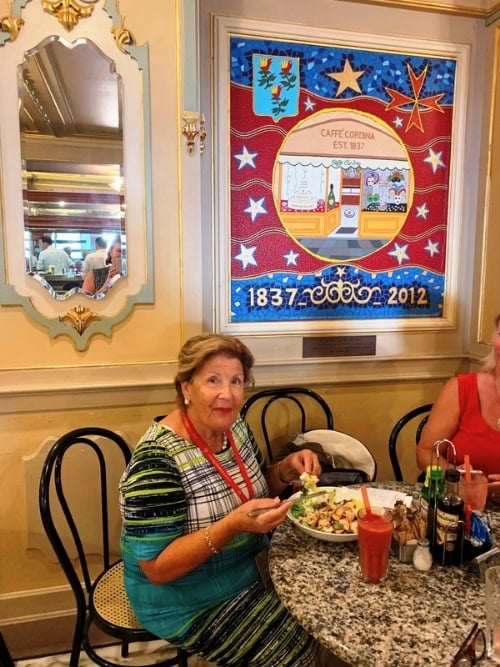
After a full day of temples, underground chambers and fortified streets, we are ready to rest our feet. Caffe Cordina is the perfect place to wrap up our tour with Anna. This Valletta institution traces its history to 1837, when the Cordina family opened a small confectionery in Bormla. It later moved to its present location near Republic Square, where locals and visitors gather beneath umbrellas to sip coffee, enjoy pastries and watch the world go by.
Although Malta is famous for pastizzi—flaky pastries usually filled with ricotta or curried peas—we choose healthy salads and fruit-infused smoothies. We raise our glasses to Anna, whose stories have brought Malta’s ancient stones and shadowy chambers to life. In one remarkable day, we have gazed across one of the Mediterranean’s most beautiful harbours, wandered through a golden city, stood inside temples older than the pyramids and descended into a sanctuary carved more than 5,000 years ago.
If You Go
Arriving by Cruise Ship
Malta is a popular port on Mediterranean cruise itineraries. Valletta Cruise Port is located below the historic centre, with an elevator connecting the waterfront area to Upper Barrakka Gardens.
Getting Around
Valletta is compact and walkable, but Malta’s archaeological attractions are spread across the island. A guide and driver make it possible to combine Valletta, the Blue Grotto viewpoint, Ħaġar Qim and the Hypogeum in one carefully planned day.
Hypogeum Tickets
Tickets for the Ħal Saflieni Hypogeum are limited and should be booked well in advance through Heritage Malta.
Travel Essentials
- Pick up an Airalo eSIM for Malta before you sail, so maps and messages work in port without relying on the ship’s Wi-Fi.
- Compare cruise travel insurance plans on Squaremouth to find coverage for medical care abroad, missed port departures and trip interruptions.
Plan Your Cruise
Find current Mediterranean itineraries on the Holland America Line website.
More Information
Need a hand planning your trip? Here are the sites and services we rely on most, from booking tools to travel products we love.
Inspire your next adventure with our articles below:
- Montenegro’s Bay of Kotor: Stone Towns, Venetian Walls and Mirror-Calm Water
- Slow Down on Corfu: A Perfect Day at Kontogialos Beach
Author Bio: Since 1996, while freelancing, Jane Cassie has had thousands of articles published. Her stories have appeared CNN Magazine, Northwest Travel, New York Daily News, Chicken Soup For The Soul, Dreamscapes, Air Canada In-flight, Cottage Life, Epicure and Travel, just to name a few. She has been a regular contributor to Spa Life, INNspire, North American Inns Magazine, Cottage, and Inspire Magazines.
Want to discover more hidden gems and helpful travel tips? Join our free newsletter for the latest travel secrets and travel articles.
We are reader-supported and may earn a commission on purchases made through links in this article.

- Canadian Rockies in 10 Days: Glacial Lakes, Wildlife and First Nations Culture from Vancouver to Calgary - October 18, 2026
- One Day in Malta, From Valletta’s Golden Streets to Temples Older Than the Pyramids - October 18, 2026
- Skiing Above Santa Fe: Powder, Glades and the Family Who Thins Them by Hand - October 18, 2026
Planning another trip soon? ✈️
Add GoWorldTravel.com as a preferred source on Google. Click the button below so our local guides, packing hacks, and hidden-gem itineraries always show up first when you search!
Add to Preferred Sources