
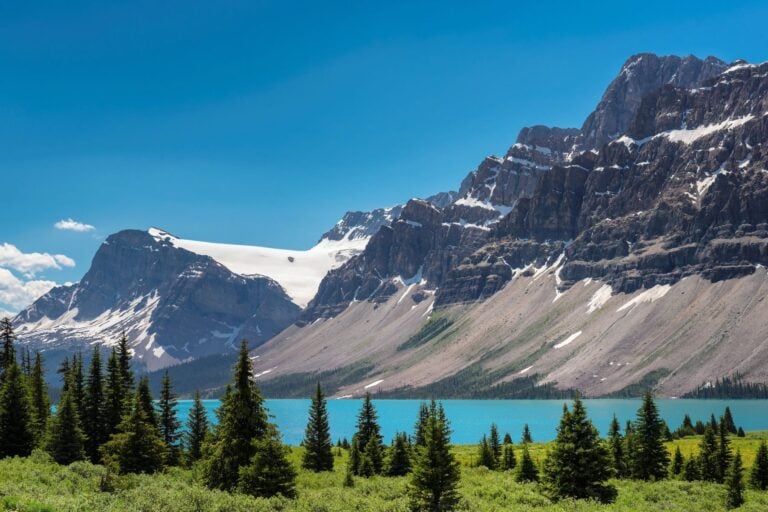
The towering, often snow-capped mountains that dominate most of our 10-day Intrepid Travel tour from Vancouver to Calgary, Canada, are magnificent, jagged peaks, but it is the waterways and wildlife that surprise and amaze us.
Every day, we see wildlife, be it majestic bald eagles, deer, elk, bighorn sheep or squirrels. An unexpected highlight is a beaver swimming beside our canoe in Banff and the ultimate highlight is seeing two black bears two days in a row outside of Banff.
We love beautiful Banff as a town too, not just because we see beaver lodges in the Bow River there, plus bears and a beaver.
As for the waterways, we had seen many photos of Lake Louise, so seeing it in person is a real treat. The unexpected delights, though, are lakes we had not heard of, like Moraine Lake and Peyto Lake.
Moraine And Peyto Lakes
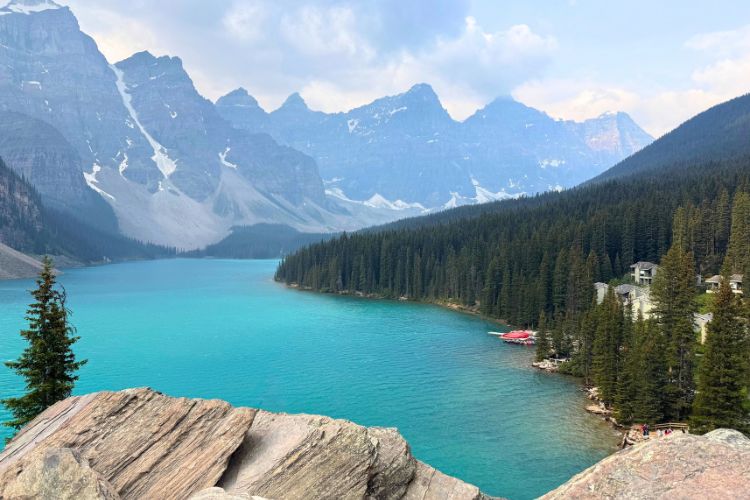
Climbing to the top of the Rock Pile and surveying the emerald water of Moraine Lake surrounded by the ten peaks (some snow-capped) and the boreal forest brings tears to our eyes. The cute little chipmunks are icing on the very gorgeous cake.
Then there is the shimmering aquamarine water of Peyto Lake, strikingly shaped like a wolf’s head.
Mid-summer, there are crowds at all these stunning lakes but our driver and guide, Neil from Alberta, is able to take us in our very comfortable minivan to the closest access point and accompany us or wait for us. His love for the natural wonders of his backyard is evident and infectious.
We had assumed that the colours of these lakes were due only to the sun, but Neil teaches us that the colour is caused by glacial sediment. Melting glaciers grind rock into fine “rock flour,” and heavy spring snowmelt or rain washes millions of tonnes of silt, clay, and sand into the water. This colours the water. Not always bright colours. Sometimes, the water looks milky. Always, it looks beautiful.
Rushing Rivers And Falls
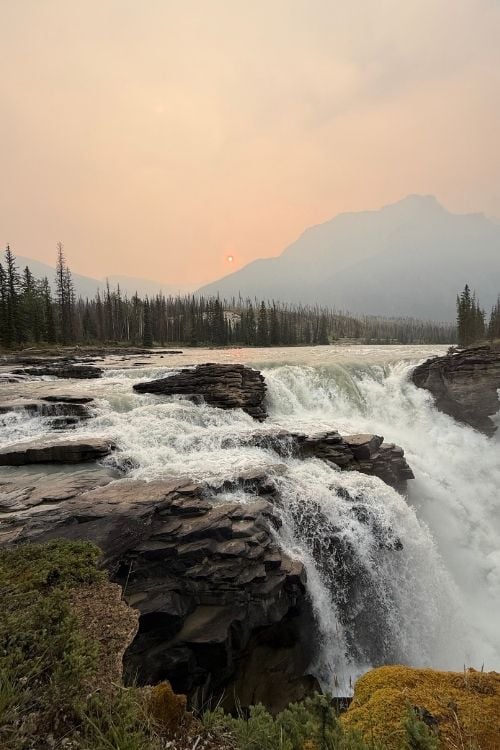
It isn’t just lakes, though. There are amazing waterfalls, running streams, rapids and rivers. Most have strong currents, seemingly in a powerful rush. Athabasca Falls is a case in point of violently pulsing water.
We visit early (as per Neil’s advice to arrive before the crowds). In the midst of terrible wildfires that are raging, the sun is a glowing fireball. An eerie counterpoint to the very cold, fine mist rising up from the Falls.
The angry milky-coloured water continually cuts into the limestone rock, gouging new carvings and tossing around large logs like matchsticks. Eventually, the water empties into the Arctic Ocean.
Local Guide Insights
We stop many times each day as Neil proudly shows us the most scenic points along the way. Whilst he drives, he teaches us about Canada. His local knowledge is invaluable; not just facts but practical information such as that we need a shuttle to visit Moraine Lake and that a washroom in Canada is the same thing as a restroom in the US or “the toilets” in Australia.
There are seven in our group: my husband and I, two other Aussies (both solo travelers), a solo American and a honeymooning British couple. None of us knew each other before, but 10 days and many shared WhatsApp messages later, we became a tight group.
Whistler Blackcomb
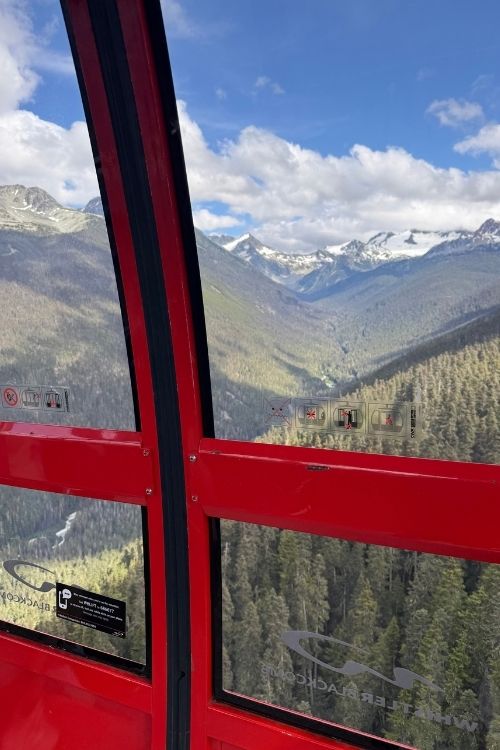
We spent two nights at Whistler, a place we had long heard of and wanted to visit. Whistler Blackcomb is the largest ski resort in North America, spanning 8,171 skiable acres with 36 lifts.
Special shoutout to the massive number of young Australians working here (and Jasper and Banff). It truly feels like a home away from home.
Whistler is buzzing when we are there as Crankworx is underway. This is the largest mountain biking festival series in the world and the 10-day Whistler event is the flagship event. All around the Village are muddy bikes and their riders.
We have a free afternoon and take up Neil’s suggestion to ride the PEAK 2 PEAK. That’s three gondola rides – one up Whistler Mountain, another across the valley and the last one down Blackcomb Mountain.
The PEAK 2 PEAK gondola across the valley is 2.7 miles (4.4 kilometres). It is the longest unsupported span in the world (almost 3 miles or 3 kilometres) with a maximum speed of 7.5 metres per second (27 kilometres per hour). All the gondola rides are super smooth and the views are incredible.
Atop Whistler, we see a marmot – a creature we had never seen before. Sort of like a plump guinea pig, Whistler is named after the whistling sound marmots make. It is cold and windy on Whistler Mountain but seeing this fuzzy ball of cuteness warms our hearts.
Once at the bottom of the Blackcomb gondola, it is a scenic 10-minute walk back to Whistler Village across a bridge over another beautiful waterway – FitzSimmons Creek, milky from the glaciers pulverising the rock.
First Nations Culture
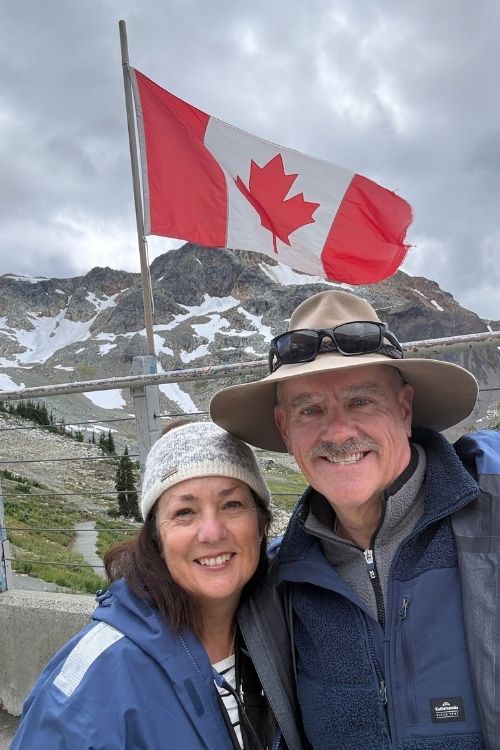
Whilst scenery dominates this itinerary, we learn about First Nations culture too.
We have an included stop at The Squamish Lil’wat Cultural Centre (SLCC), located in Whistler’s Upper Village. It is a First Nations’ museum co-managed by the Squamish and Lil’wat Peoples on their shared, unceded traditional territories. Opened in 2008, it is the first centre of its kind in Canada to be jointly owned and operated by two distinct First Nations.
After a traditional song and dance with some audience participation and a film, we have a guided tour from Markeeta of the Lil’wat Nation. As she explains to us, the two Nations own different lands with Whistler being in common. Rather than fighting about ownership, they decided to share Whistler.
Each Nation has its own language, songs and traditions. In the animal room (a temporary exhibit) the two Nations’ stories about certain animals sit side-by-side.
Grizzly bears, for example, are considered by both Nations to be fierce defenders and protectors of their families and the land. The Squamish Nation also believes grizzlies to be sacred and to be created second after the land was created.
There is a sign at the SLCC which states, in part, “Welcome to our territory, welcome to our home. We are people of the land, we are part of it, and it is a part of us. The Squamish Lil’wat Cultural Centre offers only a slice of the work that each nation is doing to ensure their culture is passed on to the next generation… Our Ambassadors breathe life into our cultural centre, they bring with them their family’s history and connection to their territory.”
In times of world conflict, it is heart-warming to see co-operation, mutual respect and love for the land and all it provides in action.
Guided Tour Highlights
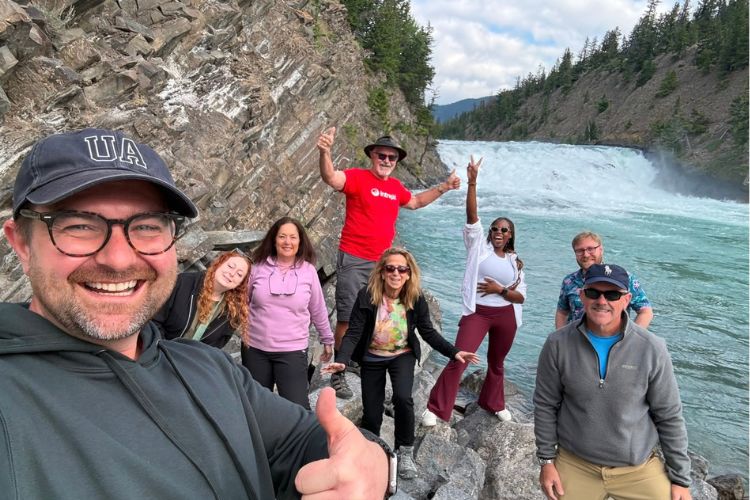
The scenery on this trip is gold and so, too, is our tour leader, Neil. His nuggets of helpful information and knowledge about everything from history to glaciers to salmon enhance each day of the trip.
We chose this tour as we had never been to this part of Canada before. To be honest, we expected to be wowed by the mountains. And we are.
We did not expect to be wowed by the waterways – spectacular rivers, lakes, streams and waterfalls. And we did not expect to be wowed by the wildlife.
All in all, ten days of wows.
For more, read Fall Day Trips from Vancouver: 7 Scenic Walks Worth the Drive.
If You Go
The Tour
Intrepid Travel’s Grand Canadian Rockies is a 10-day small-group trip that starts in Vancouver and finishes in Calgary, with stops in Whistler, Sun Peaks, Jasper and Banff along the way. Groups top out at 12 travelers. Hotels and private transport are included, along with visits to the Squamish Lil’wat Cultural Centre, Lake Louise and the Banff Upper Hot Springs.
Best Time to Go
The trip runs from late spring into early fall. Summer brings the full lineup of gondolas, hikes and rafting, along with the biggest crowds. Shoulder season departures have a few seasonal closures but quieter trails.
Getting There
- Fly into Vancouver International Airport (YVR). Airport transfers aren’t included, but the joining hotel in New Westminster is about 40 minutes away by taxi and is also reachable by SkyTrain.
- The trip ends in Calgary on the morning of day 10, so plan your flight home from Calgary International Airport (YYC).
Arriving Early
The tour opens with a 6 p.m. welcome meeting on day one, so you’ll have time to see some of Vancouver first.
- Book an extra night at Inn at the Quay on Expedia. It’s the trip’s joining hotel on the New Westminster waterfront, steps from the SkyTrain station.
- Walk Stanley Park with a First Nations guide on the Talking Trees tour. It circles Beaver Lake and explains how Coast Salish peoples have used the forest’s plants for food, medicine and shelter, which makes it a natural prelude to the cultural centre stop in Whistler.
- Taste your way through Granville Island Public Market on this small-group food tour. Around 20 tastings from local cheesemakers, bakers and picklers add up to a generous lunch.
Travel Insurance
Intrepid collects insurance details at the welcome meeting, and summer wildfire season can disrupt plans in the Rockies, so sort out coverage before you fly. Compare policies on Squaremouth or get flexible coverage through SafetyWing.
What to Pack
Layers, walking shoes, a rain jacket and sunglasses will see you through most days. Add a swimsuit for the Banff Upper Hot Springs, a warm layer for chilly mountain nights and insect repellent if you’re traveling in July or August, peak season for mosquitoes and black flies.
Further Reading
Moon Canadian Rockies by Andrew Hempstead covers Banff, Jasper and the gateway towns in depth, which helps if you’re adding days before or after the tour.
Need a hand planning your trip? Here are the sites and services we rely on most, from booking tools to travel products we love.
Inspire your next adventure with our articles below:
- 5 Romantic Island Escapes Along British Columbia’s Coast
- Retreat to Tranquility: A Healing Getaway at Hollyhock on Cortes Island, BC
Author Bio: Leonie Jarrett lives in Melbourne, Australia. She has travelled to all 7 Continents and to almost 70 countries. And counting! Leonie has cruised 22 times and she has another 6 cruises booked…so far! Avid explorer Leonie loves writing about her travels and her experiences.
Want to discover more hidden gems and helpful travel tips? Join our free newsletter for the latest travel secrets and travel articles.
We are reader-supported and may earn a commission on purchases made through links in this article.

- Canadian Rockies in 10 Days: Glacial Lakes, Wildlife and First Nations Culture from Vancouver to Calgary - October 4, 2026
- Penang, Malaysia: How to Plan a Trip to Singapore’s Quieter, Cheaper Neighbor - October 4, 2026
- Berlin’s Museum Island: Art, Antiquities and Architecture on the Spree - October 3, 2026
Planning another trip soon? ✈️
Add GoWorldTravel.com as a preferred source on Google. Click the button below so our local guides, packing hacks, and hidden-gem itineraries always show up first when you search!
Add to Preferred Sources