


Italy offers countless incredible destinations, but Florence stands out as something special. We spent a few days in this Tuscan city during our trip to Italy, and it quickly became one of our favorites.
Florence delivers exactly what you’d hope for: Renaissance art, centuries of history and that dreamy Italian atmosphere.
A big bonus is that the entire historic center is walkable. You can hit all the major attractions without dealing with complicated transportation, and just wandering the streets between sights is part of the experience.
Main Attractions of Florence
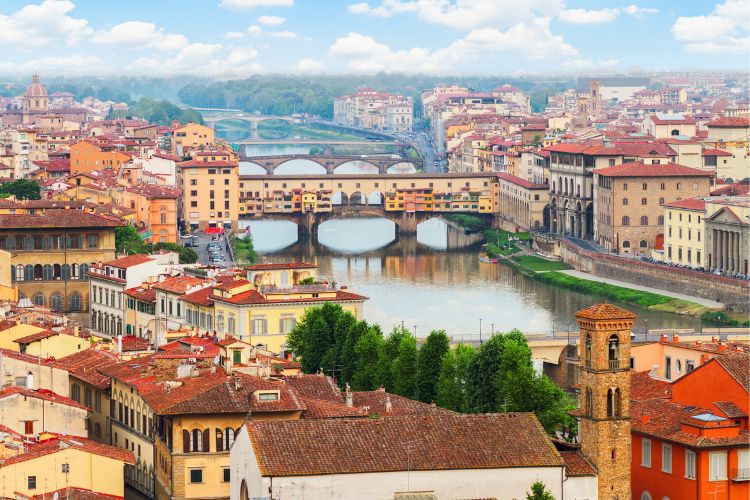
With just a few days in Florence, you’ll want to make the most of your time. The city packs an incredible number of significant attractions into a relatively small area, which means careful planning pays off.
Here are the essential sights that deserve a spot on your Florence itinerary, each offering something unique that captures what makes this city so remarkable.
Duomo (Florence Cathedral)
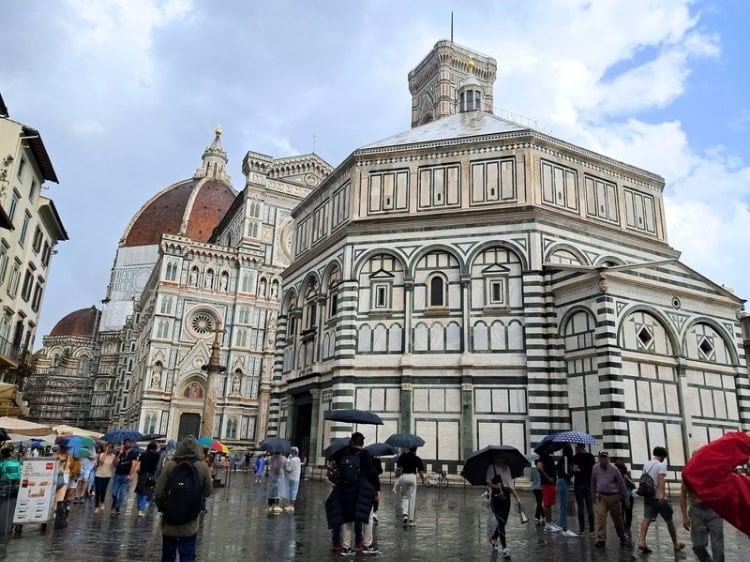
The iconic Cathedral of Santa Maria del Fiore, also known as the Duomo di Firenze, stands front and center as the symbol of Florence.
We visited in early May, and this tourist-heavy city was less crowded, making it easier to see the attractions. Certainly, the crowds will be heavy in peak summer, so keep that in mind when planning a visit.
We ventured out of our hotel, ensconced under umbrellas in heavy rain, and walked through charming, narrow streets flanked by fancy stores. And suddenly, the Duomo’s striking walls came into view, instantly uplifting our moods.
Located in the Piazza del Duomo, this magnificent Gothic-style cathedral is a true architectural masterpiece. Construction of this basilica began in 1296 and was completed in 1436.
Now, it is a UNESCO World Heritage Complex that attracts people from all over the world. Entry to the Duomo is free, and we had a relatively short wait in a line that moved steadily forward.
While waiting in line, we admired the intricately designed exterior walls, made of white, green, and red marble, featuring geometric figures and stylized floral motifs.
The facade is a 19th-century neo-Gothic work that replaced the wall of the late 1600s, which in turn had replaced the original medieval facade.
Once inside, we couldn’t stop marveling at the many sculptures, artworks, stained glass windows, frescoes and the mind-blowingly stunning interior. Bravehearts can also climb the 463 steps to the top of the dome to admire the Florentine views.
If you want to experience the cathedral without long waits, consider the Florence Duomo Skip-the-Line & Terrace Access Tour. It includes fast entry and rare access to the terraces for incredible close-up views of the dome.
The Uffizi Gallery and the Statue of David

Photo by Susmita Sengupta
Florence, the birthplace of the Renaissance, has eye-popping architecture, design, and historic decor wherever you look, giving the city itself a museum-like aura. However, to truly delve into its treasures, one must visit a few of its renowned museums.
We began with the Uffizi Gallery, a repository of Renaissance art treasures, including Botticelli’s The Birth of Venus and masterpieces by Giotto, Piero della Francesca, Caravaggio, and many other notable artists.
There is also an enviable collection of the Medici family treasures and works of art by other European painters. All this is housed in a building that was built between 1560 and 1580.
Our next museum stop was at the Galleria dell’Accademia di Firenze to see what could be the most famous statue in the world. David by Michelangelo was created by this artistic genius between 1501 and 1504.
As we entered the hallowed space, surrounded by awe-struck visitors, the towering 17-foot-high marble statue, displayed under a dome with a skylight, bathed the sculpture in natural light, and we too felt its ethereal power.
The Museo Galileo is another worthy stop on your Florence museum tour. We took a lovely walk along the River Arno to reach the place.
The museum holds an impressive collection of scientific instruments, a lot of which belonged to the Medici family and the Lorraine family, Grand Dukes of Florence.
It was definitely exciting to view the instruments of the famed astronomer, Galileo Galilei, which included his telescopes and the lens with which he discovered the moons of Jupiter.
Art lovers short on time can combine two landmarks in one outing with the Uffizi Gallery and Accademia Priority-Access Tour, which covers masterpieces like The Birth of Venus and Michelangelo’s David with an expert guide.
More Must-See Museums
A few minutes away from the Duomo is the Leonardo da Vinci Museum, good for a quick stop. Here, you can see life-size reproductions of da Vinci’s works, which include a variety of mechanical machines, each interactive in nature, providing the visitor with an accurate representation of da Vinci’s ingenuity.
Palazzo Vecchio Museum is actually the Old Town Hall of Florence, founded in 1299. It is another spectacular Renaissance palace building where visitors can admire frescoes, artworks, and even the remains of a Roman Theater.
If you decide to climb the tower, you can feast your eyes on magnificent panoramic views.
To continue with palace museums, visit the Palazzo Pitti, the residence of the famed Medici family of the 16th century, although the name still reflects its original owner.
The Pitti is the largest museum complex with five museums and holds an amazing collection of Renaissance paintings, Russian icons, modern art, costumes and more.
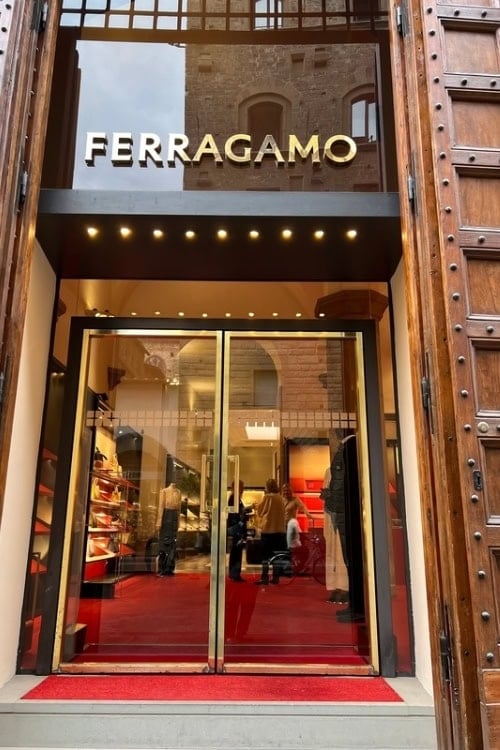
And to complete your museum visits, finish up with the Museo Salvatore Ferragamo, a repository of a different kind, shoes, to be exact.
The museum was founded by the Ferragamo family in 1995 to showcase the artistic abilities of Salvatore Ferragamo and his influence on the world of footwear and fashion.
From the conceptualization of a shoe to the many famous products worn by the world’s celebrities, the museum showcased it all, making for an interesting and unusual hour-long visit.
River Arno
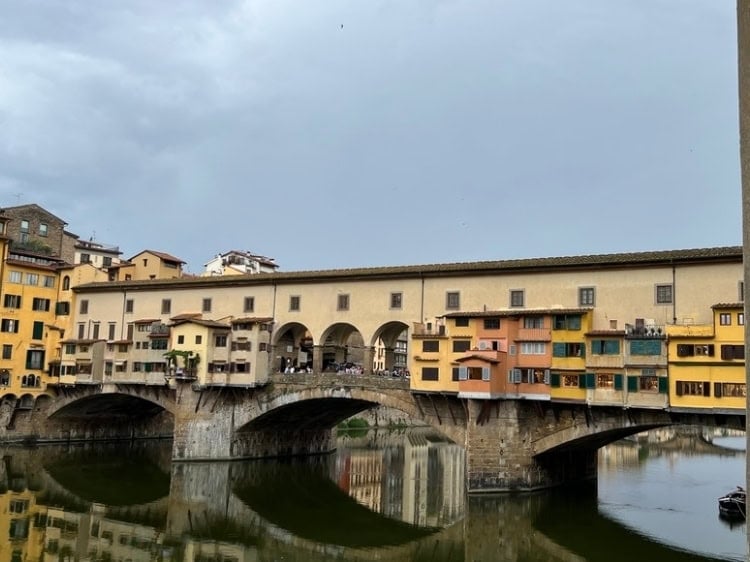
The Arno River is central to the history and development of Florence, and it is absolutely magical as you walk alongside it in order to visit many of the attractions.
Start with Ponte Vecchio, Florence’s oldest bridge, and a sight to behold. It is positioned on the narrowest part of the river, existing from Roman times with changing iterations in the centuries since.
If you are at the Uffizi Gallery, use the Vasari Corridor, built in 1585, to cross the Arno and get fabulous views. It was reopened in December 2024 after being closed for several years.
The corridor connects the Uffizi to the Pitti Palace, the site of Boboli Gardens, one of the important Florentine gardens.
Florentine Gardens
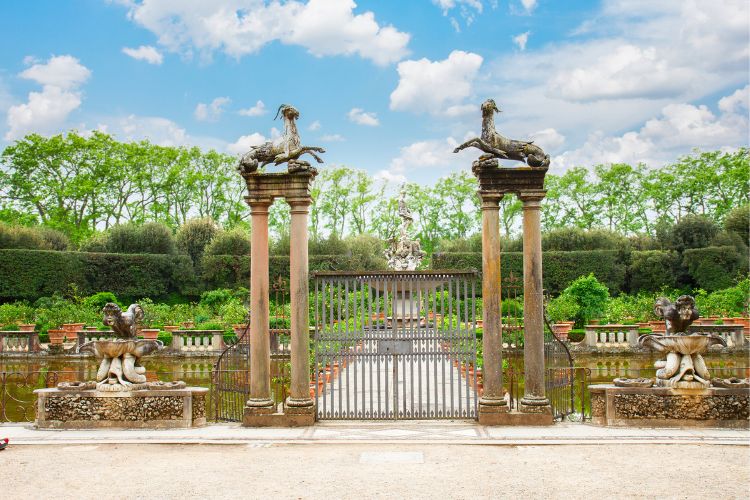
The Boboli Gardens were constructed starting in 1550 and are an illustrious example of the Italian Renaissance style of structured elegance with elaborate fountains, statues, sculptures, and terraces offering stunning landscape views.
We also enjoyed our trip to Piazzale Michelangelo, essentially a square but situated on a hilltop that once again offers tourists and locals extraordinary views of the city, the Tuscan hills, and the surrounding landscape.
We reached the terraced viewpoint via taxi and joined the growing crowd, all trying to find the best spots to soak in the scenery. You will come away mesmerized with views of the Duomo, the River Arno, Ponte Vecchio, and the red-roofed Florence skyline.
Do not miss the copy of Michelangelo’s David that also graces the square.
If you are a garden aficionado, you must also visit Bardini Gardens, about a ten-minute drive from Piazzale Michelangelo.
The Giardino Bardini personifies 700 years of Florentine garden history with three distinct areas. This includes an Italian garden with a grand Baroque-style staircase, an Anglo-Chinese garden and an agriculture zone, along with magnificent sculptures, grottoes, fountains, a variety of trees, some of them centuries old, and of course, a superb collection of flowering plants.
Day’s Outing to Pisa
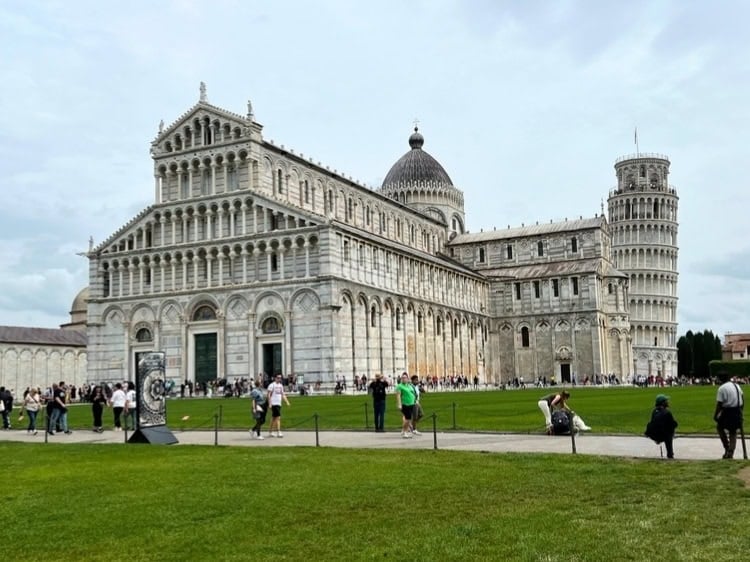
Once you’ve completed your Florence tour, it is imperative to take an excursion to Pisa, easily reachable by train or bus.
We took the hour-long train ride from Florence’s Santa Maria Novella station to reach Pisa Central Station, from where it was an easy taxi ride to Pisa’s main attractions.
The Leaning Tower of Pisa is a well-known must-visit attraction. The place teems with tourists, and of course, everyone is trying to click the perfect photo. Despite all that, the 850-year-old tilted tower is breathtaking to behold.
If you are inclined to climb the 294 spiral steps to the top, you have to buy a ticket.
The Piazza dei Miracoli or Square of Miracles, which contains the Leaning Tower, the Pisa Cathedral, and other monuments, is free to walk around in.
The Pisa Cathedral, built in the Romanesque style, has an ornate marble facade and is glorious to see.
You can complete your trip by walking around the charming streets to revel in the Tuscan atmosphere and perhaps savor a gelato in any of the little cafes before heading back to Florence, like we did.
If you prefer a guided option, the Pisa and Piazza dei Miracoli Half-Day Tour from Florence includes transport, a guide, and time to explore the Leaning Tower area without the hassle of navigating trains.
Where to Stay in Florence
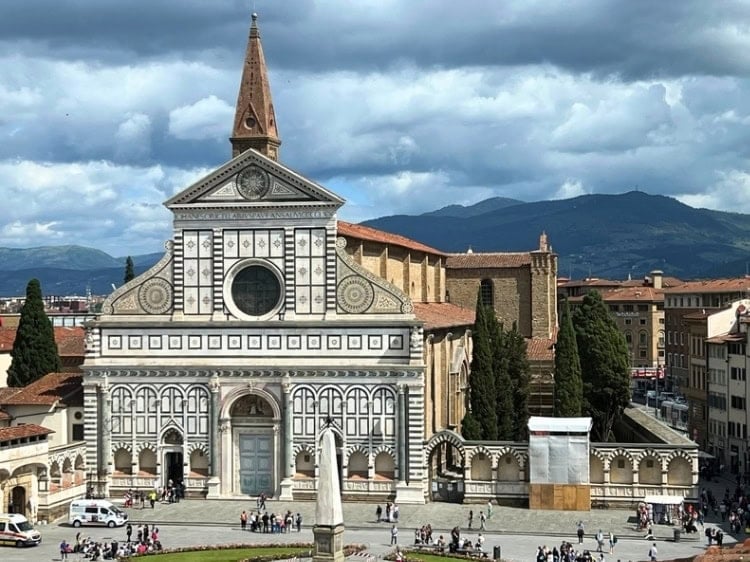
For our short stay, we chose Hotel Santa Maria Novella, located in the Piazza Santa Maria Novella, steps away from all the attractions.
The hotel was elegant and charming, and our high-floor room had a fantastic view of the Duomo and vintage Florence rooftops.
I truly loved its proximity to the Church of Santa Maria Novella, known as the first great basilica of Florence, and consecrated in 1420.
Its highly ornate facade was designed by the famed 15th-century polymath Leon Battista Alberti, who created a harmonious Renaissance frontage for a Gothic structure.
Need a hand planning your trip? Here are the sites and services we rely on most, from booking tools to travel products we love.
Inspire your next adventure with our articles below:
- Exploring Bologna: Top 10 Must-Do Experiences in Italy’s Culinary Hub
- Top 10 Things to Do in Italy: Planning Your Italian Journey
Author Bio: Susmita Sengupta, an architect by background, from New York City, loves to travel with her family. She writes frequently for Go World Travel and other online travel magazines such as GoNomad, Matador Network, Travel thru History, In the Know Traveler and others.
Want to discover more hidden gems and helpful travel tips? Join our free newsletter for the latest travel secrets and travel articles.
We are reader-supported and may earn a commission on purchases made through links in this article.

- Winter in Michigan’s Keweenaw Peninsula: Sled Dogs, Saunas and Snowshoe Trails - October 27, 2026
- Love Across Borders: 8 Expert Tips for International Dating Success - October 27, 2026
- The Ecuador Amazon Lodge That Actually Lives Up to the Ecotourism Label - October 27, 2026
Planning another trip soon? ✈️
Add GoWorldTravel.com as a preferred source on Google. Click the button below so our local guides, packing hacks, and hidden-gem itineraries always show up first when you search!
Add to Preferred Sources