
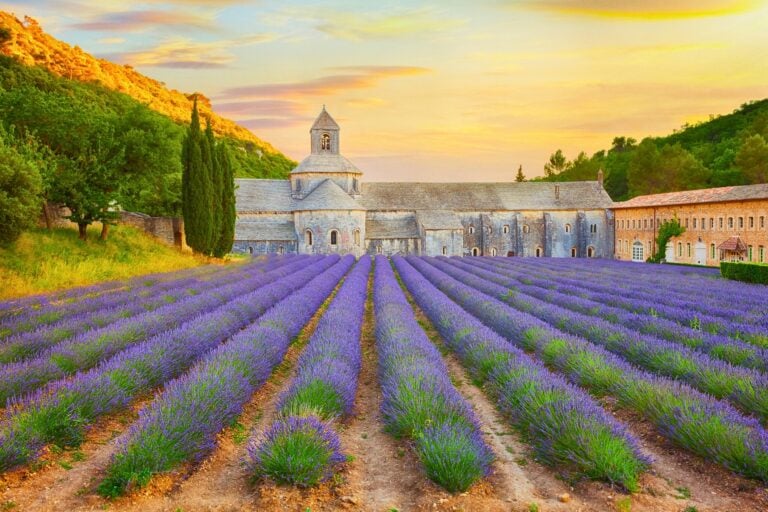

Castle ruins softened by time. Honey-coloured villages stitched together by country roads. Fields brushed with lavender, poppies, and silvery olive trees. For centuries, Provence, sunlit and soulful in southeastern France, has inspired artists, writers, and dreamers.
From Cézanne and Van Gogh to Peter Mayle, its landscapes and light have long stirred the imagination. Now, it has inspired me.
Arriving In St‑Rémy‑de‑Provence
We arrive in St‑Rémy‑de‑Provence, our chosen home base, just as the afternoon heat begins to mellow. This handsome historic town sits at the foot of the Alpilles mountains, wrapped in vineyards and olive groves.
A broad, tree‑shaded boulevard encircles the old town, protecting a tangle of narrow lanes filled with independent boutiques, galleries, and cafés where conversations drift easily from table to table. It’s lively without being loud, polished without being staged.
If you’re planning a trip to France, check out our France Travel Guide, where you’ll find a curated selection of articles to inspire you and help plan your trip.
Staying Like A Local
Wanting an experience that feels local rather than packaged, we book into Maison d’Isidore, a quintessentially French bed and breakfast tucked along a quiet pedestrian street.
Pale shutters frame tall windows, bicycles lean casually against stone walls, and the scent of espresso lingers in the morning air. It’s the kind of place that invites you to slow down, unpack fully, and wander without an agenda.
Over the next three glorious days, we do exactly that—using St‑Rémy as our anchor while exploring some of Provence’s most captivating towns, ancient sites, and landscapes. By the end, we’re utterly smitten.
Day One: Popes, Bridges and Roman Brilliance
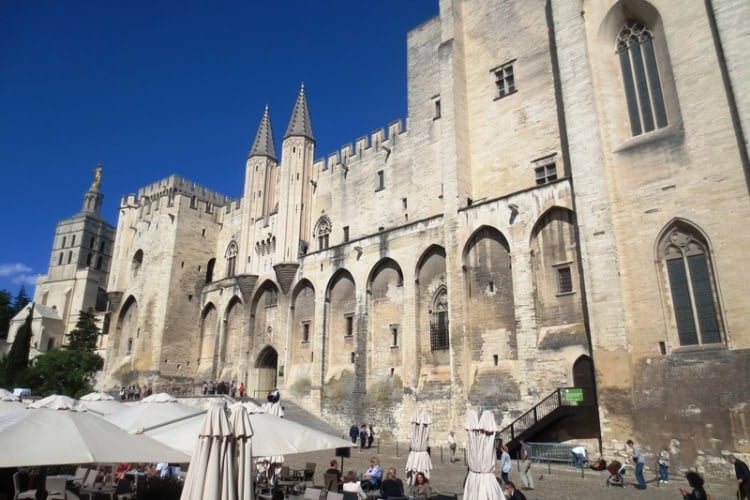
Just thirty minutes north, Avignon rises dramatically behind its medieval ramparts. Known as the City of Popes, Avignon served as the seat of papal power during the 14th century, and its history feels both monumental and intimate. Inside the walls, cobblestone streets weave past Gothic churches, sun‑bleached squares, and shaded courtyards.
Palais des Papes
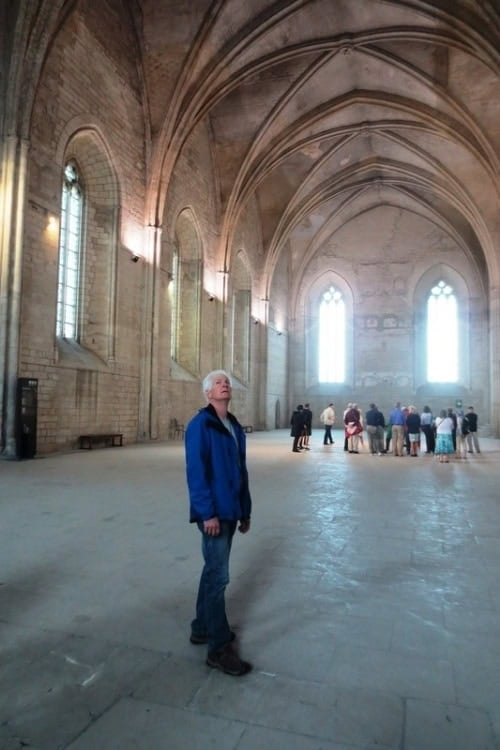
Our first stop is the Palais des Papes, the largest Gothic palace in the world.
From 1309 to 1377, Pope Clement V and his successors ruled from here, and the scale is astonishing.
We wander through the Pope’s private chambers, cavernous halls, and lavish chapels, pausing often to absorb the weight of history.
“Amazing,” my husband murmurs, gazing up at vaulted ceilings that have witnessed centuries of power, faith, and intrigue.
Nearby, the broken arches of the Pont d’Avignon stretch partway across the Rhône, hovering poetically above the water.
Childhood memories surface as we hum “Sur le Pont d’Avignon…”, a tune that stubbornly follows us back to the car.
Pont du Gard
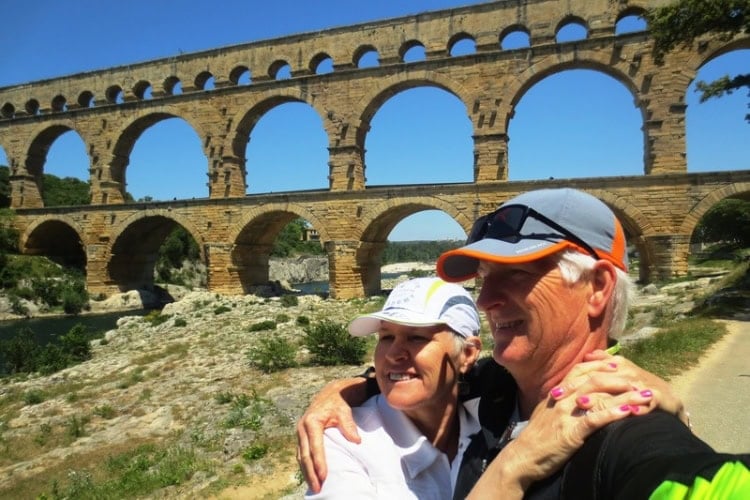
They finally fade (briefly) when we reach the Pont du Gard, one of the most extraordinary Roman engineering feats in Europe. This three‑tiered aqueduct, nearly two thousand years old, strides confidently across the Gardon River Valley. As a UNESCO World Heritage Site, it commands awe from every angle.
We circle, photograph, pause, and photograph again, knowing full well that no image will ever fully capture its grandeur.
This small-group full-day tour highlights Provence’s most photogenic spots, including rolling vineyards, lavender fields, and the iconic Pont du Gard aqueduct. It’s an ideal way to explore key landmarks with an expert guide.
Day Two: Medieval Legends and Van Gogh’s Colours
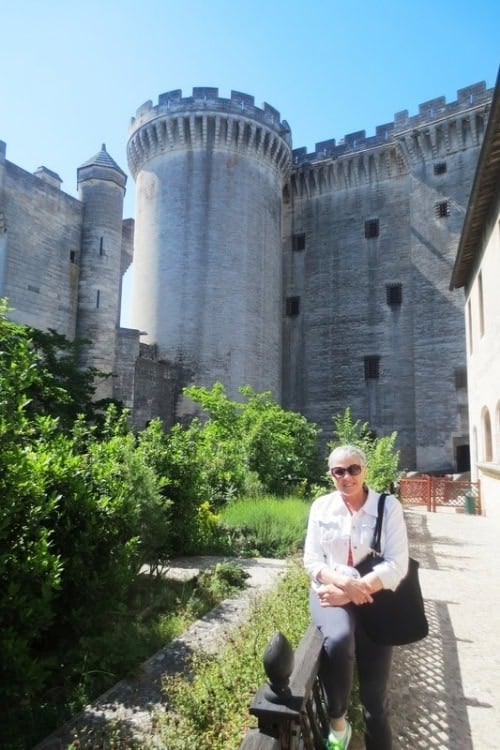
The following morning, we head south to Tarascon, a small town steeped in legend. Myths here stretch back to prehistory, but the town’s most imposing presence is unmistakable: the Château de Tarascon.
Before entering, we step into the neighboring Church of Sainte‑Marthe, a fifteenth‑century sanctuary that feels quietly reverent.
Outside, the castle dominates the skyline. Built in the 12th century, its limestone walls soar nearly 50 meters skyward. Inside, spiral staircases wind through thick stone corridors, opening into rooms that once reflected royal ambition and wealth.
From the rampart‑lined rooftop, we enjoy panoramic views of the Rhône and the surrounding countryside, tracing the river’s curve as we plan our next stop.
Just twenty kilometers away lies Arles, a town that feels both ancient and vividly alive. This is where Vincent van Gogh spent one of the most intense and productive periods of his life, and his presence lingers everywhere.
As we wander crooked streets lined with pastel façades—soft pinks, lavenders, and buttery yellows—it’s easy to understand why artists continue to be drawn here.
At the heart of the town stands Les Arènes, a Roman amphitheater once capable of seating 20,000 spectators. Remarkably preserved, it has served many purposes over the centuries—from fortress to neighborhood to cultural venue.
A short walk away, the Museum of Antiquities houses Roman artefacts that ground Arles firmly in its classical past, reminding us that Provence’s beauty is layered, not accidental.
You can visit four picturesque villages—Les Baux de Provence, Roussillon, Gordes, and Saint-Rémy-de-Provence—plus the Pont du Gard on this curated full-day small-group tour. Perfect for those short on time but eager to see the highlights.
Day Three: Van Gogh, Ancient Stones and the Sea
Our final day brings us closer to St‑Rémy itself. We stroll along the main road leading to Saint‑Paul de Mausole, the former monastery and psychiatric institution where Van Gogh voluntarily admitted himself in 1889.
Along the route, reproductions of his paintings are displayed outdoors, positioned where the original scenes unfolded.
Inside the peaceful monastery grounds, olive trees sway gently and cicadas hum. This tranquil setting inspired more than 300 of Van Gogh’s works, including The Starry Night. Today, artists sketch quietly in the gardens, drawn, like Van Gogh once was, to the light, colour, and calm.
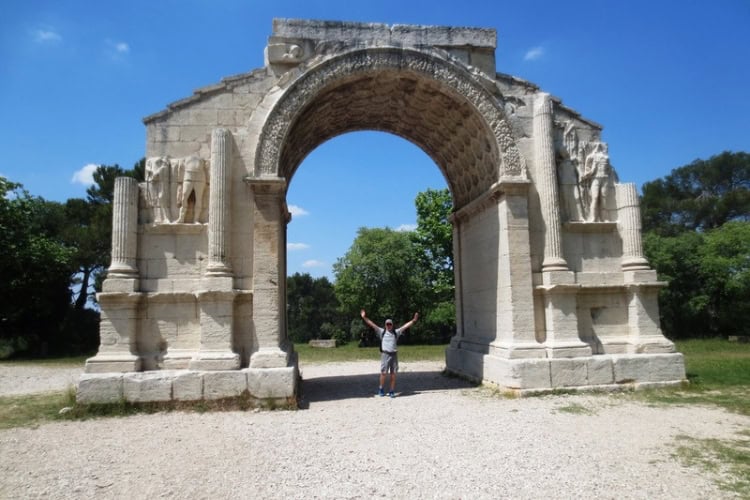
A few minutes up the road lie the ruins of Glanum, an ancient Roman town with roots reaching back to the sixth century BC. At the entrance stand Les Antiques: a triumphal arch and a beautifully preserved mausoleum that ranks among the finest ancient monuments in the world.
We wander along what was once Glanum’s main street, now crushed stone underfoot. Informative plaques describe former markets, thermal baths, temples, and sacred springs.
“I doubt this water is still treasured,” Brent jokes, peering into a murky basin at the base of a stone staircase.
“Want to find out?” he asks.
Despite the heat, I quickly decide that history can keep its bathwater.
Within the hour, we’re driving along the D35, a scenic route hugging the Rhône before giving way to the Mediterranean coast.
At the end of a narrow jetty peninsula lies Napoleon Beach, a stretch of sand that feels wonderfully undiscovered. The shoreline seems endless, the sand soft and pale beneath our feet. Gentle waves lap at the shore as the sea shifts between turquoise and deep blue.
It’s the perfect place to pause—to swim, to rest, to reflect. This quiet sanctuary by the sea feels like a fitting finale to our three days in Provence. A place where history loosens its grip, the sun softens everything it touches, and time becomes negotiable.
As we watch the horizon blur into sky, one thought is clear: Provence doesn’t just charm you—it stays with you.
If You Go
Tourism Information
Accommodations
- La Maison d’Isidore: A boutique B&B-style accommodation in St.-Remy-de-Provence, featuring just a few individually decorated rooms. Cozy, intimate, and personal.
- Le Château des Alpilles: Luxury hotel with elegant rooms and beautiful grounds.
- Le Vallon de Valrugues Hotel Spa & Villas: Stylish spa resort with wellness facilities.
- Hôtel Sous les Figuiers Saint‑Rémy de Provence: Charming boutique hotel located in town.
Favorite Must-Sees and Dos in Saint‑Rémy‑de‑Provence
Cultural & Historical Experiences
- Monastery Saint‑Paul de Mausole: Visit the former monastery where Van Gogh lived and painted some of his greatest works.
- Site Archéologique de Glanum: Explore ancient Roman ruins just outside town.
Markets & Food
- Saint‑Rémy Weekly Market: A lively Provençal market with fresh produce, lavender goods, olives, cheeses, and crafts — especially vibrant on Wednesday mornings.
Outdoors & Nature
- Alpilles Natural Regional Park: Hike or bike scenic landscapes in the Alpilles hills.
- Cycling the Van Gogh Route: Follow paths through countryside scenes that inspired the artist.
Need a hand planning your trip? Here are the sites and services we rely on most, from booking tools to travel products we love.
Inspire your next adventure with our articles below:
- Loving Lille: How a City in the North of France Stole My Heart
- Eight Countries, Eleven Days: A Love Letter (and a Reality Check) to Train Travel in Europe
Author Bio: Since 1996, while freelancing, Jane Cassie has had thousands of articles published. Her stories have appeared CNN Magazine, Northwest Travel, New York Daily News, Chicken Soup For The Soul, Dreamscapes, Air Canada In-flight, Cottage Life, Epicure and Travel, just to name a few. She has been a regular contributor to Spa Life, INNspire, North American Inns Magazine, Cottage, and Inspire Magazines.
Want to discover more hidden gems and helpful travel tips? Join our free newsletter for the latest travel secrets and travel articles.
We are reader-supported and may earn a commission on purchases made through links in this article.

- Bukhara, Uzbekistan: The Silk Road City Where History and Art Thrive - October 20, 2026
- Hoi An, Vietnam: A Local’s Guide to the Ancient Town, An Bang Beach and Must-Try Dishes - October 20, 2026
- Why Cape Town’s Kloof Street Was Ranked the Coolest Street in Africa - October 20, 2026
Planning another trip soon? ✈️
Add GoWorldTravel.com as a preferred source on Google. Click the button below so our local guides, packing hacks, and hidden-gem itineraries always show up first when you search!
Add to Preferred Sources