
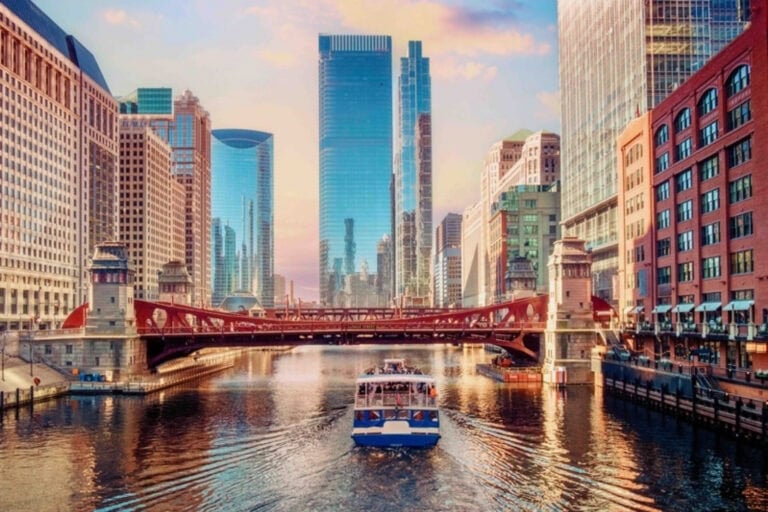

Chicago has never been short of fans – and you could be one of them! The Windy City has always been a beacon for sports fans, history buffs, design enthusiasts, museum-goers and foodies. Curious urban explorers of all stripes have been consistently drawn to an extremely varied cultural stew.
But beyond the performance venues, ample parkland and classic steakhouses lie little pockets of perfection – districts that are plenty cool enough to anchor a long weekend all on their own. Once you dig deeper into the heart of the city, you will quickly see why the true strength of Chicago’s character is indeed the sum of its indulgent and engaging parts.
Fulton Market District
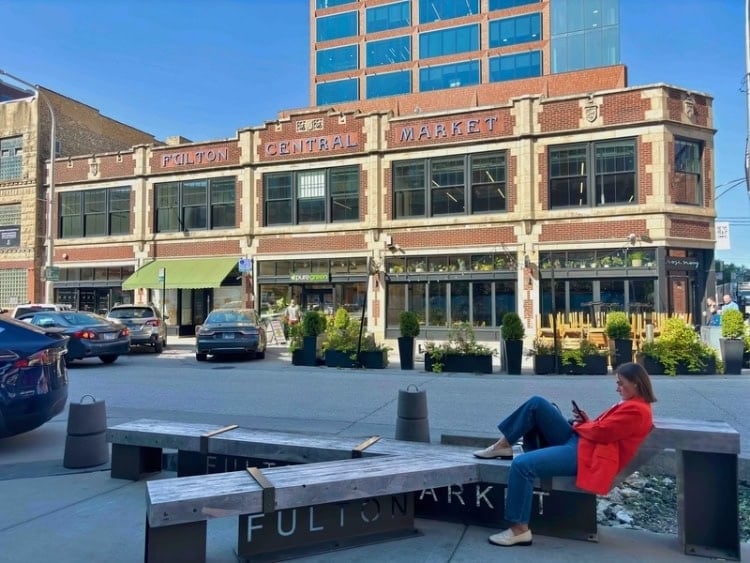
A former warehouse district, the Fulton Market is the flashiest part of the West Loop, filled with innovators and creative agencies, along with tech companies like Google. Cool-office culture yields great eateries, ample rooftop bars, design spaces and galleries, and excellent coffee.
Visitors can anchor themselves at one of the warehouse-turned-hotels, including the industrial-chic Hoxton Hotel or the artsy Emily Hotel. There’s full-on Asian minimalism, if you can afford it, at the new Nobu Hotel.
If you’re just swinging in for a few hours, go in the late afternoon so you can shop, hang around for the patios to start filling up, join the fray and stay for dinner. Though there is a big concentration of Michelin-star restaurants here, opt for the sharing spirit at Girl and the Goat or a burger at Au Cheval.
River North
Just north of the Magnificent Mile, this cosmopolitan hood is an art-and-design hub by day and an entertainment melting pot by night. The area is well known for its Merchandise Mart, a giant complex full of design showrooms, worth stopping in for the scale alone.
Head into the surrounding home design stores, antique shops and art galleries for a few minutes or a few hours. This is one of the densest contemporary art gallery zones in the city.
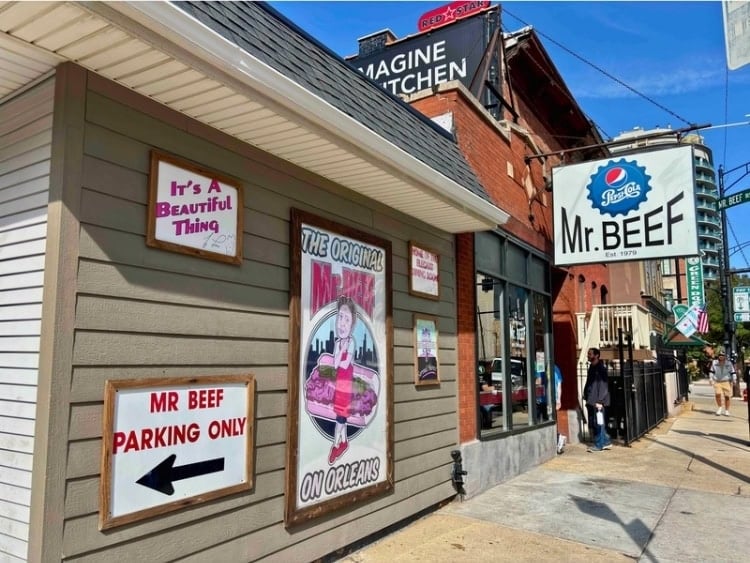
After dark, find a mix of comfort-food eateries and fine-dining boîtes, wine bars and craft cocktail hotspots. TV buffs familiar with the hit show The Bear head to real-life sandwich shop Mr. Beef. I took a Bear tour, which wound its way through establishments throughout town associated with the TV show and its characters.
And while my sandwich was to die for, I found a beef feast at Hawksmoor Chicago, one of the many other old-school power-dinner restaurants in the city. One more must-do: Share a giant cocktail at the cheeky Three Dots and a Dash tiki bar, a basement retreat off a back alley.
Wicker Park and Bucktown
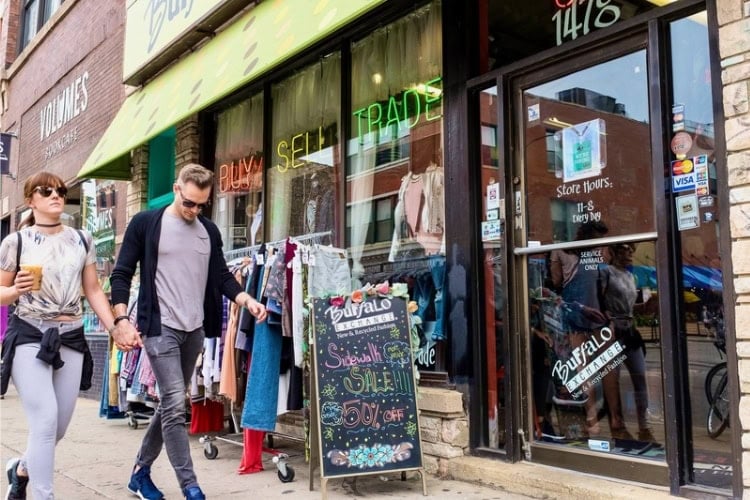
Wicker Park delivers the busier, more energetic side of the neighborhood, packed with nightlife, shopping and people-watching. Bucktown, just to the west, feels a little calmer and more residential, with quieter cafés, boutiques and a more local feel. Together, they form one of Chicago’s most recognizable creative districts.
This part of town is famous for its nightlife, shopping, dining and café culture — one of Chicago’s classic areas for wandering without much of a plan. Indie coffeehouses, record stores and thrift shops inject the requisite cool vibes, while chef-driven restaurants, cocktail bars and live music venues like The Empty Bottle liven up the evening.
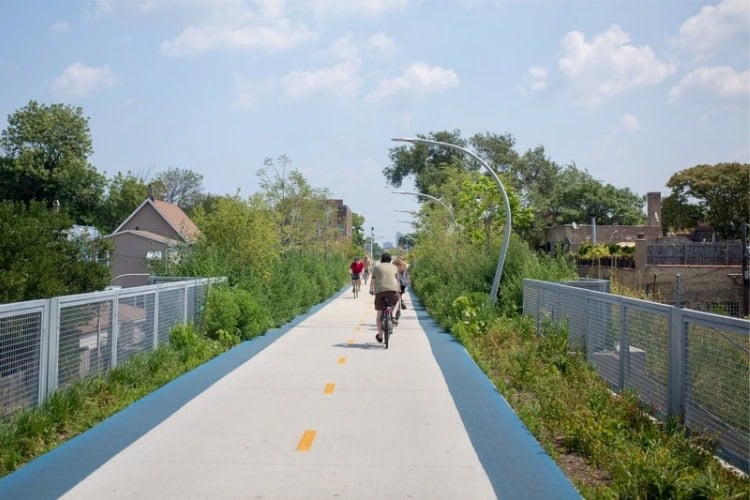
Visitors head into the fashion boutiques along North, Damen and Milwaukee as well as art spaces like the Flat Iron Arts Building. We wandered up to The 606, an elevated trail that lends a quiet moment for joggers or bikers. For specific eats, Big Star has the neighborhood’s top taco and margarita patio.
Wrigleyville
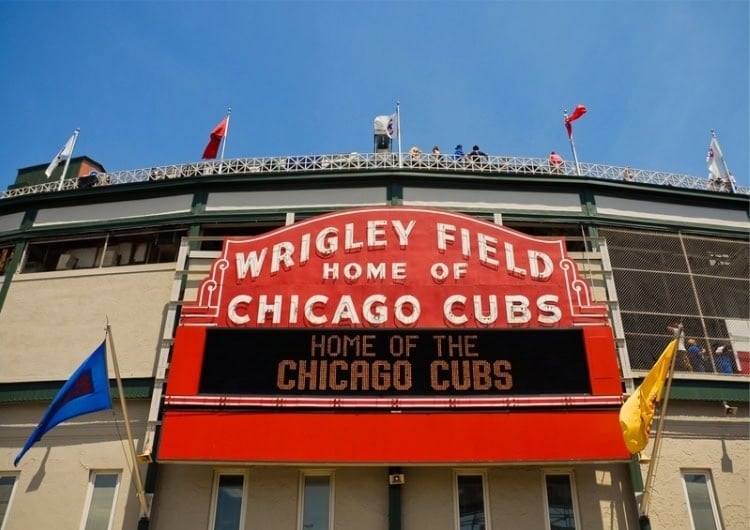
Named after landmark Wrigley Field, home of the Chicago Cubs, Wrigleyville has a communal energy that is practically infectious. A sub-district of the Lakeview neighborhood, part of a larger lakefront community, it’s rather tame during the day.
But nighttime shines along Clark Street not just with sports fans, but also with the younger, upwardly mobile set, the bar-hoppers looking for live music and the comedy-club fans. Game day is big, of course, win or lose.
Among the dozens of watering holes, Murphy’s Bleachers on Sheffield is the classic stadium-adjacent sports bar, and Old Crow Smokehouse on Clark is a cavernous comfort-food favorite with a live band in the corner for toe-tapping support. Diversity can easily be found in nearby Boystown, just a short walk away. (Oh yes, I did!)
Hyde Park
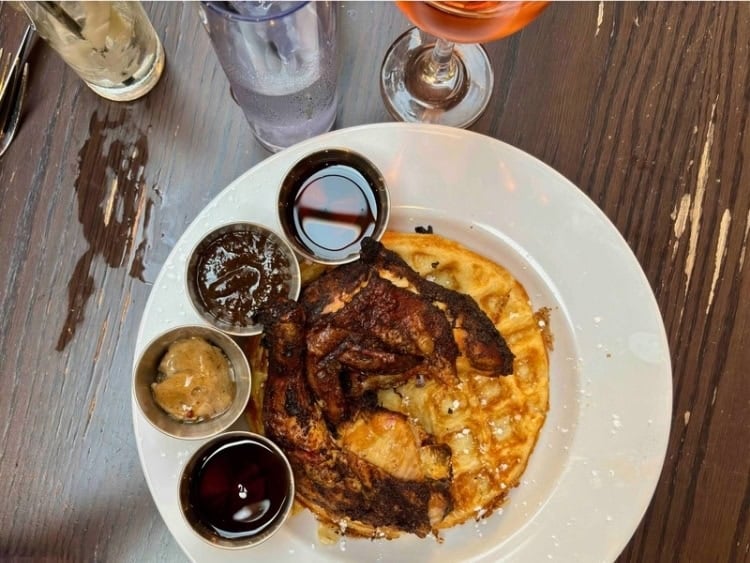
At 14 Parish Restaurant & Rhum Bar, I sit down to a plate of chicken and waffles the size of my head under a bright “put the lime in the coconut” pink neon sign. Set way down in the south end of Chicago, Hyde Park is definitely university country: there are students everywhere, wandering the various stately Gothic campus complexes, surrounded by ample parkland.
This neighborhood is also the home to the Obama Presidential Center, a new museum dedicated to Barack Obama’s presidency. Nearby, the extremely large Museum of Science and Industry is set in a 1893 World’s Fair building, well worth stopping into on your way to or from the Garden of the Phoenix.
Filled with cherry trees and soothing ponds, the garden is a little touch of Japan tucked into an island in Jackson Park. Hyde Park’s historical buildings also include Robie House, considered one of architect Frank Lloyd Wright’s prairie-style masterpieces. And the Smart Museum of Art at the University of Chicago includes a number of surprises within a relatively small space.
Read More: Architecture Takes Centerstage on This Chicago Architecture Boat Tour
If You Go
Getting There: Chicago is served by not one but two airports, O’Hare International Airport and Midway International Airport. Trains from each can connect you directly to downtown in 45 and 25 minutes, respectively. Chicago Union Station is also a major Amtrak hub, with trains arriving from across the U.S.
Getting Around: Don’t be afraid of the ‘L’ elevated rail system, which is loud but super easy to navigate. Water taxis are seasonal but swift – and more than a little glamorous! A word of caution: Ride shares can be overly expensive during inclement weather or busy times of the day.
When to Visit: Spring in Chicago brings mild temps, blooming parkland, fewer crowds and lower prices. Ditto for fall, which is often considered Chicago’s sweet spot thanks to the colorful foliage.
More Insider Tips:
- As with most cities, the mornings are optimum museum and cultural attraction time. Crowds start swelling at noon and beyond.
- Book restaurant tables and rooftop bar chairs in advance, as these fill up quickly during warm weather.
- Don’t skip the architecture cruise, which is really one of the best introductions to the city, hands down. And while you’re wandering around, don’t forget to look up, as historic details and public art are above street level and easy to miss.
- Check calendar events before booking, as major festivals bring more people and higher prices.
- If you need other pointers to make your itinerary shine, get in touch with the folks at Choose Chicago, who can help you make a solid travel plan.
Need a hand planning your trip? Here are the sites and services we rely on most, from booking tools to travel products we love.
Inspire your next adventure with our articles below:
- This Illinois Town Looks Almost Exactly Like It Did in the 1800s
- Chicago’s Comeback: Exploring One of the Best Big Cities in America
Author Bio: Doug Wallace is a travel journalist, author, photographer and copywriter, principal of Wallace Media and editor-publisher of TravelRight.Today. A member of the Society of American Travel Writers, he can be found beside buffet tables, on massage tables and table-hopping around the world.
Want to discover more hidden gems and helpful travel tips? Join our free newsletter for the latest travel secrets and travel articles.
We are reader-supported and may earn a commission on purchases made through links in this article.

- Darwin, Australia’s Northernmost Capital, Combines Vibrant Markets, Waterfront Life and Access to Kakadu and Litchfield - October 25, 2026
- Paarl: South Africa’s Secret Winelands Escape Where You Can Stay in Historic Wine Tanks - October 25, 2026
- A Quest for the Best Frango Assado in Portugal’s Algarve - October 24, 2026
Planning another trip soon? ✈️
Add GoWorldTravel.com as a preferred source on Google. Click the button below so our local guides, packing hacks, and hidden-gem itineraries always show up first when you search!
Add to Preferred Sources