
I stood on a bridge in front of the hourglass-shaped Kjosfossen Waterfall in Norway as it roared beneath my feet.
My husband and I were lured to Norway by its thundering waterfalls cascading down mountains and cliffs, dramatic fjords and breathtaking natural scenery. But traveling to two other Scandinavian countries, Denmark and Sweden, provided a bonus we weren’t expecting.
Denmark’s colorful canals and harbors and historic Danish royalty revealed the heart and soul of the country’s culture. Sweden’s Gamla Stan, Stockholm’s oldest settlement, helped us understand the prominent role the Old Town played in the country’s culture and history of Swedish architecture.
Planning for a three-country Scandinavian trip can be exhausting. But with help from our travel agent, we signed up for a two-week coach tour through Denmark, Norway and Sweden.
This left booking flights, arranging hotel accommodations and scheduling sightseeing tours to someone else while we enjoyed the culture and history of each country.
Welcome to Denmark
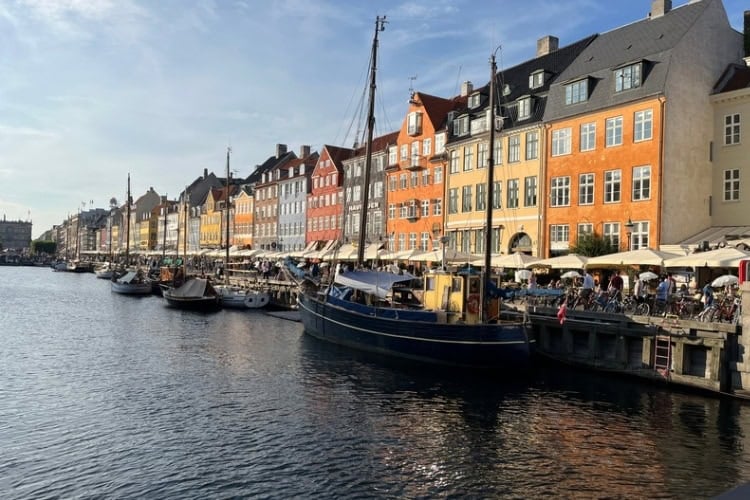
Photo by Maureen C. Bruschi
After a morning arrival in Copenhagen, we joined our tour director in the early afternoon for a walking tour of the seventeenth-century Nyhavn Canal. The Nyhavn Canal is lined with colorful old townhouses, cafes, bars, restaurants and boats.
Historical wooden ships more than 100 years old are docked alongside the canal. The oldest house dates back to 1681. Danish fairy tale author Hans Christian Andersen lived along the Nyhavn Canal in the mid-1800s.
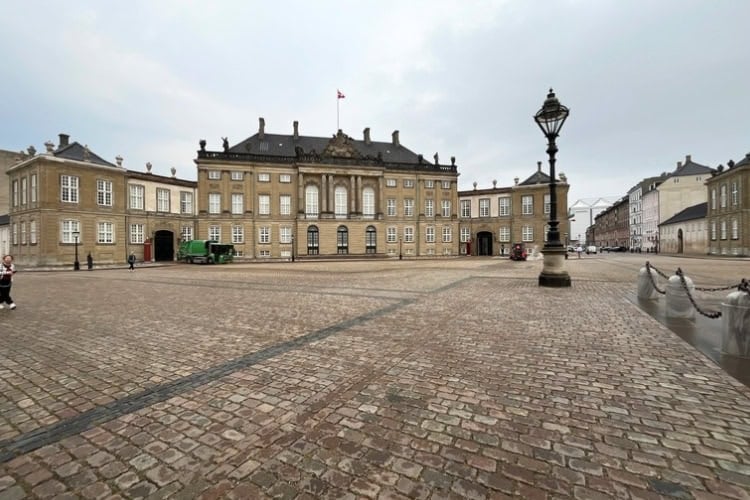
The next day, our tour guide expanded our horizons as we explored the city of Copenhagen. Our first stop was the Amalienborg Palace complex. This is the winter residence of the Danish Royal Family, one of the world’s oldest monarchies.
Standing in the middle of the octagonal courtyard, I rotated around and saw four identical palaces named after former Kings.
Frederik VIII’s Palace is the official residence of the current King Frederik X and his family. Queen Margrethe II, who abdicated her throne to her son in 2024, still resides in Christian IX’s Palace.
The Amalienborg Museum is housed in Christian VIII’s Palace. Christian VII’s Palace accommodates official guests and hosts official functions.
Everybody’s Favorite Mermaid
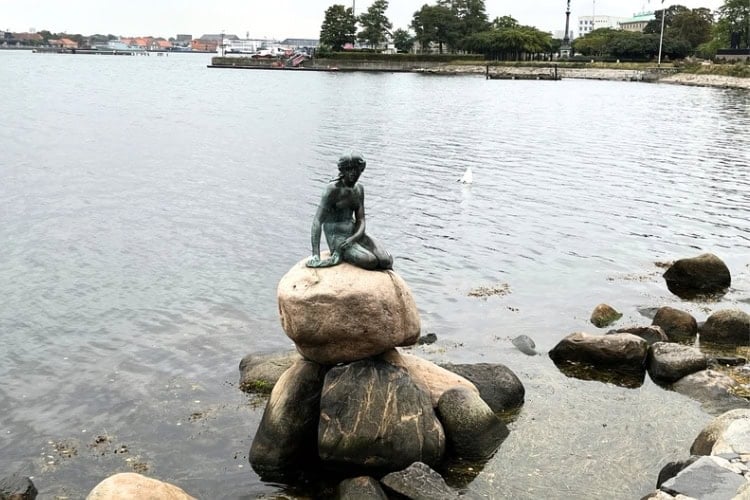
A drive along the waterfront brought us to my favorite Danish sculpture, the Little Mermaid. The Little Mermaid is a well-known bronze and granite statue sitting on a rock at Langelinie Pier in Copenhagen harbor.
No thanks to vandals and political activists, the Little Mermaid hasn’t had it easy since she’s been perched on her rock. She’s been decapitated, blown off her base, covered in paint, and had her right arm sawed off. No wonder she sits with slumped shoulders and downcast eyes.
A short coach ride delivered us to Frederiksborg Castle. This Renaissance castle, located at Hillerød on Castle Lake, was built by King Christian IV in the seventeenth century.
The castle, both massive and majestic, formerly housed the Danish monarchs, but today accommodates Denmark’s Museum of National History. History buffs can roam its interiors and attempt to absorb 500 years of Danish history, art, and furniture on display.
For me, the Renaissance Chapel was the most ornate and stately room in the castle. It houses Denmark’s oldest organ, with 1,001 wooden pipes. Danish kings and queens are still anointed in this chapel.
Rooftop Skiing at CopenHill Power Plant
Our tour veered away from palaces, castles and royalty, giving us an opportunity to appreciate an important part of Denmark’s culture: its environmental protection initiatives.
Copenhagen’s CopenHill power plant, a waste-to-energy facility, turns the city’s rubbish into heat and power. The plant burns about 440,000 tons of waste a year, producing clean energy needed for about 150,000 households in Copenhagen.
When the trash is burned at high temperatures, steam, not toxins, is released into the air. And large quantities of garbage no longer wind up at landfills.
On the roof of the CopenHill power plant is a 1,312-foot ski slope made of synthetic turf, which provides similar levels of friction a skier would get on snow. In addition, the plant offers the world’s tallest climbing wall at 262 feet, a track, and challenging trails.
The next morning, we headed to the Island of Funen and the city of Odense, birthplace of author Hans Christian Andersen. Odense is a wonderful, laid-back old town with narrow cobblestone streets lined with rainbow-colored houses and flowered curtains in the windows.
Andersen’s tin yellow home with a thatched roof sits on a cobbled street in the center of Odense.
Onward to Norway
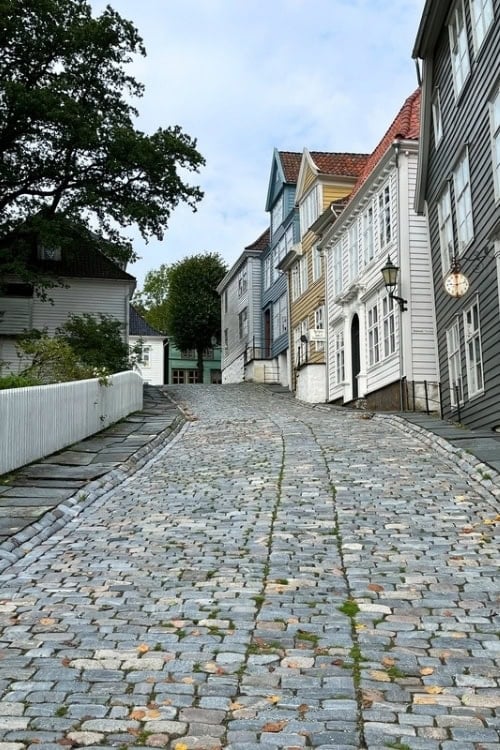
A three-hour ferry ride took us across the Skagerrak Strait to Norway. On our way to Stavanger, Norway, we drove past magnificent lakes and forests. We also got our first view of Norway’s scenic fjords.
At the port city of Stavanger, made up of 16 inhabited islands, we explored Gamle Stavanger, or Old Stavanger. Narrow cobblestone streets were lined with small white cottages, art galleries, street art, museums, and handicraft boutique stores.
Stavanger Cathedral, home to Norway’s oldest and best-preserved medieval cathedral, has been in continuous use since the 1300s.
Island hopping from Stavanger to Bergen, Norway, included two ferry crossings through beautiful natural landscapes, including fjords.
Our first stop was Gamle Bergen Museum, an open-air museum that offers visitors a look into the past. The museum contains over 50 old wooden buildings from the eighteenth, nineteenth, and twentieth centuries. Bergen was known as Europe’s largest wooden city during the 1800s.
Read More: Cabin Culture and Taco Friday: 12 Norwegian Quirks That Still Surprise Me
Best Views of Bergen
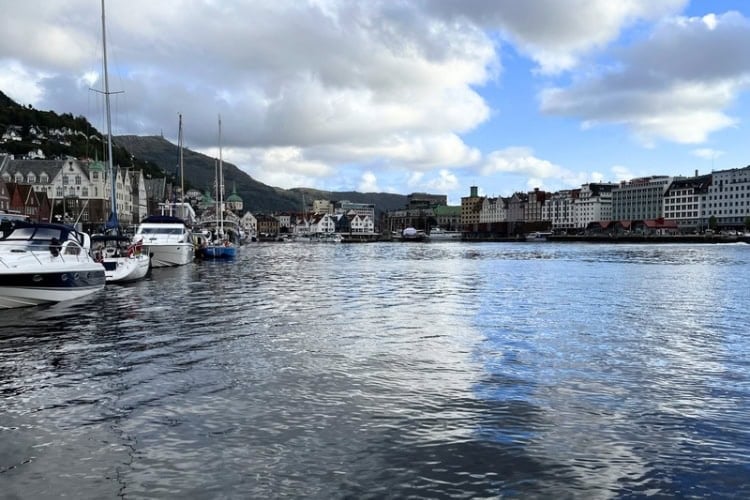
Next up, we climbed the steep mountainside of Mount Fløyen on the Fløibanen funicular railway. We experienced stunning views, through glass windows and ceilings, of Bergen, the surrounding mountains and several fjords .
Later that evening, we enjoyed dinner and entertainment with Bergen locals at the øvre-Eide farm. This fifth-generation family farm gave us a tour of their animals and prepared a Norwegian dinner of cured meats, smoked salmon and potato salad with ice cream and cookies for dessert. After a delicious meal, our guests provided music and dancing.
A day on our own in Bergen gave my husband and me a chance to walk along the old wharf, passing colorful wooden houses, shops, and restaurants. Lunch at the fish market in Bergen Harbor was a delicious treat. A mild seaweed scent resembling the salty smell of the sea permeated the market.
Our scenic journey continued as we boarded a train in Voss, Norway. We ascended approximately 2,845 feet above sea level, zigzagging through rugged mountains to Myrdal.
Kjosfossen Waterfall Beneath My Feet
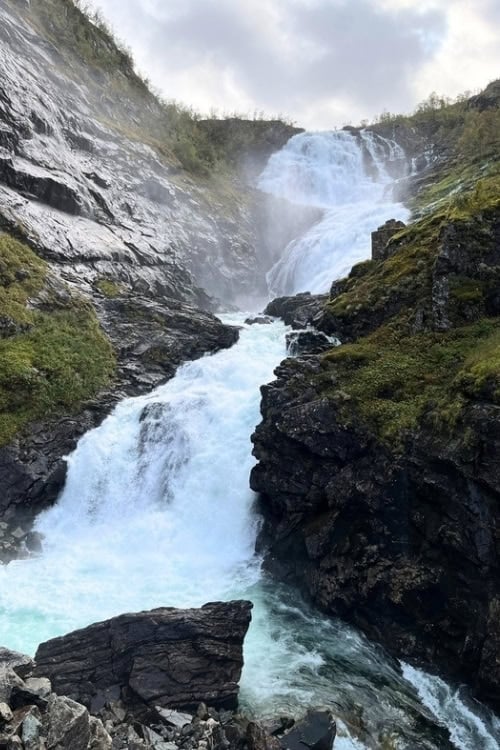
Photo by Maureen C Bruschi
At Myrdal, we boarded the Flåm Railway. Known as one of the world’s most spectacular train journeys, it is the easiest and most practical way to visit the Kjosfossen Waterfall.
The scenic views never stopped as we passed snow-capped mountains and quaint farms, culminating in a stop at the Kjosfossen Waterfall. What a mesmerizing experience as I stood up close on a platform and watched this majestic hourglass-shaped waterfall thunder down the mountainside.
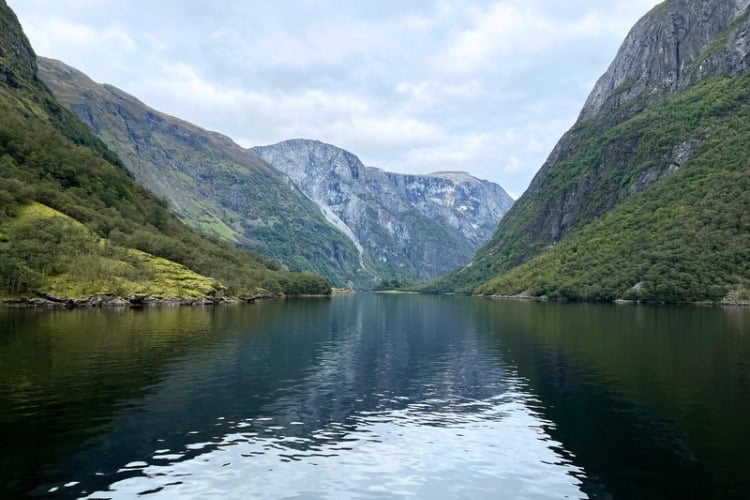
After lunch in the small village of Flåm, located at the inner end of the Aurlandsfjord, we took a short coach ride to Gudvangen. Here we enjoyed a two-hour cruise through the narrow Nærøyfjord. We passed small villages on the mountainside along the fjord before returning to Flåm.
Experience the Geiranger Skywalk via the Dalsnibba Pass
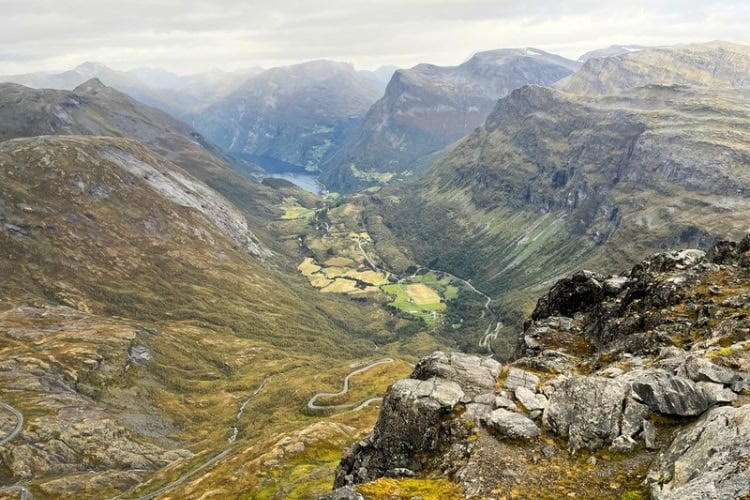
Photo by Maureen C Bruschi
After a night in Leikanger Fjord Hotel, overlooking the magnificent Sognefjord, we headed to Geiranger. The best view of the Geirangerfjord is located at the Geiranger Skywalk on the peak of the Dalsnibba Mountain.
The coach ride up the three-mile Dalsnibba Pass was an experience in itself, with hairpin turns as we reached an elevation of approximately 4,790 feet at the top. But what a spectacular sight looking down at the village of Geiranger and the snow-capped mountains surrounding Geirangerfjord.
After experiencing Europe’s highest view of a fjord from the Geiranger Skywalk, we hopped back on the coach and safely zigzagged back down the Dalsnibba Pass.
At Geiranger, we set sail through the Geirangerfjord. The cruise brought us up close to the waterfalls, mountains, cliffs, and glaciers surrounding this magnificent fjord. This included the famous Seven Sisters cascading waterfalls.
The next morning, Norway’s natural beauty continued. Our group was treated to the country’s most famous mountain road, Trollstigen. It is another twisty, mountainous road filled with waterfalls, fjords, tunnels and frozen lakes.
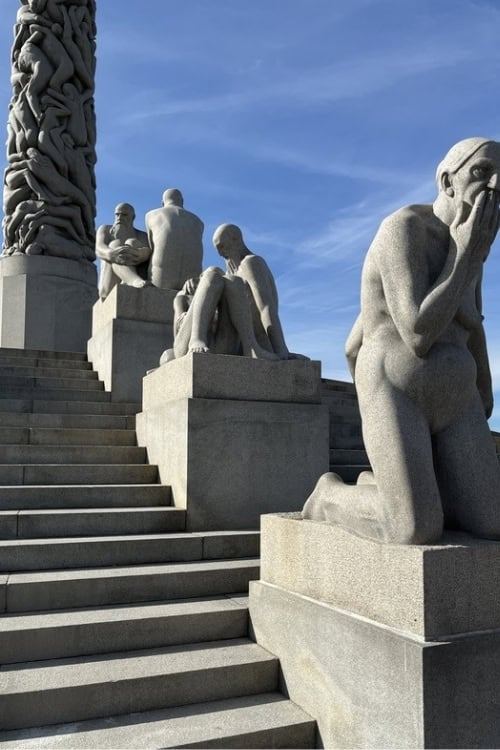
One of the highlights of my time in Oslo was the Vigeland Sculpture Park. Each statue tells a story, capturing human emotions and life experiences.
Over 200 bronze, granite, and cast-iron sculptures are displayed outdoors. It’s the only sculpture park where all the statues have been created by the same artist, Gustav Vigeland.
The interesting feature is that each of the artist’s figures is naked. Vigeland felt that this made his sculptures timeless.
Last, But Not Least, Sweden
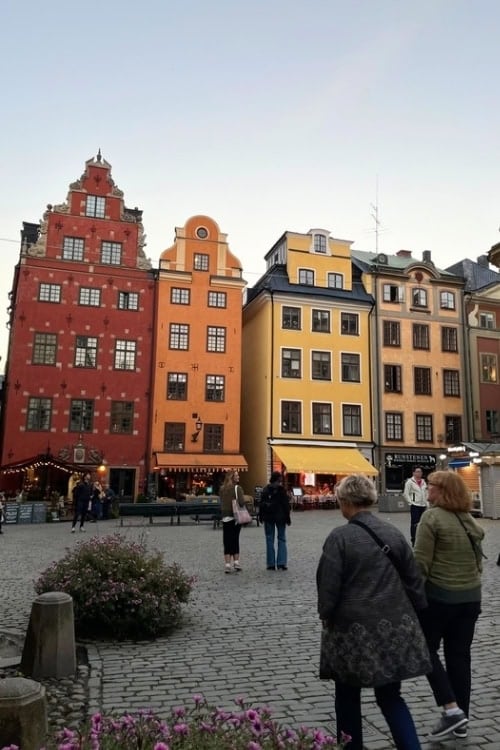
Photo by Maureen C. Bruschi
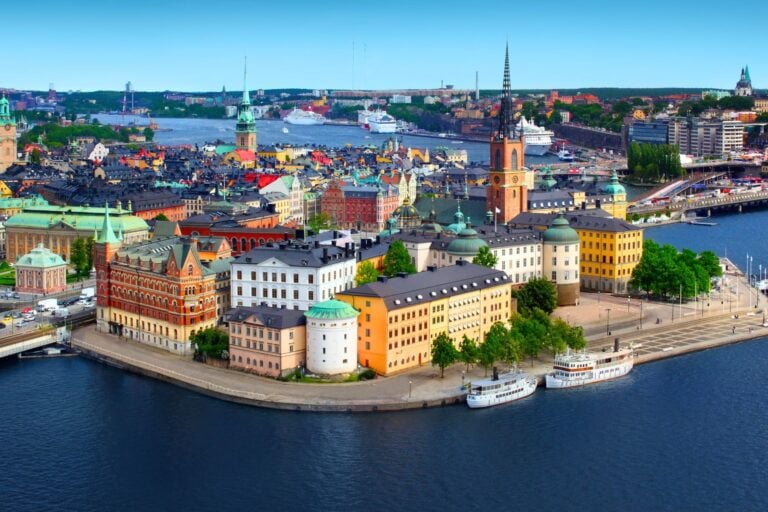
I didn’t know that Stockholm, Sweden, is part of 14 islands and more than 50 bridges, until I spent a morning walking around the city. It felt like I had walked across each of those bridges.
My favorite part of the city was the Old Town, or Gamla Stan, Stockholm’s oldest settlement. We strolled along narrow cobblestone streets with colorful buildings dating back to the thirteenth century.
Along the way we passed the Stockholm Cathedral, the oldest church in Stockholm. We also passed the Royal Palace, the King’s official residence. It is one of the biggest palaces in Europe with more than 600 rooms.
That evening, we bid farewell to our group with a delicious Swedish dinner of meatballs, mashed potatoes and lingonberry jam with a brown sauce and peas.
Our tour ended, but the history, culture, and scenic beauty of these three countries gave us memories to last a lifetime.
If You Go:
Getting There: Fly into Copenhagen Airport (CPH), approximately 22 minutes from the city center. Depart from Stockholm Arlanda Airport (ARN), approximately 43 minutes from Stockholm. Find the best flight deals through CheapOAir.
Coach Tours: The author traveled with Trafalgar (Tel: 866-513-1995), one of the leading operators for Scandinavia coach tours. Rick Steves also offers a well-regarded 14-day Scandinavia tour for independent-minded travelers.
Where to Stay
- Copenhagen Marriott Hotel — Copenhagen, Denmark
- Randers Hotel — Randers, Denmark
- Scandic City Hotel Stavanger — Stavanger, Norway
- Thon Hotel Orion Bergen — Bergen, Norway
- Leikanger Fjord Hotel — Leikanger, Norway
- Havila Hotel Geiranger — Geiranger, Norway
- Scandic Victoria Lillehammer — Lillehammer, Norway
- Scandic Solli — Oslo, Norway
- Clarion Stockholm — Stockholm, Sweden
Tours and Experiences
- Flåm Railway tickets: Book in advance, especially in summer. Available at Visit Flåm or through tours on Viator
- Nærøyfjord cruise from Gudvangen: Book through Fjord Tours
- Geirangerfjord cruise: Available through Viator or GetYourGuide
- CopenHill ski slope and climbing wall, Copenhagen: copenhill.dk
- Fløibanen funicular, Bergen: floyen.no
Car Rental: Not needed for a coach tour, but independent travelers exploring the region can book through Discover Cars.
Need a hand planning your trip? Here are the sites and services we rely on most, from booking tools to travel products we love.
Inspire your next adventure with our articles below:
- 6 Fascinating Facts About Norway: Know Before You Go
- On the Move in Copenhagen: A City Best Explored by Bike, Boat and Bus
Author Bio: Maureen Bruschi is a freelance travel writer and photographer from Lewes, Delaware and has been writing professionally since 2008. As a travel story-teller and photographer, she’s enjoyed a never-ending voyage of writing about her adventures and photographing some of the world’s most beautiful and inspiring surroundings along the way. Her travel and non-fiction articles have appeared in numerous publications including _Chicken Soup for the Soul_, _Offbeat Travel,_ _Real Travel Adventures_, _In Travel Magazine_ and _GoNomad_. Follow her on her website, [https://mbruschi305.wordpress.com](https://mbruschi305.wordpress.com/).
Want to discover more hidden gems and helpful travel tips? Join our free newsletter for the latest travel secrets and travel articles.
We are reader-supported and may earn a commission on purchases made through links in this article.

- New Brunswick’s Bay of Fundy: Trails, Waterfalls and Ocean-Floor Walks at Three Signature Parks - October 17, 2026
- Fjords, Freedom and Finding a Way: Accessible Adventure in Norway - October 17, 2026
- The Ultimate Gift for Travelers Who Don’t Want More Stuff: 10 Epic Experiences in the US - October 17, 2026
Planning another trip soon? ✈️
Add GoWorldTravel.com as a preferred source on Google. Click the button below so our local guides, packing hacks, and hidden-gem itineraries always show up first when you search!
Add to Preferred Sources
Great overview of a Scandinavian trip, it really captures the contrast between cities like Copenhagen and the raw landscapes of Norway. The fjords and train journey sound like the highlight, especially Kjosfossen.