
I arrived in Birmingham later than planned, already tired before the trip had even really begun.
My flight had been delayed, and by the time I landed in Alabama, I was carrying that particular airport exhaustion that makes every thought feel heavier. But underneath the travel fatigue, I was carrying questions I had brought with me before I ever boarded the plane.
What does it mean to visit Birmingham in 2026, more than sixty years after the events that made the city central to the Civil Rights Movement? What does that history ask of us now? And what does the modern city of Birmingham have to offer now?
On a three-day trip to Birmingham, I was hoping to find out.
Birmingham, Alabama, in Context
Birmingham is located in north-central Alabama in the South of the United States, a region too often flattened into stereotype from the outside. Its reality is more complex. It is a place of beauty and contradiction, shaped by hospitality, faith, violence, resistance and deep cultural memory. Birmingham is an industrial city, a civil rights landmark and a modern Southern destination all at once.
The city grew quickly after the American Civil War because of the natural resources around it, such as iron, coal and limestone. Those ingredients helped turn Birmingham into an industrial city, sometimes called “The Magic City” because it seemed to rise almost overnight.
But Birmingham’s history is not only a story of industry. It is also one of segregation, racial violence and organized resistance. In the mid-20th century, the city became one of the most important battlegrounds of the American Civil Rights Movement.
The 1963 Birmingham Campaign, the Children’s Crusade and the bombing of the 16th Street Baptist Church forced the United States, and eventually the world, to look directly at the violence required to maintain Jim Crow.
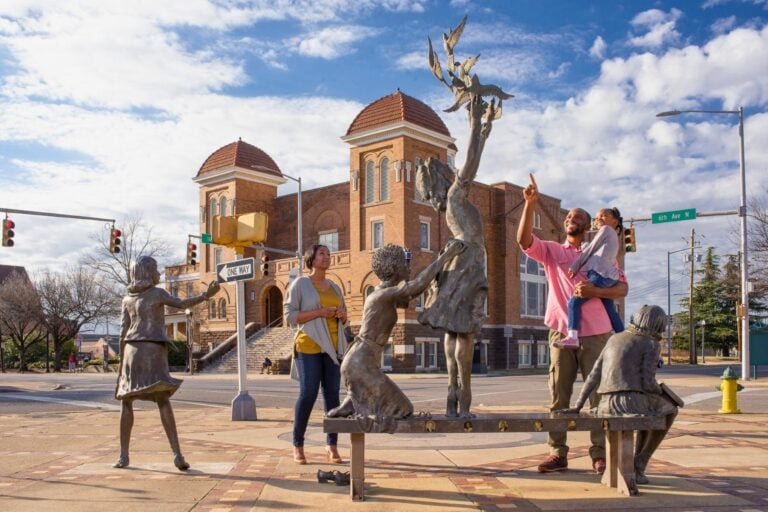
Birmingham is a city best understood on foot. Kelly Ingram Park, the Birmingham Civil Rights Institute, the 16th Street Baptist Church, and the A.G. Gaston Motel are all close enough together that the geography becomes part of the experience.
A trip here is not only about seeing landmarks. It is about walking between them, noticing what stands across the street from what, and understanding how much history unfolded within a few city blocks.
Meeting the Foot Soldiers
The city did not introduce itself slowly. Shortly after arriving, I was in the Civil Rights District.
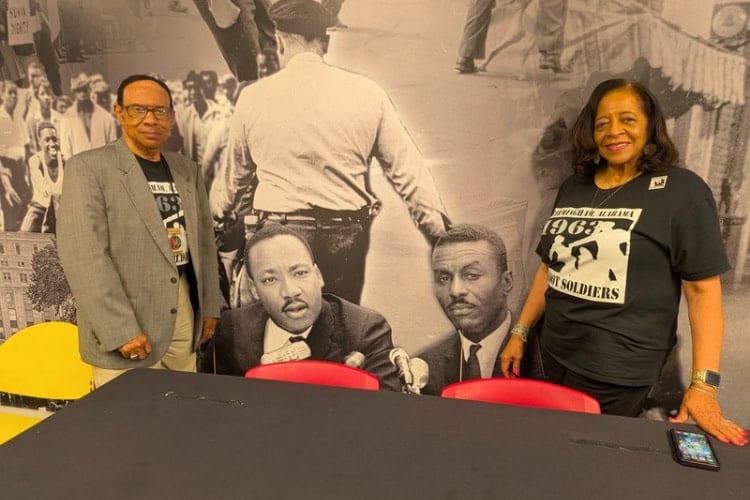
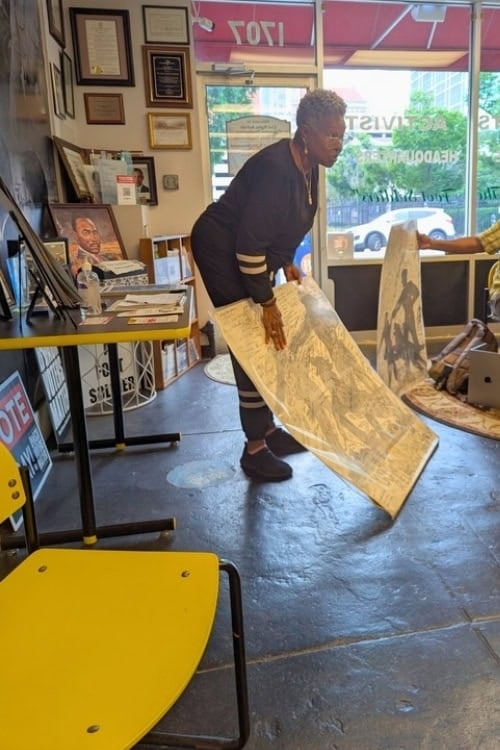
There, I met Terry Collins, Nadine Smith and Paulette Roby at the Civil Rights Activist Committee. Their memories and lives were connected directly to the era I had come to learn about, and they were willing to share their stories with me.
The people I met that day were part of Birmingham’s living civil rights memory, often referred to as “foot soldiers.” The phrase does not refer only to the people whose names made it into textbooks. In Birmingham, it includes the ordinary citizens who marched, trained for civil disobedience, participated in sit-ins, transported protesters, collected bail money, cooked meals, stood guard outside meetings and did the quiet, necessary work that made the movement possible.
The Civil Rights Activist Committee Foot Soldiers Headquarters exists, in part, to preserve those stories before they disappear from living memory.
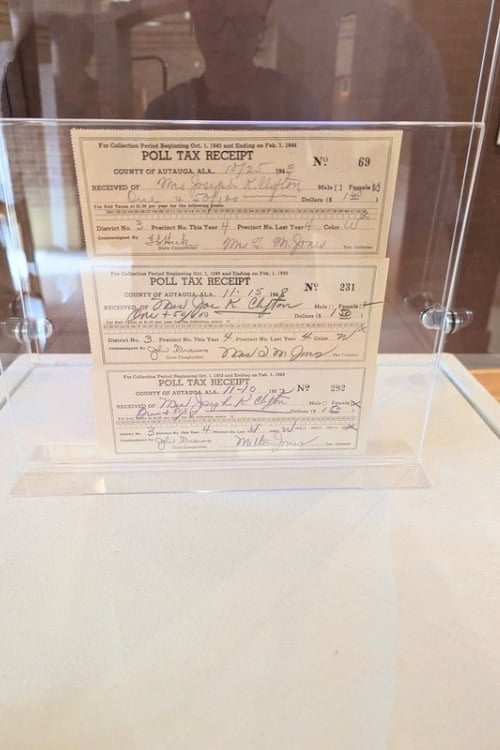
Hearing firsthand accounts of their life experiences during the Civil Rights Movement was humbling. One of the topics of discussion during my visit left a lasting impression on me. Before the Voting Rights Act of 1965 began dismantling these tactics, Black citizens could be asked to pass absurd “tests” before being allowed to vote, including guessing how many jelly beans were in a jar.
Today, counting jelly beans is the kind of thing associated with county fairs, school contests, office games and prize baskets. It is harmless, even nostalgic. But during our discussion in that room, the innocence of that image curdled into something nefarious.
From our discussion, it was clear that this history was close enough that a conversation about candy could shift the air in the room. Close enough that something I associated with childhood games could still carry an enormous, painful weight.
Another thing stood out to me.
At the Civil Rights Activist Committee, the movement was not presented as something carried only by famous leaders. The stories presented included children who marched, teenagers who were arrested, parents who worried and still let them go and church members, organizers, students, pastors and neighbors who did the necessary work in real time, without knowing how the story would end. In other words, these stories were carried by regular people.
Standing in Kelly Ingram Park
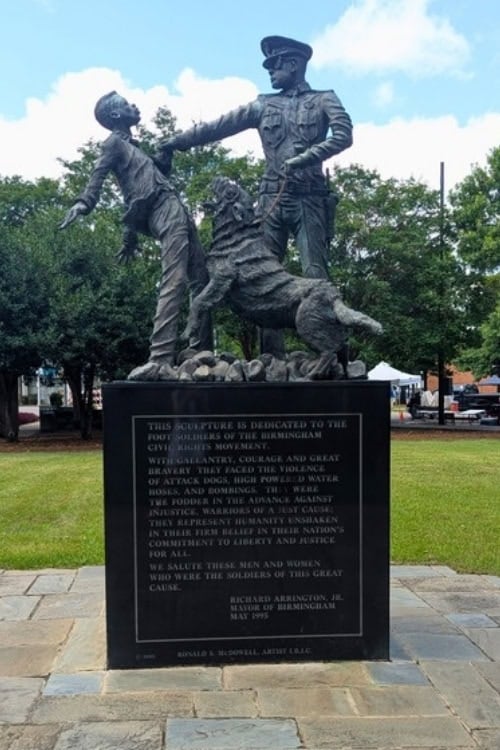
We briefly stopped by Kelly Ingram Park, where we would later return for Juneteenth festivities. Kelly Ingram Park sits at the center of the Civil Rights District, just across from the 16th Street Baptist Church and near the Birmingham Civil Rights Institute. During the 1963 Birmingham Campaign, the park became one of the central gathering places for demonstrations.
It was here that children and teenagers participating in the Children’s Crusade were met by police dogs, fire hoses and arrests under the direction of Birmingham’s public safety commissioner, Theophilus Eugene “Bull” Connor.
Today, the park is quiet, with walking paths, trees and sculptures that interpret the violence that unfolded there. The images from 1963 are famous now, reproduced in textbooks, documentaries and museum exhibits. But standing in the place where those images were made gave them a different weight.
The park was no longer only a scene from history. It was a public space, still open to the city, bearing witness to what happened there in plain sight.
Inside the Civil Rights Institute
The next morning began more quietly, with coffee at the hotel before heading out. The itinerary that day moved deeper into the Civil Rights story, beginning with the Birmingham Civil Rights Institute.
The Institute sits across from Kelly Ingram Park and near the 16th Street Baptist Church, making it clear you are not learning about Birmingham from a sealed-off museum somewhere far removed from the events. You are learning in the middle of the places where the story unfolded.
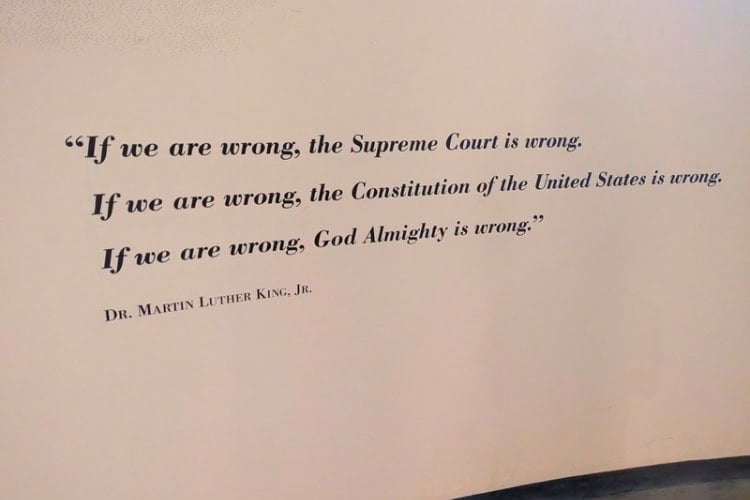
Inside, the exhibits trace the machinery of segregation and the resistance that rose against it.
The exhibit documented how segregation was not only enforced through law and violence. It was enforced through habit, custom, architecture, etiquette and fear.
The exhibit also made clear how oppressive systems survive because enough people are persuaded to treat the unacceptable as ordinary. In the exhibit, there are numerous examples of how courts, classrooms, churches, businesses, police departments and ordinary civic life upheld Jim Crow.
The institute is best experienced slowly, giving ample time to sit with each display. The institute forces its visitors to reckon with brutal history and examine how it remains relevant today.
The ending exhibit was a display of mirrors and art, allowing for the reflection of modern-day America.
16th Street Baptist Church
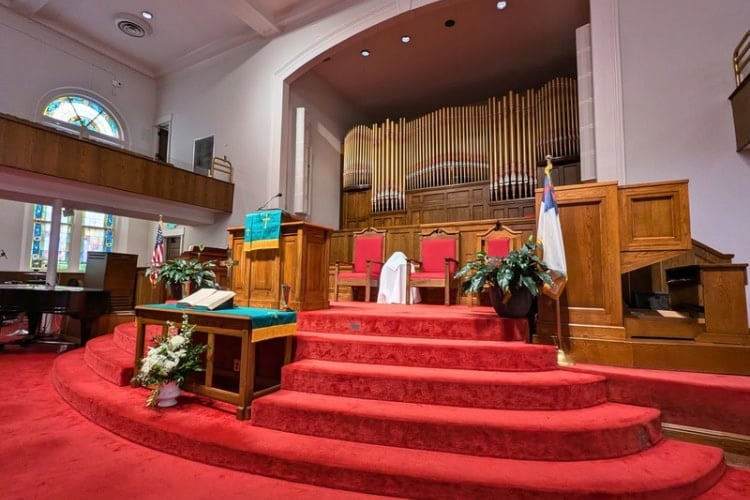
From the Institute, we continued through the Civil Rights District, including the 16th Street Baptist Church and the A.G. Gaston Motel.
The 16th Street Baptist Church is one of the most significant sites in the Civil Rights District. The church is part of the Birmingham Civil Rights National Monument, but it remains privately owned and an active place of worship. It sits just across from Kelly Ingram Park.
Inside, the tour gave us a closer look at the sanctuary and the church’s role in Birmingham’s civil rights history. It was here, in 1963, that Addie Mae Collins, Cynthia Dionne Wesley, Carole Rosamond Robertson and Carol Denise McNair were killed in a racially motivated bombing. Two other boys, Virgil Ware and Johnny Robinson, were also murdered that same day in racially motivated violence. The visit was solemn and straightforward, and also prompted its visitors to ask questions about how this history would be relevant today.
The A.G. Gaston Motel
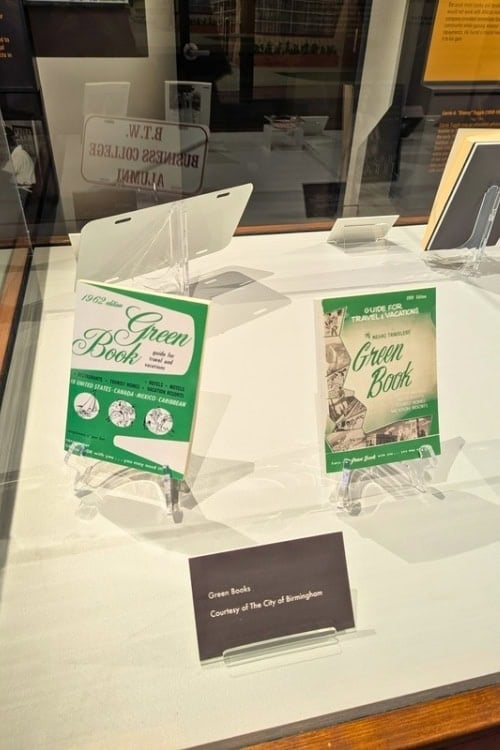
Next, we visited the A.G. Gaston Motel. During the 1963 Birmingham Campaign, also known as Project C, it served as a headquarters. Civil rights leaders, including Dr. Martin Luther King Jr., Ralph Abernathy, Rev. Fred Shuttlesworth, members of the Southern Christian Leadership Conference and the Alabama Christian Movement for Human Rights, used the motel as a base while organizing in the city.
As I moved through the exhibits, I saw a display containing Green Books. These guides helped Black travelers find hotels, restaurants, gas stations and other businesses that would serve them safely during the segregation era, when discrimination could make even ordinary travel difficult.
As I moved through more exhibits, I couldn’t help but reflect on how much of the Civil Rights Movement was pure logistics work. Things like holding meetings, making phone calls and publishing Green Books.
Historic Bethel Baptist Church
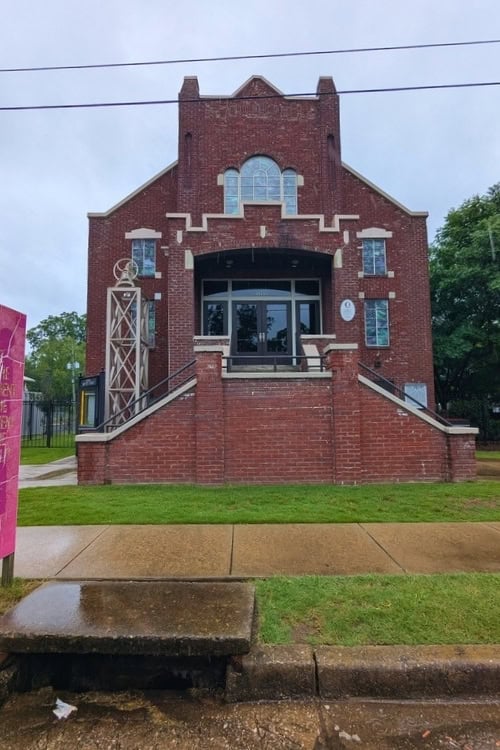
Later, we visited Historic Bethel Baptist Church, located in the working-class neighborhood of Collegeville. Reverend Dr. Thomas L. Wilder Jr. was gracious enough to speak with me about the church’s history.
Here, visitors should expect a quieter, more community-rooted stop than some of the larger sites in the Civil Rights District.
Built in 1926, Bethel Baptist became one of the central organizing sites of Birmingham’s civil rights movement under Reverend Fred Shuttlesworth. After Alabama outlawed the NAACP in 1956, Bethel became the headquarters of the Alabama Christian Movement for Human Rights, which challenged segregation through legal action and nonviolent direct action. The church was also connected to the 1961 Freedom Rides and was bombed three times during the movement, including on Christmas Day in 1956.
For travelers, Bethel adds an important layer to a Birmingham civil rights itinerary. Kelly Ingram Park and the Birmingham Civil Rights Institute help visitors understand the public face of the movement. Bethel Baptist shows more of the organizing infrastructure behind it.
Juneteenth in the District
The next day was Juneteenth, the federal holiday which commemorates June 19, 1865, when Union troops arrived in Galveston, Texas, and announced that enslaved Black people there were free, more than two years after the Emancipation Proclamation.
The atmosphere changed. I was now watching a living commemoration unfold in the Civil Rights District. We set up under a tree next to Kelly Ingram Park across from the Birmingham Civil Rights Institute, a small mercy in the Alabama heat.
There was a parade, not enormous, but warm and human. Kids visiting from Tennessee danced, collected candy and brought unselfconscious joy to the street.
After the parade, we moved our chairs inside Kelly Ingram Park and enjoyed the music and festivities. During Birmingham’s Juneteenth Jubilee, participating sites offered free admission or tours, including the Birmingham Civil Rights Institute, 16th Street Baptist Church, the A.G. Gaston Motel Gallery and National Park Service tours of the Civil Rights National Monument.
For visitors who can time a Birmingham trip around Juneteenth, the day adds another dimension to the district. It is worth checking the city’s event schedule in advance, arriving early and planning for heat, crowds, parking and time outside.
Seeing Birmingham from Above
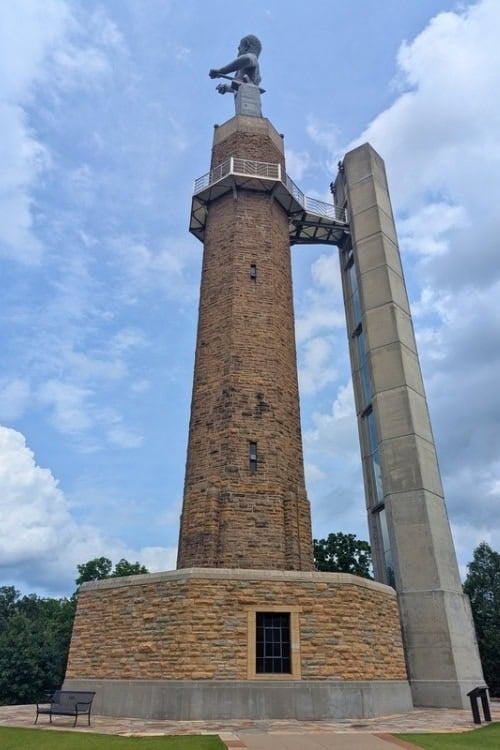
Later, I went to Vulcan Park and Museum, home to the giant statue of Vulcan, the Roman god of fire and the forge, who looks out over the city. For visitors, the park offers one of the best panoramic views of Birmingham and a useful reminder of the industrial history that shaped the city long before it became known internationally for the Civil Rights Movement.
The stop is especially helpful near the beginning or end of a trip to Birmingham. The museum provides more context on the city’s iron and steel roots, while the overlook offers visitors a chance to take in Birmingham from above.
Vulcan Park is also a good practical break in an itinerary that can feel emotionally heavy. It gives visitors space, air and a broader sense of Birmingham’s geography. I would still plan for heat and sun, especially in summer, and check current hours before going. But for travelers trying to understand Birmingham beyond a single district or museum, Vulcan Park is worth adding to the itinerary.
Why Birmingham Belongs on Your Travel List
Birmingham is not the kind of destination that lets visitors look away from difficult history. That is precisely why it is worth visiting.
For travelers interested in American history, civil rights, Black history or the ongoing work of democracy, Birmingham offers a city where the story is not confined to one museum or monument. In the Civil Rights District, visitors can walk through Kelly Ingram Park, stand near the 16th Street Baptist Church, spend time inside the Birmingham Civil Rights Institute and see how close together so many defining events unfolded.
A visit here is not easy in the sentimental sense, but it is deeply worthwhile. Birmingham makes history feel unfinished. It asks visitors not only to remember what happened, but to understand the people and places that made change possible.
Birmingham is worth visiting because it does not offer distance from history. It asks what we plan to do with it.
If You Go:
Plan at least two days if your main reason for visiting Birmingham is the Civil Rights District. The major sites are close together, but they are not places I would want to rush. Give yourself time to sit in Kelly Ingram Park, move through the Birmingham Civil Rights Institute slowly and leave space between visits when possible.
Check current hours before you go, especially for historic churches and National Park Service-affiliated sites. Some places remain active houses of worship, and access may depend on tours, special programming or preservation work. The A.G. Gaston Motel is also undergoing renovation, so visitors should confirm what is open before planning an itinerary around it.
Where to Stay
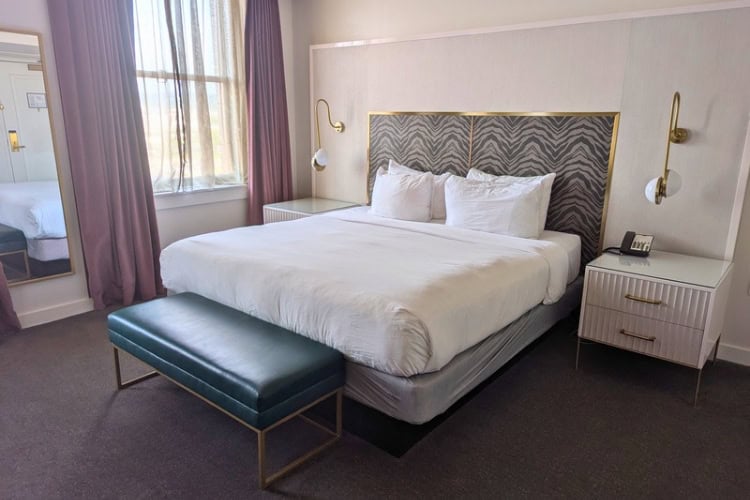
I stayed at The Kelly Birmingham, Tapestry Collection by Hilton, which worked well as a downtown base. Parts of downtown Birmingham were more walkable than I expected, with restaurants, coffee shops and several points of interest within walking distance. For a trip centered on the Civil Rights District, staying downtown made the logistics easier and gave me a better sense of Birmingham as a living city, not only a historic destination.
How to Structure Your Visit
For the first day, begin with Kelly Ingram Park and the Birmingham Civil Rights Institute. The park gives visitors a sense of place before entering the museum and the Institute provides deeper historical context for what happened in the surrounding streets, churches and public spaces.
Kelly Ingram Park also offers a free mobile phone tour that guides visitors through the park’s sculptures and their historical significance. It is worth using if you are exploring the Civil Rights District on your own.
On a second day, make time for the 16th Street Baptist Church, the A.G. Gaston Motel area and Historic Bethel Baptist Church. These sites add layers to the story, moving from public protest and national memory into worship spaces, organizing headquarters and the local leadership that helped sustain the movement.
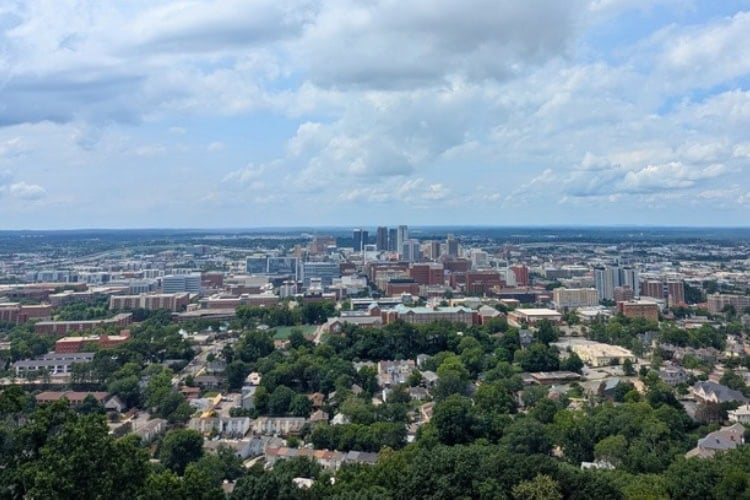
Vulcan Park and Museum makes a good first or final stop because it gives visitors a wider view of the city. From the overlook, you can see downtown, neighborhoods, roads, trees and the wider geography of Birmingham beyond the Civil Rights District.
What to Pack
Birmingham can be hot, humid and rainy, especially in summer. Bring comfortable walking shoes, and consider packing waterproof shoes or an extra pair in case a storm rolls through. An umbrella or lightweight rain jacket is also worth having on hand. Sunscreen and bug spray are smart additions too, particularly if you plan to spend time walking through Kelly Ingram Park, attending outdoor events or visiting Vulcan Park.
This is not a destination where I would overpack the schedule. Water, sun protection and time to pause will make the experience better.
Places to Visit
Civil Rights Activist Committee
Birmingham Civil Rights Institute
The Historic Bethel Baptist Church
Need a hand planning your trip? Here are the sites and services we rely on most, from booking tools to travel products we love.
Inspire your next adventure with our articles below:
- Stone Town, Zanzibar: Slave Trade History and Freddie Mercury’s Birthplace
- Hiroshima and Onomichi: A Historic Seaside Town with Hillside Charm and Artistic Vibes
Want to discover more hidden gems and helpful travel tips? Join our free newsletter for the latest travel secrets and travel articles.
We are reader-supported and may earn a commission on purchases made through links in this article.

- Travel Guide to Japan - September 29, 2026
- Laos for Backpackers: Vientiane, Vang Vieng and Luang Prabang on a Slow-Travel Route - September 29, 2026
- Exploring Nanjing, China: 48-Hour Trip That Changed My Perspective - September 29, 2026
Planning another trip soon? ✈️
Add GoWorldTravel.com as a preferred source on Google. Click the button below so our local guides, packing hacks, and hidden-gem itineraries always show up first when you search!
Add to Preferred Sources