

Panic started creeping in as the shadows lengthened and the sun dipped lower in the sky. Somewhere in the midst of rural farmland, I cursed my GPS and wondered how I’d managed to get this lost so quickly on my first day in Spain.
After checking the directions for the tenth time, I finally gave up on Google Maps and decided it was time to trust my own instincts. I backtracked to the highway and drove up the hill to the lovely enclave of Vélez-Blanco, perched like a sentinel above the farmland in which I’d just been wandering in circles. Eventually, by sheer luck, or maybe fate, I spotted a small sign pointing to the cortijo, or farmhouse, where I would spend a week in an artist residency.
From the moment I was accepted into the residency, I knew I wanted to see the real Andalucía – the quieter corners not overrun by tourism. Considering Spain is the second most visited country in the world, it might prove to be a more difficult task than anticipated.
Stories of recent anti-tourism protests stayed with me. I didn’t want to contribute to the problem. What I wanted was to find the smaller places, the lesser-known towns and landscapes that still hold their magic.
Vélez-Blanco: History, Silence, and Stone
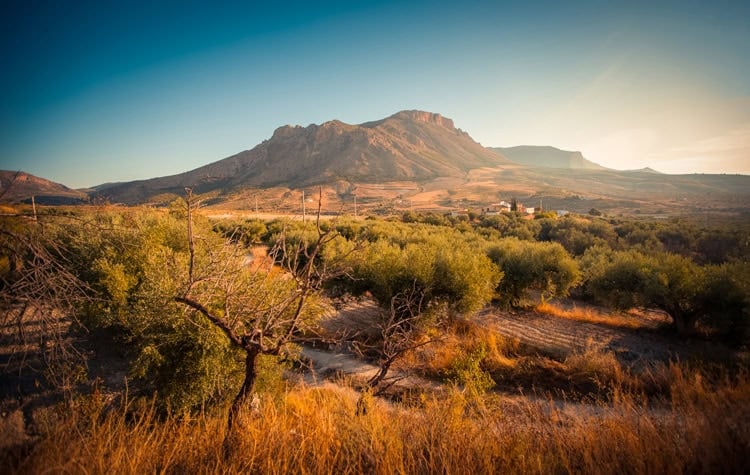
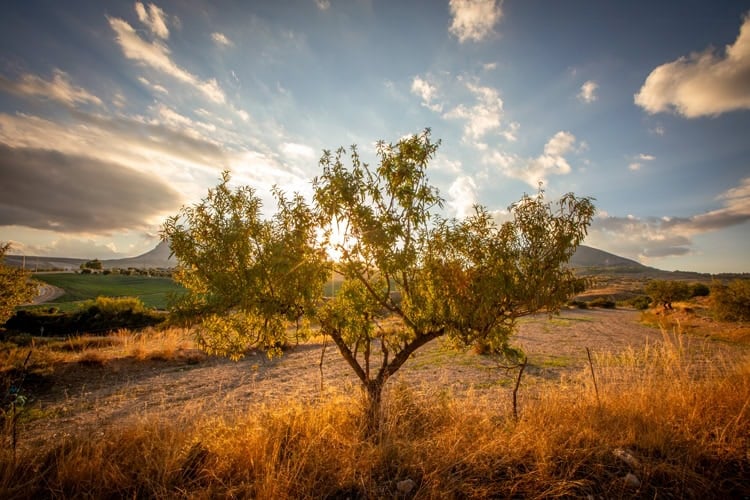
The old, restored cortijo sat between the towns of Vélez-Blanco and Vélez-Rubio (in the Province of Almeria), nestled among ancient olive trees, with rolling hills dusted with soft, white soil rich in calcium carbonate.
I spent a glorious week there with three other artists, photographing the shifting landscape, painting watercolors, and watching the light change over La Muela, a stunning flat-topped mountain that dominated the scenery.
If I was looking for a place untouched by tourism, sleepy little Vélez-Blanco delivered. It’s so far off the beaten path that it manages to confuse GPS systems, yet it has a wealth of history and beauty to offer. Its crown jewel is the 16th-century castillo, a remarkable example of Spanish Renaissance architecture.
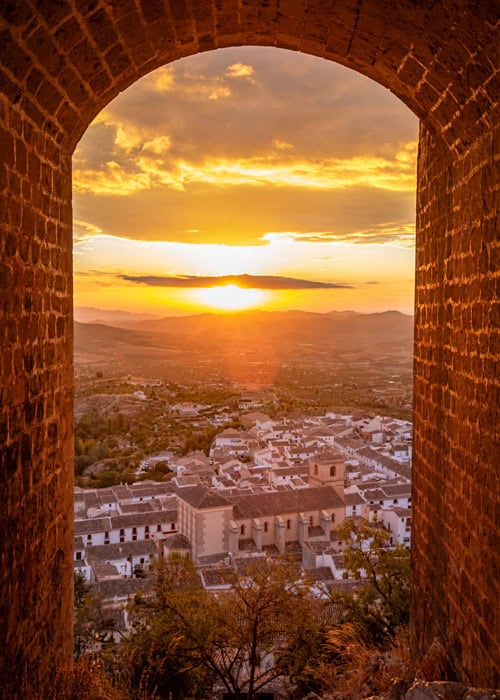
Parts of the castle are under restoration – one entire interior section was famously sold and now resides in the Metropolitan Museum of New York – but you can still wander through the castle on your own, free of charge, and marvel at the impressive courtyard and sweeping views.
Standing there, I couldn’t help thinking about the people who’d stood in that same place over time. Los Letreros cave contains prehistoric paintings dating to around 5000 BC, and includes the iconic Indalo figure, a symbol of luck and protection. Now the official symbol of Almería province, the Indalo appears everywhere: hanging in homes, incorporated into park benches and sculptures throughout the region.
Hiking in the Sierra de María-Los Vélez Natural Park nearby is also unforgettable. One misty morning on a trail, I watched the castillo emerge from the fog like something out of a fairy tale. The rugged cliffs and the changing light – and if you’re lucky, majestic griffon vultures soaring overhead – make this landscape impossible to forget.
Vélez-Blanco itself is lovely and unhurried, with beautifully preserved medieval streets, an old Moorish quarter and fountains that are central to the town’s stories and traditions. Panaderia Patrón bakery still uses a bread oven from the 16th century. In one quiet plaza, I found a phrase tiled in Spanish, “Hay lugares donde uno se queda, y lugares que quedan en uno.”
There are places where you stay, and places that stay with you. Vélez-Blanco and the surrounding area will definitely stay with me.
Cabo de Gata Natural Park: Wild Cliffs, Desert Landscapes, and Quiet Beaches
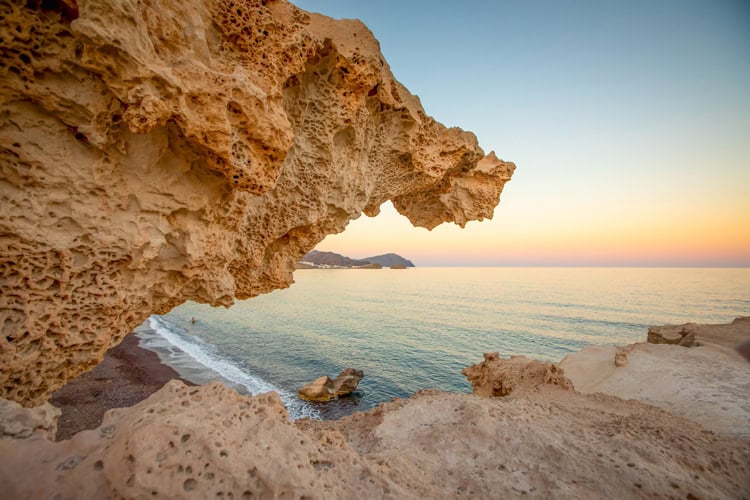
After scrambling up some jagged rock formations, I took in the view high above Playa del Arco beach. Waves crashed below, the beach nearly empty except for a lone fisherman and a few families savoring the last of the afternoon light.
As the sun dipped behind the mountains, the dramatic shapes of the rocks began to resemble mythical creatures shifting in silhouette. I soaked in the solitude as the colors of the sky changed to pink and violet, until I realized I had to quickly climb back down before darkness swallowed the coastline.
Cabo de Gata-Nijar Natural Park is spectacular – 177 square miles of volcanic cliffs, sea stacks, pristine beaches and Europe’s only desert meeting the Mediterranean Sea, located in the Province of Almeria.
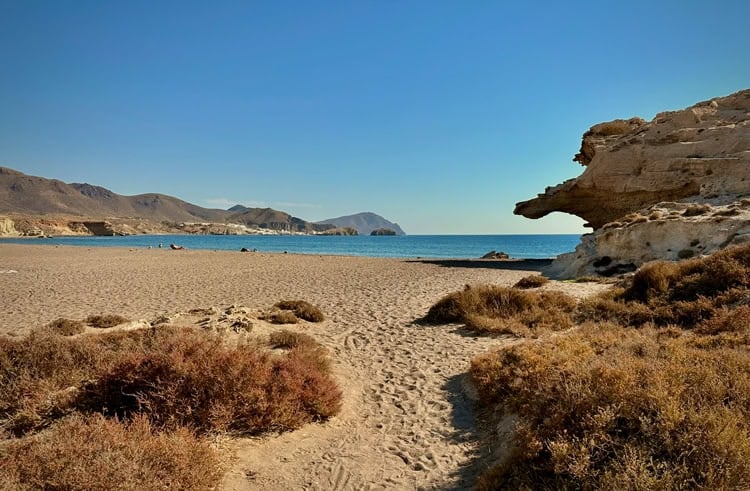
The best way to experience it is on foot, along hiking trails that reveal hidden beaches and dramatic headlands. The water is ideal for snorkeling, diving, kayaking and sailing. San José serves as the main hub for visitors, while the fishing villages of Agua Amarca and La Isleta del Moro are especially charming.
In October, the off-season quiet wraps the park in a gentle solitude. I stayed in a small hostal in Los Escullos, simple, but perfect for my purposes: exploring the wind-eroded rock formations along the coast. The fossilized dunes, formed 100,000 years ago, twist into bizarre and beautiful shapes.
I discovered Castillo de San Felipe, an 18th-century coastal fort, standing guard over the sea. I even gave myself the rare gift of time: reading on the beach, taking a quick dip in the sea, and lingering a while before moving on to my next destination.
Alhama de Granada: Gorges, Moorish History, and Thermal Springs
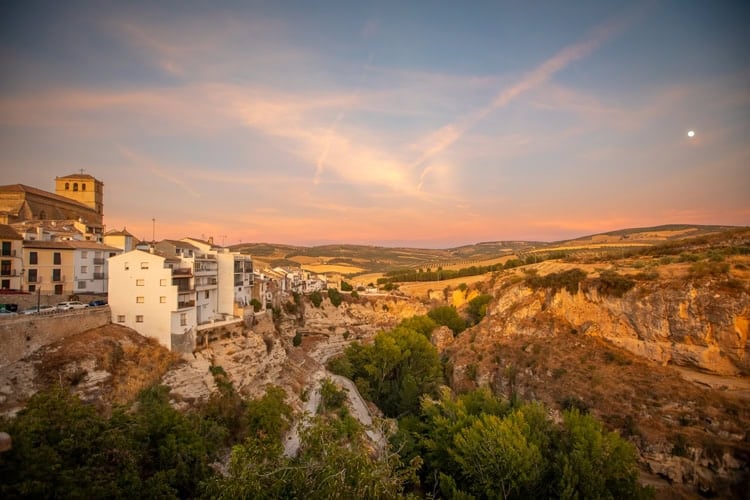
Perched on the rim of a dramatic gorge, Alhama de Granada feels both timeless and otherworldly. This hilltop town, one of the hidden gems of Granada Province, offers sweeping views of olive-dotted hills and distant sierras, where the light softens everything it touches.
From my terrace, I watched swifts swoop out of the canyon as the last sunlight clung to a tapestry of pink clouds. The medieval town rose quietly to my left, the Tajo gorge opened before me, and the vast Andalucían sky transformed itself into a living canvas. As the moon lifted above the ridge, the church bells rang out the eight o’clock hour – an early dinner time by Spanish standards.
It’s easy to imagine those bells replaced by the call of the muezzin centuries ago. The Iglesia de la Encarnación, built in 1506 on top of a former mosque, stands at the heart of the old town. Moorish influence is everywhere here: in the castillo, in the narrow winding streets, and the remnants of acequías, the intricate irrigation system built by the Moors. Even my room at La Maroma echoed this heritage with gorgeous Moorish tiles and arched details.
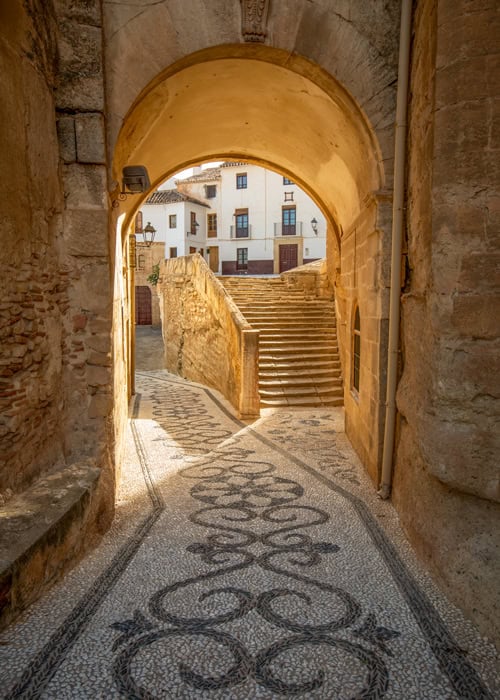
In the old quarter, centuries seem to fold together. Narrow cobbled streets wind between whitewashed houses and ancient churches, their architecture layered with Roman, Moorish, and Christian influences. At the heart of town lies Plaza de la Constitución, a gathering place where locals drift in as evening falls. Beneath the red walls of El Castillo, the square hums with conversation, clinking glasses, and the scent of tapas wafting from nearby cafés.
Just beyond town, the thermal baths, fed by mineral-rich springs, have soothed travelers since Roman times. The town’s name itself, Al Hamma, means “hot springs” in Arabic. You’ll find a few small, free pools beside the river, or you can opt for a spa session or overnight stay at the Balneario de Alhama de Granada.
From the pools, a trail winds into the gorge, where the Alhama River cuts its way through pale limestone cliffs. I hiked the gorge trail starting from the old quarter, meeting a few friendly locals along the way and savoring the forest’s quiet.
Crumbling ruins and old stone bridges appeared at intervals, whispering of centuries gone by, their stories carried on the breeze. After the hike, I settled into a table at Bar El Tigre on the plaza, enjoying a glass of wine and letting kindly Antonio choose my tapas for the evening.
Though less than ninety minutes from Granada or Málaga, Alhama de Granada feels a world apart. There are no crowds here, no rush – only the quiet rhythm of rural Andalucía. For those seeking nightlife or high energy, it may seem too still. But for travelers drawn to history, nature, and the unhurried pace of small-town Spain, Alhama offers something rare: a place where the past lingers, and time slows just enough for you to hear it breathe.
Where to Stay & Eat: Alhama de Granada
La Maroma Rooms & Views: Views from the terrace are spectacular and the rooms are beautifully appointed. There is a shared kitchen – head to the grocery store for breakfast supplies.
Bar El Tigre: Sit outside and watch life unfold in Plaza de la Constitucion over a glass of wine and tapas. Antonio, the owner, will make you feel right at home.
Arcos de la Frontera: Whitewashed Walls and Endless Views
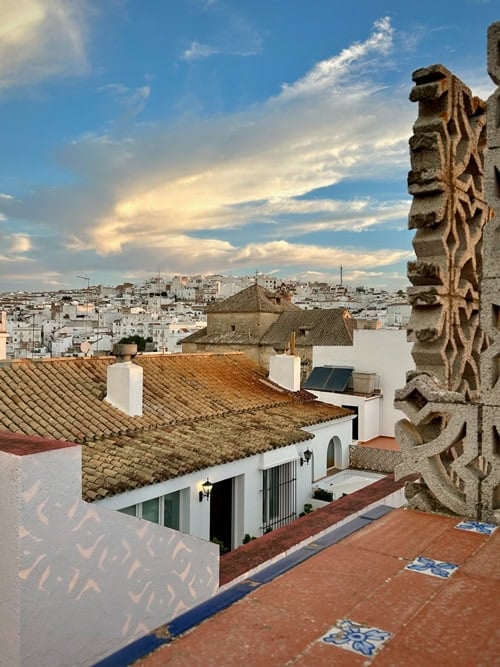
Driving across Andalucía to the Cádiz province became an exercise in restraint – for a photographer, every turn revealed another breathtaking view: golden hills, red earth, endless olive groves, surprise castle ruins, and white hill towns glowing on distant ridges. If I had stopped for every image I wanted to take, I’d still be there!
Arcos de la Frontera is a quintessential pueblo blanco, with jaw-dropping panoramic views and lively plazas. Though larger than the towns I’d visited so far, it’s still far less touristy than Spain’s more popular cities.
I wandered its narrow streets, browsed artisanal shops, and stumbled upon the peaceful Andalusí garden next to the Mayorazgo Palace, a quiet corner of Arabic architecture hidden under a cool canopy of vines.
I stood in awe of the view of the surrounding countryside through the arch at Mirador de Abades. I sipped tinto verano and ate croquetas while watching local kids on their way home for their long lunch break.
From the rooftop of my hotel, Los Olivos, I watched the sun rise and the huge moon set as birds flitted between church towers, before descending into the lovely courtyard for breakfast.
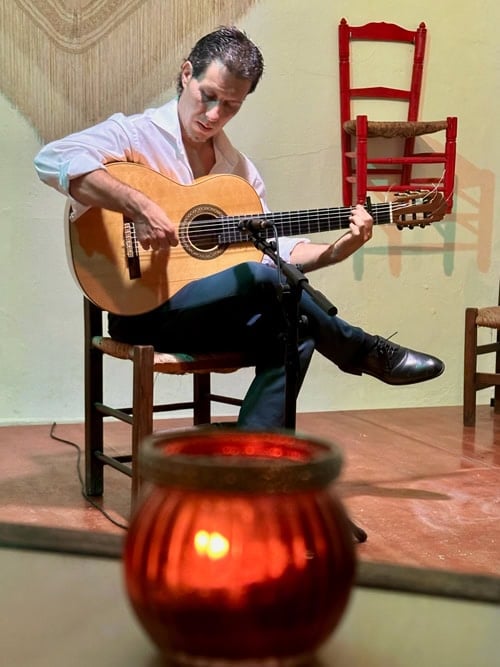
One evening, I stepped into the small Tablao Flamenco Los Molinos. The room fell silent as a man walked on the small stage carrying a guitar. He sat down without fanfare and began to play. The notes were melodic and complex, full of memory, longing, and history. The audience was mesmerized. He continued to play, stopping only after every few songs to relay a story in rapid-fire Spanish. His hands moved so quickly they blurred across the strings and became an extension of the guitar, the music vibrating into our bodies and souls.
Federico García Lorca once wrote that true art comes from “a struggle that the artist must help open, in the very rim of the wound.” This was authentic emotion, raw energy, a magnetic presence brought forth from something deep within, something that is beyond pure talent. This is duende, the indefinable quality brought out in music, poetry and flamenco – an unmistakably Spanish force steeped in layers of history and multicultural influence.
In these moments, I felt both lost and found – much like my journey through Andalucía itself. It was the perfect ending to a trip that revealed the heart of a region far beyond the tourist trail.
Where to Stay & Eat: Arcos de la Frontera
Hotel Los Olivos: lovely accommodation with breakfast in the courtyard. Walkable to the old town. Private parking is available.
Aljibe Restaurante: Wonderful food and ambiance. Mediterranean cuisine with Moroccan influences.
If You Go
Getting There
Southern Spain has a variety of airports, and the most popular international hubs are Málaga and Sevilla. You can also fly into Almeria, Alicante, Granada or Jerez.
Getting Around
The best way to get around to the smaller places is by car. There are many affordable rental companies in Andalucía. Do your research and book early to get the best price. Driving in Spain is not difficult on the highways, but can be challenging in the small hill towns. The ancient streets are extremely narrow, so I recommend renting the smallest car you can and take it slow.
Eating Out
It can be challenging to find a meal at all times of the day in the smaller towns, so you’ll want to plan accordingly. Breakfast is usually from 9:00-10:30 am, lunch (which can also be tapas) is usually around 1:30-3:30 pm, light tapas or small snack (merienda) is usually 5:00-7:00 pm, and dinner is usually 9:00-10:30 pm (later on weekends).
Restaurants may be closed on Sunday nights or Mondays (and sometimes Tuesdays, as I found out), and information on the website may not be accurate. Check with your hotel or tourist office to confirm. At some places, especially in the Granada area, free tapas come with a drink.
Need a hand planning your trip? Here are the sites and services we rely on most, from booking tools to travel products we love.
Inspire your next adventure with our articles below:
- Córdoba, Spain: Your Ultimate Guide to Andalusia’s Most Layered City
- Inside Spain’s Liquid Gold Country: A Journey Through Extremadura’s Ancient Olive Groves
Author Bio: Teri K. Miller is a travel writer and photographer based in Colorado. She has captured award-winning images around the world, including two years of living and traveling around the U.S. in an RV. Teri still loves hitting the road when she can, exploring the world with an insatiable curiosity about what’s around the next bend. Explore Teri’s stunning photography portfolio on her website.
Want to discover more hidden gems and helpful travel tips? Join our free newsletter for the latest travel secrets and travel articles.
We are reader-supported and may earn a commission on purchases made through links in this article.

- A Weekend in Cambará do Sul: Hiking Brazil’s Itaimbezinho and Fortaleza Canyons - October 26, 2026
- Uzbekistan’s Silk Road Cities: From Tashkent’s Markets to Samarkand’s Registan - October 26, 2026
- Lost in the Fjords: Finding Myself Through Her Eyes - October 26, 2026
Planning another trip soon? ✈️
Add GoWorldTravel.com as a preferred source on Google. Click the button below so our local guides, packing hacks, and hidden-gem itineraries always show up first when you search!
Add to Preferred Sources