
As travel journalists, we’ve been fortunate to travel all over the world, and along the way, we’ve had some extraordinary wildlife encounters.
These aren’t zoo experiences or staged photo ops. They’re raw, real, and profoundly moving moments in some of the world’s most remarkable ecosystems. Here are eight wildlife encounters that we’ll carry with us for the rest of our lives.
1. Hanging with Sloths in Costa Rica
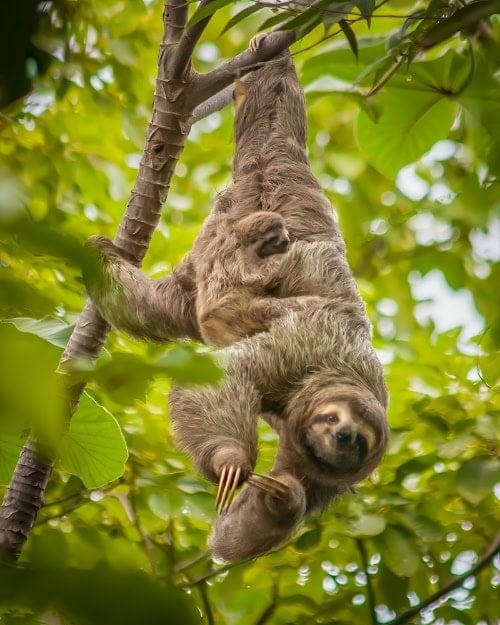
I always dreamed of spotting sloths in Costa Rica. What I didn’t expect was to find one hanging just outside our casita on our very first day in the Osa Peninsula. Since sloths have an exceptionally low metabolic rate and sleep 8 to 10 hours a day, this one didn’t seem to mind our presence at all. It simply carried on napping while we lounged on the deck, surrounded by rainforest.
Sloths spend their days high in the canopy of tropical rainforests across Central America and parts of South America. In Costa Rica, the best places to spot them are the Osa Peninsula, Manuel Antonio National Park, the southern Caribbean coast, and La Fortuna.
They tend to be most active in the early morning or on overcast days, and they have a particular fondness for cecropia trees. A specialized green algae that grows in their fur helps camouflage them among the leaves, a reminder that even finding one is a small miracle.
Because Costa Rica protects more than a quarter of its land, wildlife here is remarkably abundant. Beyond sloths, you might encounter scarlet macaws, tapirs, jaguars, and four species of monkeys. We never found a jaguar, but we came away with toucans, parrots, poison dart frogs, red-eyed tree frogs, and more monkeys than we could count.
We even saw a pod of dolphins playing in Golfo Dulce, the bay that separates the Osa Peninsula from the mainland, a perfect reminder that in Costa Rica, the surprises never stop.– Teri K Miller
Read More: Call of the Wild: Costa Rica’s Osa Peninsula
2. Paddleboarding with Seals and Sea Lions in Avila Beach, California
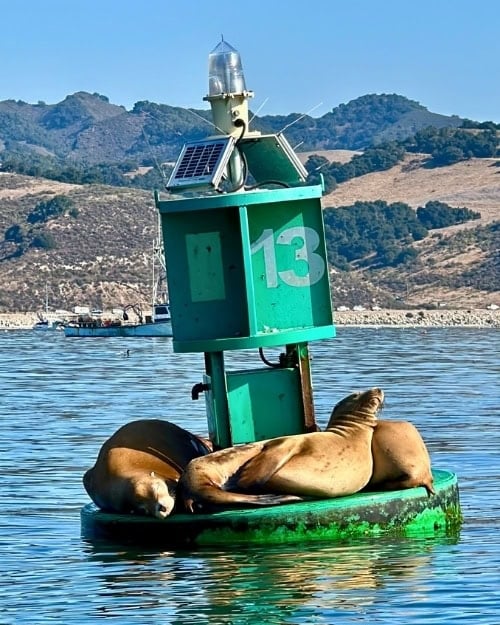
From the second I gained my balance on the paddleboard in Avila Beach, California, I locked eyes with my favorite animal, arguably God’s greatest creature, a seal. His massive eyes gazed at me with such curiosity before he slipped under the surface and reappeared in a completely different part of the bay.
And he was one of dozens, playfully twirling around as if their entire job was to have a ball. It was like wack-a-mole, seal heads popping up all over the place, nearly sending me overboard out of pure, unfettered giddiness.
Beyond seals, you’ll find a host of other marine animals: sea otters holding hands, sea lions barking on the docks, and various birds coexisting with them all. I could have spent all day peacefully observing this ecosystem, which is tucked into such an underrated part of California, too.
I went with Avila Beach Paddlesports, where you can rent kayaks or paddleboards and book wildlife tours. – Isabella Miller
Read More: Sea, Sips, and Seals: Exploring Highway 1 Along California’s Central Coast
3. Night Snorkeling with Giant Manta Rays Off the Island of Hawaii
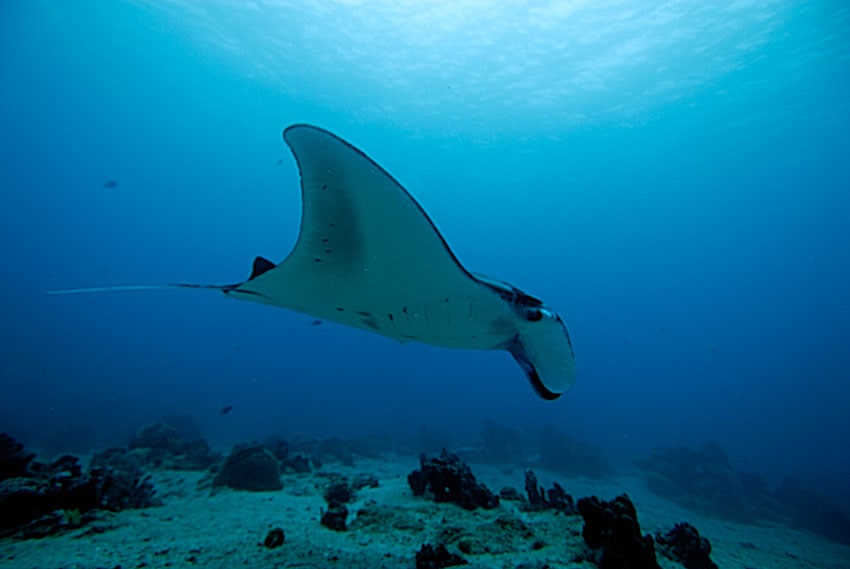
One of my favorite experiences on the Island of Hawaii happened not on land but at night, in the dark water off the Kona Coast, floating face down as giant manta rays swept toward me through the black.
The Island of Hawaii is one of the only places in the world where this happens reliably. Underwater lights draw plankton to the surface, the plankton draws the mantas, and snorkelers float gripping a lit board while the rays barrel-roll below in their signature feeding loops — wingspans sometimes reaching 14 feet or more.
What stays with you afterward is not the adrenaline — though there is plenty of that — but the sheer alien beauty of the creatures. Their white undersides glow in the lamplight as they arc and pivot in silence. They pay you no mind. You’re just a temporary fixture in their feeding ground, and they are magnificent. – Janna Graber
Read More: A Road Trip on Hawai’i’s Big Island: Manta Rays, Volcanoes, and Black Sand Beaches
4. Swimming with Whale Sharks in the Sea of Cortez
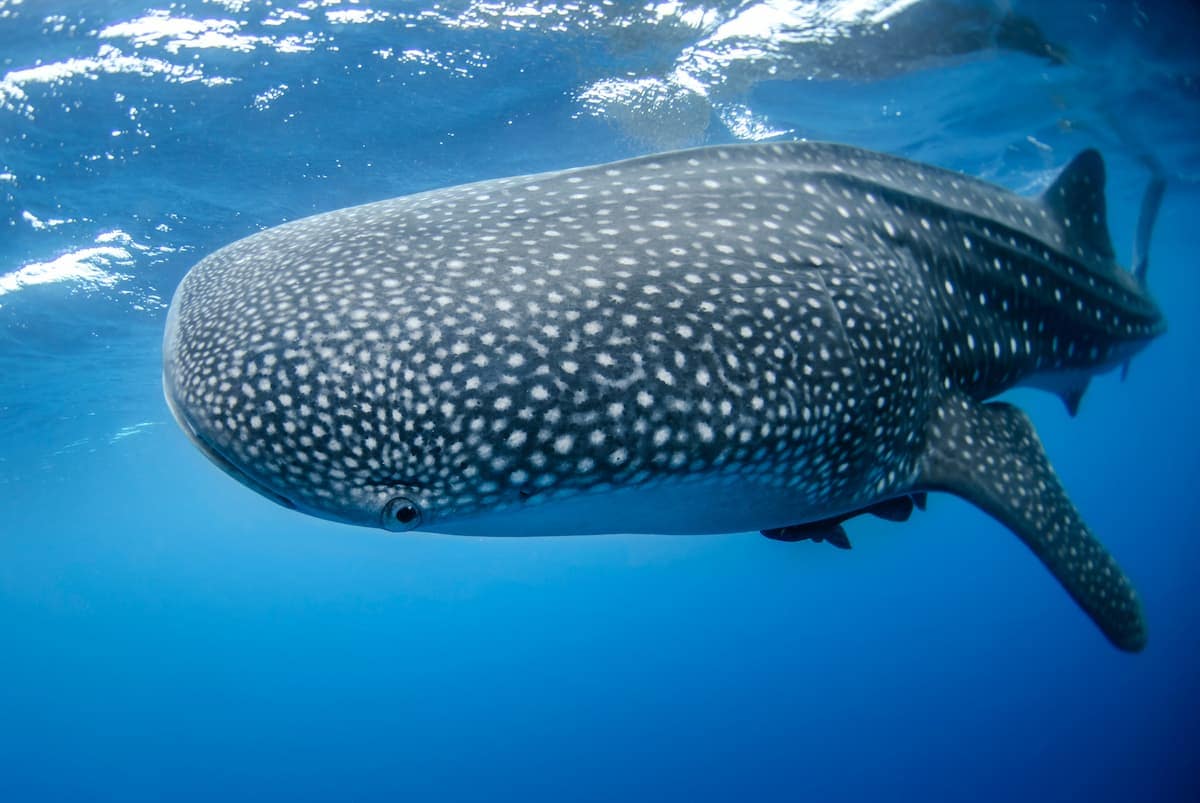
Jacques Cousteau once called the Sea of Cortez “the aquarium of the world,” and I understood why the moment we left the dock. Within minutes, a shadow the size of a bus passed under the boat — a 28-foot whale shark, cruising alongside us as if we weren’t even there.
Juvenile whale sharks gather in the Bay of La Paz each year from October to February, and they are the largest fish on the planet. When you’re next to one in open water, that fact hits differently.
When our guide called “drop in now,” I slipped into the clear sea and found myself right alongside the shark, close enough to watch water push through its massive gills. I saw five different whale sharks that morning.
When I finally climbed back in the boat for the last time, I was tired and exhilarated in equal measure. There is something so grounding about being alongside a creature that large and that peaceful. It recalibrates you. – Janna Graber
Read More: Swimming with Whale Sharks in the Sea of Cortez
5. Walking With Elephants at the Anantara Elephant Sanctuary in Thailand

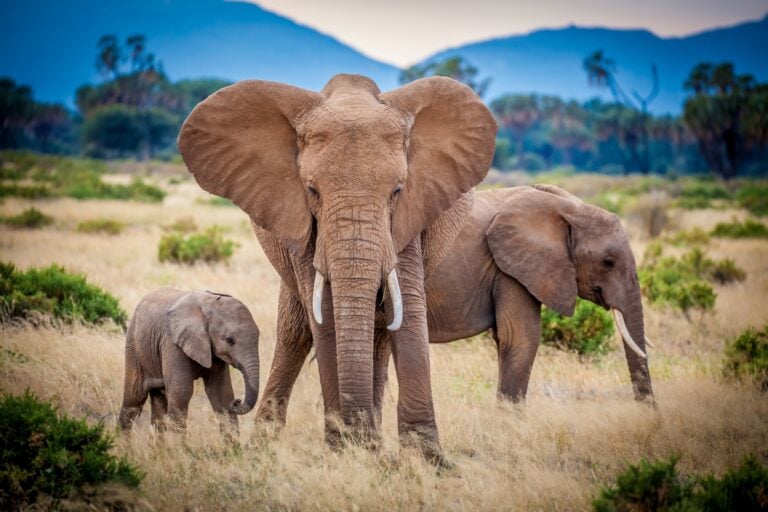
I wasn’t afraid standing next to her, but rather I was humbled, not just by her size but by the almost palpable sense of her intelligence. I watched her root around for figs, her trunk moving with such acrobatic precision that it felt like I was witnessing something mastered and ancient. These are emotional, social creatures, and being in their presence felt like an absolute privilege.
Thousands of elephants in Thailand live in captivity, in conditions that vary wildly in terms of ethics and care. Anantara Golden Triangle rescues elephants that cannot return to the wild, pairs each with a lifelong mahout, and prioritizes ethical treatment.
The sprawling property sits at one of the most breathtaking intersections in Southeast Asia, where Thailand, Laos and Myanmar meet at the banks of the Mekong River, known as the Golden Triangle.
The resort itself is a once-in-a-lifetime experience: you can sleep in transparent jungle bubbles in the heart of the sanctuary, or dine on a platform suspended 52 meters above the grasslands, watching the elephants graze while you do the same. You’re not just visiting elephants. You’re living among them. – Isabella Miller
Read More: Jungle Luxury and Gentle Giants: A Golden Triangle Elephant Adventure
6. Watching Hippos Blow Bubbles on the Chobe River, Botswana
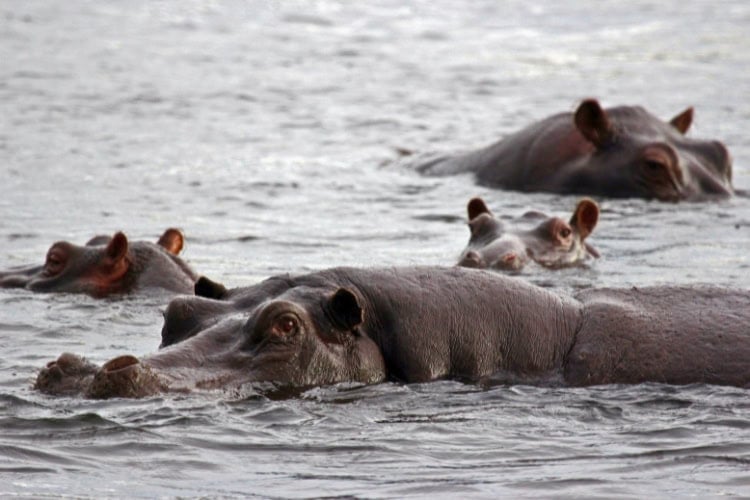
I finally made it to Africa on a 10-day land-and-cruise safari with CroisiEurope, covering four countries — South Africa, Botswana, Namibia, and Zimbabwe. One afternoon on a pontoon boat along the Chobe River stands out above almost everything else.
We rounded a bend and found a pod of hippos lounging in the shallows, watching us lazily as we drifted close. When they blew air through the water, the bubbles surfaced in slow rolling bursts. It sounds like a small thing. It didn’t feel like one.
Chobe National Park holds the world’s largest elephant population — some 140,000 roam the park — and we saw hundreds over our time there, including babies playing at the water’s edge. Our guide brought us within feet of a family of lions that sauntered toward our jeep and flopped down for a nap.
But it was those hippos on the river, blowing their lazy bubbles under a wide blue sky, that I keep coming back to. Africa is beautiful and humbling, in the best possible way. – Janna Graber
Read More: This 10-Day Land and Cruise Safari Is the Perfect Introduction to Southern Africa
7. Bonding with Gray Whales in Magdalena Bay, Mexico
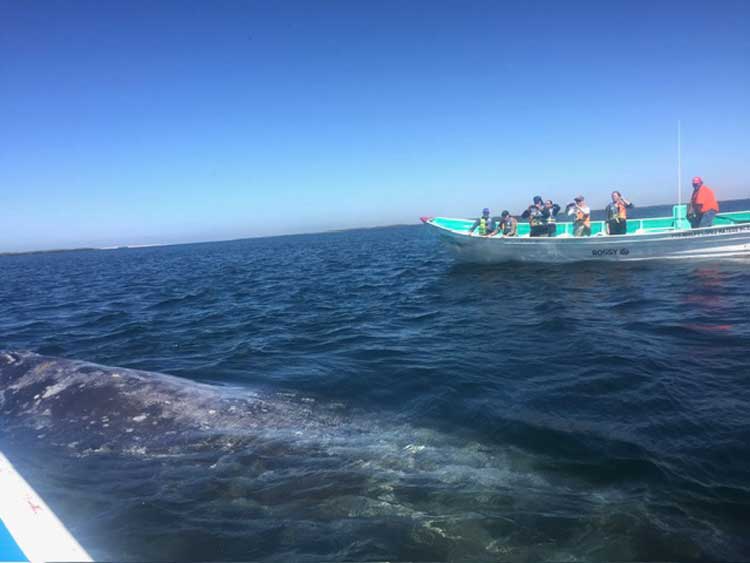
From December to March, more than 400 gray whales come to Magdalena Bay in Baja California Sur to give birth and raise their young. Over the decades, these whales have developed a genuine curiosity about humans, making this one of the few places in the world where the watching goes both ways.
I saw this firsthand. With a marine biologist and guide, we boarded small panga boats and cruised into Magdalena Bay. Our guide stopped the boat, and we sat quietly on the water and waited.
A large gray whale approached, circled us, and came so close that the tip of her massive head touched the hull, making us sway gently from side to side. Our guide said that the whales seem to love watching us, and one of her huge eyes often popped out of the water to view us.
She was very still. She spent about 10 minutes with us, right alongside the boat. There was no food involved, just to be clear.
Then she swam away. When she returned, she brought a calf just a few days old — tail still wobbly, still learning to swim. The mama whale nudged the baby toward our boat, pushing it close enough for us to look into its eye as it swam nearby.
Of all the wildlife encounters I’ve had in 65 countries, this one tops the list. There is simply no adequate word for what it feels like to have a 50-foot animal introduce you to her newborn. – Janna Graber
Read More: Humans and Gray Whales Meet at Magdalena Bay
8. Seeing Hawaiian Green Sea Turtles on Kauai

Kauai has been a family favorite of mine for years, and Poipu Beach on the island’s south shore keeps drawing us back. Every afternoon, Hawaiian green sea turtles come to rest there, hauling themselves up from the sea to bask in the sand for a few hours while swimmers and families give them plenty of space.
They travel more than 450 miles to the French Frigate Shoals to lay their eggs, then return to Kauai. Watching them settle into the sand, completely unruffled by the people around them, is one of those experiences that makes you go quiet.
Getting in the water is just as good. The snorkeling at Poipu puts you right in their world — you can often see them (being careful to give them their space) drifting through clear water, moving with that slow, effortless grace that makes them look like they own the place.
For any family visiting Hawaii, Kauai and Poipu Beach are worth the trip for this alone. It’s the kind of wildlife encounter that doesn’t require a tour operator or a special permit. Just show up, be respectful, and pay attention. – Janna Graber
Read More: Kauai with Kids: 7 Unforgettable Family Adventures on the Garden Isle
Need a hand planning your trip? Here are the sites and services we rely on most, from booking tools to travel products we love.
Inspire your next adventure with our articles below:
- World Travel: Don’t Miss These 15 Bucket List Destinations
- The Most Unique Islands on Every Continent You Have to See to Believe
Want to discover more hidden gems and helpful travel tips? Join our free newsletter for the latest travel secrets and travel articles.
We are reader-supported and may earn a commission on purchases made through links in this article.

- 9 Insider Tips I Wish I’d Known Before My First European Adventure - October 7, 2026
- Seaplanes, Porcupines and Hidden Lakes on Quebec’s Explorer’s Route - October 6, 2026
- The Family Reunion Hack That Eliminates All the Planning Stress - September 30, 2026
Planning another trip soon? ✈️
Add GoWorldTravel.com as a preferred source on Google. Click the button below so our local guides, packing hacks, and hidden-gem itineraries always show up first when you search!
Add to Preferred Sources