
Most travellers in Poland already know about the historic Old Town area, or the more modern downtown area with its blend of architectural styles. But few people realize there is beautiful nature and fascinating culture to explore in the capital city’s outer suburbs.
Stepping off the bus at the terminal Międzylesie, it struck me how well this place lived up to its name, which translates from Polish as “between the forests.”
This small bus station is surrounded by fresh, green forest, brimming with conifers and European oak. It’s amazing to think that such an unspoiled haven is only around 30 minutes from Warsaw’s busy downtown area.
My guide, a local woman who understands the history of the area and can show me some of its best sites, had suggested this pristine spot as a meeting point.
Despite the recent snowfall, we were prepared for a day of hiking and sightseeing. Heavy boots on our feet and thick coats shielding us from the cold, we set off into the winter forest.
The Rural Wawer District

I had come to this place, in the Wawer district of Warsaw, to enjoy a breath of fresh air and explore one of the lesser-known districts of Poland’s capital.
Located to the southwest of the city’s downtown, Wawer was once an independent collection of towns and villages before it was incorporated as a city district in 1951.
Today, the district has a unique character and a reputation as an artists’ enclave. Creatives flock here, enjoying the peace and quiet while retaining easy access to the delights of the city.
Shortly after beginning our hike, I notice the work of local craftspeople: a stone shrine to the Virgin Mary, sitting beside a hand-carved wooden bench depicting a trio of wolves.
We begin our journey by hiking northeast through the forest. Despite the cold weather, there are plenty of animals around, and I immediately spot a pair of red squirrels chasing one another around the base of a tree.
My guide warns that later in the day, we might have to be careful of the packs of wild boar that abound in the area.
Read More: Poland’s Wieliczka Salt Mine: A 700-Year-Old Wonder Near Krakow
A Center of Healing

After around 20 minutes of pleasant hiking, we come to a wall adorned with colorful murals. Characters from popular animated shows stand side by side with depictions of Polish flags and local wildlife. A cluster of brightly colored buildings stands behind it.
“This is the Centrum Rahabilitacji Helenów,” my guide explains. “It’s a place for children with disabilities and physical problems to receive treatment and enjoy fun activities. But it’s there for everyone to enjoy, so we can go inside.”
I didn’t expect to be exploring a children’s medical facility on my trip, but my guide is right. The facility is beautiful and inviting, featuring attractive gardens, statues of the founder, and even a small stadium.
After a few minutes’ walk, we arrive at a small zoo featuring alpacas, rabbits, horses, and a variety of other creatures.
“Local people love to bring their children here,” my guide explains as we scratch the horns of a friendly goat. “People can support this facility with donations or as part of their taxes, and in turn, the Center offers something back to the community.”
A Perfect Neighborhood

After another 20 minutes of walking, we find ourselves in the Anin neighborhood of Wawer. A neat grid of streets, sometimes cobbled, lies peacefully under their veil of snow, with small meadows and tiny patches of woodland dotted between the houses.
Among one patch of trees, I spot another shrine to the Virgin Mary, a fixture of the street since 1931, adorned with candles kept permanently lit by diligent locals.
The houses themselves are eye-catching too, many featuring intricate wooden designs, with balconies and wide roofs reminiscent of the wooden buildings found in the mountains of Zakopane.
These houses are built in the Świdermajer architectural style, a design unique to the area between Warsaw and Otwock.
A Bite to Eat

After so much hiking in the snow, we’ve both built up quite an appetite, so it’s time to stop at a local restaurant.
Since Wawer is less built up than other Warsaw districts, you might have to walk a little while before you find a place to eat. But look closely and you’ll find great traditional restaurants, along with foreign options.
We opt for a classic taste of Poland at Gospoda Do Syta, a restaurant decorated with murals depicting the nature of Poland, along with flowers and folksy ornaments.
Inside, we enjoy pierogi ruskie, traditional dumplings filled with potato and cheese. Alongside mushroom soup with noodles and fresh salad, it’s a nutritious but filling meal.
Dark History
Still a little sleepy after lunch, we decide to take a bus along one of the main roads to our next destination. Now that we’ve enjoyed the nature, food and architecture of the district, it’s time to learn something about the history of the area.
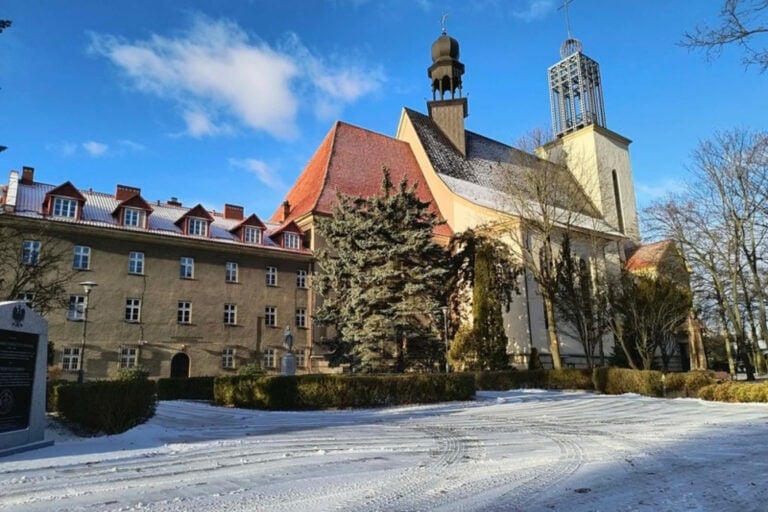
After a short journey on a red and yellow city bus, we disembark at the Church of St Felix of Cantalice in the Marysin neighborhood.
With its attractive white tower and red-tiled roof, it’s an intriguing structure among the trees. The grounds are open to the public, with information boards available to browse and several beautiful statues.
But the beauty of the church belies a dark past. During WWII, the large tower was used as an observation point for Nazi officers. Adolf Hitler paid a visit to the church during the siege of Warsaw.
Most of the church was destroyed in the closing stages of the war, so the existing structure has been almost entirely rebuilt. Information boards around the grounds provide detailed information and display pictures.
Resistance History
The history of the church isn’t only negative. The nuns who resided in the convent used their status to shelter Jewish families in the area, protecting them as best as they could from Nazi aggression.
They even ran a clandestine high school to ensure Polish children could continue their education and preserve their language.
But, my guide informs me, these were far from the only resistance activities in Wawer. On the way to the church, we passed many Tchorek plaques. These specially designed monuments are present across Warsaw, documenting both Nazi atrocities and Polish resistance actions.
Traditional Shopping

A little further along the road, we come to Korkowa Street. It’s much busier than anything we’ve seen in Wawer so far, with plenty of shops and traffic.
The focal point of the area is the small square around the Marysin Cultural Center, with a library and post office. On the wall of a nearby supermarket, a mural of the popular children’s literature character Król Maciuś is a bright contrast to the surrounding concrete.
Along with my guide, I head inside the Marysin Bazar. Traditional indoor markets like this are a popular shopping option for many Warsaw locals.
“The bazaars have better prices and fresher food,” my guide explains. “They grow the food locally in their gardens or on small farms.”
Through another stall window, I catch a tantalizing glimpse of Polish cakes. Makowiec cakes made with poppy seeds are displayed in inviting displays, alongside slices of chocolate cake. I opt to try a slice of sernik, Polish cheesecake, with a creamy flavor and firm texture.
The Birthplace of Resistance

Before leaving the district, I cross the train tracks into the small neighborhood of Wawer that is, somewhat confusingly, also named Wawer.
At first glance, these streets are nothing special, but they contain what is probably the most important site in this part of Warsaw.
Among the houses is 27th December Square, an area containing statues, plaques, and a small cluster of white crosses. At this place, the Nazis committed their first massacre of Polish civilians, killing 107 people in total. This atrocity came to be known as the Wawer Massacre.
The Wawer Massacre inspired local resistance groups, which eventually became the Armia Krajowa or Home Army, the biggest resistance army in WWII.
The group used a symbol called the Kotwica (anchor), which combined the letters P and W. The letters stand for pomścimy Wawer (We shall avenge Wawer) in reference to the events that took place here.
Last Hours in Wawer

Night has fallen now, and it’s dark between the trees. As we head to the train station, a handful of deer emerge onto the road in front of us, blocking the way.
“They probably won’t harm us, but it might be better to take a diversion,” says my guide.
We turn and begin walking away when an enormous wild boar emerges from the trees, squealing loudly. In a slight panic, we retreat into a nearby driveway. But the boar veers off the road as a car approaches behind it, hiding itself among the trees.
A frightening experience, but perhaps the best way to cap off a day in this magical forest district.
If You Go
- Gospoda do Syta is a great traditional place to eat and has vegetarian options.
- The Wawer district is easily accessible from central Warsaw by public transport. Take an SKM train from Warszawa Śródmieście railway station towards Otwock and get off at either Wawer, Anin, or Międzylesie.
- English isn’t quite as widely spoken as in more central areas of the capital, but most shops and restaurants still have English-speaking staff.
- When enjoying a hike in the forest, be careful of the local wildlife. If you do encounter a boar, back away slowly and they should stay away from you.
- Wawer is a great base for trips to other forested towns like Sulejówek and Konstancin-Jeziorna.
- If you’re planning to hike in the Wawer forests or visit nearby towns, having travel insurance can save a lot of stress. Check out SafetyWing or SquareMouth to see what coverage makes sense.
Need a hand planning your trip? Here are the sites and services we rely on most, from booking tools to travel products we love.
Inspire your next adventure with our articles below:
- Exploring Jewish Krakow: Tracing the Rich History and Culture of Poland’s Jewish Community
- Warsaw Rises: A City of Culture, Courage and Culinary Surprises
Author Bio: Jan Meyer is a Warsaw-based writer specializing in travel, history and culture.
Want to discover more hidden gems and helpful travel tips? Join our free newsletter for the latest travel secrets and travel articles.
We are reader-supported and may earn a commission on purchases made through links in this article.

Planning another trip soon? ✈️
Add GoWorldTravel.com as a preferred source on Google. Click the button below so our local guides, packing hacks, and hidden-gem itineraries always show up first when you search!
Add to Preferred Sources