
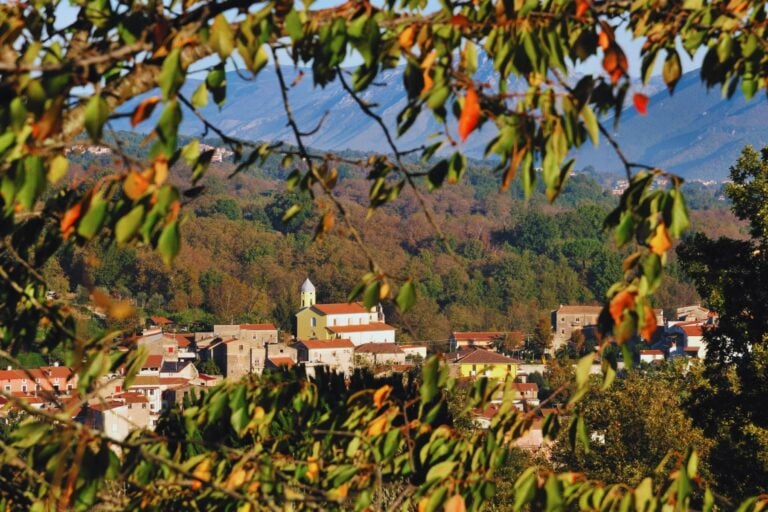
If you think the Via Francigena is only a Northern Italian pilgrimage, think again. There’s a southern section that winds through Campania, offering 86 kilometers of countryside paths, Roman sites and medieval villages that few travelers have ever seen.
The route crosses the Caserta hinterland, from Sessa Aurunca to Telese Terme, through olive groves, vineyards and landscapes steeped in history. Along the way, you’ll find Norman crypts, Roman cryptoporticos and quiet rural communities that feel frozen in time.
I’m from Naples, born and raised, yet I had never heard of this route. Despite years spent traveling across the world, the Via Francigena in my own region had somehow escaped me.
When I finally discovered it and walked its paths, I realized how much beauty was hidden so close to home.
A Thousand-Year-Old Pilgrimage Route
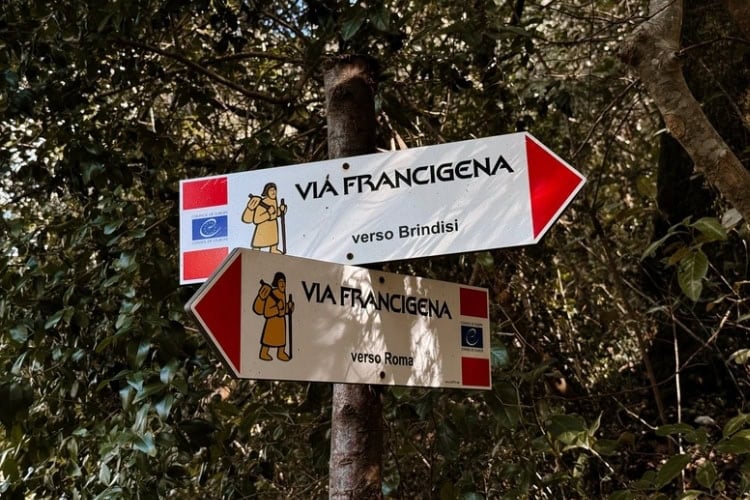
The Via Francigena, literally “the road from France,” was once a medieval superhighway for pilgrims traveling from Canterbury to Rome. Over centuries, abbeys, hospitals, and villages grew along its path, serving travelers seeking spiritual and physical renewal.
But the story doesn’t end in Rome. From there, the Via Francigena del Sud continues all the way to Santa Maria di Leuca in Puglia, stretching 900 kilometers across Lazio, Campania, Basilicata and Puglia.
Unlike its northern counterpart, this southern route is still quiet and little-known. You won’t find crowded hostels or long lines of pilgrims here. Instead, you’ll walk in silence, greeted by farmers and locals, surrounded by raw, authentic Italy.
Stage 1: Sessa Aurunca to Teano – Roman Roots and Hidden Marvels
Sessa Aurunca marks the northern gateway of Campania’s section. I began my journey at the stunning Cathedral of Saints Peter and Paul, a Romanesque masterpiece built in 1113 with marble and stones repurposed from ancient Roman temples. Every column and mosaic seemed to whisper stories from centuries past.
Leaving Sessa Aurunca, I followed gentle trails through olive groves and vineyards until suddenly the ancient basalt stones of the Via Adriana appeared beneath my feet.
Roman soldiers once marched here. Merchants, medieval pilgrims, and now—me. The moment felt timeless.
In Teano, I discovered one of Campania’s most fascinating towns. The Teanum Sidicinum Archaeological Museum holds treasures from pre-Roman times, but its masterpiece is the Epiphany Mosaic from 375 AD, the earliest depiction of the Three Magi in Italian mosaic art.
Just steps away, the Cathedral of San Clemente hides a two-level crypt built over an ancient Roman cistern. Descending into its shadows, I walked through layers of time, from the Roman Empire to the Christian Middle Ages, in a silence so deep it felt sacred.
Stage 2: Teano to Statigliano – Silence and Stone Towers
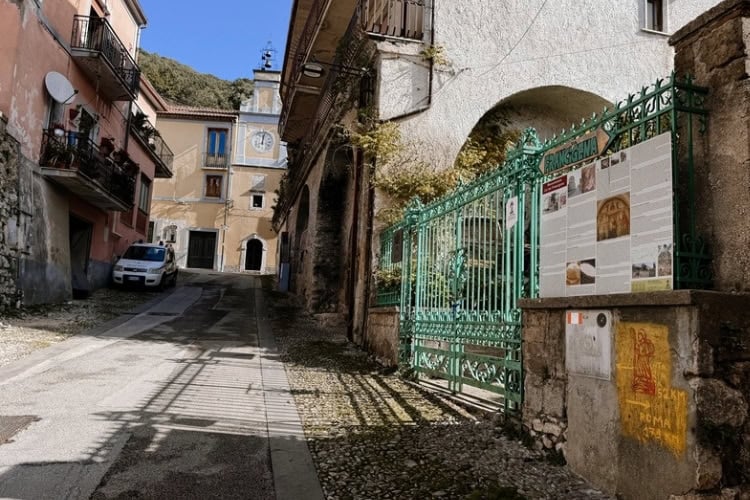
The second stage, 22 kilometers long, is the wildest and most demanding. The path climbs gently through deserted countryside, where the only sounds are the wind in the olive trees and birdsong.
In Roccaromana, a small village perched on a hill, I stopped for coffee with a local woman. “People don’t know the Francigena passes here,” she said, half proud, half regretful.
Indeed, Roccaromana is a place untouched by mass tourism—stone houses, quiet lanes, and views stretching endlessly over green hills.
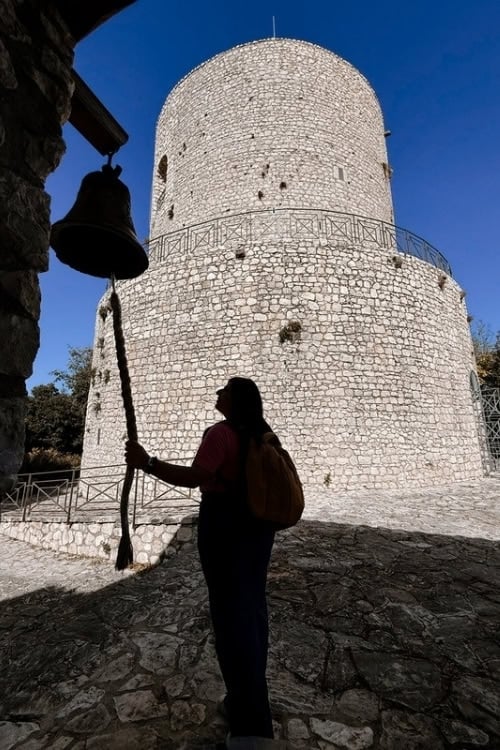
After hours of solitude, the Norman tower of Statigliano appeared on the horizon, a stone sentinel from the 12th century standing guard over the valley.
I sat nearby, soaking in the panorama and the profound silence. It was a silence that spoke to the heart, the kind that modern life rarely allows.
Stage 3: Statigliano to Alife – Walking Through Roman Glory
This stage leads straight into history. Alife is one of Campania’s most surprising discoveries: a Roman city still enclosed by its original walls, with streets and gates perfectly preserved.
Crossing Porta Piedimonte felt like stepping into another century. Inside, the ruins of ancient Allifae blend with everyday life, mosaic floors under modern homes and column fragments in garden walls.
The Roman amphitheater, half-buried for centuries, hints at the city’s past grandeur. But the real wonder lies underground: the cryptoporticus, a vast subterranean gallery supported by 31 pillars, once part of a Capitolium or noble villa.
During World War II, locals used it as a bomb shelter. Walking there, I could still sense the lives and voices of those who once found refuge below.
Beneath the Cathedral of Santa Maria Assunta, the Norman crypt built by Count Rainulfo houses relics of Saint Sisto, Alife’s patron. Dim light filters through narrow openings, casting shadows that make you feel suspended between earth and heaven.
I couldn’t believe I had never been to Alife before, less than 100 kilometers from Naples, yet utterly unknown to me. As the sun set behind the Roman walls, I realized how often the greatest treasures lie just beyond our own doorstep.
Stage 4: Alife to Faicchio – At the Foot of the Matese Mountains
Leaving Alife, the trail skirts the imposing Matese Massif, its peaks watching over the landscape like ancient guardians. This was one of my favorite stretches: open countryside, mountain silhouettes, and the rhythm of walking in peace.
By now, my pace had changed. I wasn’t counting kilometers anymore. Each step felt like a small meditation. The Via Francigena teaches you to slow down, to notice a bird in flight, the smell of grass after rain, the sound of your own breath.
Arriving in Faicchio, the medieval castle greeted me from its rocky hill. In the village below, I enjoyed local cheese, cured meats, and Matese wine, simple food that tastes like home.
The warmth of people here reminded me that hospitality is still a living tradition in Italy’s rural heart.
Stage 5: Faicchio to Telese Terme – Between History and Rebirth
The final stretch, just over 12 kilometers, follows the Titerno River through shady paths and cool breezes.
Halfway along, you cross the Fabio Massimo Roman Bridge, a perfectly preserved stone arch that has carried travelers for more than two millennia.
Touching its ancient surface, I felt connected to everyone who had crossed before me—soldiers, merchants and pilgrims seeking something beyond themselves.
Telese Terme, with its volcanic lake and famous sulfurous baths, is the perfect place to end the journey. After nearly 90 kilometers on foot, immersing in warm mineral water felt like pure bliss. Romans once bathed here, too, proof that some pleasures truly never fade.
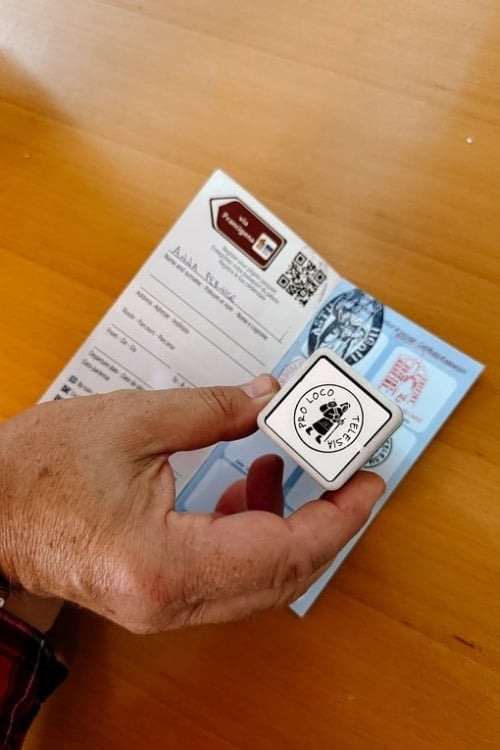
Before leaving, I climbed the Norman Tower, home to what Guinness World Records calls the world’s smallest museum, just two square meters of space filled with local history.
From the top, the view over the Titerno valley was breathtaking, a final gift from this unforgettable route.
Reflections on the Pilgrimage
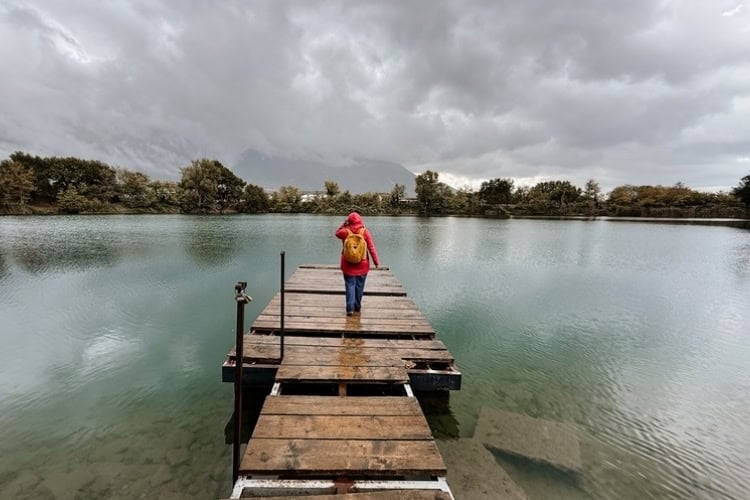
At Lake Telese, I sat on the shore and looked back—not just at the distance I’d walked, but at what I had discovered.
This journey was more than a series of ancient sites or beautiful views. It was a rediscovery of my homeland, a reminder that adventure doesn’t always require a plane ticket.
The Via Francigena in Campania gave me time to slow down, to listen and to reconnect with the land beneath my feet. In a world obsessed with speed, that might be the rarest luxury of all.
If you’re seeking authenticity, silence, and the essence of Italy far from the crowds, this is your path. You’ll walk on Roman stones, enter Norman crypts, and meet people who still live by the rhythms of the countryside. Step by step, you’ll find not only history, but yourself.
If You Go: Practical Information for Walking the Via Francigena in Campania
Total Distance: 86 km (53 miles), divided into five stages
Route: Sessa Aurunca → Teano → Statigliano → Alife → Faicchio → Telese Terme
Best Time to Go: Spring (April–May) and autumn (September–October). Summers are hot; some winter services may close.
Difficulty: Moderate — ideal for reasonably fit walkers. Longest stage: 22 km; shortest: 12 km.
Getting There: The most convenient gateway is Naples International Airport (NAP), roughly an hour’s drive from Sessa Aurunca. Search flights to Naples on CheapOair for the best fares. If you’re planning to drive between stages or shuttle luggage, Discover Cars is a reliable option for car rental pickup at the airport.
Navigation: Trails are marked but not always clearly — Campania’s waymarking is spottier than other sections of the route. Download GPS tracks from the official Via Francigena del Sud website or apps like Komoot or AllTrails before you set off. A good offline map is essential for the wilder Stage 2 stretch.
Staying Connected: Mobile coverage is thin in parts of rural Campania, but you’ll want GPS and maps working reliably the whole way. Pick up an Italy eSIM through Airalo before you leave home — plans start from around €4 and activate the moment you land.
Accommodation: B&Bs, agriturismi, and parish houses line the route — book ahead in smaller villages. In Telese Terme, Aquapetra Resort & Spa is the top-rated splurge, Grand Hotel Telese a dependable mid-range pick, and Hotel del Lago a budget-friendly lakeside option.
What to Pack: Lightweight backpack, broken-in hiking boots, layered clothing, water bottle, sun protection, rain gear, and a basic first-aid kit. Given the remote stretches and limited services on Stage 2, travel insurance is genuinely worth having. SafetyWing or SquareMouth are both solid options for coverage that includes medical evacuation.
Food: Each village offers at least one trattoria serving local specialties. Bring snacks for the longer stretches — Stage 2 in particular has limited food stops between Roccaromana and Statigliano.
More Info: viefrancigene.org / Anna Pernice’s original account of the route
Need a hand planning your trip? Here are the sites and services we rely on most, from booking tools to travel products we love.
Inspire your next adventure with our articles below:
- The 15 Best Places to Visit in Italy for History, Art and Endless Beauty
- Get Off the Beaten Track With This Guide of Things to Do in Sardinia, Italy
Author Bio: Anna Pernice is an Italian professional travel blogger, journalist, content creator, and author. Born in Naples and now based in Milan, she founded her blog Le Avventure di Anna Pernice Travel Fashion Tips in 2013, one of Italy’s first travel blogs, where she documents her solo journeys around the World to inspire women to travel beyond their comfort zone.
She has collaborated with major international tourism boards and airlines, teaches blogging and storytelling at the European Tourism Institute in Rome and Milan, and has been featured in radio and TV programs in Italy. Anna is the author of several books, including Manuale per aspiranti blogger (Dario Flaccovio), Spezie e Moschee, Il richiamo dell’isola, and an Audible original audiobook on Naples.
Want to discover more hidden gems and helpful travel tips? Join our free newsletter for the latest travel secrets and travel articles.
We are reader-supported and may earn a commission on purchases made through links in this article.

- Fall Day Trips from Vancouver: 7 Scenic Walks Worth the Drive - September 15, 2026
- Laos for Backpackers: Vientiane, Vang Vieng and Luang Prabang on a Slow-Travel Route - September 15, 2026
- Why “Just Immerse Yourself” Won’t Teach You Spanish, No Matter How Long You Stay - September 15, 2026
Planning another trip soon? ✈️
Add GoWorldTravel.com as a preferred source on Google. Click the button below so our local guides, packing hacks, and hidden-gem itineraries always show up first when you search!
Add to Preferred Sources