

It was a crisp, sunny morning in Brno when my wife, son, and I met our friends Hana and Jan outside Mitte Café in Brno, Czech Republic. Nestled among centuries-old facades, Mitte exuded a warm aroma of freshly brewed coffee and buttery pastries.
Nataliya, Alex, and I followed Hana and Jan through the rustic interior and chose a table in the back garden, where we ordered a quick breakfast: croissants, pastries, and steaming cups of coffee.
I raised my cappuccino. “To a day fit for royalty.”
Jan raised his espresso. “Yes, we’ve got a full day ahead at Lednice-Valtice.”
Nataliya frowned quizzically. “Aren’t Lednice and Valtice two different places?”
Jan nodded. “They are, but they’re part of the same UNESCO World Heritage site, the Lednice-Valtice Cultural Landscape—a massive aristocratic playground. The Liechtenstein family built and owned each of them.”
“The Lednice-Valtice Cultural Landscape refers to the whole area, about 200 square kilometers, not just the estates,” Hana said. “And it’s beautiful.”
“Can’t wait,” Nataliya said, downing her coffee.
Through the Moravian Countryside
After breakfast, we piled into Jan and Hana’s red Skoda and set off. Moravia unfolded before us in golden fields and rows of vineyards, dotted with villages where red-tiled roofs peeked through morning mist.
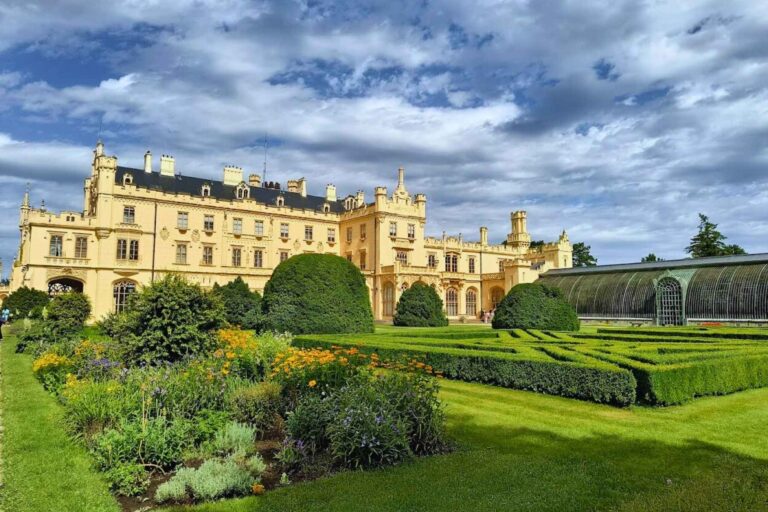
Hana turned from the passenger seat to address us. The sight of Lednice Castle, a neo-Gothic masterpiece emerging from the trees, was enchanting.
Luxurious Lifestyle of the Liechtensteins

We started with a guided tour of the apartments and chapel. The castle’s interiors were a feast for the eyes: soaring ceilings with intricate wood carvings, walls lined with damask, and furniture of aristocratic grandeur.
Chandeliers of Bohemian crystal sparkled in the light streaming through tall windows, and each room seemed seeped with wealth and refinement.
Our guide, a stern woman with a passion for history, regaled us with tales of the Liechtenstein family, one of Europe’s wealthiest dynasties.
The stained-glass windows of the private chapel cast kaleidoscopic light over the regal interior. The delicate tracery and serene altarpiece made it a highlight of the tour.
A Scent of France and England
Lednice’s French and English gardens were as enchanting—and meticulously designed—as the castle itself. While the French garden showcased royal precision, the English garden displayed poetic disarray.
The French garden, located closest to the castle, was a masterpiece of symmetry and order.
Neatly trimmed hedges formed geometric patterns, while classical statues stood like sentinels amid fountains that sparkled in the sunlight. It was a vision of cultivated elegance.
The English garden, by contrast, felt wild and poetic, a deliberate celebration of nature’s untamed beauty.
Winding paths meandered through groves of ancient trees, past flowerbeds bursting with vibrant colors. A small artificial ruin added a touch of romantic melancholy to the scene.
As we strolled the grounds, we came to a dock where boats bobbed gently on the Dyje River.
“What’s that?” Alex asked, pointing toward an ornate tower beyond the river.
“The Minaret Tower,” Jan said.
“Here?” Nataliya asked.
Hana led us toward the boats. “It’s just a short cruise away.”
Rising to the Occasion

The boat ride was tranquil, the river flanked by weeping willows and reeds. The Minaret Tower rose dramatically against the sky, an unexpected touch of Islamic architecture in the middle of Moravia.
Built in the early 19th century, the tower was a bold statement of exoticism by the Liechtenstein family. Its design includes Islamic motifs and a small mosque on the lower floor.
Historical records suggest that it served as a viewing platform, offering breathtaking vistas of the estate.
“Let’s climb to the top,” Jan said, enthusiasm rising. We began our ascent, one stone step at a time. Inside, we marveled at the mosque’s arches and inscriptions.
Climbing the tower was a workout, but the panoramic views were worth the effort. Below, the sprawling estate stretched endlessly, the castle we had visited earlier gleaming in the distance.
Hoofing it Back to the Palace
Back on the ground, we opted for alternate transportation for our journey back to the main palace grounds. We hopped onto a horse-drawn buggy.
The rhythmic clop of hooves and the gentle sway of the carriage made for a charming interlude, and we talked about what we had seen so far and what awaited us.
Alex began snapping some photos. “This is straight out of a fairytale,” he said. “The castles, the gardens, even this carriage ride.”
Soon, we were back at the palace, which we walked past one last time before returning to the populated parking lot.

Breaking Bread in Valtice
A short drive brought us to Valtice, the sister estate of Lednice. Built as the principal seat of the Liechtenstein family, Valtice Palace was a symbol of their power and prestige.
It remained in their hands until the end of World War II, when the property was confiscated and became state-owned.
We settled into a shaded beer garden for lunch, the air filled with the hum of conversation and the clink of glasses.
Over hearty plates of duck and pork, we sampled a crisp local pilsner, known for its slightly floral aroma and balanced bitterness—a hallmark of Moravian brewing.
“This is fantastic,” I said, savoring the earthy richness of the goulash and its blend of paprika and caraway seeds.
Hana teased, “Wait until you see the wine cellars.”
Inside Valtice Palace

After lunch, we explored Valtice Palace. A guided tour took us through its grand halls and intimate chambers, revealing the estate’s dual purpose as a symbol of aristocratic opulence and a functional residence.
The richly decorated salons featured ornate stucco work, gilded mirrors, and tapestries that evoked the grandeur of the Habsburg era.
The library, with its floor-to-ceiling bookshelves and rolling ladder, was a treasure trove of thought and knowledge from centuries past.
Our guide explained that Valtice was the administrative hub of the Liechtenstein estates and often hosted elaborate social gatherings.
The attention to detail in every corner of the palace reflected the family’s ambition to impress its peers and guests.

Delicious Descent
We descended into the labyrinth of wine cellars beneath Valtice Palace, dating back to the 1430s.
Originally constructed to store and age the Liechtenstein family’s prized wines, they now serve as both a museum of winemaking and a venue for immersive tastings that celebrate Moravia’s centuries-old viticultural heritage.
We paid our entry fee and selected a tasting package. Armed with a tasting glass each, we ventured into the dimly lit caverns. The air was cool and damp, carrying the faint aroma of aging oak barrels.
Rows of barrels and pyramids of wine bottles filled the underground.
We moved from station to station, each offering a different wine tasting. While we typically find ourselves drawn to dry reds, the whites here were bright and aromatic, with Riesling and Grüner Veltliner stealing the spotlight.
One pour was a sweet late-harvest wine, golden and luscious, its memorable flavor lingering like a dessert. We all raised our glasses and toasted to Moravia—and all its hidden treasures.
Back to Brno
The sun was just beginning to set as we returned to Brno, the golden hour casting a warm glow over the city and bathing its rooftops in soft amber hues.
Jan and Hana’s neighborhood, lined with 19th-century apartment blocks and cobbled streets, felt like a world apart from the grandeur of Lednice and Valtice, but still inviting.
We ended the day at a small brewery tucked into a side street, its wooden beams and brick walls exuding a cozy charm. Over frothy mugs of pilsner served in heavy glass, we recounted the day’s highlights with the buzz of quiet conversations around us.
“Lednice and Valtice were incredible,” Nataliya said.
“It would be easy to spend more time there,” Alex agreed.
I took a drink from my golden mug. “But this is the perfect finish to a great day.”
The lively hum of locals talking, watching soccer, and laughing provided all the background music we needed.
Brian raised his mug. “To visiting interesting places, old and new.”
In the warm embrace of Moravia, we all drank to that.
If You Go
Getting There
The Lednice-Valtice Cultural Landscape sits about halfway between Brno and Vienna, and most visitors arrive from one of those two cities. The area also draws plenty of cyclists, with well-marked paths making biking an ideal way to see the whole landscape. For maximum flexibility, renting a car is the easiest option, since the drive from Brno or Vienna to either Lednice or Valtice takes about an hour. Travelers without a car can take one of the regular trains connecting Brno to both towns (check the Czech Railways website for schedules and specific lines) or hop a frequent bus through Student Agency or FlixBus.
Where to Stay
Lednice offers a range of accommodation, from luxury hotels down to family-run guesthouses. For a standout pick, Hraniční zámeček is a lakeside luxury property with a full spa, seasonal pool, and a fine dining restaurant guests have called some of the best breakfast in Europe.
Valtice is mostly hotels and guesthouses geared toward visitors exploring the palace, and Zámecký hotel Anton Florian is a strong option, sitting close to the palace itself with its own vineyard and wine tastings on site.
Travelers who’d rather have a wider selection of hotels and amenities can base themselves in Brno and take day trips out to Lednice and Valtice. Grand Palace Brno is a five-star pick in the heart of the old town, within walking distance of Petrov Hill and Špilberk Castle.
Need a hand planning your trip? Here are the sites and services we rely on most, from booking tools to travel products we love.
Inspire your next adventure with our articles below:
Want to discover more hidden gems and helpful travel tips? Join our free newsletter for the latest travel secrets and travel articles.
We are reader-supported and may earn a commission on purchases made through links in this article.

- Montenegro’s Bay of Kotor: Stone Towns, Venetian Walls and Mirror-Calm Water - October 11, 2026
- Rila Monastery: A Day Trip Into Bulgaria’s Spiritual Heart - September 23, 2026
- Castles, Carriages, and Cellars: Following the Liechtenstein Trail Through Moravia - August 14, 2026
Planning another trip soon? ✈️
Add GoWorldTravel.com as a preferred source on Google. Click the button below so our local guides, packing hacks, and hidden-gem itineraries always show up first when you search!
Add to Preferred Sources