


As the United States turns 250, it feels wrong to just commemorate from the couch, and maybe a little too comfortable to limit the celebration to a neighborhood fireworks display.
Revolutions, after all, were not sedentary affairs. They were loud, inconvenient, and conducted in taverns, ports, and borrowed rooms where people argued late into the night and then got up early to make history.
Why a Revolutionary Road Trip
If you’re looking for a way to mark the anniversary that involves more substance, consider a Revolutionary Road Trip—one that stitches together the places where independence was debated, documented, supplied, and slowly transformed from idea to reality.
It’s a route where history becomes less about memorization and more about standing in the places where things actually happened.
This journey takes us through Baltimore, Montgomery County, Washington, DC, Annapolis, and Philadelphia. Not a straight line, but then again, neither was the path to independence.
Read More: 10 Best Places to Spend the Fourth of July in the USA
Fells Point: Where the Revolution Smelled Like Tar and Salt
Begin in Baltimore, at Fells Point, where the Revolution doesn’t announce itself with monuments so much as it lingers in the physical character of the place. The cobblestones still slope toward the harbor, uneven and unforgiving, a reminder that this neighborhood predates comfort by design.
During the Revolutionary era, Fells Point was a working port—gritty, loud, and essential. Baltimore wasn’t merely supportive of the cause; it was instrumental to it.
Privateers outfitted here slipped past British blockades, harassing enemy ships and returning with goods that helped finance the war effort. This was true during the War of 1812 as well, earning the nickname “The Nest of Pirates.”
Walking along Thames Street today, past brick warehouses and former sailors’ lodgings, it’s easy to imagine how information moved through the port—rumors from Europe, news from other colonies, carried as casually as cargo.
Revolutions need ideas, but they also need ships, supplies, and people willing to risk them.
Federal Hill: Seeing the Strategy
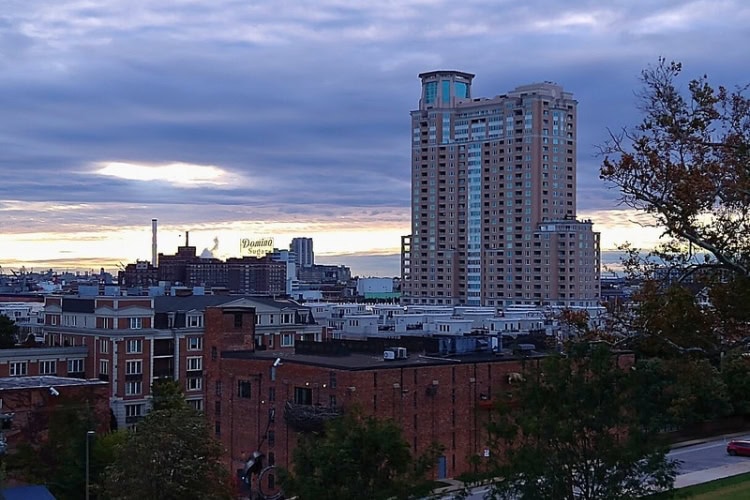
A short climb up Federal Hill offers one of the best views in Baltimore and one of the clearest Revolutionary lessons: control the high ground. During the war, the hill served as a lookout point to protect the harbor from British attack.
From the top, the logic becomes obvious. The water, the shipping lanes, the approaches to the city—all laid out in a way that makes strategy visible rather than abstract. The site reminds visitors that not every Revolutionary landmark is a room or a document.
Sometimes it’s simply a place where someone stood watch, scanning the horizon, understanding that vigilance itself was part of the fight.
Dowden’s Ordinary: Independence, Debated
From Baltimore, head west into Montgomery County toward Dowden’s Ordinary in Clarksburg. The building is modest, which is exactly what made it effective.
This tavern hosted Maryland delegates in 1774 as they debated whether to support independence from Britain. There were no soaring chambers or marble columns here—just a small space where disagreement was unavoidable. The intimacy of the room underscores what was at stake.
These weren’t theoretical arguments. Supporting independence meant risking property, status, and life. Dowden’s Ordinary is a reminder that the Revolution was not born in moments of clarity, but in prolonged argument.
The United States didn’t begin with consensus; it began with people willing to stay in the room and keep talking.
Annapolis: Where Independence Was Ratified
Before heading to Washington, it’s worth stopping in Annapolis, a city that briefly served as the nation’s capital and played an outsized role in the Revolution’s conclusion.
At the Maryland State House, in December 1783, George Washington stood in the Old Senate Chamber to resign his commission as commander-in-chief—a radical act that quietly established the American precedent of civilian control over the military.
Just weeks later, in January 1784, the Continental Congress met in that same room to ratify the Treaty of Paris, officially ending the Revolutionary War. The building itself is elegant but restrained, its dome rising above a compact, walkable historic district.
Annapolis offers a useful counterpoint to other Revolutionary sites: this is where restraint, process, and institutional trust mattered as much as defiance.
Washington, DC: The Revolution on Paper
In Washington, DC, the Revolution becomes formal—and fragile. At the National Archives, the founding documents are preserved under carefully controlled light. The Declaration of Independence, Constitution, and Bill of Rights sit behind glass, their physical vulnerability hard to ignore.
Handwritten edits and revisions make clear that these were working documents, shaped by debate and compromise rather than certainty. Seeing these ancient documents in person reinforces an important truth: the Revolution didn’t end with victory.
It transformed into an ongoing project, one that required structure, safeguards, and constant reinterpretation.
Step outside and the city’s noise resumes—tourists, protests, policy arguments unfolding in real time. Inside, the Revolution waits patiently, still insisting on being read.
Beyond the Documents
The Library of Congress
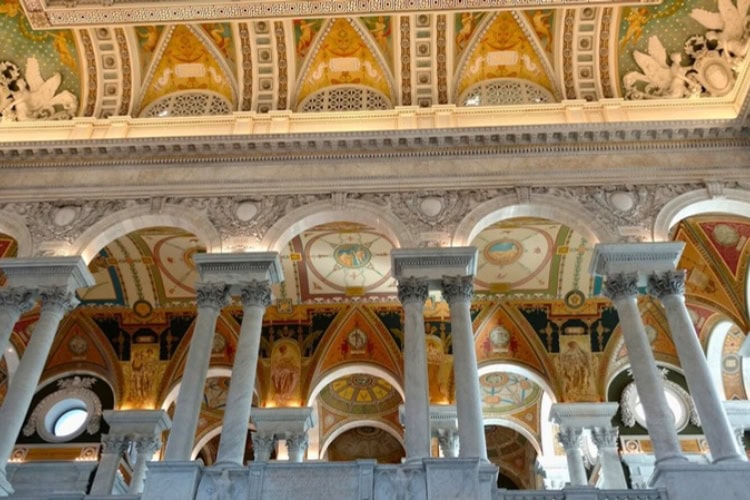
A short walk from the Archives, the Library of Congress reinforces a quieter Revolutionary principle: that a strong republic depends on knowledge.
The Library’s exterior is grand without being showy, and the interior—marble staircases, murals, and the soaring Main Reading Room—makes a persuasive case that ideas were meant to be preserved, debated, and revisited.
The Mall Itself
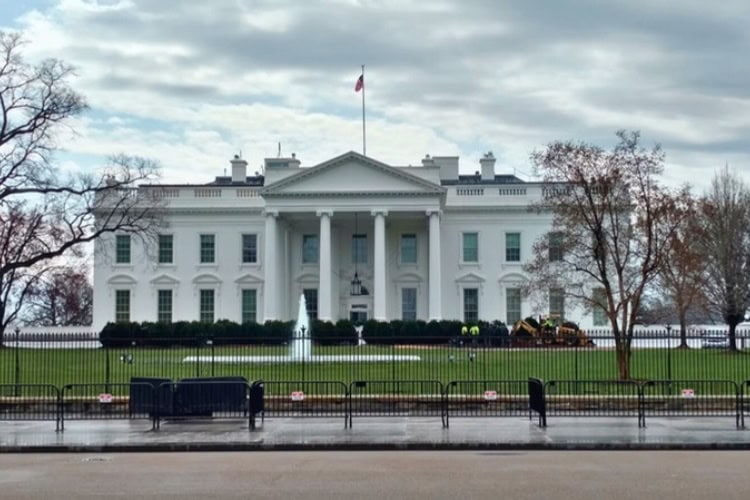
Step outside the Archives and Library, and the city itself becomes the exhibit.
Walking between the Capitol, the White House, and the Washington Monument turns abstract civics into physical space.
The Capitol represents the institutional gamble the Revolution demanded; the White House, the uneasy balance between leadership and restraint; the Washington Monument, the elevation of Revolutionary leadership into an enduring symbol.
Add the Jefferson and Lincoln Memorials, and the conversation stretches across generations—one articulating the Revolution’s ideals, the other testing whether they could survive.
The National Portrait Gallery
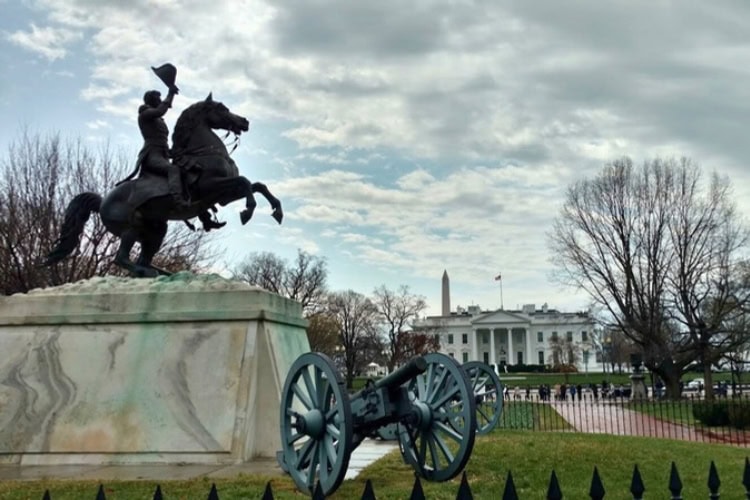
The National Portrait Gallery offers a different kind of Revolutionary reflection. Its halls trace the story of the nation through faces: presidents and their spouses, leaders both celebrated and contested, each captured in a moment that hints at the weight of office.
The gallery reminds visitors that the people who shaped the country were human, with ambitions, doubts, and families navigating the same uncertainties that define leadership today.
The National Museum of American History
The National Museum of American History plays a different role. Its most famous artifacts skew modern and cultural rather than Revolutionary—Kermit the Frog, C-3PO, and Dorothy’s ruby slippers tend to steal the spotlight—but that imbalance is instructive.
The museum shows how quickly the ideals of 1776 gave way to the work of living: commerce, invention, entertainment, and contradiction layered atop one another until the Revolution became backdrop rather than headline.
While pop culture icons often draw the crowds, the museum’s core holds artifacts that are foundational to the American story.
Standing before the original Star-Spangled Banner—the massive, battle-worn flag that survived the 1814 bombardment of Baltimore—the connection between the Revolution’s ideals and the defense of the young republic becomes visceral.
Nearby, George Washington’s military uniform sits in a glass case, its blue and buff wool preserved with such clarity that you can almost see the weight of command he carried.
Mount Vernon
A short drive south brings visitors to Mount Vernon, George Washington’s estate, where the home, gardens, and river views connect the Revolutionary ideals traced in the city to the man who embodied them.
Visitors can wander the manicured gardens, gaze down the Potomac, and stand in the rooms where Washington lived and worked, feeling the human scale of the ideals celebrated in the city just a few miles away.
Read More: Mount Vernon: George Washington’s Legacy on the Potomac
Philadelphia: Where the Idea Became a Country
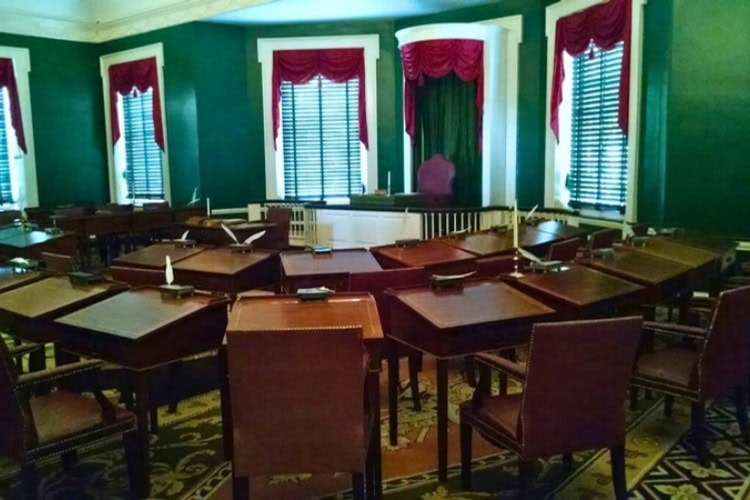
Philadelphia feels appropriately weighty. This is where independence stopped being hypothetical.
Independence Hall stands with quiet confidence, its red brick exterior belying the magnitude of what occurred inside. The rooms are smaller than expected, the ceilings low, the spaces intimate—conditions that make the delegates’ endurance all the more impressive.
As you walk across the Assembly Room, the floorboards groan underfoot with a heavy, centuries-old resonance, and the air carries the faint, dry scent of aged timber and wax.
This is where independence was debated, declared, and committed to paper despite immense uncertainty.
A City That Layers Its History
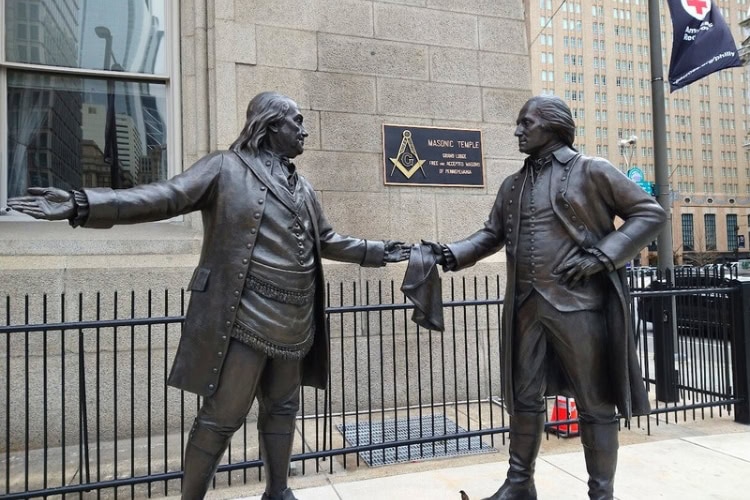
The surrounding streets reinforce the point. Philadelphia doesn’t isolate history; it layers it, allowing past and present to coexist without sentimentality.
Just a short walk away, the Liberty Bell offers a quieter, more complicated coda to America’s story.
Its fame rests less on what it did during the Revolution than on what it came to represent afterward. Originally cast to mark colonial governance, the bell was later adopted by abolitionists as a symbol of unrealized promise—its crack becoming as meaningful as its inscription.
Seen through the lens of the 250th anniversary, the Liberty Bell works not as a triumphant endpoint, but as a reminder that independence was aspirational as much as achieved.
The ideals rang out early; living up to them has taken considerably longer.
The Road Between the Places
Taken together, these cities and sites tell a broader story. The Revolution wasn’t a single event or isolated to a single city.
It was a network—ports and taverns, hills and halls, documents and disagreements. It was shaped by people who didn’t know how it would turn out, only that they were willing to risk finding out.
At 250 years, the United States remains very much a work in progress. But walking these streets, standing in these rooms, and tracing the routes between them gives one an appreciation for all that went into making this nation one that has managed to endure two and a half centuries and counting.
Read More: Boston’s Freedom Trail: A Walk Through Revolution and Living History
If You Go
Getting There: For an efficient Mid-Atlantic road trip, use Baltimore as your base camp. It sits centrally between Philadelphia (90 minutes north) and Washington, DC (60 minutes south), offering significantly better hotel value than either city.
Where to Stay: Stay in historic Fells Point at the Pendry Baltimore or the William Fell Baltimore to wake up on the same cobblestones where privateers once paced.
Getting Around: While the cities are walkable, a car is essential for reaching sites like Dowden’s Ordinary and Mount Vernon. Use the I-95 corridor to link the major hubs, but leave room for the scenic routes through Maryland’s horse country and the rolling hills of Montgomery County. Discover Cars searches hundreds of rental suppliers at once to surface the best available rate for your dates.
Tours: The Celebrate 250th: Washington Monument Ticket & National Mall Tour is purpose-built for this anniversary moment — a small-group history tour of the National Mall’s monuments and memorials with a Washington Monument ticket included. Book on Viator.
Need a hand planning your trip? Here are the sites and services we rely on most, from booking tools to travel products we love.
Inspire your next adventure with our articles below:
- From Settlers to Revolutionaries: A Journey Through Jamestown, Williamsburg and Yorktown
- Cobblestones, Crypts, and Crab Beignets: Inside Savannah’s Enchanting Historic District
Want to discover more hidden gems and helpful travel tips? Join our free newsletter for the latest travel secrets and travel articles.
We are reader-supported and may earn a commission on purchases made through links in this article.

- Montenegro’s Bay of Kotor: Stone Towns, Venetian Walls and Mirror-Calm Water - September 27, 2026
- Rila Monastery: A Day Trip Into Bulgaria’s Spiritual Heart - September 23, 2026
- Castles, Carriages, and Cellars: Following the Liechtenstein Trail Through Moravia - August 14, 2026
Planning another trip soon? ✈️
Add GoWorldTravel.com as a preferred source on Google. Click the button below so our local guides, packing hacks, and hidden-gem itineraries always show up first when you search!
Add to Preferred Sources