
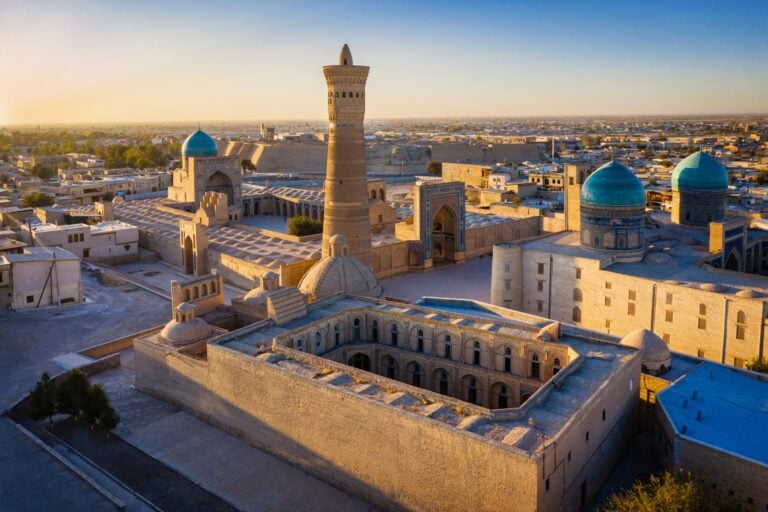
Deep in the heart of Uzbekistan, three iconic desert oases, Bukhara, Khiva and Nukus, remained on the last legs of our 1,000-mile journey across the Silk Road.
Leaving Samarkand’s stunning Islamic architecture behind, we boarded the high-speed Afrosiyob train. Our group of thirteen Overseas Adventure Travelers was whisked 170 miles to Bukhara in under two hours. This would have been a ten-day passage for caravans.
Racing on rails alongside the ancient corridor, the landscape drifted from scrub trees to scant bushes and then flat seas of pale sand against steel-blue skies. The deeper we went into the interior, the more the open desert emerged. The light softened and the spirit of the Silk Road unfolded in quiet but dramatic fashion.
Bukhara Oasis
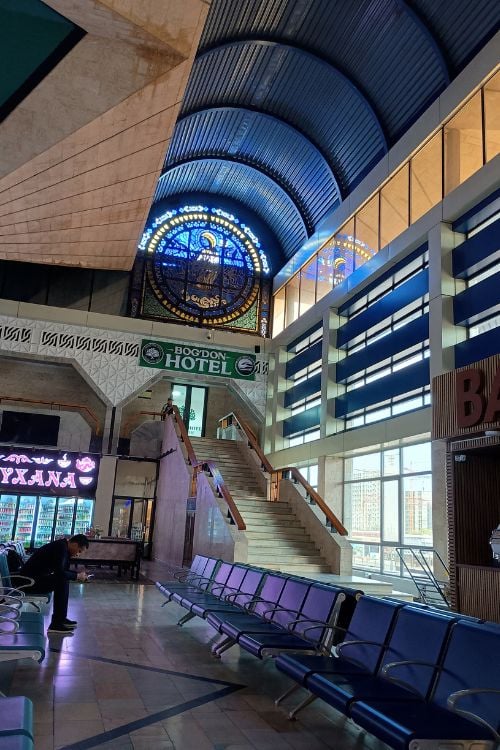
As we left the train at Bukhara station, the fairy tale began. Our ground transport drove through the gates of the oldest and largest oasis in Uzbekistan, continuously inhabited for 2,500 years.
A moody, distinctive character of this UNESCO World Heritage mecca, akin to The Arabian Nights, revealed antiquated dwellings, updated to accommodate tourists. Our refuge, the Amelia Boutique Hotel, was tucked one block off the town square.
A Caravanserai Atmosphere
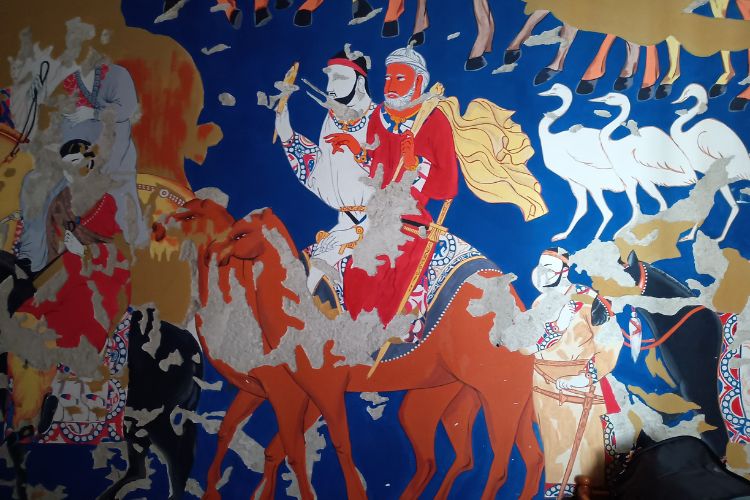
Photo by cbowman
Converted into an inn, this sprawling, 200-year-old home evoked the feeling of a Silk Road caravanserai.
A neighborhood-wide power outage lasting four hours heightened the sense of stepping into the past. Each guest room came equipped with the welcomed necessities of candles, a flashlight and an oil lantern.
Secret niches, wooden bridges, ceilings draped with silk, and a rooftop lookout, furnished with wide settees covered with intricately woven silk Uzbek rugs, added to the archaic atmosphere.
In our three-room suite, floor-to-ceiling murals depicted the intricacies of caravan life. Upon entering the bedchamber, I felt the Silk Road all around me.
Minarets, Mosques and the Ark
We set an ambitious plan to explore the 140 protected structures, which you can visit on foot through narrow, winding alleyways.
Dominating the skyline for nearly 900 years, the baked brick Kalyan Minaret, built in 1127 by Arslan Khan, watches over the magnificent Kalyan Mosque and the Mir-i-Arab Madrassah. So impressed by the minaret’s ensemble, Genghis Khan, known for his brutal destruction of places and people, ordered it spared.
Other historical sites included the Ark of the Citadel and a 5th-century walled fortress built as Bukhara’s residence for ruling emirs. The Throne Room, Juma Mosque and the current archaeological dig outside the walls provided a glimpse of life in this grand oasis.
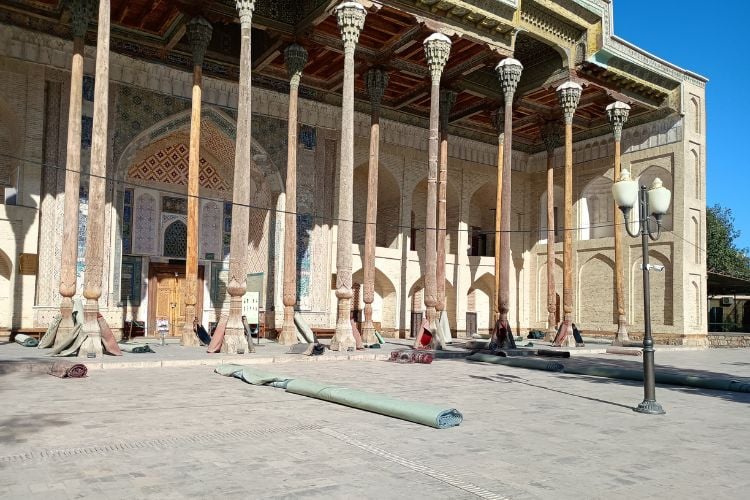
Nearby, at the unique 1712 Bolo Hauz Friday Mosque, women swept and laid carpets in front of the structure to accommodate throngs of Muslim men coming for prayer.
Twenty carved elm pillars supported the open-air extension roof that protected worshipers from the sun. A troubling fact remains: women prepare the Friday mosque but aren’t allowed to pray in it.
Wine, Knives and Lyabi Hauz
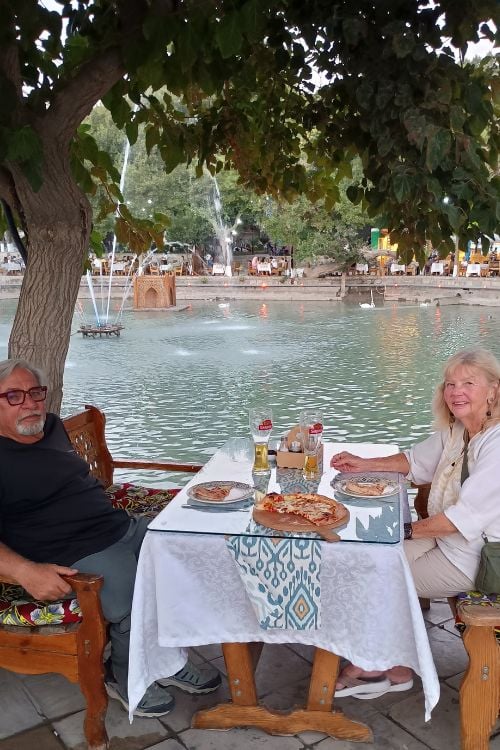
Although the structures echoed Bukhara’s history, interactions with its people brought the culture to life. My husband and I relaxed in the social heart of the city, Lyabi Hauz Square.
We sat at a table for two by the refreshing, swan-filled pond, surrounded by emerald mulberry trees, and chatted in a blend of English and Uzbek with our young, dashing waiter. A sizzling pizza and tall, cool Sarbarten local beers boosted the pleasure.
Wine tasting of Uzbekistan’s prized vinos in a desert oasis on the Silk Road seemed unlikely. That is, until we stumbled upon Shohrud, an intimate wine cellar on a back street.
The host and sommelier, a huge, Russian bear of a man, who spoke only Russian, used Google Translate to describe the eight wines, a smooth cognac, and a home-made port we sampled.
Adding to the fun, my Google Translate picked up the conversation of a Russian couple sitting behind us. What a hoot. Sipping wines, munching on Uzbek snacks and eavesdropping on Russian customers.
The interlinked domed market, highlighting skilled craftsmen, dominated Old Town. Bukhara remains the center of knife making in Uzbekistan.
I passed up carpetmakers, jewelers and silk weavers, but was drawn to the Ikramov knife workshop. This family has hand-crafted Damascus steel knives for six generations.
My treasured purchase, a titanium knife with a forever-sharp razor edge and a green-tinged, marble handle, shines in my kitchen.
A Day in Nayman Village
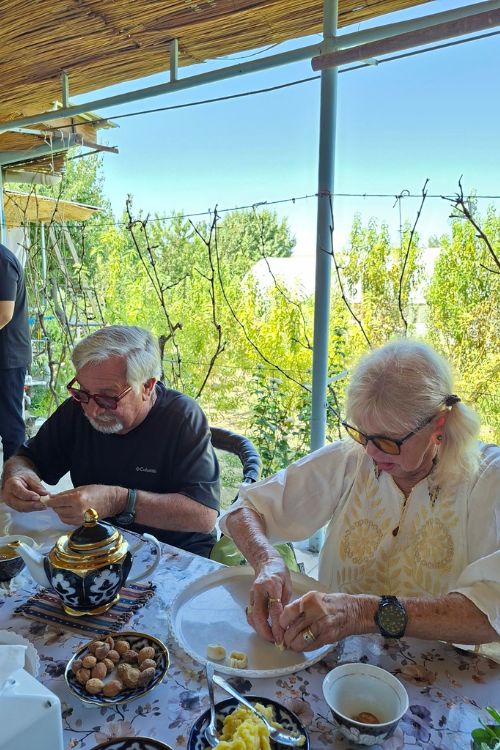
On a final excursion, our group traveled to Nayman, an outlying village of 700 residents. We soaked up vibrant, bucolic images and experienced a day in the life of Bukhara farmers.
Leaving our bus at the hamlet’s entrance, we walked the narrow roadway toward the rural home of our hosts, Uman and Mukarram. Along the way, curious families came out from their cottages to greet rare American tourists.
At the local school, secondary-level teenagers on recess quickly mingled with our group, hoping to converse with native English speakers. All students wore crisp white shirts and creased black pants or skirts; their presentation and politeness were impressive.
An animated, raven-haired girl gravitated to me, fascinated by my hairstyle. I said, “In English, we call these ‘pigtails.’ What do you call them?”
She blushed, then replied, “We call them childish.” We both laughed hysterically as she clarified she meant that she usually sees them on children. She asked if I had been to Japan.
When I said yes, she moaned, “Don’t make me jealous. My dream is to go to Japan.” A fifteen-year-old from a small village in Uzbekistan, asking about Japan in English: amazing.
At the family farm, three generations assisted group members to hand-make Uzbek-style pastas of filled tortellini and ravioli. We learned how to throw naan bread against the walls of a tandoori oven, then helped to make the national dish of plov.
As we sat with the family to feast on tourist-twisted versions of their favorite foods, we relished the warm hospitality of the people who live along the Silk Road.
Khiva Oasis
The nine-hour overland ride from Bukhara to Khiva followed the original Silk Road pathways. We drove through the Kyzyl-Kum desert, Soviet-style towns and crossed the sacred Amu Darya River.
Established over 2,500 years ago, Khiva’s name is rumored to be linked to Noah’s son, Shem. Legend claims he dug a Kleva well here, and finding water in the desert spurred the town’s development.
Inside the Walls of Itchan Kala
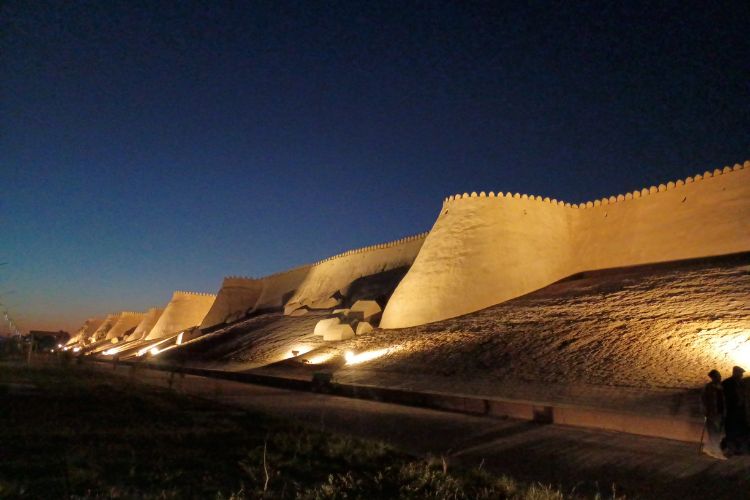
The internal city of Khiva, called the Itchan Kala, is completely surrounded by rippling mud walls ten meters high. It unfolded as an open-air museum of the Silk Road.
All fifty historic monuments and 250 ancient houses within the walled inner city were built on wealth from the caravan and slave trades. From our room at the Asia Khiva Hotel, we could see the city entrance through one of four gates.
Khiva Street Life
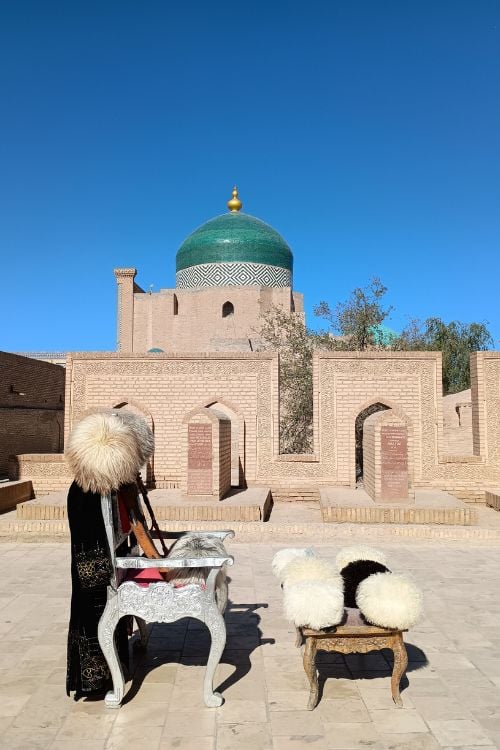
Vendors selling their crafts filled the narrow streets. Hat furriers’ wild, curly sheep creations to ward off the brutal cold of Khiva winters caught my attention.
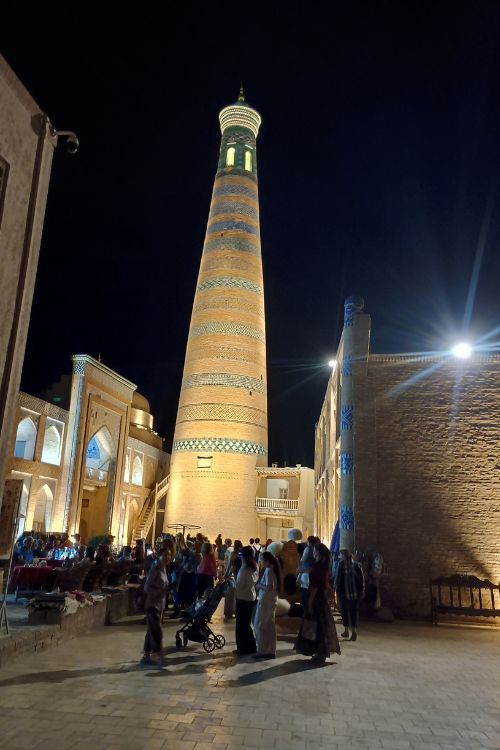
The concentration of tourists, confined to points of interest within the walls, seemed more jammed than other Silk Road sites. Crowds swelled during the evenings to view illuminated structures.
I preferred early morning visits to the Dzuma Mosque, the squat, Kalta Menos Minaret, its construction abandoned with the unexpected death of the ruling Khan and the Tash Hanli Palace.
Tightropes and Rooftop Sunsets
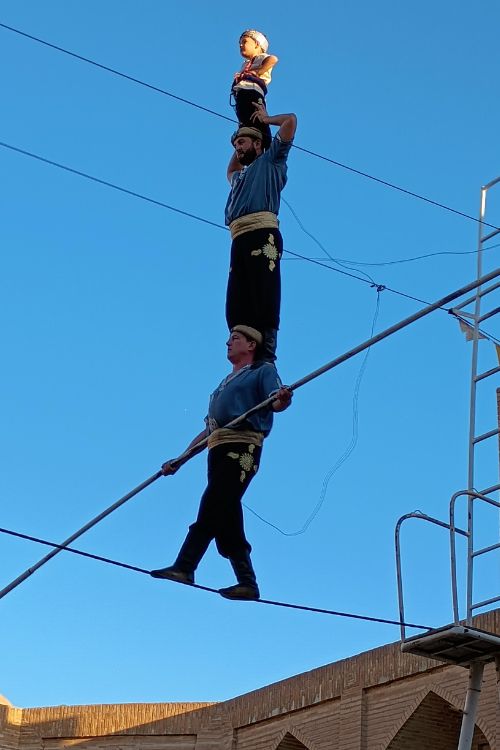
Once again, personal interaction with the locals brought curiosity. We attended a thrilling high-rope walking act, performed daily by three generations of the Jabbarov family.
The most daring feat was a father, son and four-year-old grandson, perched on each other’s shoulders, warily crossed a thin rope, 25 meters high. All without the benefit of a safety net.
The audience, me included, gazed in frightened silence. The Jabbarovs have been amazing Khiva audiences for over 100 years.
Rooftop Dining in Khiva
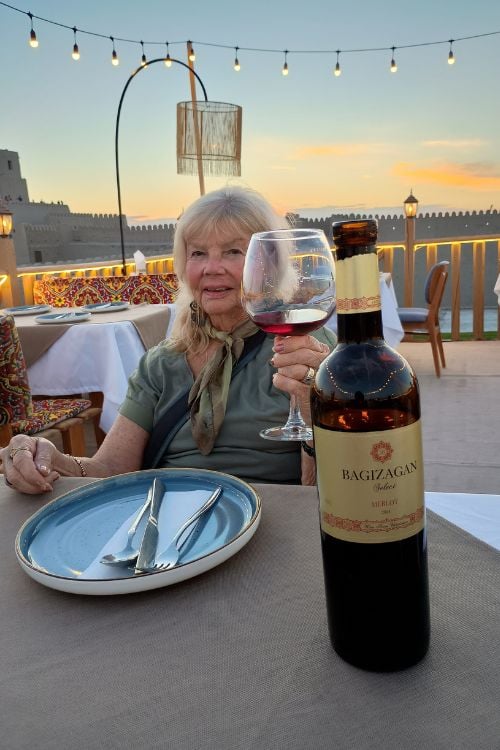
The real treat came as we climbed four flights of stairs to the rooftop of Terrassa Cafe & Restaurant. Panoramic, mesmerizing views of the city glistened in the sun, setting behind the scalloped wall. After dusk, illuminated twinkles glowed from interior minarets and madrassahs.
We enjoyed a simple broiled lamb shank, a large round of naan bread and a bottle of Uzbek merlot. Meanwhile a local woman twirled an ancient dance around the tables. What better way to end our visit to Khiva?
Nukus And Karakalpakstan
Completing our 1,000-mile overland Silk Road journey, we arrived in Nukus, the most northwestern city in Uzbekistan and capital of Karakalpakstan.
An autonomous republic but considered part of Uzbekistan for economic and governmental purposes, this remote, isolated republic, surrounded by three deserts, unfolded as the most unique of the three oases.
En route, we stopped at Chilpik, a Zoroastrian Tower of Silence more than 2,000 years old. On this circular hilltop ring, Zoroastrians laid out their dead until vultures picked the bones clean for burial.
In the distance, a flat mesa rising from the desert floor remained, upon which Zoroastrians laid their dead until vultures picked the bodies clean so the bones could be buried.
The Karakalpaks are a Turkic people with their own language, closer to Kazakh than Uzbek, though Russian is widely spoken. Fiercely proud of their heritage, people we met made clear they are Karakalpak, not Uzbek.
Due to its extreme geographic isolation, the Red Army, during Soviet rule, established Nukus as home to a Soviet chemical weapons research institute. This further caused the city to be closed off from outside influences. The atmosphere and the residents still seemed guarded.
The Savitsky Museum
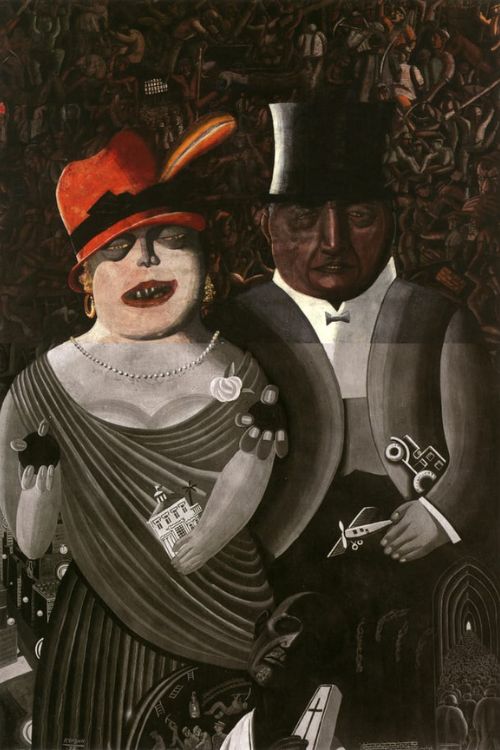
The Igor Savitsky Museum stands as the main draw for tourists. During the Stalin era, when Soviet artists were being sent to the Gulag, Savitsky dedicated his life to rescuing the outlawed pieces. He amassed the second-largest collection of Russian Avant-Garde art in the world.
The museum offers an incredible view into the lives and works of these banished artists.
Mizdakhan Necropolis
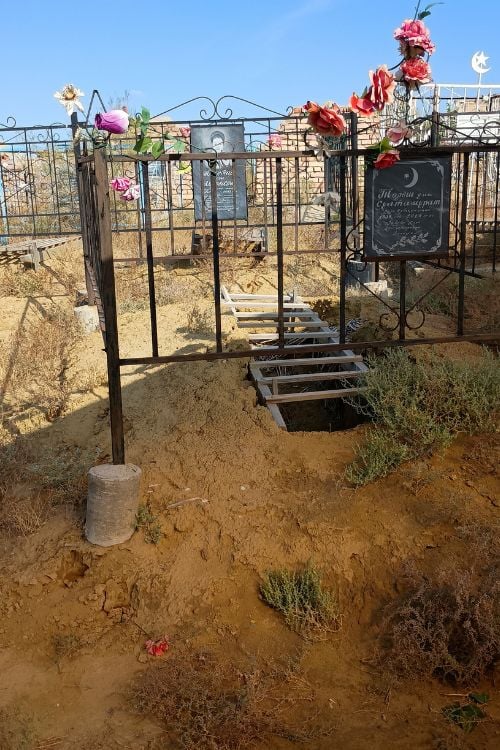
Thirty kilometers south of Nukus, the Mizdakhan Necropolis offered a fascinating walk through one of Central Asia’s largest ancient cemeteries. This mixture of religions, cultures, and traditions of burial practices over centuries gave me an extraordinary feeling of spiritual heritage.
The site is currently undergoing archaeological excavations. It has become a pilgrimage for Muslims, who come to build piles of seven stones to honor their dead.
Travelers without a group tour can see all three sites in one long day out of Khiva. This private day trip pairs the Savitsky Museum with the Chilpik Tower of Silence and the Mizdakhan Necropolis, with pickup in Khiva or Urgench.
A Warm Farewell
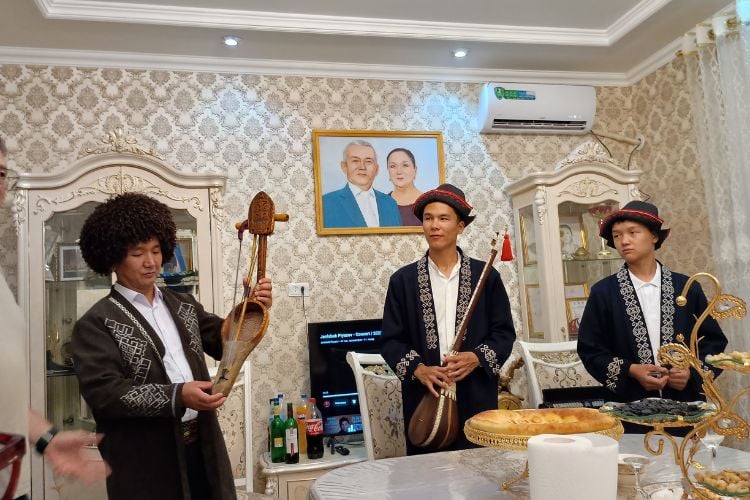
Our farewell to Nukus, to Uzbekistan, to the Silk Road, involved a special evening with a local family of musicians. After dinner at their home, they played traditional Karakalpak instruments and encouraged the Americans to dance, to sing, and to reflect on our incredible journey along the Silk Road.
If You Go
Getting There
Citizens of the U.S., Canada, Australia, Japan and most European countries can visit Uzbekistan visa free for up to 30 days, and many other nationalities can apply online through the official e-visa portal. The high-speed Afrosiyob train connects Tashkent, Samarkand and Bukhara, while Khiva and Nukus are reached by road or domestic flight.
Where to Stay
- Amelia Boutique Hotel in Bukhara is a 200-year-old home turned inn, with hand-painted murals, silk-draped ceilings and a rooftop lookout, a few minutes’ walk from Lyabi Hauz.
- Asia Khiva sits steps from the walls of Itchan Kala, with a breakfast buffet and a seasonal outdoor pool for the hot afternoons.
- Karakalpak Palace Hotel is a comfortable base in Nukus, with free breakfast and WiFi.
Tours
- In Bukhara, this Best of Bukhara: All Day Private Old Town Tour covers Lyabi Hauz, the Kalyan Minaret, the Mir-i-Arab Madrasah, Bolo Hauz Mosque, the Ark and the old trading domes with a local guide.
- In Khiva, this four-hour Khiva Historical City Highlights Guided Walking Tour starts at the West Gate and winds through Itchan Kala to the Islam Khoja Minaret, Juma Mosque and Pahlavan Mahmud Mausoleum.
Travel Insurance
Long overland days between remote desert cities make good coverage worth having. Compare plans on Squaremouth or pick up flexible coverage through SafetyWing.
Staying Connected
Set up an Uzbekistan eSIM from Airalo before you leave so maps and Google Translate work everywhere from the train to the back streets of Bukhara.
Need a hand planning your trip? Here are the sites and services we rely on most, from booking tools to travel products we love.
Inspire your next adventure with our articles below:
- Jingdezhen, China’s Porcelain Capital: Kilns, Museums and the Porcelain Palace
- Uzbekistan’s Silk Road Cities: From Tashkent’s Markets to Samarkand’s Registan
Author Bio: Carol Bowman has taught English to Mexican adults and disadvantaged local children for the past 20 years. She writes for local, international, on-line and print publications. Using her adventures to over 120 countries, she has captured a niche in travel writing, and her stories have been featured in Go World Travel Magazine. A frequent contributor to El Ojo del Lago, the largest distribution English magazine in Mexico, she’s won several literary awards from that publication. Her psychiatric field work netted a contribution to the anthology, Tales from the Couch. Recently she has also been featured in two more anthologies, Insider’s Guide to the Best of Mexican Holidays, and Bravados, Life, Love and Living in Lake Chapala, Mexico, all available on amazon.com.
Want to discover more hidden gems and helpful travel tips? Join our free newsletter for the latest travel secrets and travel articles.
We are reader-supported and may earn a commission on purchases made through links in this article.

- Uzbekistan’s Silk Road Oases: Bukhara, Khiva, and Nukus on a 1,000-Mile Journey - November 28, 2026
- Galicia, Spain: Coastal Fortresses, Celtic Traditions and the Camino de Santiago - November 28, 2026
- I Got Pickpocketed in Buenos Aires. Then the City Won Me Over - November 28, 2026
Planning another trip soon? ✈️
Add GoWorldTravel.com as a preferred source on Google. Click the button below so our local guides, packing hacks, and hidden-gem itineraries always show up first when you search!
Add to Preferred Sources