
I’d been dreading turning sixty. Forty and fifty weren’t much of a treat either, so I expected sixty to be the icing on the middle-aged angst cake.
However, as the day approached in the fall, I decided that I was going to take the trip I kept reading about, watching YouTube videos of, and planning in my head repeatedly since I turned fifty.
That trip was to the Scottish Borders and Hadrian’s Wall.
Making It Happen
So determined to make my birthday trip a reality, I threw caution to the wind and was a tad reckless with my budget priorities. Finding both an airfare and a hotel that would work within my resources, a trip was born! Edinburgh, here I come!
Basing myself in Edinburgh worked for so many reasons, it’s one of my favorite cities, easy to explore on foot and has many free places to visit, plus, there was a tour operator who could make my birthday trip a reality. If your visit coincides with August, the Royal Edinburgh Military Tattoo is a spectacular add-on.
I quickly signed up for this small-group day tour to Hadrian’s Wall on my birthday and felt the thrill of my plan falling into place.
If you’re planning a trip to Scotland, check out our Scotland Travel Guide, where you’ll find a curated selection of articles to inspire you and help plan your trip.
Heading to the Borders
I woke bright and early and was pleased to see it was going to be a mostly sunny day and headed to Edinburgh’s Bus Station (in the New Town). Having checked in and met the driver, who would double as our tour guide, a dozen of us set off for a day of historic adventure.
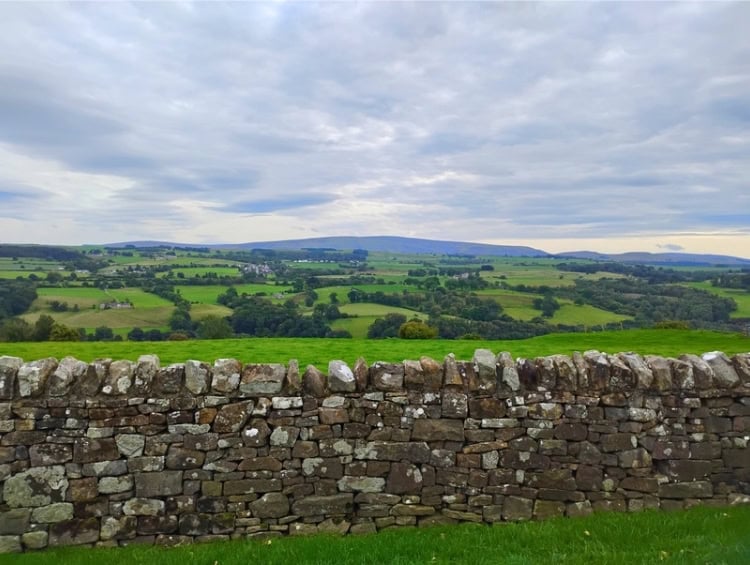
The journey started as we followed the old Roman Dere Street that ran from the south of Scotland toward what is now Northumberland in England. Surrounded by green rolling hills and more sheep than anyone dared to attempt to count, I was instantly charmed by this part of the world that I had never seen before. We’d pass ancient abbeys, woodlands and villages as our guide shared stories about the area’s rich history that included centuries of conflict.
Jedburgh Abbey
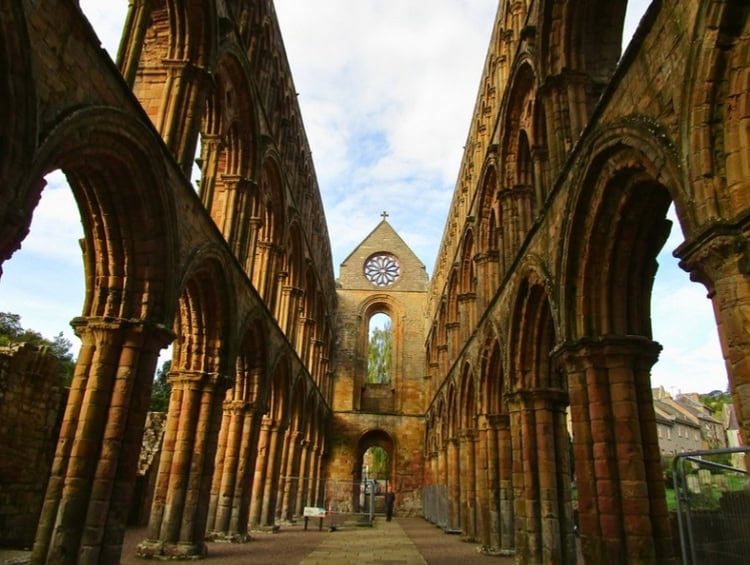
Still in Scotland, we stopped in Jedburgh where I had time to tour its magnificent 12th-century Augustinian Abbey ruins and take a quick walk around the narrow streets.
At the Abbey, I explored the impressive red sandstone structure which also has a visitor center with various displays and a charming gift shop focusing on locally created products. While at the visitor center, I marveled at the exceptionally carved stone fragments, including crosses and a sarcophagus, dating from the 700s to 1000s.
Historic Environment Scotland shares, “Jedburgh is one of the four great abbeys established in the Scottish Borders in the 1100s. David I founded a priory here in 1138 and raised it to abbey status in 1154. The brethren may have come here from St Quentin Abbey, near Beauvais, France. Augustinians were priests who for the most part lived a secluded and contemplative life but also went forth to minister to the people.”
The demise of Jedburgh’s monastic life was sealed by further attacks in the 1400s, major raids in the 1500s and the Protestant Reformation of 1560.
Scottish King Alexander III and his new queen, Yolande de Dreux, were married here in 1285. Legend says that a ghostly figure appeared before the congregation and foretold the king’s death. Alexander died the following year, after falling from his horse on the way to visit his recent bride.
More to See in Jedburgh
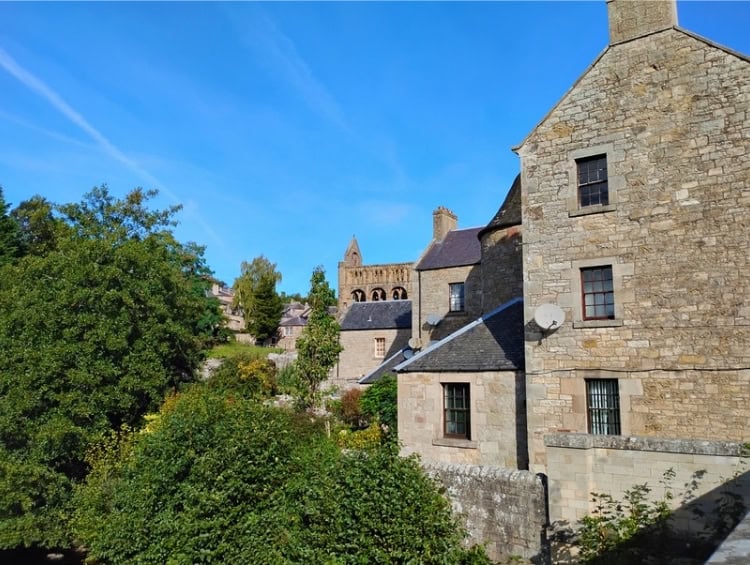
Other sites to visit in Jedburgh include the Mary Queen of Scots’ House — this 16th-century house museum details the queen’s stay in 1566. Another popular destination is the Jedburgh Castle Jail and Museum — a Georgian-era prison built in the 1820s on the site of a medieval castle.
Walking around Jedburgh is pleasant, with shops, cafes, parks and a market cross.
Leaving Angst at the Border
The next stop on this Scottish Borders adventure was Carter Bar. On the edge of the Cheviot Hills and with scenery for miles, this is the crossing point between Scotland and England following the ancient Roman road. It has marked the border for the past 700 years.
While I’ve only been around for sixty of those years, it was here that my angst lifted. I cannot truly define why it happened here — maybe it was because my mother was from England and my father was of Scottish descent, but I suddenly felt lighter. In recent years, they have both passed away, and, like many relationships, there was baggage and words left unsaid.
As I stood there, one foot in England, the other in Scotland, I felt them with me, and my ancestors as well. It was as if balance, forgiveness and understanding were embracing me. Turning sixty didn’t seem so bad after all. The tour guide took my photo standing next to the massive white stone marking this point; he couldn’t see it, but I could feel it, and I knew I was okay.
Hadrian’s Wall
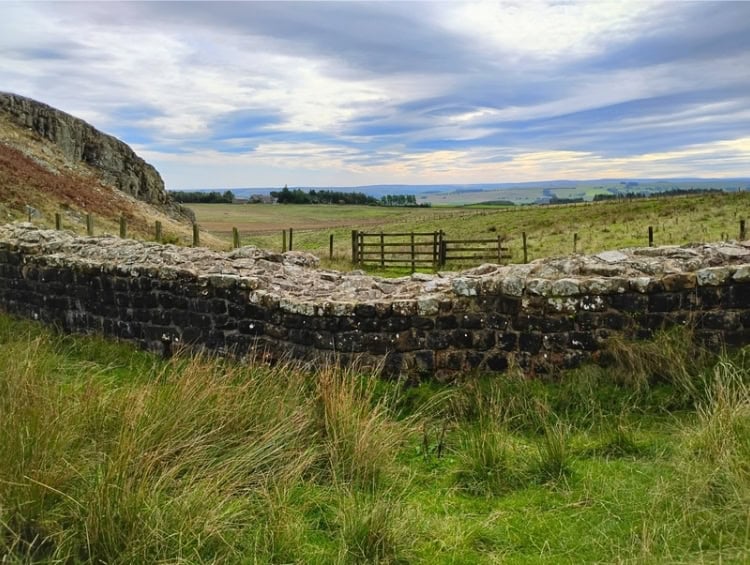
My obsession with visiting Hadrian’s Wall goes back decades. I absolutely love British history and worked for many years in a museum setting. Give me a field of ruins and I am in heaven! Now in the county of Northumberland in England, our group stopped at Steel Rigg, along Hadrian’s Wall.
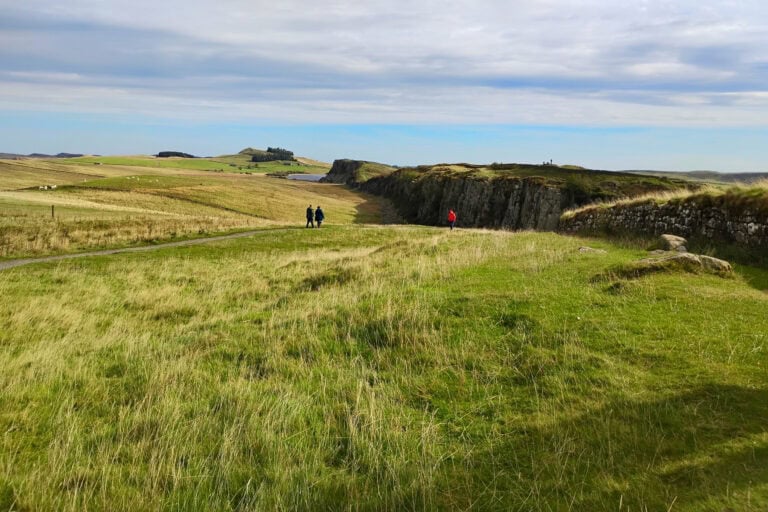
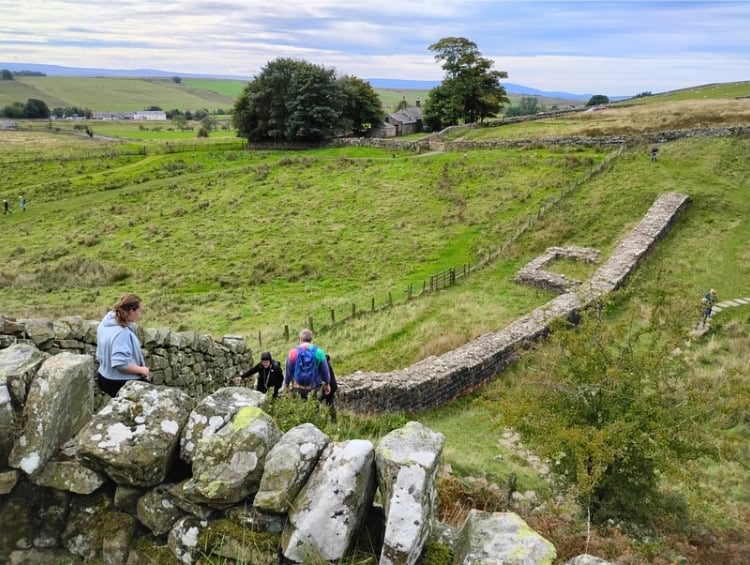
Anticipation had grown during the ride as I spied walkers in the distance following the storied wall and I was practically giddy by the time it was time to explore myself. At Steel Rigg, I had my chance to walk along the wall and reflect on this part of both British and Roman history.
Steel Rigg is a viewpoint atop a cliff and a popular place to park and explore within the Northumberland National Park. With dramatic views of both the countryside and Hadrian’s Wall, I couldn’t wait to explore more and walk through history. That’s what it felt like, walking through time, knowing it was 2026 and my birthday no less, but I also felt the presence of so many before me. After reaching a quiet agreement with my bad knee, I decided to head up the rocky path along Steel Rigg, and I was so glad I did. The views from here were stunning and everywhere I turned, I was rewarded for my efforts with panoramic views of the English countryside.
Exploring Vindolanda
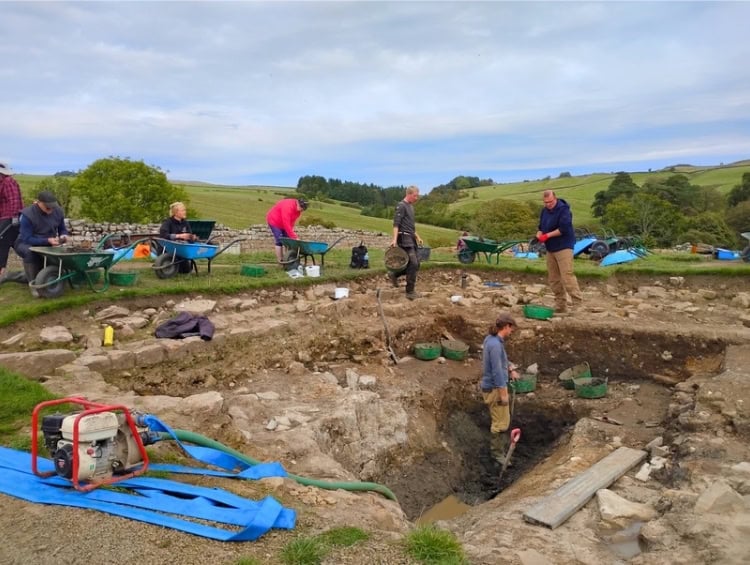
Back on the tour bus, in a few minutes I was at the archaeological site of Vindolanda.
Vindolanda had its first Roman settlement between AD 74 and AD 85. This was just the beginning, at least nine successive Roman forts and towns were built on this site. During the 17th century, local farmers began to clear the land and used the stone used to build the complex for other uses, so some of Vindolanda is forever gone, but what is left is amazing!
I started my visit at the visitor center, where a volunteer guide gathered a group and we headed on our way. The guide shared fascinating stories and the history of Vindolanda as we explored sections of this immense area that included bathhouses, butcher’s shop, wells, homes, and a tavern.
This was a thriving community, with families and people from around the world at all class levels. Learning about conservation and ongoing archaeological excavations highlighted the importance of preserving history, and I even got to see archaeologists at work.
The Vindolanda Museum
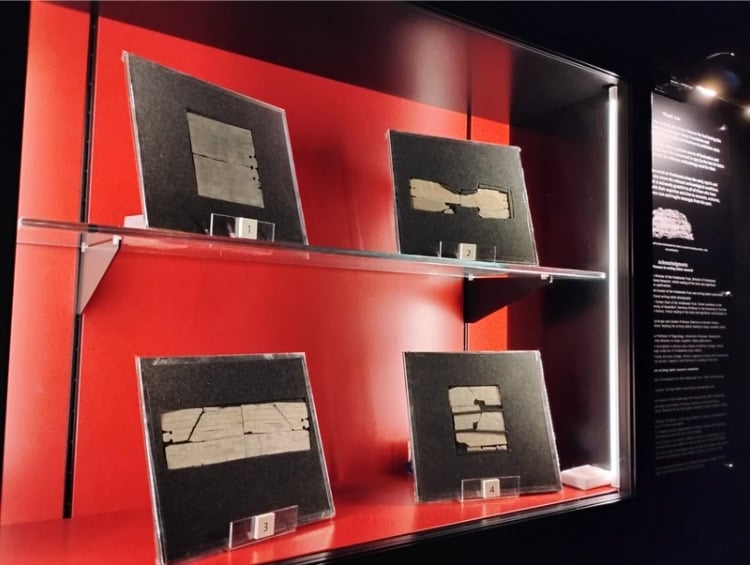
I then explored the museum on the property which houses thousands of artifacts found on site, including shoes, bones, jewelry and rare writing tablets. The stories and displays are informative and help tie it all together. I could have stayed all day, but alas, it was time to head north and see more of the beautiful Scottish Borders.
A Birthday Stop in Moffat
Back on the bus, my eyes were glued to the window as I took in one spectacular vista after another. Winding roads, the River Tweed, villages and small farms made this part of the journey, even as the sun started to go down – a time I hope I never forget.
One last stop in Moffat gave me a chance to stretch my legs and treat myself to a birthday ice cream. Known for its Moffat Toffee, I bought some to take home and enjoyed the last minutes of this adventure and said goodbye to this Victorian spa town.
As the bus headed back into Edinburgh, I reflected on the history I’d just learned, and on my own history, feeling very glad I made this journey.
The Scottish Borders and my 60th birthday were all I had hoped for.
If You Go
Taking the Tour
This small-group day tour leaves from Edinburgh Bus Station and covers Jedburgh, Carter Bar, Steel Rigg, Vindolanda and Moffat in one full day, with Vindolanda admission included. Vindolanda closes each January and for part of February, so tours in those weeks visit Housesteads Roman Fort instead. Learn more here.
Visiting the Sites
- Jedburgh Abbey is run by Historic Environment Scotland, which posts its current opening hours and ticket prices.
- Vindolanda lists its hours, tickets and excavation updates on its official site. That’s worth checking if you’d like to see archaeologists at work.
Need a hand planning your trip? Here are the sites and services we rely on most, from booking tools to travel products we love.
Inspire your next adventure with our articles below:
- Where Empires Were Carved: Inside England’s Haunting Isle of Portland
- Embracing Yuletide Magic: A Guide to Celebrating the Holidays in London
Author Bio: Mary Casey-Sturk is an Editor and Writer for Living Magazines (Kentucky) as well as a contributor to Smoky Mountain Living Magazine (North Carolina). Mary is also a content developer, freelance travel, food, wine and features writer and the author of “Eating Cheese Curds With Strangers”.
Want to discover more hidden gems and helpful travel tips? Join our free newsletter for the latest travel secrets and travel articles.
We are reader-supported and may earn a commission on purchases made through links in this article.

- Turning 60 at Hadrian’s Wall: A Day Trip from Edinburgh Through the Scottish Borders - November 11, 2026
- 6 Cruise Myths I Fell For Until I Finally Set Sail - November 11, 2026
- Winter in Michigan’s Keweenaw Peninsula: Sled Dogs, Saunas and Snowshoe Trails - November 10, 2026
Planning another trip soon? ✈️
Add GoWorldTravel.com as a preferred source on Google. Click the button below so our local guides, packing hacks, and hidden-gem itineraries always show up first when you search!
Add to Preferred Sources