
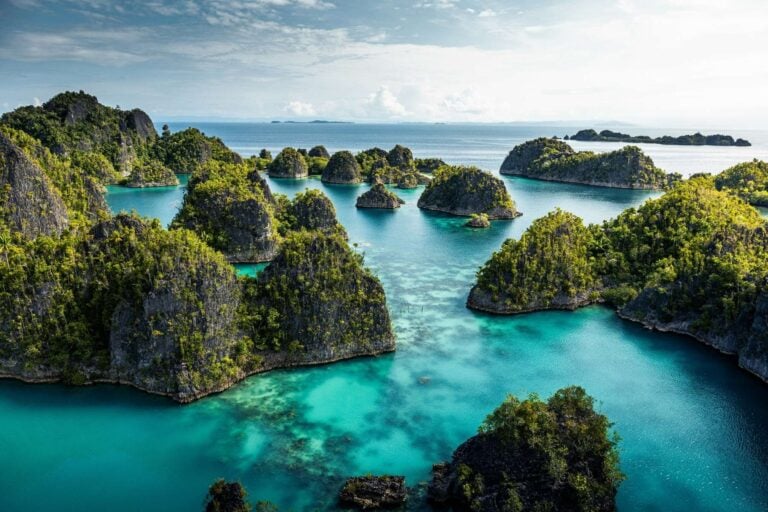
For travelers researching a Raja Ampat liveaboard guide overview, the real question is not only where to go, but how to experience one of the world’s most extraordinary marine regions with the right balance of comfort, access, and perspective.
In Raja Ampat, a liveaboard is more than accommodation on water. It is often the most practical and rewarding way to explore remote reefs, quiet lagoons, hidden coves, and wildlife-rich passages that would be difficult to reach from land alone.
- Raja Ampat is defined by distance, geography, and marine diversity.
- A liveaboard shapes the travel experience as much as the destination itself.
- The best journeys combine seamless hospitality with a strong sense of place.
Why Raja Ampat Is Best Understood from the Water
Raja Ampat is not a destination that reveals itself quickly. Unlike island holidays built around a single resort base, this region is spread across a vast seascape of limestone formations, jungle-covered islets, blue-water channels, and coral-rich shallows. Distances matter here. Tides matter. Weather matters. So does timing.
That is why many experienced travelers consider a liveaboard Raja Ampat experience the most natural way to explore the region. Instead of treating the sea as a barrier between islands, a liveaboard turns it into the main route of discovery. Guests wake up closer to the next reef, the next bay, the next sunrise, and often the next unforgettable moment.
- Raja Ampat rewards mobility more than fixed-location travel.
- Marine conditions and geography influence daily planning.
- Being on the water creates a deeper connection with the destination.
More Than Diving: A Floating Base for Immersive Travel
While Raja Ampat is famous among divers, the liveaboard format appeals to a wider kind of traveler than many people first assume. It suits those who want immersion rather than simple sightseeing.
A liveaboard trip can include marine exploration, island scenery, birdlife, encounters with local villages, paddleboarding in calm lagoons, and quiet evenings surrounded by open water and stars.
This is one reason the format continues to attract both dedicated underwater enthusiasts and travelers who simply want to see Raja Ampat in its entirety. The vessel becomes not only a moving base of operations but also part of the emotional atmosphere of the trip.
The pace feels different from a hotel stay. It is usually more intimate, more fluid, and more connected to nature.
- Guests often value the journey itself, not only the activities.
- A liveaboard can suit both adventurous and comfort-focused travelers.
- The experience is shaped by rhythm, movement, and environment.
Why Access Changes Everything
One of the biggest advantages of a liveaboard is not luxury, although comfort certainly matters. It is access. Raja Ampat’s reputation largely comes from places that are not easily reached on day trips. Liveaboards allow guests to arrive early, stay close to prime sites, and experience the region with less transit fatigue.
This creates a very different quality of travel. Instead of rushing to catch boats from shore or losing hours in transfers, guests can move with the flow of the destination. That means more time enjoying it and less time organizing around it.
- Early access often improves wildlife and reef experiences.
- Less transfer time usually means a smoother overall journey.
- Proximity adds both convenience and a sense of exclusivity.
The Draw of Liveaboard Diving in Raja Ampat
For underwater travelers, liveaboard diving in Raja Ampat is widely respected because it aligns with how the region actually works. Raja Ampat is not a place where a single harbor or island can easily unlock everything. The best dive areas are spread out, and marine conditions vary throughout the archipelago.
A liveaboard allows divers to follow a route rather than repeat a limited radius.
This matters for both experience and efficiency. Divers can explore a broader mix of reefs, pinnacles, drift sites, and sheltered coral gardens without constantly returning to the same base. Equally important, a good liveaboard operation helps translate the complexity of Raja Ampat into a journey that feels smooth rather than demanding.
- Route-based travel supports greater site diversity.
- Divers often experience greater underwater variety on a single trip.
- Good onboard coordination makes complex logistics feel effortless.
Hospitality Matters as Much as the Itinerary
In remote marine destinations, service quality becomes even more important. Guests are not simply checking into a room and heading out on their own. They rely on the crew for timing, comfort, meal rhythm, safety briefings, equipment flow, and the overall emotional tone of the trip.
That is why hospitality on a liveaboard should never be treated as secondary to diving. Fresh meals after a long dive, calm support during changing weather, well-paced schedules, and attentive but unobtrusive service all shape the journey. In fact, many guests remember the feeling of being well looked after just as strongly as the reefs themselves.
- Strong hospitality creates confidence in remote settings.
- Comfort onboard helps guests stay energized throughout the trip.
- Good service can turn a demanding expedition into a deeply relaxing one.
Not Only for Divers: The Rise of the Raja Ampat Snorkeling Liveaboard
Raja Ampat’s appeal is no longer limited to scuba-focused travelers. The idea of a Raja Ampat snorkeling liveaboard has grown in popularity because the region offers exceptional shallow-water beauty in addition to its deep-diving sites.
Calm lagoons, reef edges, mangrove channels, and coral gardens can be spectacular even for guests who never put on a tank.
This has significantly expanded the liveaboard audience. Couples, families, and mixed-interest groups increasingly seek trips where some guests dive while others snorkel, paddle, photograph wildlife, or simply enjoy the scenery. A well-planned liveaboard can accommodate these different expectations without making the trip feel fragmented.
- Shallow-water experiences can be outstanding in Raja Ampat.
- Mixed-activity travel is becoming more common.
- Snorkelers often value the same access and mobility as divers.
What Makes a Great Liveaboard Experience in Practice
Travelers often focus on cabin style or boat design first, and those details do matter. But the strongest liveaboard experiences are usually defined by operational quality and atmosphere rather than appearance alone. A beautiful vessel is only part of the story. What matters more is how well the trip is run and how naturally guests can settle into the journey.
A great liveaboard tends to feel organized without being rigid. It respects both adventure and recovery. It provides guidance without overcomplicating the experience. Most importantly, it creates trust. In a destination as remote and special as Raja Ampat, trust is one of the most valuable parts of the hospitality equation.
Elements That Often Matter Most
- Clear scheduling without making the trip feel rushed
- Comfortable cabins and shared spaces for genuine rest
- Fresh, well-timed meals that support active days
- Knowledgeable crew with local awareness and calm professionalism
- Flexible planning for weather, currents, and guest energy levels
- A balanced atmosphere for divers, snorkelers, and leisure travelers alike
Business Perspective: Why Liveaboards Continue to Define Raja Ampat Travel
From a hospitality and travel-planning perspective, liveaboards remain central to Raja Ampat because they address a fundamental challenge: how to deliver access, immersion, and comfort across an expansive marine region. Land-based properties are important, but they cannot always match the reach and fluidity that the destination naturally rewards.
This is why the liveaboard model continues to hold strong appeal for serious travelers. It offers a format that fits the environment rather than forcing the environment into a conventional hotel-based framework. In business terms, that makes the product compelling. In guest terms, it makes the experience feel authentic and well-matched to the place.
- Raja Ampat favors travel models built around movement and access.
- Liveaboards support more complete regional exploration.
- The format often feels more aligned with the spirit of the destination.
Choosing the Right Mindset for the Journey
Raja Ampat is best enjoyed by travelers who arrive with the right expectations. This is not about rushed sightseeing or checking off a list of famous names. It is about entering a marine world that moves at its own pace. Tides shift—light changes. Wildlife appears unexpectedly. Some of the best moments are unplanned.
A liveaboard helps guests adapt to that rhythm rather than resist it. It encourages patience, presence, and a wider appreciation of what makes Raja Ampat so remarkable. For some, the highlight will be a reef alive with motion.
For others, it may be coffee on deck at sunrise, a silent limestone bay, or the quiet satisfaction of reaching places that few destinations can offer with such intimacy.
- Raja Ampat rewards curiosity more than urgency.
- The finest travel moments here are often the least staged.
- A liveaboard can turn movement itself into part of the destination.
The true value of a Raja Ampat liveaboard lies in how completely it changes the relationship between traveler and place. Instead of treating the region as a backdrop for isolated excursions, it allows guests to live within the landscape of sea, islands, reefs, and weather. That shift is what makes the experience feel so distinct.
For goworldtravel.com readers considering this journey, the most useful takeaway is simple: in Raja Ampat, the vessel is not just transport or lodging. It is the framework through which the destination becomes legible, comfortable, and unforgettable.
Whether the priority is marine life, scenery, snorkeling, or a deeper sense of escape, a thoughtful liveaboard experience remains one of the most meaningful ways to understand this extraordinary part of Indonesia.
Want to discover more hidden gems and helpful travel tips? Join our free newsletter for the latest travel secrets and travel articles.
We are reader-supported and may earn a commission on purchases made through links in this article.

- Exploring Nanjing, China: 48-Hour Trip That Changed My Perspective - October 13, 2026
- Buzzing into Sustainability: How Hotels Are Embracing Beekeeping Initiatives - October 13, 2026
- The Perfect Bay Area Day Trip: Why Sausalito Should Be Your Next Weekend Escape - October 13, 2026
Planning another trip soon? ✈️
Add GoWorldTravel.com as a preferred source on Google. Click the button below so our local guides, packing hacks, and hidden-gem itineraries always show up first when you search!
Add to Preferred Sources