
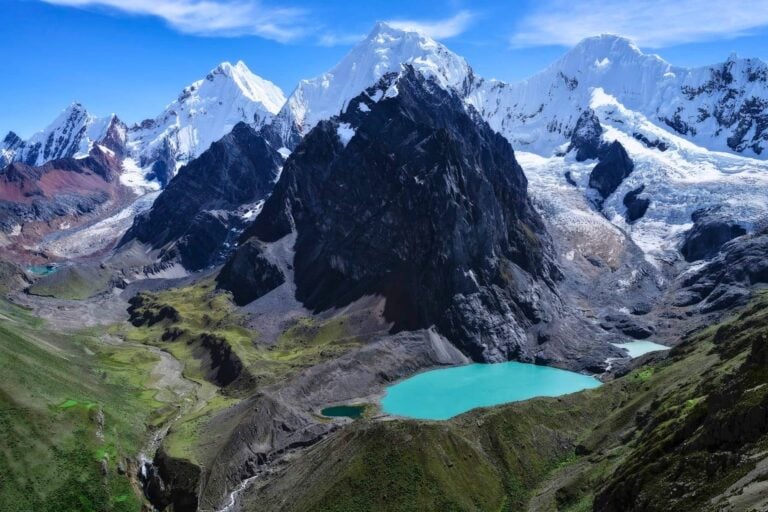
Ever travel somewhere so transcendent that you want to scream about it from rooftops—but so pristine, untouched, and special that you also want to keep it a secret?
While trekking in northern Peru’s Ancash region—home to the Cordillera Blanca and its dominating Huascarán glacier, the world’s highest tropical ice-covered mountain range—I was dumbfounded by how few tourists experience the incredible Andean landscapes, intricate Inca architecture, and vibrant local culture along this well-preserved portion of the Great Inca Trail.
The Qhapaq Ñan Could Become the World’s Next Major Through-Hike
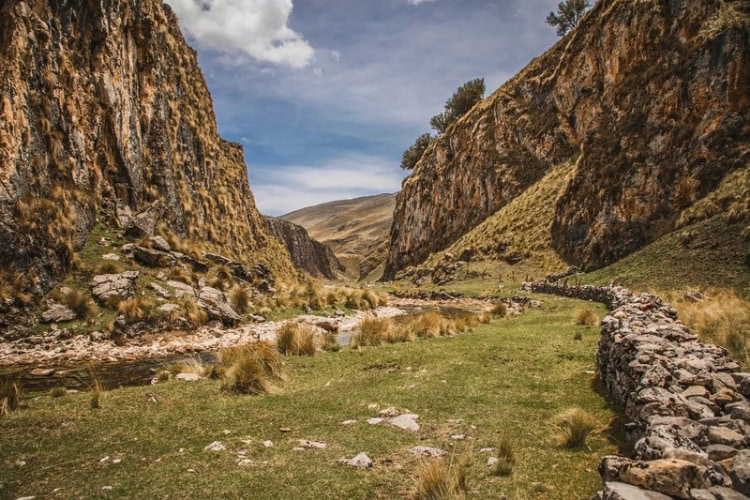
While roughly 1.5 million tourists visit Machu Picchu each year, most only see that tiny fragment of the 30,000-kilometer Qhapaq Ñan, the Royal Route of the Incas, which once connected the Inca Empire across Colombia, Ecuador, Peru, Bolivia, Chile, and Argentina.
This massive UNESCO-listed road network—sometimes exceeding 10 meters in width—winds along the spine and toothy peaks of the Andes.
The “Great Andean Way,” as some call it, could soon become the world’s next major global thru-hike.
Peruvian adventurer Ricardo Espinosa Reyes walked over 10,000 km of the trail from 1995 to 2002 to document it.
I’m thrilled to be on the short list of people who have hiked the northern Peruvian stretches between Chavín, Huánuco Pampa, and Huarautambo.
These are some of the best-preserved, yet least-traveled sections, I’m told, with stunning scenery, intricate archaeological sites, and over 3,000 years of Andean culture.
The Mixed Blessing of Low Tourism
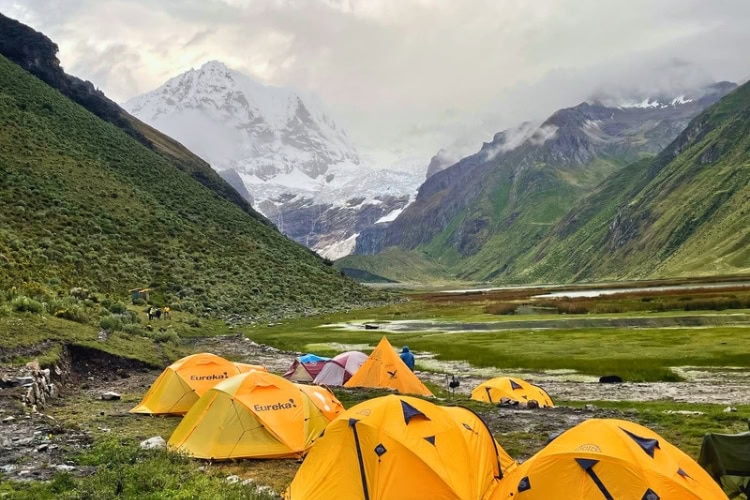
While a lack of tourism keeps these stretches of the Inca Trail pristine—and free from the big crowds and strict regulations of Machu Picchu—the isolation also makes them vulnerable.
The mining industry has already contaminated local waterways and paved over parts of the ancient trail. Along with the impending expansion of mass tourism, it threatens the region’s long-term viability by prioritizing immediate economic gain over a sustainable future.
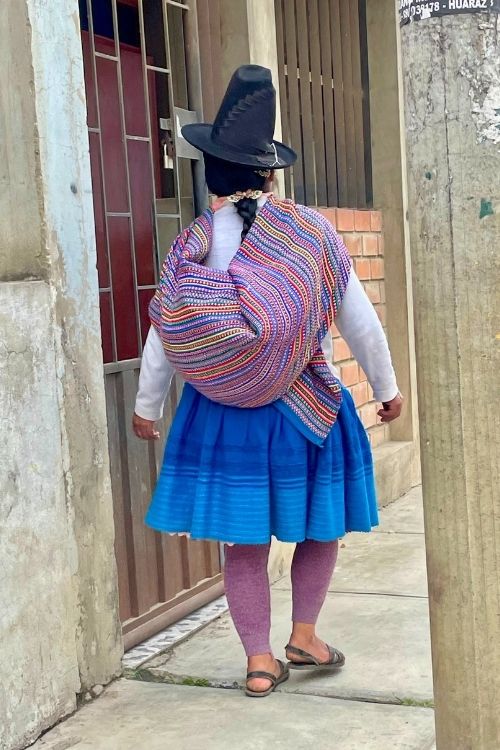
As I listen to the breathy, rhythmic sound of handcrafted zampoña flutes, sip coca leaf tea, or recall the glowing smiles of women in colorful skirts walking with bundles of branches in their manta—the traditional woven cloth used to carry everything from babies to food—my heart sinks.
I think about how quickly the region’s environmental, cultural, and economic resources could be depleted.
Imparting Timeless Concepts of Reciprocity and Pachamama
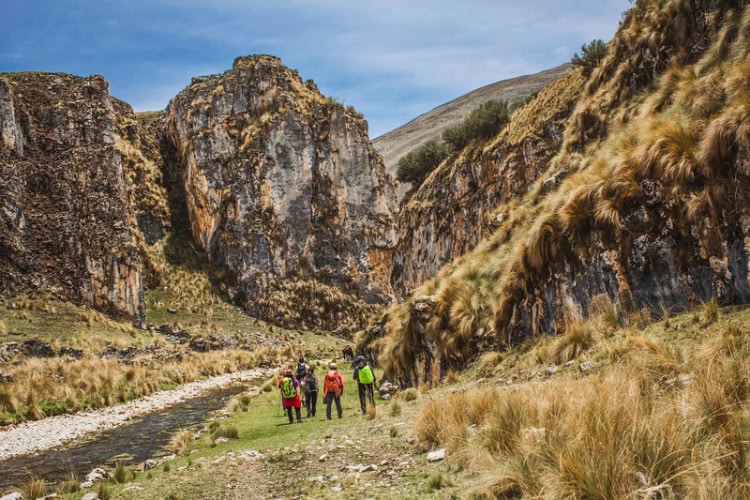
Built in part as a communication highway, the Royal Road of the Incas imparted one clear message to me during my trek: the interconnectedness of history, nature, culture, local communities, economy and tourism.
Following in the footsteps of generations, gazing at ancient structures, observing local farming, and marveling at glacial lakes, wild potatoes, and grazing llamas, I beheld the reciprocity and reverence fundamental to Andean culture.
We began our trek by honoring the Apus, mountain spirits, and Pachamama (Mother Earth) through the age-old custom of holding “k’intus,” sacred bundles of three coca leaves used to express gratitude, hopes, and intentions.
Regenerative Tourism: A Living Systems Approach
I was traveling with Explorandes—a family operation celebrating 50 years of developing Andean mountain tourism, not just for trekkers’ delight but as a way to benefit lands and local communities.
Founder Alfredo Ferreyros, a pioneer of Andean mountain travel, believes trekking is essential for conservation. He told me that bringing tourists to the ancient path—a natural and cultural sanctuary—helps ensure it remains a “living route,” protecting surrounding artifacts, local farming, and indigenous culture.
The company arranges guides, cooks, llamas, food, and camping through local Quechua communities and is currently working with two other tour companies, archeologists, and government offices to prepare archeological restoration projects that would boost the area’s local economies, ensure maintenance of the ruins, and ideally be a win-win for all.
It was clear that Explorandes wasn’t just leading us on a great hike through spectacular nature and impeccable ruins. This trip was an exercise in regenerative tourism—travel aimed at leaving a destination better than it was.
It reflected a recognition that we are all part of a living system where everything adapts together and where reciprocity fosters mutually beneficial relationships. It gave me hope for how things could develop there.
Acclimating in Carhuaz, Hot Springs and Huascaran National Park
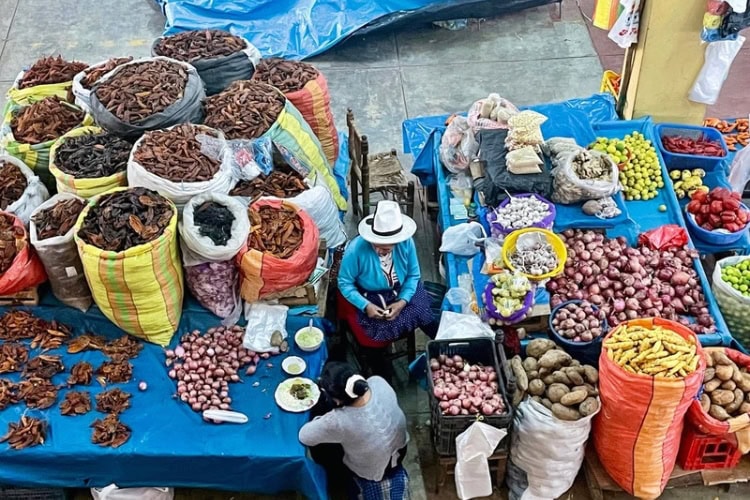
I knew I needed to acclimate for my high-altitude trek, but I didn’t expect my time in Carhuaz (2,668 m) to be so enriching.
Sitting in the palm-lined Plaza de Armas, I soaked up the energy of Quechua-speaking locals carrying shawls full of goods and dressed in colorful skirts and traditional hats—an enduring staple of fashion and identity.
Hotel Abuelo‘s farm-fresh meals were story-rich, delectable works of art that showcased the same kaleidoscope of colors and flavors I found in the town’s bustling daily market—and in its famous ice cream shops, where flavors ranged from cherimoya and lúcuma, local fruits, to pisco sour. My favorite was tuna (the cactus fruit, not the fish).
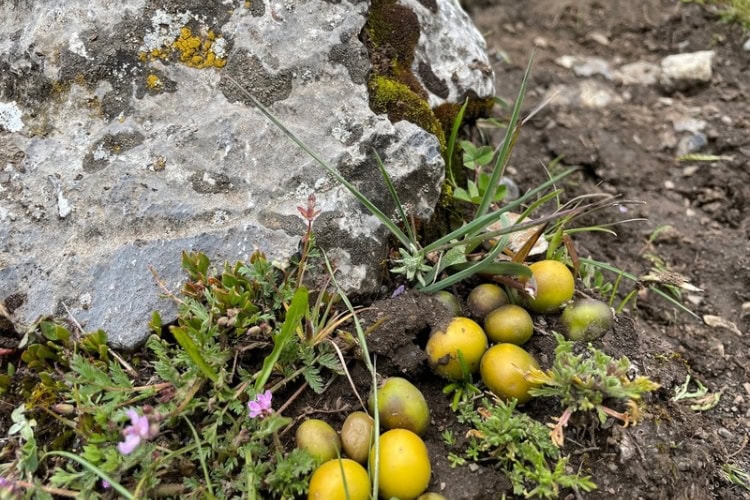
“Slow and steady” was my mantra as I struggled to catch my breath on an uphill day-hike in the rain to Laguna Churup (4,450 m), a breathtaking glacial lake in Huascarán National Park. As I descended the steep, slippery slope, captivated by wildflowers and mushrooms, I felt a sense of triumph.
Soaking in rustic Chancos hot springs was magical.
Despite language barriers on my “colectivo,” a local minibus, and while selecting my private, steam-filled cave, the combination of hot mineral-rich waters, stunning views of the Cordillera Blanca, and sounds of the rushing Vicos River made for an idyllic, nourishing morning—readying me for the trek of a lifetime.
Trekking and Camping at Altitude, With the Help of Llamas
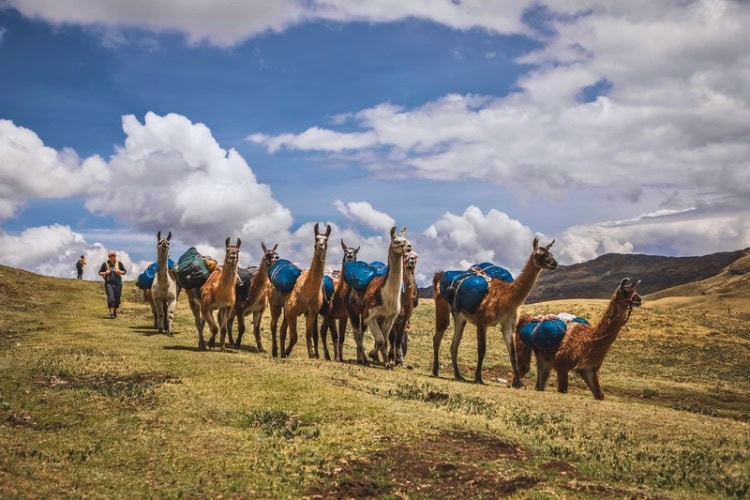
I’m told that ease of travel is why the Incas constructed high-altitude paths—to avoid ravines and to reach beneficial lakes and springs. Crossing 4,000-meter passes still feels daunting to me.
Fortunately, we had llamas carrying our heavy gear—chosen not only for their quirky looks, good nature, and timeless presence, but for their padded feet and foraging habits—they cut, not yank—which protects the trail.
Starting the five-day trek, I carried only a daypack (snacks like quinoa bars, kiwicha bites, and dried golden berries included)—and a heavy dose of anxiety about the altitude. It helped knowing our pack-horse, Justin, was there, “Just in case.”
Read More: The Anxious Traveler’s Guide to Seeing the World
A Trek With Epic Scenery
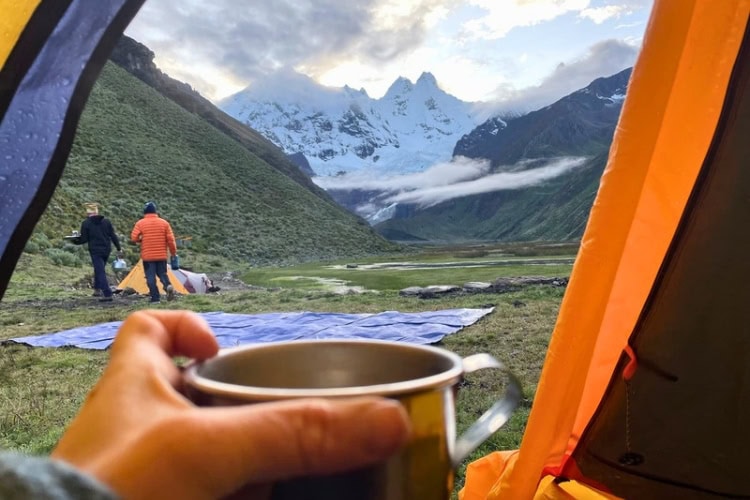
From waking in my tent to a delivery of hot tea and a warm washcloth at Soledad de Tambo—one of the path’s many ancient way-stations—to ascending the 4,385 m Waqankupunta Pass, the experience of my first day was transformative.
Between a Pachamama ceremony at an “ushnu,” an ancient ceremonial platform, seeing “quolqas,” historic storehouses, and walking on wildflower-strewn paths, I shed my fears and found a profound sense of oneness. Each day felt surreal.
Condors circled above as we hiked alongside grazing sheep and flowing streams, surrounded by jagged mountains and snow-covered peaks.
We conquered Sambunya Pass at 4,760 m, taking in a vista of dark rock and turquoise glacial lakes. After a steep descent, in the rain, to Lake Jahuacocha, we woke to the dramatic, close-up peaks of the Cordillera Huayhuash.
A Visit to Huanuco Pampa
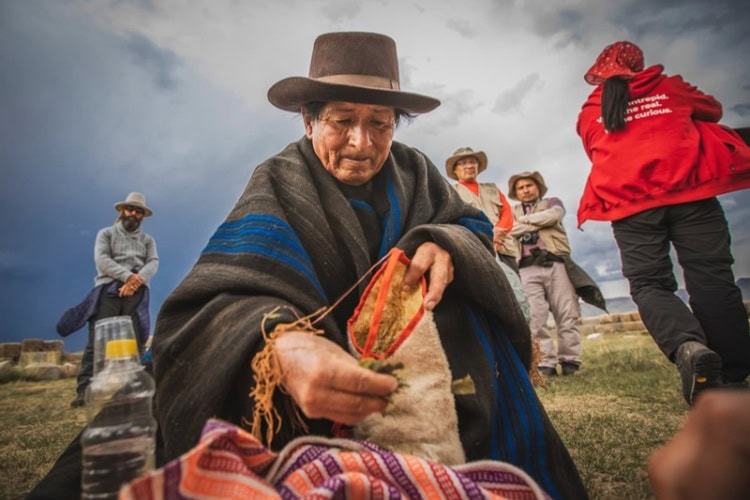
Our visit to Huánuco Pampa—a crucial administrative, economic, and religious center on the Great Inca Road that was abandoned following the Spanish conquest—began with a warm welcome from the local Aguamiro community, complete with a traditional warrior dance and unforgettable pachamanca feast.
We explored its massive storage complex, the largest surviving “ushnu,” and a striking Sun Temple, all under the light of a full moon.
We experienced firsthand the benefits of collaborative tourism. Don Pedro, one of 20 members of the local tourism cooperative, led us through the ruins with contagious enthusiasm, blending the site’s ancient history with its modern tourism aspirations.
Chavín De Huántar
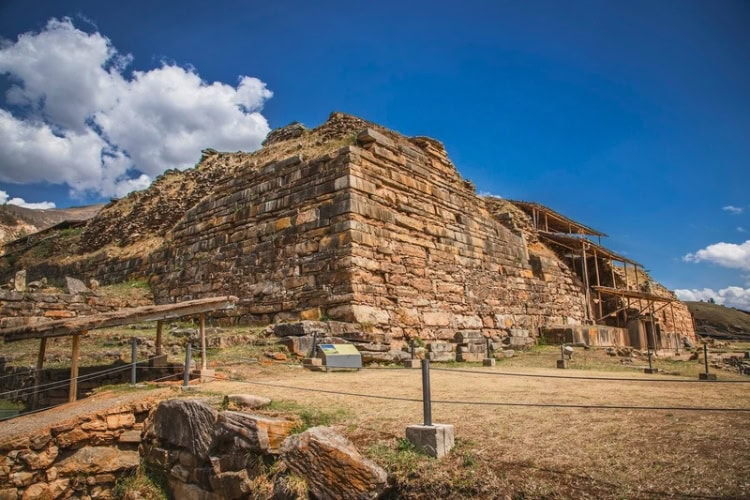
Our journey brought us back in time to the ancient pilgrimage site of the Chavín civilization (c. 900–200 BCE).
Here, labyrinthine tunnels and distinctive art—predating Machu Picchu by 2000 years—tell the story of the Andean “mother culture” and showcase advanced engineering, with elements like drainage tunnels creating mystifying light and soundscapes.
The breathtaking scenery proved so distracting that I struggled to absorb the in-depth history and innovations—a recurring theme throughout my trek.
Skipping the Lines for Machu Picchu
Without a reservation made months in advance, I would have to endure a multi-day waiting game in Aguas Calientes for a last-minute, timed-entry ticket.
I thought about the thousands of other tourists I’d be joining, the well-trodden paths I’d be walking, and who would truly benefit from my visit.
Reflecting on the remarkable, quiet, and soul-stirring moments I experienced in the north, visiting iconic Machu Picchu started to feel less necessary.
I decided to let it remain on my bucket list.
My first visit to Peru shall definitely not be my last. I know I will be back.
If You Go
- Choose responsible, high-quality operators like Explorandes that demonstrate proven, sustainable, and regenerative practices rather than just marketing buzzwords. Ask the right questions, examine websites thoroughly, and be aware of fake eco-labels.
- Acclimate first, using Carhuaz or Huaraz as a base.
- Trekking at this altitude in a remote area is also a good reason to sort out travel insurance before you go. Compare plans at Squaremouth before you leave. Emergency evacuation coverage matters when the nearest hospital is hours away.
- June–August is peak season with the most crowds and most stable weather. April, May, and September are likely to have fewer people, greener landscapes, and possibly more rain.
- Gear up! Always be prepared for strong sun, cold winds, and rain. Sunglasses, a wide-brimmed hat, long sleeves, rain pants, and a bladder/hydration reservoir are among the essentials. Layers are key!
- Remember, you don’t have to be an athlete or experienced trekker to do it!
Author Bio: Chana Widawski is a writer and social worker who harnesses the power of community, storytelling, and the natural world to foster connection, healing, and systemic change. Whether adventuring across the globe, innovating mutual aid projects, or leading trauma-informed support and advocacy initiatives, Chana cultivates curiosity, resilience and new possibilities.
Inspire your next adventure with our articles below:
- Green Travel in Europe: The Joy of Traveling by Train
- Go Off the Beaten Path to the Magical Island of Chios, Greece
Need a hand planning your trip? Here are the sites and services we rely on most, from booking tools to travel products we love.
Want to discover more hidden gems and helpful travel tips? Join our free newsletter for the latest travel secrets and travel articles.
We are reader-supported and may earn a commission on purchases made through links in this article.

Planning another trip soon? ✈️
Add GoWorldTravel.com as a preferred source on Google. Click the button below so our local guides, packing hacks, and hidden-gem itineraries always show up first when you search!
Add to Preferred Sources