

Before I went to El Nido, I thought I already knew what I was going there for.
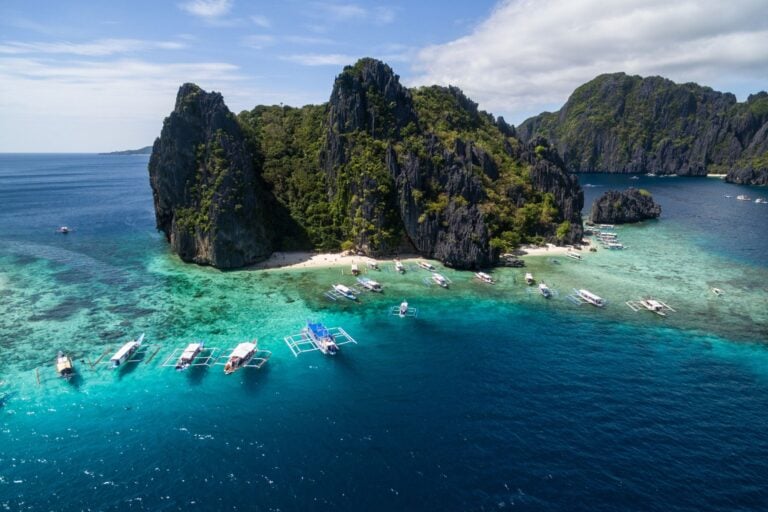
I had seen the photos, of course. The limestone cliffs rising out of turquoise water. The boats floating calmly by the shore. The beaches that looked too clean, too bright, too cinematic to be real.
I had seen El Nido through travel vlogs, social media posts, and other people’s stories long before I ever stood there myself.
But seeing a place online is different from arriving in it.
There are places that look beautiful in pictures, and then there are places that make you pause in real life because your eyes cannot fully process what is in front of you. El Nido was the latter.
El Nido is a coastal municipality in Palawan, an island province in the western Philippines. It is part of the MIMAROPA region and sits hundreds of kilometers southwest of Manila, surrounded by water, cliffs, islands, beaches, and coastal communities that shape the rhythm of the town.
For travelers coming from outside the Philippines, the usual route is to fly into Manila, Cebu, or Clark, then take a direct flight to El Nido Airport. Another option is to fly to Puerto Princesa, Palawan’s capital, and travel overland to El Nido by van or private vehicle for several hours.
That distance matters.
El Nido does not feel like a place you casually pass through. It feels like somewhere you choose. Somewhere you make time for. Somewhere you reach after flights, roads, expenses, uncertainty, and maybe a little fear. And maybe that is part of the reason it stays with people. You do not just arrive in El Nido. In a way, you earn your arrival.
For me, it was more than a vacation. It was my first time stepping this far out of my comfort zone. It was my first flight, my first real experience traveling on my own, and one of the first times I allowed myself to be fully open to a place: the views, the people, the questions, the awkwardness, the courage, the unexpected conversations.
I came for the islands.
But somehow, El Nido gave me more than views.
It gave me people.
The Place That Makes You Pause
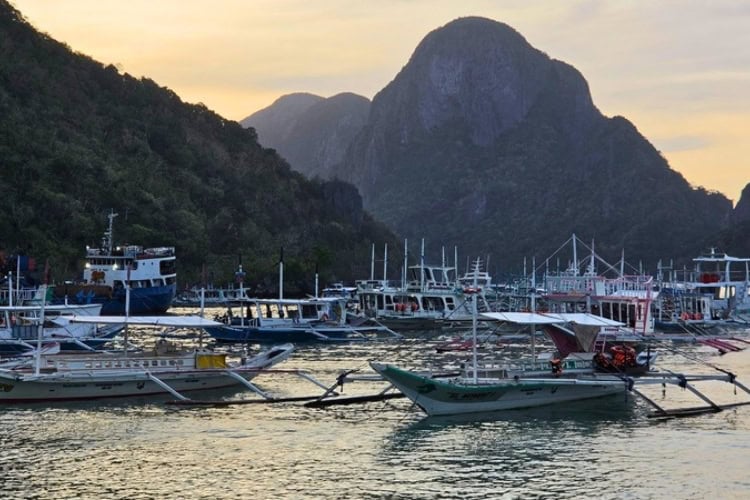
Photo by Kurl Ivan I. Fernandez
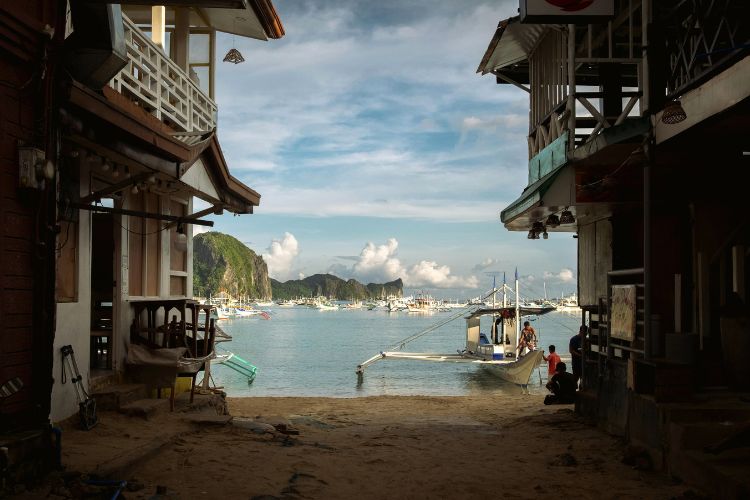
El Nido is visually overwhelming in the best way. The cliffs do not simply decorate the horizon; they rise from the sea like something ancient and sure of itself. The water changes color depending on the light: blue, emerald, turquoise, glass-clear. The shorelines hold both stillness and movement at the same time.
Boats leave and return. Travelers arrive and disappear. Locals continue their daily lives while visitors stand there, amazed.
It is the kind of place that does not need to try hard to impress you. It simply exists, and somehow, that is already enough.
But El Nido is far more than a tropical escape. It is not just a destination for island-hopping, beach photos, and sunsets. It is a place where nature feels alive in every direction.
The land, the sea, and the sky do not just appear together there. They collide. They meet in a way that feels dramatic, almost cinematic, as if every corner was made to remind you that the world is still capable of being this beautiful.
And maybe that is why El Nido gives people a kind of pause.
It gives you a reason to breathe deeper. To walk slower. To look longer. To ask yourself why you have been rushing so much in the first place.
Tours A, C, and D: The Islands That Started Everything
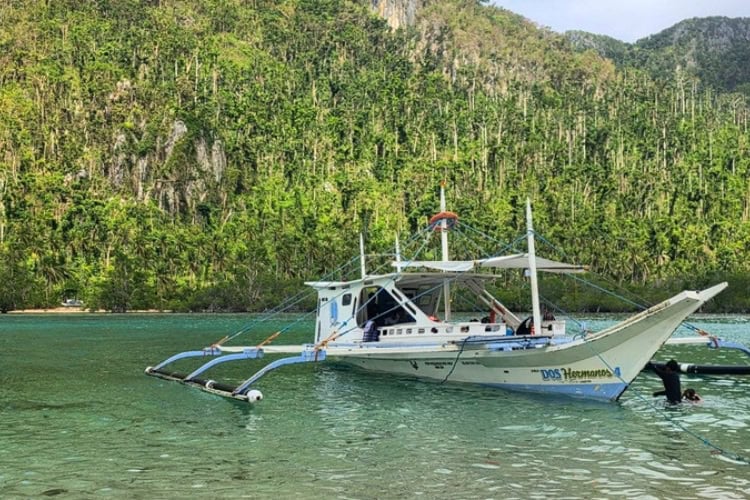
Island-hopping is the heart of the El Nido experience, and during my trip, I joined Tours A, C, and D through Dos Hermanos Travel & Tours, an El Nido-based tour operator.
I would recommend all three, but not for the same reason.
Tour A
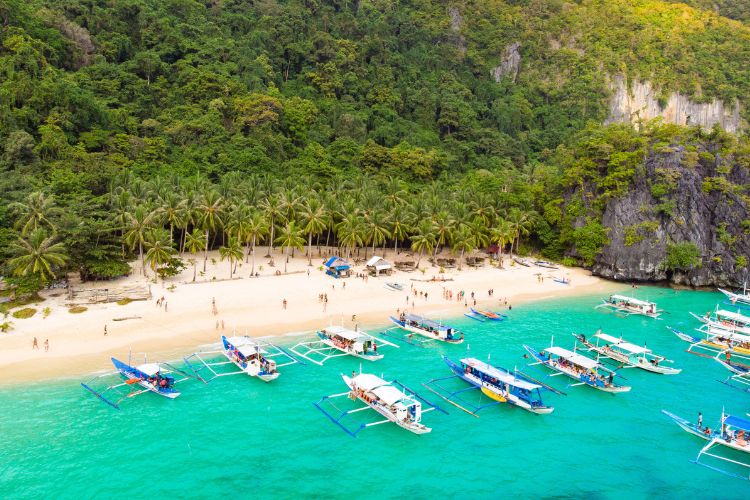
This is the tour I would recommend most for first-time visitors. Dos Hermanos lists this route with stops such as Big Lagoon, Shimizu Island, Payong-Payong Beach, Secret Lagoon and 7 Commando Beach.
It gives you the classic El Nido image many travelers imagine before arriving: limestone walls, bright water, island beaches, snorkeling stops, and that unreal feeling of being inside a postcard. Tour A felt like an opening scene.
At 7 Commando Beach, the sand, boats, trees, tourists, and water all seemed to say, “Okay, welcome to El Nido. This is just the beginning.” The place was lively but not overwhelming. There was movement everywhere, but it still felt peaceful. It was beautiful in the way first experiences usually are: imperfectly remembered, but emotionally clear.
Tour C
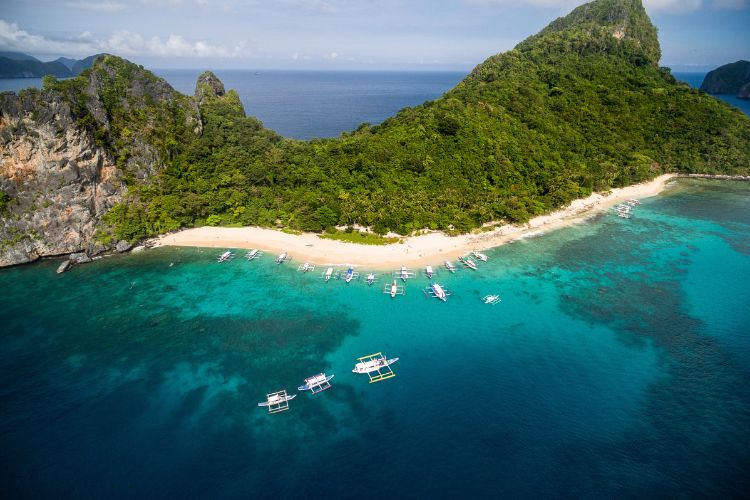
Tour C was my personal favorite. Dos Hermanos lists this route with Hidden Beach, Talisay Beach, Secret Beach, Matinloc Shrine and Helicopter Island.
Compared with Tour A, it felt more dramatic, more hidden, and more adventurous. The cliffs felt taller. The beaches felt more secret. The whole day carried the feeling of discovering places that were not immediately visible from the open sea.
Maybe I loved Tour C most because by then, I was no longer too nervous. I had already adjusted to the rhythm of El Nido: early mornings, boat rides, salty skin, shared lunches, wet hair, and conversations with strangers.
Or maybe I loved it because the last parts of a trip always feel heavier. You enjoy everything while knowing it is slowly ending.
Tour D
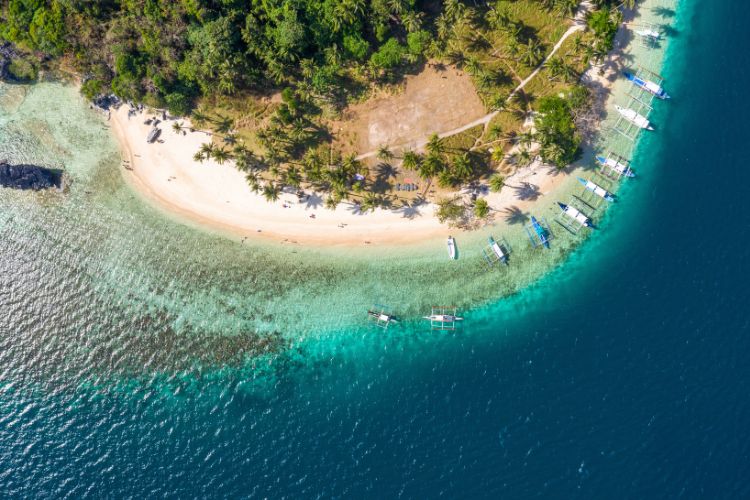
Tour D showed me the softer side of El Nido. Dos Hermanos lists this route with Small Lagoon, Cadlao Lagoon, Paradise Beach, Pasandigan Beach and Ipil Beach.
If Tour A is the classic introduction and Tour C is the dramatic adventure, Tour D is the quieter pause. It is a good choice for travelers who want kayaking, calmer scenery, and a less crowded island-hopping experience.
What’s Included
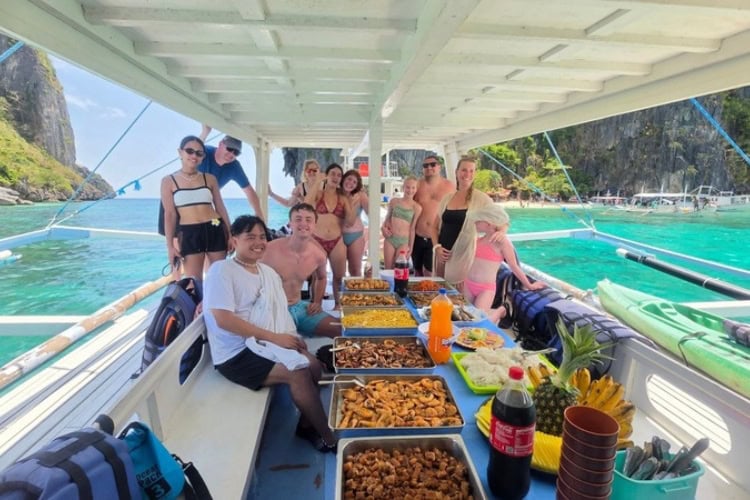
Before booking, travelers should ask what is included in the package. Dos Hermanos lists lunch, purified drinking water and soft drinks, life vest, mask and snorkel, licensed tour guide, licensed boat captain and crew and boat insurance as part of its island-hopping inclusions.
Environmental fees and lagoon entrance fees may be separate, so it is always better to clarify the full cost before the tour begins.
But more than the destinations, what I appreciated most was the feeling of being taken care of. The Dos Hermanos crew made the tours feel homey, comfortable and full of humor.
I do not usually overpromote things unless I really mean it, but their service felt personal. It was not just “go here, swim there, take pictures, leave.” The guides were fun, attentive, and easy to be with. They made the experience feel lighter, safer, and warmer, especially for someone traveling alone and still trying to figure out how to be brave in unfamiliar places.
The islands were beautiful, yes. But the people on the boat made them unforgettable.
Eating Where El Nido Feels Local

The rumors are true: El Nido can be expensive.
A simple meal in some restaurants can start around 400 Philippine pesos, which can feel painful if you are traveling on a tight budget.
At first, the prices shocked me. But after seeing how far El Nido is and understanding that goods have to be transported into the area, the higher prices became more understandable.
Still, budget-friendly food exists. You just have to walk a little farther, look a little deeper, and not be afraid to eat where locals eat.
In Barangay Buena Suerte, I found Leah’s Kitchenette, a simple Filipino eatery serving comfort dishes such as adobo, sinigang, chicken curry, and vegetables. During my visit, some meals started at around 80 pesos without rice, which honestly felt like a relief after seeing tourist-priced menus around town.
It was not flashy. It was not the kind of place that demanded a photo before the first bite. But it felt honest. Sometimes, the best meals while traveling are not the most aesthetic ones. Sometimes, they are the ones served quietly, without too much branding, with enough warmth to remind you of home.
Another favorite was Inasal EatsCo., a casual restaurant in the heart of town. I ordered chicken inasal with soup and fresh coconut juice, and for El Nido standards, it felt satisfying and reasonable.
But what made Inasal EatsCo. memorable was not only the food. It was the people.
Inasal EatsCo. hires deaf and hard-of-hearing workers. As someone learning Filipino Sign Language, this struck me deeply. I know how many deaf people still face discrimination in employment. Some are not given opportunities at all, while others are treated unfairly because of their abilities. Seeing a business in El Nido create space for deaf and hard-of-hearing employees was not just nice. It was meaningful.
It reminded me that travel is not only about the views. Sometimes, the most unforgettable parts of a place are the people you meet unexpectedly. The ones who serve your food with kindness, smile without needing too many words, and quietly show you that inclusion is possible when people choose to make space for it.
The Strangers Who Became the Story
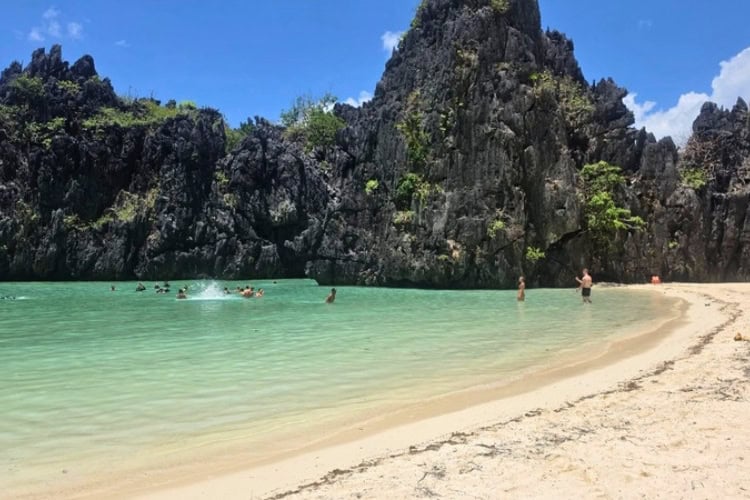
Photo by Kurl Ivan I Fernandez
Traveling alone sounds lonely until it teaches you how open you can be.
You think you will be alone most of the time. You imagine yourself sitting quietly, looking at the sea, pretending you are in a coming-of-age film. But sometimes, being alone makes you more willing to talk.
You notice more, listen more and smile more. Small conversations suddenly matter, and strangers become part of the trip before you even realize it.
During one of my tours, I met Filipino-American brothers, Jose and Adrian. They were funny, warm, and easy to be with. They were Filipino, but they did not speak much Tagalog beyond one very expressive phrase that many Filipinos would instantly recognize.
And honestly, that made everything funnier.
There was something comforting about meeting people who were technically strangers but somehow felt familiar. Maybe because of shared blood, shared humor, shared chaos, or just the way Filipinos, wherever they grow up, can still find a way to connect through laughter.
I also met Flo, a fellow Taylor Swift fan, during Tour C. We kayaked, talked, laughed, and somehow moved from music to life, timing, growth and all the quiet things people carry.
She had depth and was the kind of person who made conversation feel natural, like you could talk about a song and end up talking about becoming a better person.
That is the strange gift of travel. Sometimes, people enter your life only briefly, but they become part of how you remember a place.
I also met travelers around my age who had already been moving across countries for months. They had been crossing borders while I was still waiting for graduation, thinking about board exams, career plans, responsibilities, and all the timelines we are taught to follow.
I felt happy for them. I also felt a little jealous. Not the bitter kind. More like the quiet Filipino “sana all” kind: the feeling of seeing someone living a version of freedom you also hope to experience someday.
Meeting them did not make me hate my path. It made me look at it more honestly. It reminded me that life can be learned in many ways. Some lessons come from classrooms, careers, and exams. Others come from hostels, beaches, airports, boats, and conversations with strangers.
Maybe I cannot live exactly like them right now. Maybe backpacking across continents is not something I can easily do financially, culturally, or personally.
But they reminded me that someday, somehow, there might still be room for me to see more of the world too.
Not to escape life. But to understand it better.
The Workers Who Carry the Beauty
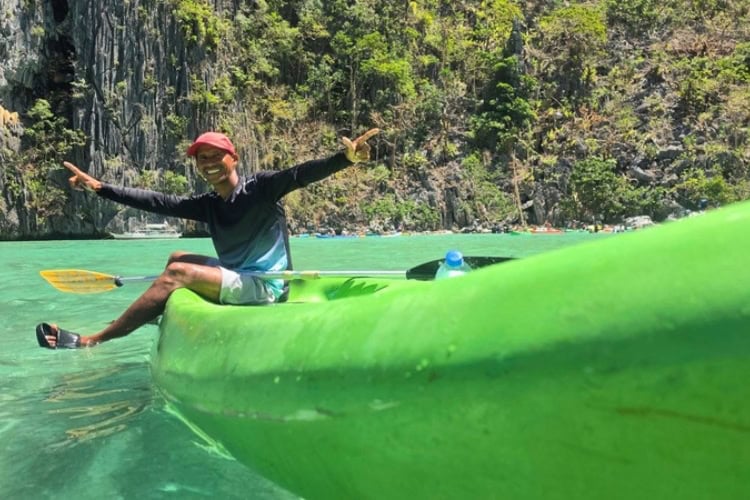
Photo by Kurl Ivan I. Fernandez
And then there were the workers.
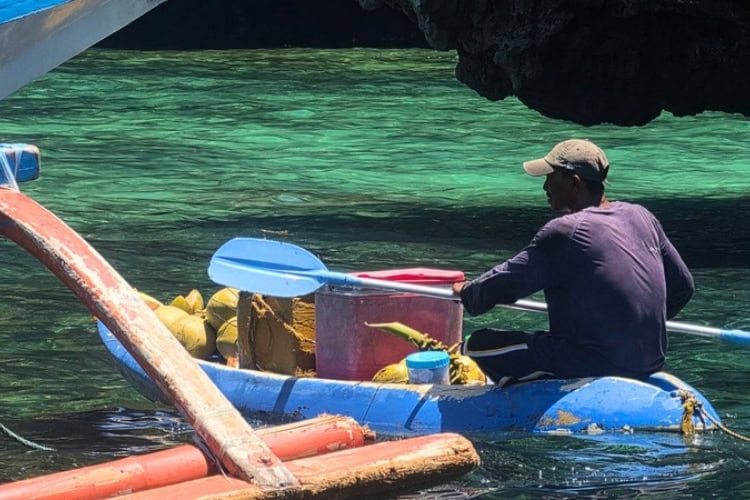
The boatmen, food servers, massage workers, tour guides, and crew members who make the tourism experience possible. These are the people travelers often meet in passing. We say thank you, we pay, we move on.
But if you pause long enough, if you ask, if you listen, you realize they have stories that deserve more space than a simple transaction.
One boatman accompanied me while kayaking and made me feel safe when I was still trying to look braver than I felt. He was kind, easy to talk to, and familiar in the way some people can make a foreign place feel less intimidating.
Through conversations with workers, I was reminded that every beautiful destination is carried by labor we do not always see.
El Nido is expensive. The tours, food, accommodations, and activities can all add up. But behind that tourism economy are people waking up early, preparing boats, serving meals, guiding travelers, cleaning rooms, giving directions and doing the quiet work that allows visitors to call the place beautiful.
That changed the way I saw El Nido. It is not only cliffs and beaches. It is also work. It is service. It is survival. It is people making a living in a place that many of us enter only as a dream.
El Nido After Dark
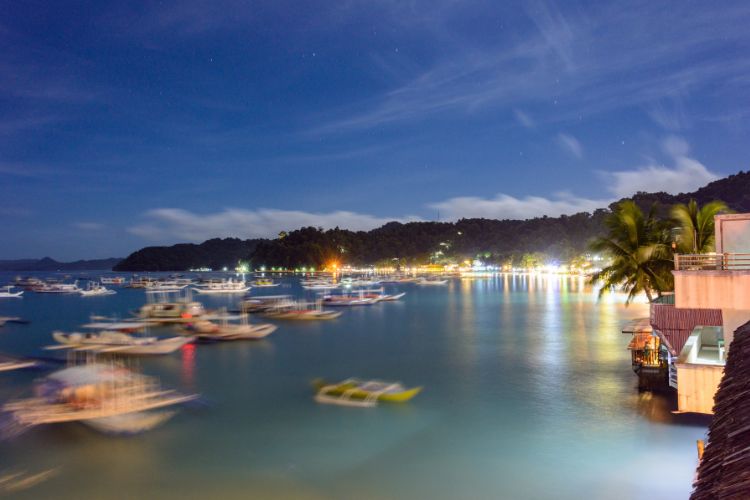
At night, El Nido becomes human in a different way.
After island tours and sunset walks, the town shifts into music, lights, conversation and movement. Around the town proper, bars and casual nightlife spots bring together tourists, locals, boat crews, and travelers who still have energy after a day under the sun.
I visited places such as Amigos and Calamari, and what I liked most was that El Nido nightlife did not feel too serious. It was not the polished city club scene where everyone looks curated and intimidating.
It felt more open, random, and alive. Some people came straight from island tours, still sunburned and in beach clothes. Some were already dancing like they had known everyone in town for years.
At Calamari, I saw tourists, locals, and even boat crew dancing together. That scene stayed with me. These were the same people guiding tourists through lagoons and islands during the day, and at night, they were laughing, dancing, and enjoying the town too.
For a moment, it did not feel like “visitors” and “locals.” It felt like everyone sharing the same night.
Of course, enjoy nightlife with awareness. Watch your belongings. Do not leave your drink unattended. Know your limits. If you are traveling alone, stay in areas where there are people around. And please, do not go swimming after drinking. The sea may look beautiful at night, but it is still the sea.
During the day, El Nido is breathtaking. At night, it becomes laughter, music, familiar faces, random conversations and stories that happen only when you allow yourself to stay a little longer outside.
The Souvenirs I Actually Took Home
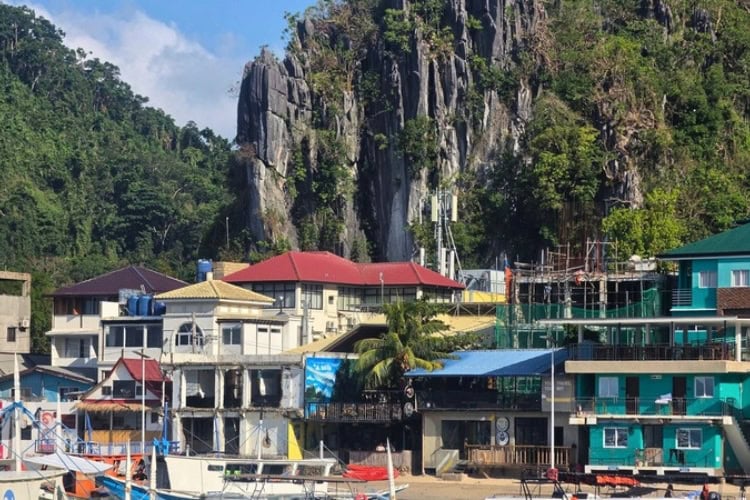
Photo by Kurl Ivan I. Fernandez
I brought home bracelets, anklets and a turtle necklace given to me by a friend I met during the trip. They were not expensive things, but they carried stories.
I know some people travel light and only bring home photos. But me? I like proof. I like tiny things that remind me that I was there, that it happened, that El Nido was not just a dream I entered for a few days.
Around town, souvenir shops sell beach-inspired accessories, dry bags, shirts, keychains, and travel essentials. Many stores offer similar items, so it helps to compare prices before buying.
A dry bag, especially, is useful for island-hopping because your phone, money, clothes and other things will thank you later.
But more than the items themselves, I realized that souvenirs matter because they hold a version of us from a certain place and time.
A necklace becomes more than a necklace when it reminds you of a friend. A bracelet becomes more than an accessory when it brings back the memory of walking through town after a long day at sea.
The best souvenirs from El Nido, however, were not the things I bought. They were the people I remembered.
Why I Think We Need to Go Back
Travel has a strange emotional effect.
At first, it gives you bliss. It makes you feel light. It makes you feel like, for once, you are not just existing under responsibilities, deadlines, expectations, and all the invisible weight you carry every day.
In El Nido, I felt myself more. I laughed, walked, swam, danced, asked questions, listened to people, and allowed myself to experience life without overthinking every next step.
But then the end of the trip comes.
Suddenly, the same streets feel more meaningful because you know you are about to leave them. The sea becomes more beautiful because you may not see it again tomorrow. The people feel more special because you do not know when, or if, you will ever meet them again.
Even the smallest things like the sound of motorcycles, the smell of grilled food, the salt on your skin, the walk back to your accommodation, begin to feel like memories while they are still happening.
That is the strange pain of traveling. You arrive as a visitor, but you leave as someone who has been changed.
I gained so much more than island photos in El Nido. I gained stories, names, laughter, questions and a wider understanding of people. In addition, I learned that everyone travels with something: joy, grief, courage, uncertainty, hope, or the quiet need to begin again.
I learned that strangers can become friends, that workers deserve to be seen beyond the service they provide and that language is not always a barrier when people are willing to meet one another halfway.
There is a lot of soul waiting to be found in El Nido. A lot of stories of struggle, survival, joy, healing and connection. There is beauty that is not only seen in the cliffs or the water, but in the lives of the people who pass through it and the people who call it home.
And maybe that is why El Nido stays with you. It’s not only a destination, it is a mirror. It shows you how small you are against nature, but also how deeply capable you are of feeling.
It reminds you that the world is wider than your routine, that people are softer than your assumptions, and that life can still surprise you when you allow yourself to go somewhere unfamiliar.
But one thing is for sure. El Nido shapes everyone who seeks it.
It shapes the travelers who crossed countries to find wonder and it shapes the workers who continue to survive and serve with warmth.
It shapes the visitors who came carrying uncertainties and it shaped me, a first-time traveler who arrived scared, curious., and alone, but left with stories, friendships, and a heart heavier and fuller than before.
And someday, it could be you. You could be the one standing by the shore, watching the sky turn gold and you could be the one holding a souvenir that means more than its price.
Maybe you will be the one dancing with strangers, laughing on a boat, listening to someone’s story, or quietly realizing that you needed the trip more than you thought.
You could be the one asking what is really in El Nido. And maybe, after everything, you will understand.
El Nido is not just a place you visit. It is a feeling you carry. A chapter you keep returning to. A memory waiting somewhere between the sea, the sky, and the person you became while you were there.
If You Go
Getting there: Travelers coming from outside Palawan can fly to El Nido Airport through available domestic routes, usually after arriving in the Philippines through Manila, Cebu, or Clark. Another common option is to fly to Puerto Princesa, Palawan’s capital, then travel overland to El Nido by van or private vehicle. The overland trip takes several hours, so it is best to plan enough time between transfers.
What to bring: Bring reef-safe sunscreen, a dry bag, water, swimwear, a towel, cash, and a waterproof phone pouch. A dry bag is especially useful during island-hopping because your belongings can easily get wet on the boat or while transferring between beaches and lagoons.
Budget tip: El Nido can be expensive, especially near the main tourist areas. For cheaper meals, walk around town and look for local eateries or casual restaurants where residents and budget travelers eat. It is also better to compare prices for souvenirs and travel essentials before buying, because many shops sell similar items.
Travel note: El Nido is beautiful, but it is also home to people who live and work there every day. Travel with care. Respect the beaches, follow local tour rules, avoid leaving trash, and treat guides, boat crews, servers, and local workers with kindness. They are part of what makes the destination unforgettable.
Need a hand planning your trip? Here are the sites and services we rely on most, from booking tools to travel products we love.
Inspire your next adventure with our articles below:
- Palawan Perfection: Exploring the Philippines’ Last Ecological Frontier
- Cebu, Philippines: Jeepneys, Markets, and Clear Seas at Southeast Asia’s Welcoming Gateway
Author Bio: Kurl Ivan I. Fernandez is a writer from Bataan, Philippines, with a background in civil engineering and campus journalism. A former campus journalist, he writes human-centered stories about travel, memory, identity, and the quiet encounters that shape the way people experience a place. His work often blends personal reflection with careful observation, finding meaning not only in destinations, but also in the people, conversations, and fleeting moments found along the way.
Want to discover more hidden gems and helpful travel tips? Join our free newsletter for the latest travel secrets and travel articles.
We are reader-supported and may earn a commission on purchases made through links in this article.

- El Nido, Philippines: The Islands I Came For, the People Who Made Me Stay - September 16, 2026
- Fall Day Trips from Vancouver: 7 Scenic Walks Worth the Drive - September 15, 2026
- Laos for Backpackers: Vientiane, Vang Vieng and Luang Prabang on a Slow-Travel Route - September 15, 2026
Planning another trip soon? ✈️
Add GoWorldTravel.com as a preferred source on Google. Click the button below so our local guides, packing hacks, and hidden-gem itineraries always show up first when you search!
Add to Preferred Sources