
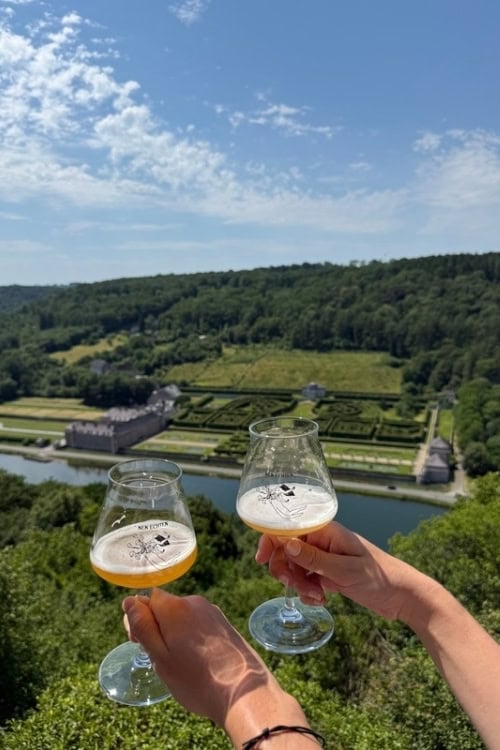
Last spring I stood at the viewpoint above Rochehaut with two guests from Chicago, looking down at the river Semois as it wrapped almost a full circle around the village of Frahan. Nobody spoke for a while. Then one of them asked the question I hear most often in my work: why does nobody talk about this?
I have an answer, and it is a little embarrassing. Belgians keep the best of Belgium to themselves, not out of greed but out of habit. We assume visitors want Brussels, Bruges and a chocolate shop, so that is what we hand them.
I was born in Zottegem, a small market town in the hills south of Ghent, and I have spent my life on Belgian back roads.
These days I make my living showing small groups of visitors around my own country. So consider this the guide I would write out by hand for a friend: not complete, not neutral, simply where a Belgian would send you.
Dinant and the Meuse: The Valley Most Visitors Miss
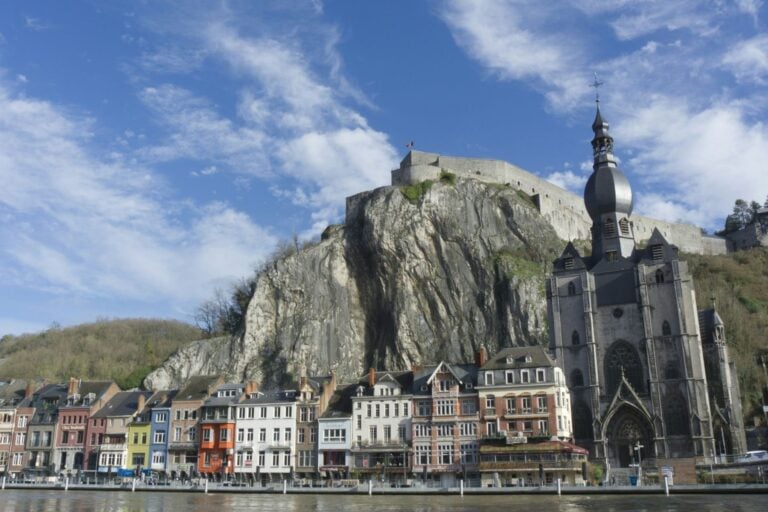
Ninety minutes south of Brussels, the river Meuse cuts a deep trench through gray limestone, and Dinant sits in its narrowest part. Only about two streets fit between the cliff and the water, so the town grew long instead of wide.
A citadel hangs some 100 meters (330 feet) above the rooftops. A citadel hangs some 100 meters (330 feet) above the rooftops. Normally I would tell you to skip the 408 steps and ride the cable car, but it is closed for major repairs until at least 2027, so for now it is the stairs or the road.
Dinant gave the world the saxophone. Adolphe Sax was born here in 1814, and the bridge over the Meuse now carries a line of giant saxophones, each painted for a different European country. His birthplace on Rue Sax is a small free museum, and a bronze Sax waits on a bench outside for your photo.
Before you leave, buy a couque de Dinant, a hard cookie of flour and honey pressed into carved wooden molds. Do not bite it; it bites back. Break off a small piece and let it melt while you watch the river.
The Ardennes: Castle Towns and Deep Forest
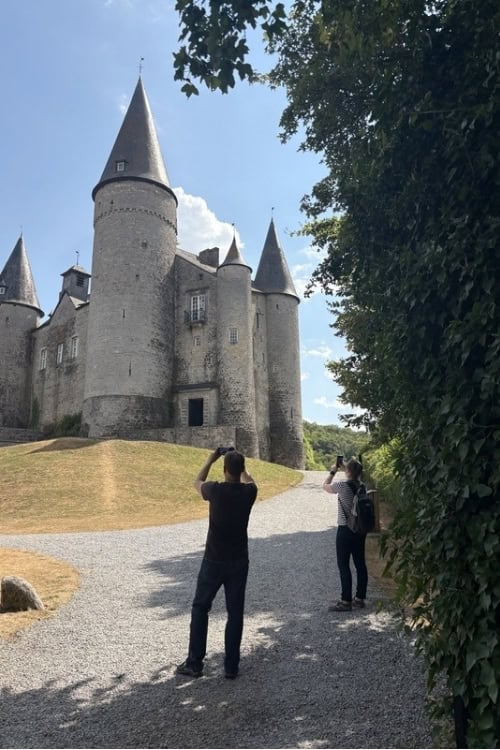
Keep driving southeast and the land rises into the Ardennes, the forested hill country that covers most of southern Belgium. It is under two hours from Brussels and it feels like a different nation. This is where Belgians themselves go to walk, kayak and eat too much game in October.
The castle towns are the anchors. La Roche-en-Ardenne wraps around a ruined medieval fortress above the river Ourthe, and Bouillon guards the castle of Godfrey of Bouillon, one of the knights who led the First Crusade to Jerusalem in 1099. And above Rochehaut, the view that opened this story waits at the end of an ordinary village street, free.
History sits close to the surface here. In the Bois Jacques woods outside Bastogne, you can still stand in the foxholes American soldiers dug in December 1944, during the Battle of the Bulge. Go in the morning, when the forest is quiet, and it will quiet you too.
Where the Monks Still Brew: Belgium’s Trappist Abbeys
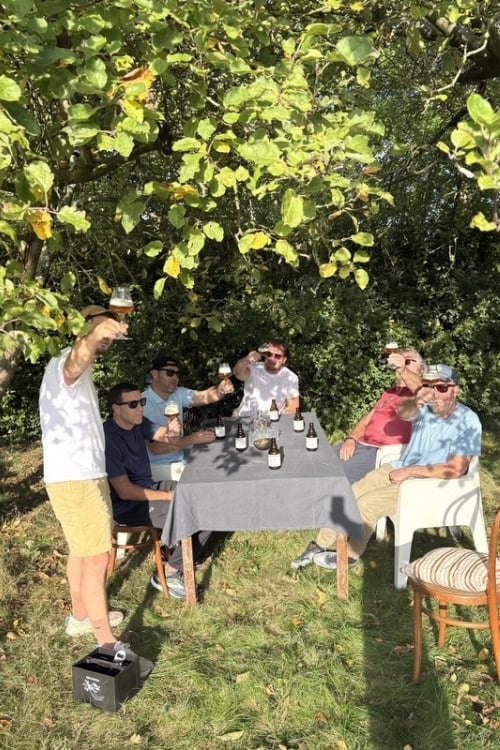
Photo by Joris Desplenter
Guests often step into my car believing Trappist is a type of beer. It is not; it is a promise. The name is a protected seal with three rules: the beer must be brewed inside the walls of a monastery, by or under the supervision of the monks, and the profits must go to the abbey and to charity.
Only five Belgian breweries carry the seal today: Chimay, Orval, Rochefort, Westmalle and Westvleteren.
Orval is the one to build a day around. The medieval abbey ruins are open to visitors, the spring that feeds the brewery still rises beside them, and the monks release exactly one beer to the outside world, a dry amber that keeps changing in the bottle for years.
At the inn across the road, ask for Petit Orval, the lighter table beer the monks brew for themselves; it is poured nowhere else on earth.
Rochefort has brewed since 1595 and lets nobody in. Do what locals do: order a Rochefort 8 in a café in the town, with the abbey hidden in the woods above you.
Chimay is the most welcoming of the five. The brewery stays closed, but the Chimay Experience visitor center beside the abbey ends with a beer on tap at the inn next door, where you can also order Chimay à la Bière, a cheese washed in the monks’ own beer.
Westvleteren is the ghost of the five. Its dark Westvleteren 12 has repeatedly been rated the best beer in the world, and the monks answered by refusing to brew more of it. Crates are sold at the abbey gate by reservation, so the café across the road, In de Vrede, is the reliable way to taste it.
Tip: If you don’t make it to the abbey, Brussels Airport, Charleroi Airport and the Eurostar terminal sell a gift pack with a beer from all five Belgian Trappist breweries, including Westvleteren 12.
Wherever you go in Trappist country, the beer costs café prices a few minutes from where it was made.
Ghent Past the Postcards
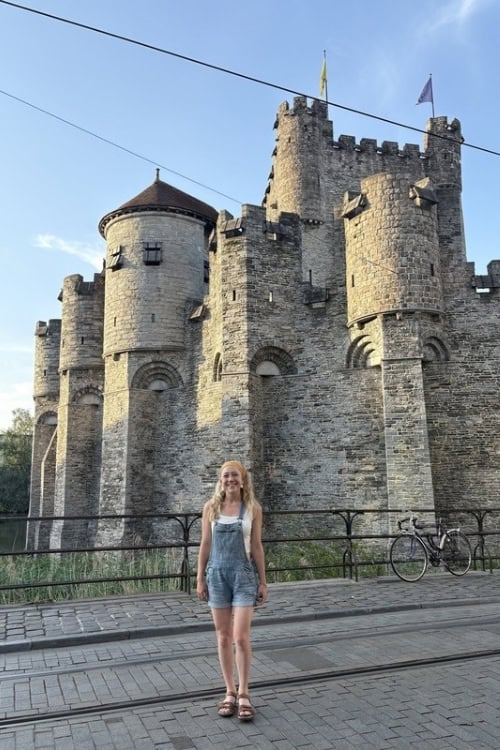
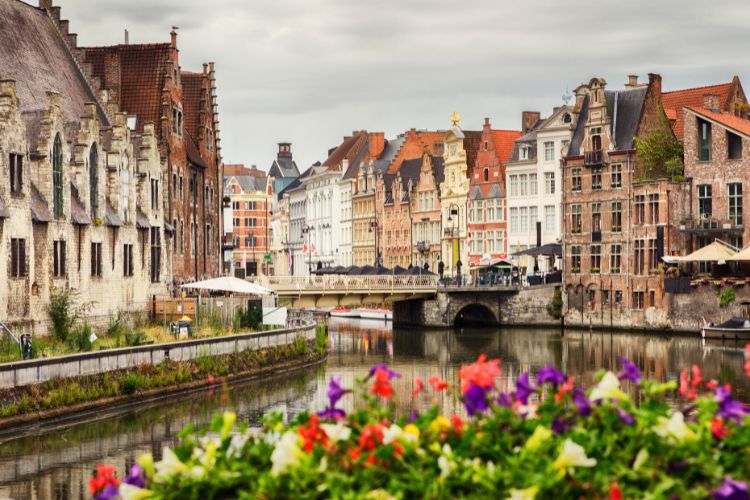
I grew up 20 minutes from Ghent, so when guests ask me to choose between Bruges and Ghent, they get the honest version. Bruges is the museum; Ghent is the living room. Bruges you admire. Ghent you join, along with 80,000 students and a working port.
Start early. At 8 a.m. on St Michael’s Bridge you get the towers, the canals and the smell of bakeries, with almost nobody beside you.
Then walk into St Bavo’s Cathedral for the Van Eyck brothers’ Adoration of the Mystic Lamb, finished in 1432 and stolen so many times it may be the most stolen artwork in history. One panel has been missing since 1934, and the police still receive tips.
Tip: Book a timed ticket ahead. Until spring 2027, the upper panels are being restored across town at the Museum of Fine Arts, where you can watch the conservators at work through glass.
Then do what the city actually does. Hunt street art in Werregarenstraatje, the alley where graffiti is legal, and buy a purple cuberdon from a candy cart on the Groentenmarkt.
Enjoy knowing that the castle in the middle of town was last conquered in 1949 by students protesting a new tax on beer. If you come in mid-July, the Gentse Feesten turns the center into a ten-day street party; come for it on purpose or avoid it on purpose, but do not stumble into it.
When to Skip Bruges
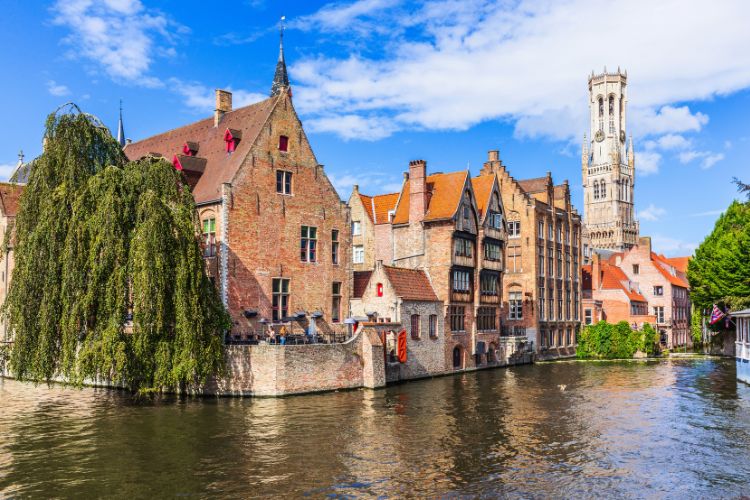
The question guests ask me most is whether Bruges is worth it. It is. Bruges is a medieval trading city that went broke when its harbor silted up and was too poor to tear anything down, which is exactly why it is so beautiful, and exactly why it is so crowded.
So here is my rule: skip Bruges on summer weekends entirely. Come on a weekday morning in shoulder season, April to early June or September to October, and stay past six in the evening, when the day-trip tide drains away and the canals in low light belong to you.
If you find yourself there at noon anyway, walk ten minutes. Head for the windmills on the old ramparts, or for the beguinage, a walled courtyard where a community of independent religious women once lived. In Bruges, silence is never more than ten minutes away.
How to Eat Where the Locals Eat
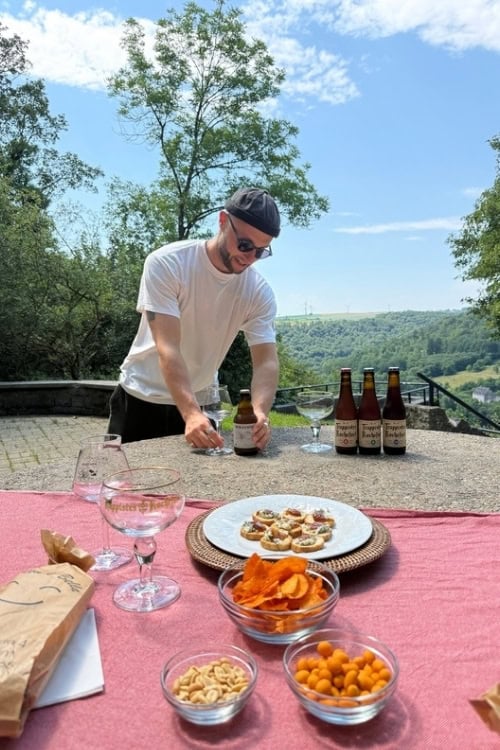
Photo by Joris Desplenter
My simplest rule works in every Belgian town: if the menu hangs outside in four languages with photos, keep walking. Look for a chalkboard with the dagschotel or plat du jour, the dish of the day. That board means the kitchen cooked what was good at the market this morning.
Trust the parking lot too. A village restaurant full of Belgian license plates at Sunday lunch does not need a review site. Order the beer of the region you’re in, ask what the kitchen is proud of, and you will eat better than in most of the famous rooms in Brussels.
And eat fries the way we do, from a friterie window, standing up. Order them with stoofvlees, beef slow-cooked in dark beer, and you have had one of Belgium’s national dishes for around ten euros.
A Small Country, Honestly
Belgium is small enough that nothing in this article is more than two and a half hours from Brussels. That is the real local wisdom: you do not have to choose between the famous cities and the quiet country, because you can sleep in one and spend the day in the other.
Just leave one day unplanned. Drive south until the forest closes over the road, stop where a church tower looks interesting, and order whatever the town brews. That is how Belgians travel Belgium. It has never failed me, and I have yet to meet a visitor it failed either.
If You Go
Getting around: Trains connect the cities fast and often; Brussels to Ghent takes about 35 minutes and Brussels to Bruges about an hour (belgiantrain.be). For the Meuse valley, the Ardennes and the abbeys you need a car, because public transport there is thin.
When to come: May, June, September and October give the best mix of weather and calm. October adds forest color and game season in the Ardennes; December adds Christmas markets and the Battle of the Bulge commemorations around Bastogne.
Trappist beers: Background on the abbeys and the seal is at trappist.be. Orval’s ruins are open year-round, and Chimay’s visitor center offers tastings. Rochefort and Westvleteren do not receive visitors, so drink their beers in the nearest café.
Regional information: visitwallonia.be covers Dinant and the Ardennes; visitflanders.com covers Ghent and Bruges.
Need a hand planning your trip? Here are the sites and services we rely on most, from booking tools to travel products we love.
Inspire your next adventure with our articles below:
- Don’t Miss These 7 Hidden Gems in Europe for Your Next Escape
- Fairytale Getaways: 10 Most Romantic Small Towns in Europe
Author Bio: Joris Desplenter was born and raised in Zottegem, near Ghent, and has spent his life exploring Belgium by back road. He runs Belgium’s Wanderlust (www.belgiumswanderlust.be), guiding private, fully custom day tours across the country for up to eight guests. He still thinks the best table in Belgium is a café terrace within sight of an abbey.
Want to discover more hidden gems and helpful travel tips? Join our free newsletter for the latest travel secrets and travel articles.
We are reader-supported and may earn a commission on purchases made through links in this article.

- How Belgians Travel Belgium: Meuse Valley Views, Trappist Abbeys and Ghent - October 31, 2026
- Kayaking Italy’s Lake District, From Lake Como to the Swiss Alps - October 31, 2026
- Romania Beyond Dracula: 7 Places That Define the Country’s Character - October 30, 2026
Planning another trip soon? ✈️
Add GoWorldTravel.com as a preferred source on Google. Click the button below so our local guides, packing hacks, and hidden-gem itineraries always show up first when you search!
Add to Preferred Sources