
Moldova is the odd country out of Eastern Europe; so much so that I actually had to go through passport control—inside the country!—reminiscent of the infamous Checkpoint Charlie. And this is the essence of its uniqueness as a destination.
Landlocked and Unknown
Unknown, landlocked and located in a remote corner of Europe bordering Ukraine, tiny Moldova with less than three million people is something of a time capsule. The mass tourism engulfing most of Europe has bypassed Moldova, which is the continent’s least visited country. While the former East European Soviet states, from the Baltics to Czechia, have made significant economic strides and are thriving, Moldova remains largely undeveloped.
Life is slower and more traditional here, and its tourism assets are rooted in history and heritage: an age-old wine culture exceptional in scope and quality; medieval fortresses with whimsical architecture; exquisite Orthodox monasteries and churches; a landscape of rolling hills awash in bright yellow sunflowers (the oil is a major export); eclectic anomalies from nostalgic museums to the uninhabited castle-like mansions of Gypsy Hill. Moldova recently celebrated its 35th year of independence, yet an aura of Soviet times lingers—while in the Transnistria region the USSR seemingly lives on.
Small and Ultra Leafy
The capital, Chisinau, does not boast grand monuments, historic ruins or world-class museums. Instead, it is a small, pleasant, safe city that is ultra-leafy and green.
Trees line virtually every street and parks are everywhere. Sidewalks are often broken or non-existent, while many buildings are poorly maintained and vintage. Except for the compact main central city area, which has some newer restaurants, coffee bars, shops and buildings, the city feels more rural than urban, more of the past than the future.
Relaxed and chill, Chisinau is a good base for exploring the small country—most top sights can be visited on day trips—while enjoying evenings in the city.
A budding culinary scene has brought wine bars and ethnic and fusion eateries, complementing the especially popular traditional restaurants serving hearty Moldovan dishes along with time-honored live music. The quartets typically combine violin, accordion, an indigenous pan flute called a nai and a cimbalom, a large dulcimer played with mallets.
An Autonomous Republic
Moldova’s ultimate time capsule is Transnistria, where Russian is the dominant language. Wanting to remain aligned with Moscow, the region fought a civil war with Moldova to secede in 1992; in the end, it remained officially part of Moldova but with the status of an autonomous republic with its own currency, parliament and passport control.
Crossing into Transnistria was reminiscent of entering Berlin at Checkpoint Charlie in the Cold War days. Nearing the border, I negotiated several checkpoints with soldiers wielding automatic weapons, barbed wire, and large blocks of cement positioned to force vehicles to slow to a crawl in order to maneuver between them.
At the border, however, entry was simple: I was asked a few questions including my hotel and the number of days I planned to stay, then an entry permit was issued.
Once inside Transnistria, I stepped back in time, to a world where the people pine for the USSR and cling to their memories of that era.
A Tribute to the USSR
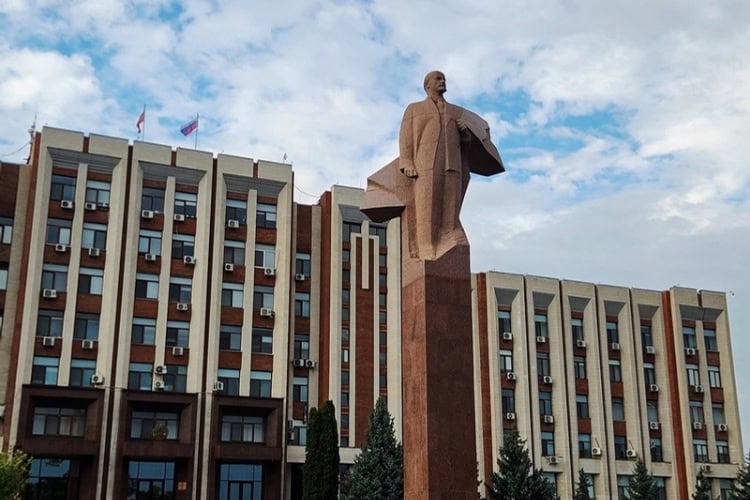
The small central area of the capital, Tiraspol, is a tribute to and celebration of Soviet Russia. Huge red stars and the emblem of the former Soviet Union are strategically placed. A towering statue of Lenin guards the Transnistrian Parliament.
A Soviet-era tank is displayed on a raised cement platform. A series of tombs and monuments pay homage to the Transnistrian soldiers who died in the civil war and to the sacrifices and heroics of Russian generals and soldiers during WWII. An Eternal Flame burns.
Around Tiraspol, I encountered busts of Russian figures and relief sculptures on buildings in the Soviet Realism style that glorify workers and Communist ideals. Tiraspol’s most popular restaurant, called Back in the USSR, is filled with memorabilia from portraits of Lenin and Marx to Soviet TVs and radios. When I was having lunch there, a customer tried on a Russian officer’s coat from the memorabilia collection and was laughingly posing for photos.
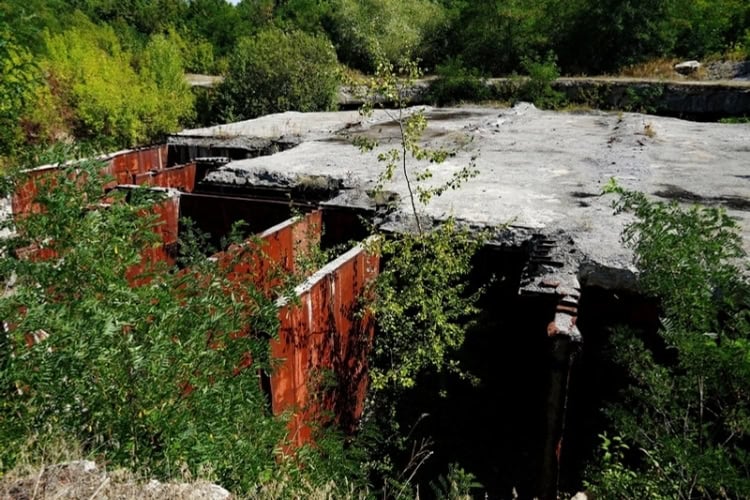
Moldova proper also has its own Soviet throwbacks. Hidden deep in a forest about a 20-minute walk from a country road is the eerie Soviet Bunker, where the Russian bigwigs overseeing Moldova hoped to survive the fallout of a nuclear war with the US. Bunker #1180—one of many built throughout the Soviet Union—was 12 levels deep into the earth and constructed of steel and cement. Today it is a ruin, a skeleton with rusty beams for ribs that conjures up the fear and trepidation of that time.
Eclectic Collections

The Petru Costin Gallery, in the town of Ialoveni, was an eye-opening, nostalgic hoot. Room after room is filled with paraphernalia and curiosities from the height of Soviet rule (50s, 60s and 70s) from vintage TVs, phones and phonographs to military uniforms and weapons. A lifelong collector of paraphernalia, Costin also has assembled numerous odds and ends such as early diving suits, Russian Orthodox icons, a recreated 1957 Russian schoolroom and more than 17,000 horseshoes, a Guinness World Record.
The emotional ride concludes with the Red Room: it celebrates Lenin, Marx and the USSR with brilliant red banners and flags, cars and motorcycles of the period, propaganda posters, busts, photos and more.
Costin, who began gathering stuff through his job as a customs agent, also created an Open-Air Soviet Museum—an eclectic outdoor assemblage of rusting, deteriorating machines and objects from the time, from a helicopter, small plane and autos to many statues and busts.
World’s Largest Wine Cellar
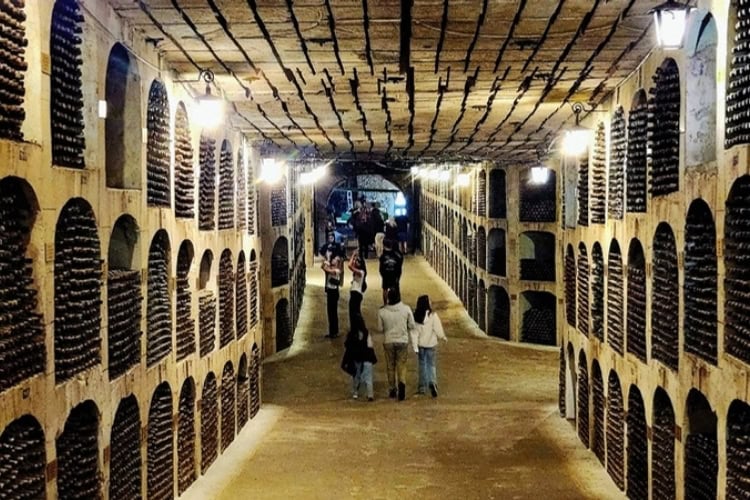
It is Moldova’s wine industry, whose roots go back millennia, that has its sights on the future. The country is an oenophile’s dream world—with 100+ wineries, unique varietals, high-quality wines to enjoy, and more vineyard area and density per capita than any other country. Moldova’s largest winery (one of the largest anywhere) is Milestii Mici, which boasts the Guinness World Record for most bottles in storage; the award in 2005 was for 1.5 million bottles but the total has since grown to more than two million.
On a tour and wine tasting at Milestii Mici, I whirled through a maze of cold underground tunnels (about 40F) aboard an open-air electric cart, passing areas of huge wooden barrels and steel storage tanks, and walked amid numerous vaults filled with stacked bottles shrouded in dust. The scope of the winery is a stunner: some 120 miles of tunnels (though only a portion are currently in storage use) descending several hundred feet.
A host of wineries around the country—from Moldova’s other giant winery, Cricova, to modest ones like the Winery at Comrat—offer tours, tastings, restaurants and, for those who want to immerse deeper into the vineyard life, overnight accommodations.
Dazzling Iconography
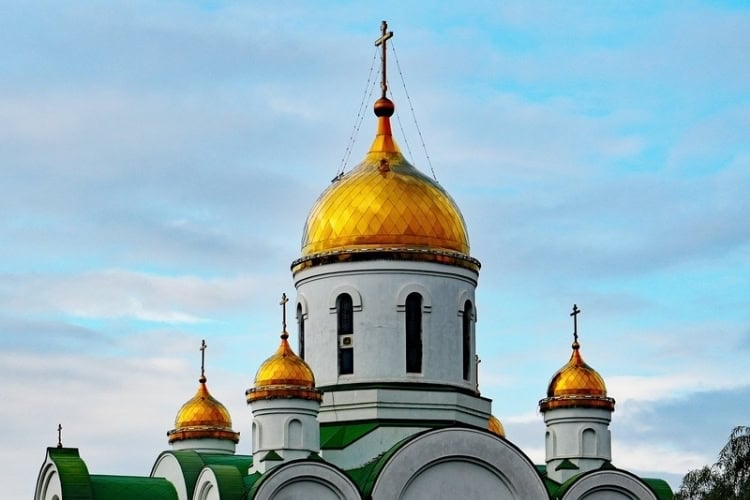
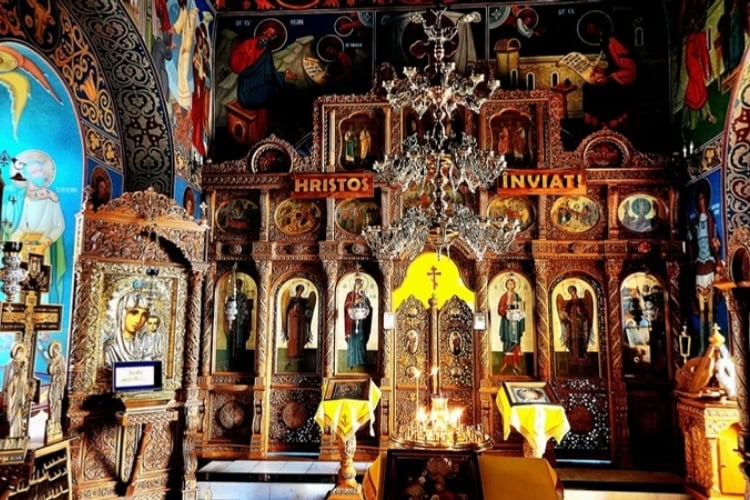
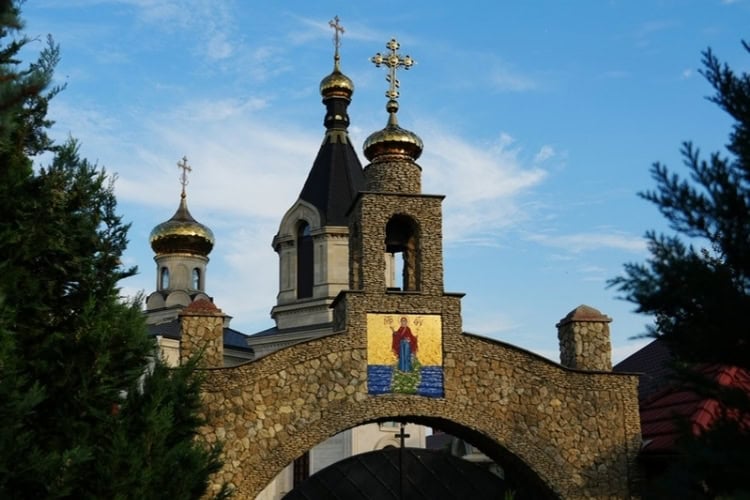
The iconography inside Moldova’s Orthodox churches and monasteries dazzles and electrifies. The religious symbols, paintings and murals burst with vivid color, are illuminated by brilliant gold accents and framed by intricate wood carvings. The main church in Tiraspol, the Christmas Cathedral, and at Orheiul Vechi, the most venerated of Moldova’s spiritual sites, harbor an array of iconographic art that exude rare beauty.
Travelers drawn to similar Orthodox artistry might enjoy Rila Monastery: A Day Trip Into Bulgaria’s Spiritual Heart.
Orheiul Vechi’s Cave Monastery
Orheiul Vechi is celebrated as the country’s most important historical and archaeological venue. It crowns a steep hilltop above the colorful village of Butuceni, gazing over a dramatic limestone gorge, a broad, verdant valley of patchwork fields and the twisting, serpentine route of the Raut River.
Its history spans millennia, from the Paleolithic era and Thracian civilizations to the Golden Horde and medieval Moldova. In the 15th century, fleeing Ottoman expansion and Crimean Tatar raids, monks sought safety by carving out cells and churches in the precipitous limestone walls. They survived despite repeated assaults and the revered cave network remains today along with a graceful, golden-domed church and monastery built in 1904.
The church’s San Vacile chapel is breathtakingly beautiful inside, inspiring a pause for spiritual contemplation.
Orheiul Vechi’s popularity was on full display on Sunday afternoon: it was overwhelmed with visitors, most coming from Chisinau, lighting candles and saying prayers. I hiked up the next morning and had it all to myself, plus Butuceni, where I spent the night, which itself turned out to be worth the trip there.
The Faded Charm of Butuceni
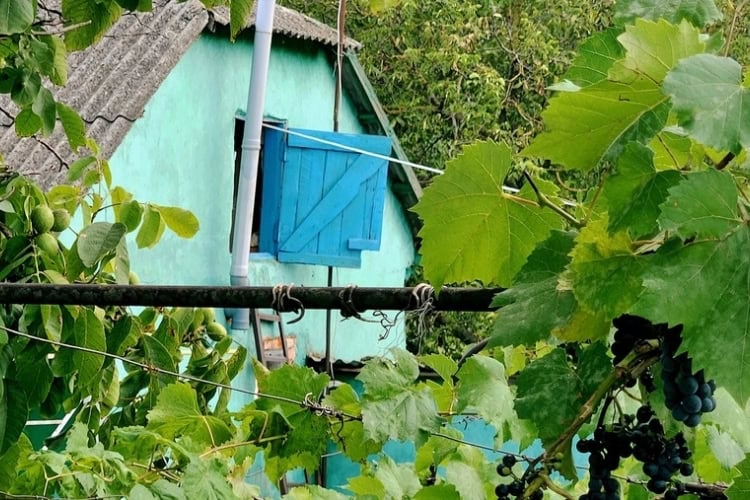
Picturesque in a faded, eclectic, tumbledown way, the village is a palette of broken stone walls, exuding a sense of the past and a forgotten time; bright pastel colors and patterns on houses, discolored, smeared and stained by the elements; moss growing on the time-blackened roof tiles; rusty Soviet-era tractors and trucks still in use; and aging, multi-hued, iron garden gates.
Bewitching Fortresses
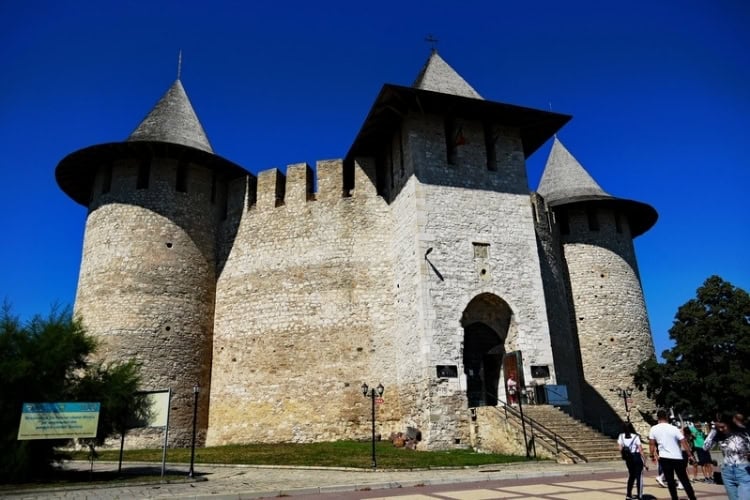
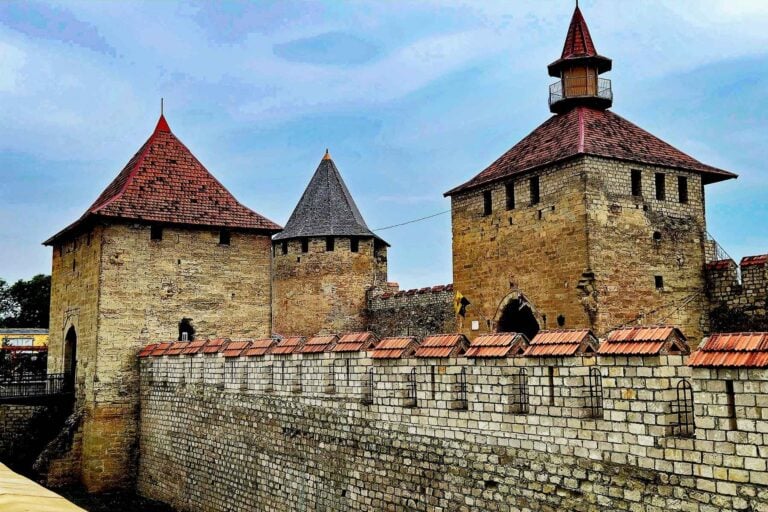
A chain of great fortresses once guarded Moldova, mostly located by waterways to protect the extensive river trade. The two that remain, both restored, are whimsical visions not out of place in a fairytale.
Bender, in Transnistria, is a sprawling complex of walls, towers and exhibits of weapons and implements of torture. Whitewashed Soroca, in the eponymous town, is small, compact and Europe’s last standing circular fortress. What they have in common is Moldovan architecture, straight out of Grimm’s Fairytales, where the iconic domes on the multiple towers look like a giant witch’s hat.
Soroca is also the center of the Gypsy community of Moldova and their residential area, Gypsy Hill, houses one of the true oddities of Moldova. Scores of huge, fanciful mansions in the castle-like Gypsy style cover Gypsy Hill, unfinished and vacant. Purportedly, they stopped construction when a lucrative trade with Romania dried up and, especially, when they discovered they would be paying much higher taxes for the large properties.
They continue to live in their original small abodes next to the mansions. Some were modeled after famous buildings—so there’s a White House and a U.S. Capitol.
Typical Moldovan Lifestyle
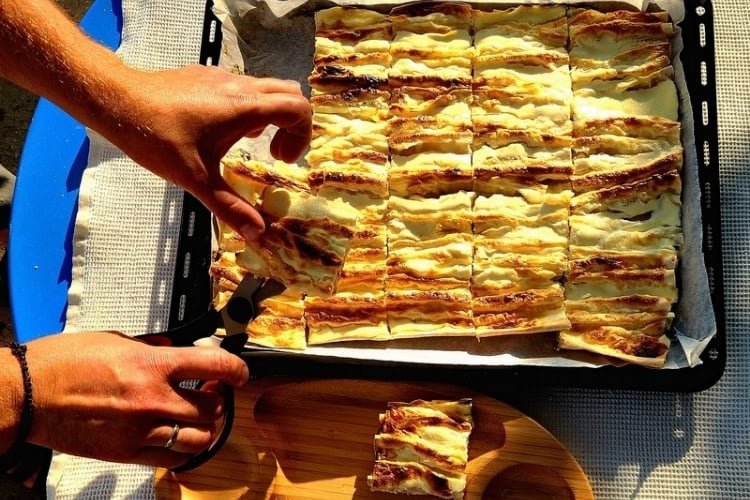
In the small community of Ceadir-Lunga, in the autonomous province of Gagauzia where some farmhouses are still topped by medieval thatched roofs, Max and Vera introduced me to the typical life of a Moldovan.
The couple works with guides to offer visitors a personal taste of this little-known land. An ubiquitous favorite throughout Moldova is the placinte, a flat pie with layers of flaky crust stuffed with cheese, mincemeat or vegetables; they taught me how to make the Gagauzian version called kyvirma.
They served common foods such as grilled vegetables, potatoes with garlic, eggplant slices rolled with tomatoes, aged sheep’s, goat and cottage cheeses, a variety of fruits, and a traditional drink made from fruit compote.
Typical of Moldova, everything was homemade and homegrown—by them, neighbors or other locals. The topper was homemade wine—“Everyone makes their own wine,” Max assured me—that was a bit fizzy and rustic, but a very drinkable rosé made from grapes growing in their garden.
Max and Vera took me to neighbors’ houses to see their verdant vegetable gardens and all-important cellars. Moldovans pickle everything, particularly the abundant summer tomatoes. Traditionally, their cellars were a lifeline to survival in the winter months, and they maintain the custom, filling them with numerous jars of pickled vegetables, homemade wine and more.
Not a People Place
While Max and Vera were welcoming and delightful, Moldova in general is not a people place. The Moldovans are not outgoing, though once an introduction is made or the ice broken they can be charming and gregarious. Few speak English, mostly hotel receptionists and some young people. I was told the Moldovans believe in minding their own business and keeping a healthy distance—which is what they generally do.
If You Go
When to Go
Moldova’s National Wine Day takes over Chisinau the first weekend of October, bringing winemakers from every corner of the country to the city center. It’s a wonderful time to visit, but book your hotel well in advance.
Where to Stay
- Courtyard by Marriott Chisinau is a consistently well-reviewed pick with free parking, handy if you’re renting a car for day trips.
- To be at Orheiul Vechi before the crowds arrive, Casa Veche Butuceni is a three-bedroom village house a two-minute walk from the monastery, a good fit for families or small groups.
Tours and Experiences
- This small-group Tiraspol and Bender tour handles the Transnistria border crossing for you and covers Tiraspol’s Soviet-era monuments and the Bender Fortress, with pickup in Chisinau.
- This private half-day tour of Orheiul Vechi pairs the cliffside cave monastery with a stop at a working farmhouse in Butuceni.
- This Milestii Mici cellar tour includes hotel pickup in Chisinau, a guided walk through the underground galleries and a tasting of three of the winery’s wines.
Getting Around
Most of Moldova’s top sights are an easy day trip from Chisinau, so if you’d rather set your own pace, compare rental cars at Chisinau International Airport before you arrive.
Staying Connected
Airalo’s Moldova eSIM runs on the Orange network, so you can get online as soon as you land without hunting down a local SIM.
Good to Know
- Few Moldovans speak English beyond hotel staff and some younger people, so English-language tours or a private guide make the trip much smoother.
- Bring cash for Transnistria, since international credit cards generally aren’t accepted in Tiraspol.
- Chisinau’s most popular restaurants, especially the top traditional spots, fill up fast for dinner on weekends, so reserve ahead.
- For more planning help, visit Moldova’s official tourism site at moldova.travel.
Need a hand planning your trip? Here are the sites and services we rely on most, from booking tools to travel products we love.
Inspire your next adventure with our articles below:
- Skopje, North Macedonia: Where Ancient History Meets Modern Charm
- Walking the River Danube Through Serbia, Romania, Bulgaria and Moldova
Want to discover more hidden gems and helpful travel tips? Join our free newsletter for the latest travel secrets and travel articles.
We are reader-supported and may earn a commission on purchases made through links in this article.
- Moldova, Eastern Europe’s Time Capsule: Vast Wine Cellars, Monasteries and Soviet-Era Echoes - November 2, 2026
- Remote Timor-Leste Dazzles with Natural Wonders and Bright Smiles - August 24, 2026
- Tajikistan and Kyrgyzstan Beckon with Ancient Legends, Modern Cities and Indomitable Mountains - August 1, 2026
Planning another trip soon? ✈️
Add GoWorldTravel.com as a preferred source on Google. Click the button below so our local guides, packing hacks, and hidden-gem itineraries always show up first when you search!
Add to Preferred Sources