
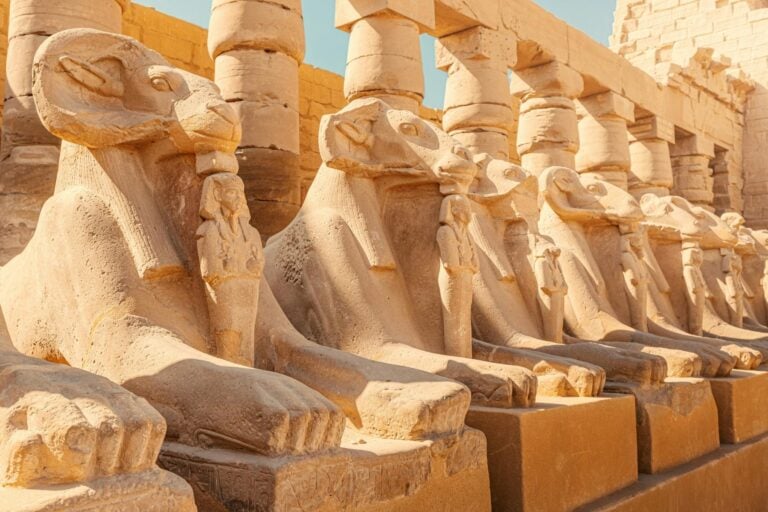
I thought travel was about seeing famous places. That changed the first time I visited Luxor.
A historic city in southern Egypt, Luxor sits along the Nile River and is home to some of the country’s most remarkable ancient temples and monuments, including Karnak Temple and Luxor Temple. It’s often described as one of the world’s greatest open-air museums.
At the time, it didn’t feel like something that would stay with me for years. It was just a school trip—an announcement in a classroom, a list of names, a permission slip signed quickly at home.
But something about it felt different from the beginning. Maybe it was the destination. Maybe it was the idea that we were going somewhere we had only seen in textbooks—somewhere that seemed older than anything we had known.
When the trip was announced, I didn’t hesitate. I signed up immediately. And then I prepared in the only way I knew how. I packed my bag carefully, chose what I would wear and took something that felt, at the time, just as important as anything else: a small booklet filled with English phrases.
Simple sentences meant for tourists.
“How are you?”
“Where are you from?”
“Welcome to Egypt.”
I didn’t fully know why I needed it. But I knew there would be foreigners. As an Egyptian student, English wasn’t my first language, and most of the foreign visitors I expected to meet spoke English. At that age, it was something I was still learning—something that felt distant from the way I naturally spoke.
And I wanted, somehow, to be able to speak to them.
Before the Journey Begins
The morning we left was loud in the best way. We didn’t move in lines. We moved in clusters—friends finding each other, voices overlapping, excitement impossible to organize.
Teachers tried to bring order, but it never fully settled. As soon as we boarded the bus, the energy shifted into something even louder. Songs started. Hands clapped against seats. Someone began a rhythm, and the rest followed without thinking.
We sang without caring how we sounded. Laughed without needing a reason. The road stretched ahead, but none of us were thinking about distance. We were already there in our minds.
Arrival and Discovery
When we finally reached Luxor, something changed. Not around me. Inside me. I remember stepping off the bus and feeling a kind of excitement that was sharper than anything I had felt before. Not just happiness—but curiosity.
A need to see everything. To understand everything. To move fast enough that nothing would be missed. I wanted to explore the temples, the streets, the people, the feeling of the place itself.
But like every school trip, there was a plan. A schedule. A route we had to follow. We moved together. Stayed close. Listened. Walked in lines that never quite stayed straight.
And still, within that structure, something personal was beginning to unfold.
Temples Beyond Stone
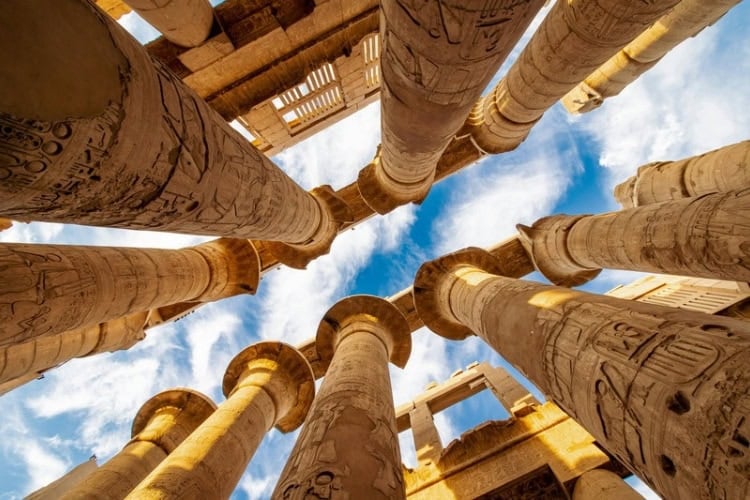
We began with the temples. At that age, I didn’t understand history the way I do now. But I felt something. Standing inside Karnak Temple, I didn’t think about dates or dynasties. I just looked up.
Columns rising higher than anything I had seen before. Stone that felt too large to belong to something made by people. The air felt warmer there, almost still. Dust carried faintly with every step. Our voices softened without being told to.
I walked between the columns slowly—not because I had to, but because it felt like the right way to move. There was something about the place that made noise feel unnecessary.
Thinking I Understood Travel
It wasn’t the temples that stayed with me most clearly. It was something much smaller. Something I almost forgot—until I didn’t.
We were walking between sites when I noticed a group of foreign tourists nearby. They looked relaxed. Curious. Comfortable in a place that still felt overwhelming to me. One of them smiled. I smiled back.
And suddenly, I remembered the booklet. I took it out quickly, flipping through the pages until I found something I could use. A simple sentence.
I looked up again. Tried to say it. And stopped.
The words felt unfamiliar the moment I tried to speak them. My voice didn’t match what I had practiced in my head. The sentence broke before it could fully form.
I tried again. Slower this time. Still unsure. They waited—kindly, patiently. But I could feel myself hesitating. The language felt distant, just out of reach.
The Girl Who Didn’t Hesitate
And then I noticed her. A girl around my age, standing nearby with another group. She spoke easily. Naturally.
The same language that felt heavy in my mouth moved lightly in hers. She laughed. Responded. Asked questions without searching for the words first.
I moved closer without thinking. Not to join the conversation—but to understand it. I stood there quietly, listening. Trying to follow what was being said. Trying to match sounds with meaning.
Trying to understand how something that felt so difficult to me could feel so simple to someone else. No one asked me to step away. No one explained anything. I was just there—on the edge of something I couldn’t yet fully enter. And for a moment, that was enough.
A Day Without Perfection
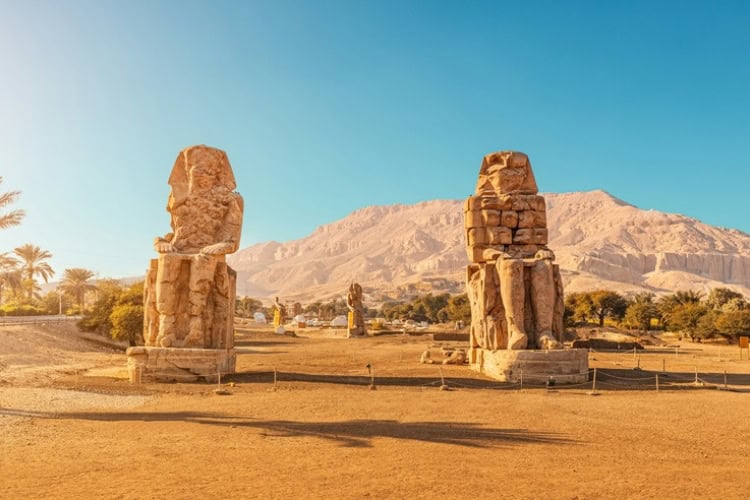
The rest of the day moved the way school trips always do. Moments of discovery followed by moments of distraction.
We learned, then we laughed. We listened, then we wandered slightly out of line. We took photos we didn’t know we would look at years later.
Time passed quickly, but not in a way that felt rushed. It simply moved, carrying everything with it until the light began to soften and the day started to close without announcing it clearly.
What I Didn’t Understand
When I returned home, I thought I understood the trip. A visit to a famous place. A day filled with temples and history. A memory that would sit neatly alongside others.
But something about it stayed unsettled. Not incomplete, just… not fully understood. It wasn’t about what I had seen. It was about something I had felt but couldn’t yet explain.
What I Understand Now
Years later, I see it differently. That trip wasn’t just about visiting Luxor. It was about the first time I realized that travel isn’t only about places. It’s about moments where you don’t fully understand what’s happening—and stay anyway.
It’s about trying to speak and not quite succeeding, about standing close to something you can’t fully access yet. It’s about feeling curiosity without resolution.
The temples mattered. The history mattered. But what stayed with me wasn’t something I could photograph or describe easily. It was the feeling of being present in a place that was larger than my ability to fully understand it.
Leaving Without Clear Answers
I didn’t leave Luxor with answers. I left with something quieter, a sense that travel wasn’t about reaching a place and understanding it completely, but about allowing parts of it to remain just beyond you.
Not as something missing—but as something still unfolding. That small booklet of English phrases didn’t make me fluent, but it marked the beginning of something. An awareness. A curiosity. A willingness to step closer, even when I wasn’t ready.
And maybe that’s what travel really is. It’s not the places you fully understand, but the ones that change you before you do.
Read More: How to Travel Smart in Uncertain Times: Lessons from Egypt
Need a hand planning your trip? Here are the sites and services we rely on most, from booking tools to travel products we love.
Inspire your next adventure with our articles below:
- A Visit to Bhaktapur, Nepal: A Journey of 1,000 Years Begins with a Single Step
- Where Empires Spoke in Stone: Inside Türkiye’s Hittite Heartland
Author Bio: Sarah Barbary is an Egypt-based travel writer whose work explores the emotional side of place—where memory, culture, and personal experience quietly intersect. Her journey began with a school trip to Luxor, a first encounter that sparked a lasting connection with travel and storytelling. Since then, she has returned to the city multiple times, each visit deepening her understanding of how destinations reveal themselves over time. Through her writing, she captures not just where we go, but the subtle ways those places shape how we see the world—and ourselves.
Want to discover more hidden gems and helpful travel tips? Join our free newsletter for the latest travel secrets and travel articles.
We are reader-supported and may earn a commission on purchases made through links in this article.

- Slow Down on Prince Edward Island: A Relaxed Four-Day Itinerary of Dunes, Seafood and Seaside Inns - September 25, 2026
- Two Sides of Cape Town: Table Mountain Trails, Winelands Dawn and Township Voices - September 25, 2026
- St. Pierre and Miquelon: Visit France Without Leaving North America - September 25, 2026
Planning another trip soon? ✈️
Add GoWorldTravel.com as a preferred source on Google. Click the button below so our local guides, packing hacks, and hidden-gem itineraries always show up first when you search!
Add to Preferred Sources