
After graduating from university, I started my Southeast Asian backpacking trip where almost every backpacker begins: Bangkok.
It was my second time in Thailand. I had first visited during a summer break, travelling through Singapore, Malaysia and Thailand, and had been reminiscing about the trip ever since.
Four years later, in 2025, I returned to Southeast Asia, this time with Vietnam at the top of my list. I started in Hanoi and travelled all the way to Ho Chi Minh City, ticking off everything on my bucket list that I had bookmarked from Instagram recommendations.
By the time I reached Ho Chi Minh City, however, the novelty was beginning to wear off. The long, uncomfortable bus rides and constant energy of the cities had left me feeling unexpectedly burnt out.
This was when I flew into Laos.
Admittedly, I had not done much research on the country. Most of my planning had gone into Thailand and Vietnam, and Laos became an afterthought. Just somewhere I would pass through before continuing my journey.
So I decided to wing it. And I am so glad I did.
It ended up becoming the place where I learnt the art of slow travel.
First Impressions Of Laos
Stepping out of the airport in Vientiane, the first thing I noticed was that no one was pursuing me with offers of taxis or tours. There was none of the frantic energy I had become accustomed to elsewhere in Southeast Asia.
Even in the city centre, Vientiane felt remarkably peaceful.
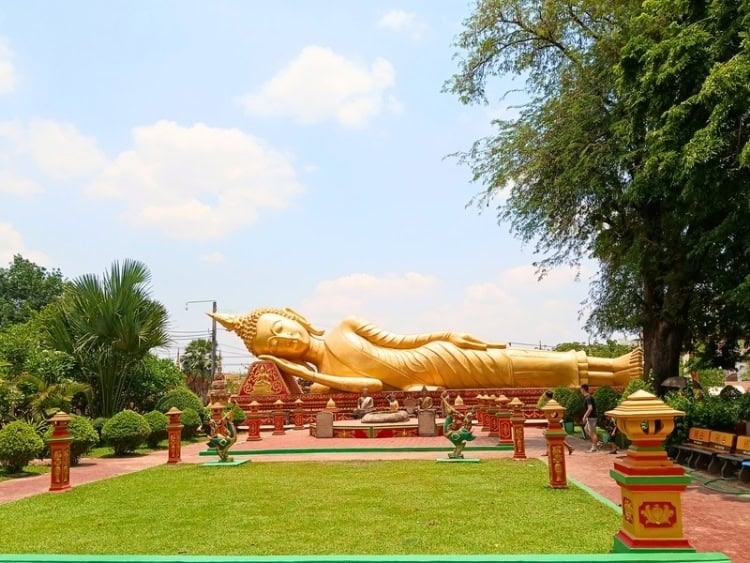
It was unlike any capital city I had visited before. It felt almost spiritual, with Buddhist temples tucked into corners throughout the city and a calmness that seemed to hide a much darker history.
Laos had endured years of conflict, including the Vietnam War and a devastating bombing campaign that left much of the country littered with unexploded ordnance. Yet there was little sense of that turmoil on the surface.
Exploring Vientiane
I reserved my first day in Vientiane for simply soaking in the atmosphere, exploring the city on foot and figuring out the rest of my trip.
That evening, after checking into Phongsavath Boutique Hotel, a centrally located stay just a short walk from the riverside, I watched the sunset over the Mekong River before stopping at a local open-air café for a cold Beerlao. For the first time on this trip, I enjoyed having nowhere else to be and no packed itinerary to follow. Just sitting and enjoying being somewhere new.
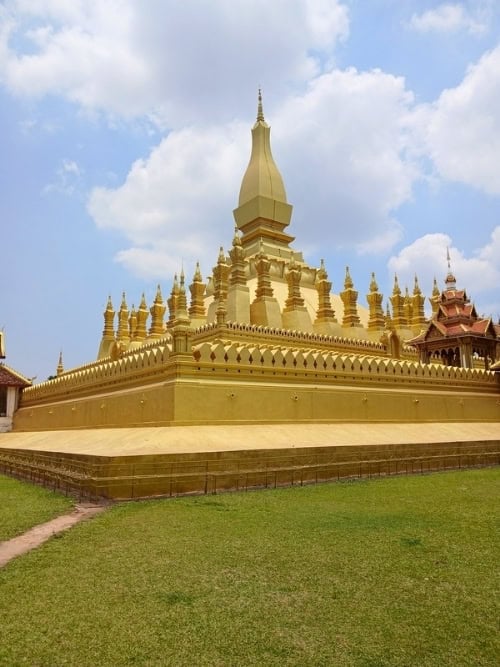
The next day, I set out to explore Vientiane properly and spent most of the day visiting its many temples and Buddha Park, home to more than 200 Buddhist and Hindu statues.
In the evening, I arrived at Patuxai, the city’s striking victory monument. Often compared to Paris’s Arc de Triomphe because of its design, Patuxai has a much more local meaning. It was built to commemorate the Laotians who fought for independence from France, and its name translates roughly to “Victory Gate.”
After a full day of exploring, I decided to call it an early night. I had an early-morning ride to Vang Vieng the next day.
Vang Vieng
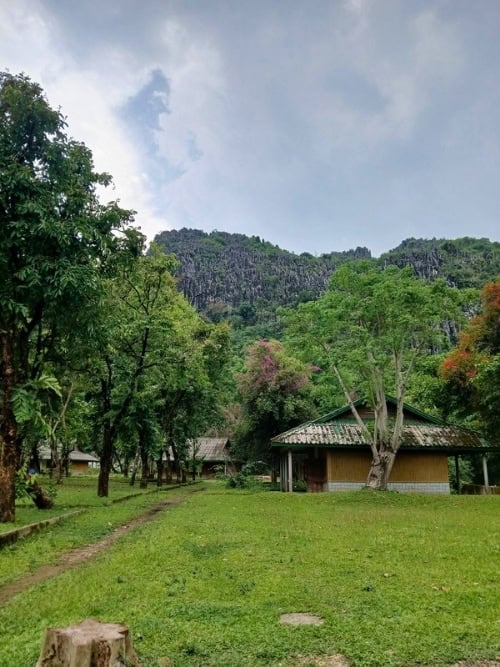
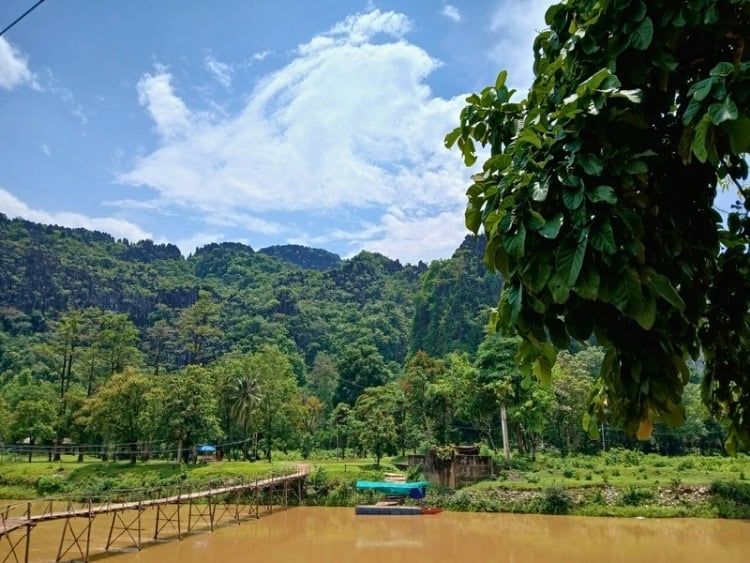
Vang Vieng is a beauty from the moment you arrive. Surrounded by dramatic limestone mountains and caves, there is plenty to keep adventurous travellers busy, from river tubing, caving, rock climbing and ziplining to hiking up viewpoints and swimming in blue lagoons.
It has a reputation among backpackers as an adventurous party town, but I found myself drawn to its quieter side. Away from the centre, Vang Vieng felt like a retreat, with rice fields, small villages and lush countryside stretching out beneath the limestone peaks.
Blue Lagoons of Vang Vieng
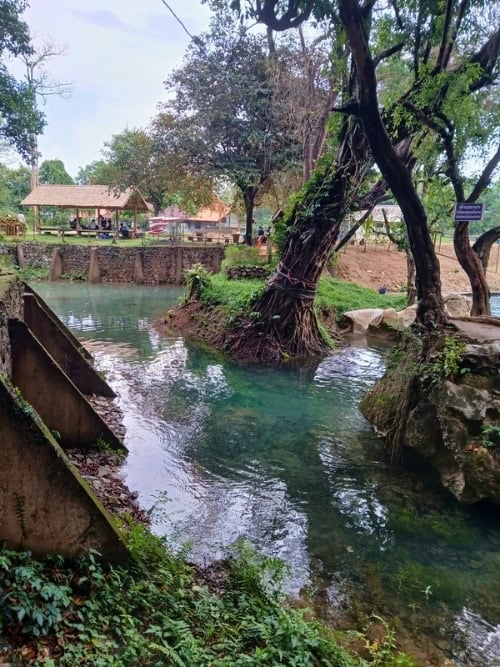
I rented a bike and spent the next few days exploring beyond the town. One morning, I woke up early to watch the sunrise over the mountains before setting out to explore some of the blue lagoons and caves scattered around the countryside.
The clear blue-green water, surrounded by rocks and trees, made the lagoons perfect for swimming and cooling off.
Caves and Viewpoints
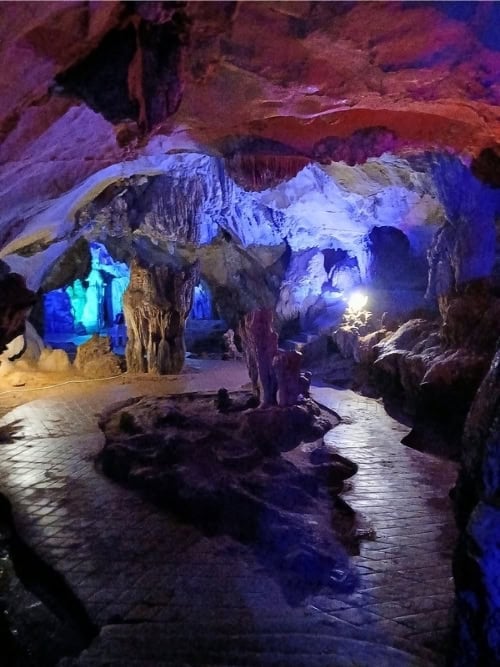
The caves added another layer of adventure to the journey, their dark passages and rock formations a striking contrast to the lagoons above ground.
If you’re physically fit, hiking to one of Vang Vieng’s viewpoints is a must. I climbed Nam Xay on a cloudy day, and although the steep climb wasn’t the easiest, the view from the top made it worthwhile. Looking out across the patchwork of green fields and limestone mountains was one of those moments when the journey itself felt like part of the destination.
Wandering Off The Road
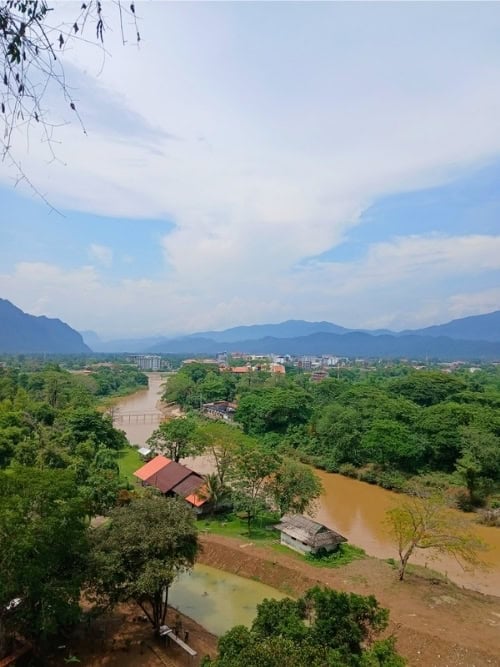
I also found myself wandering into some of the small villages surrounding Vang Vieng. They weren’t on my itinerary. In fact, I wasn’t looking for them at all. I had no name for the roads I was cycling down, no destination marked on a map. I would simply see a road that looked interesting and follow it.
I couldn’t have predicted it at the time, but these unplanned detours became some of my favourite memories of Laos.
The roads were small and quiet, winding past houses and fields. I stopped to say hello to children playing along the way and bought sweets from an elderly shopkeeper in one of the little roadside stores. None of it was remarkable in the way we usually think of sightseeing. There was no famous landmark to photograph or attraction to tick off.
I didn’t even keep a record of the roads I took. I couldn’t tell you the names of the villages I passed through now, and perhaps I never will. There is a good chance I will never cycle those roads again or come across those people.
For a few hours, I wasn’t a traveller following an itinerary. I was simply someone who had arrived somewhere, seen a road, and decided to see where it led.
Luang Prabang
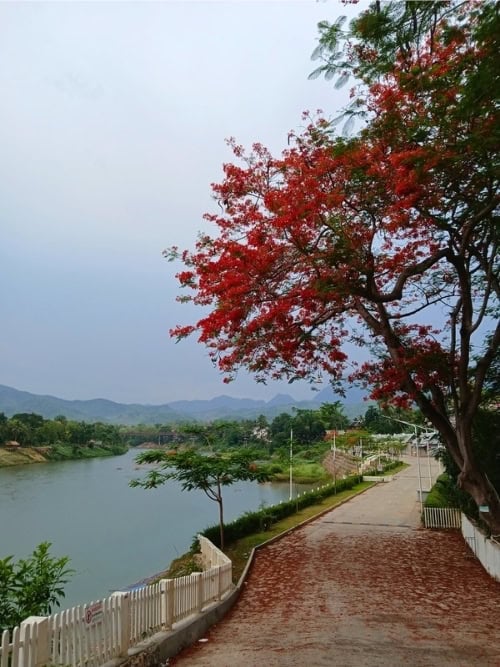
My next stop was Luang Prabang.
I arrived in Luang Prabang by high-speed train, reaching the city at dusk. And this place had me slowing down immediately.
The Old Town
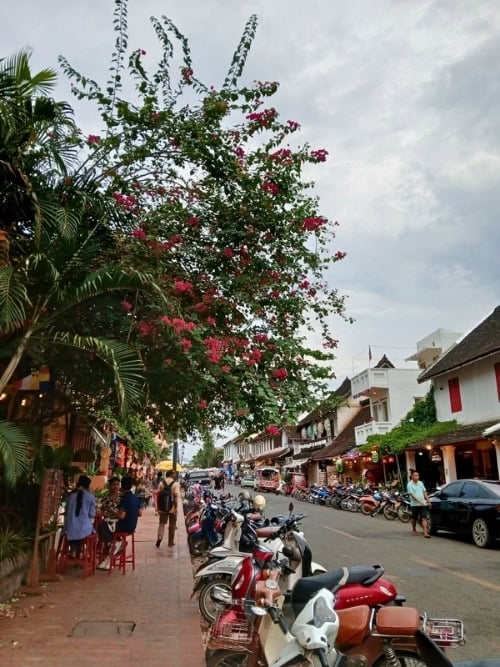
There was still daylight, but the sky had just started turning pink as I waited for the sunset. I wandered through the old town as the last light of the day faded.
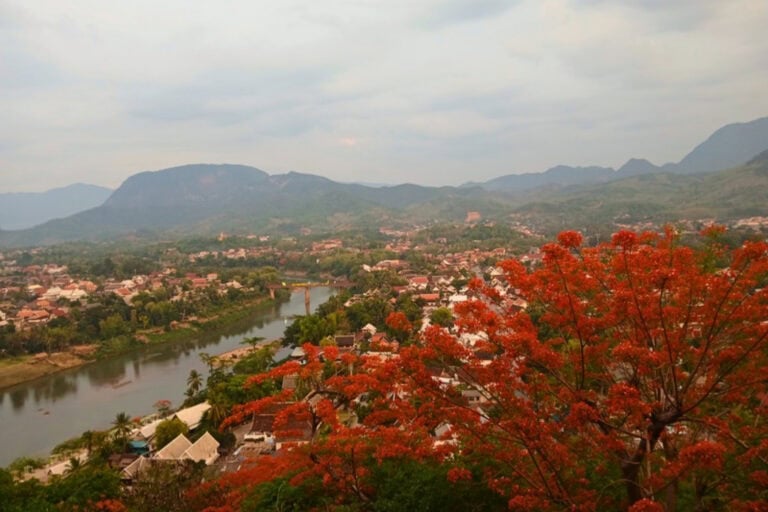
Luang Prabang sits between two rivers, the Mekong and the Nam Khan, which meet at the edge of the old town. With water on either side and mountains rising in the distance, the old town felt wonderfully removed from the outside world.
The streets were lined with old buildings, Buddhist temples and small cafés. There was something about Luang Prabang that made me want to slow down, sit somewhere quiet and write poetry.
But the most surreal part was yet to come.
Read More: Why Luang Prabang Is One of Southeast Asia’s Most Captivating Towns
The Alms-Giving Ceremony
The next day, I woke up before dawn to see the alms-giving ceremony in Luang Prabang’s old town. I was staying at Luang Prabang Champa Villa, on the same road where the ceremony takes place, so I could simply step outside and walk over.
The streets were still dark and almost completely quiet when I arrived. Slowly, people began taking their places along the roadside, kneeling with baskets of food prepared for the monks.
As the sky began to lighten, a line of saffron-robed Buddhist monks appeared, walking quietly through the streets with their alms bowls. One by one, locals placed small portions of sticky rice and other food into their bowls as they passed.
The monks continued walking in silence, while the people giving alms remained kneeling and focused on the ritual.
Watching Luang Prabang begin its day this way felt almost sacred.
Kuang Si Waterfall
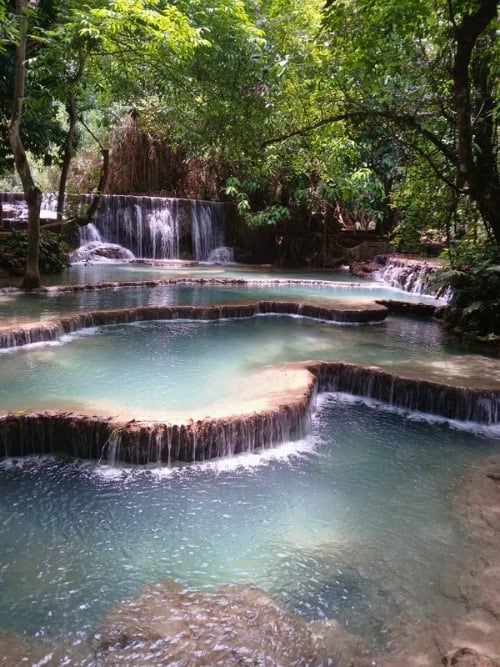
After the early morning ceremony, I made my way to Kuang Si Waterfall, one of the places I had been most excited to see in Laos.
Entering the grounds felt like stepping into untouched nature. The path to the waterfalls winds through thick jungle, with greenery stretching in every direction and the sounds of the forest growing louder as you walk further in.
Then the turquoise pools begin to appear through the trees. Water cascades over layers of limestone, forming a series of natural pools surrounded by dense forest. And somehow, it looked even better than it did in photographs.
Perhaps it was because photographs can’t capture the sound. The rushing water, the birds and the rustling of the trees made it feel as though nature was in its truest, wildest form, claiming its space around you.
Reflections
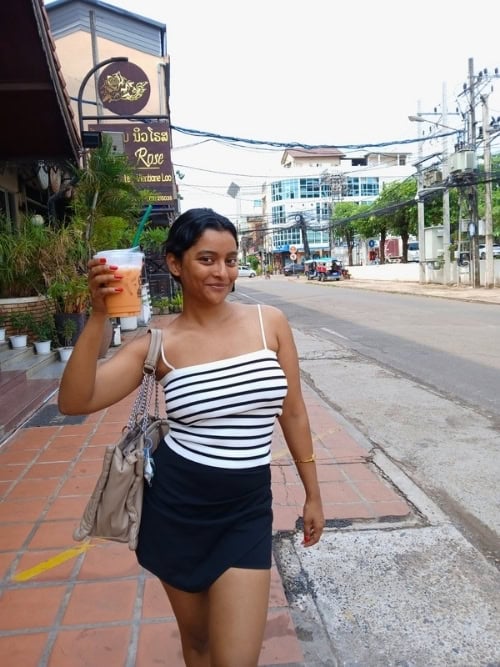
When we set off on long backpacking trips, we don’t all leave home for the same reasons. Some of us are simply looking for a break from the mundanity of everyday life. Some are healing from a heartbreak, while others are trying to reassess their choices and figure out what comes next.
Travel can give us the space to do that, but it isn’t always the carefree escape we imagine it will be. We miss our families. We worry about our future. Friendships become distant and scattered across different time zones. After weeks or months of constantly moving, even travelling can become emotionally exhausting.
This is where places like Laos can feel like a lifesaver.
It doesn’t demand much from you. You don’t have to constantly be somewhere, see everything or make the most of every minute. It is comforting to be somewhere that doesn’t make you feel like you’re falling behind just because you’re standing still.
For me, Laos became a place where I didn’t feel like I had to be anything other than myself. When you’re far from home, carrying your own worries and trying to figure out what comes next, sometimes you need somewhere that doesn’t ask anything of you. Laos gave me that space.
If You Go
Best time to visit: October to April is generally the best time to visit Laos, when the weather is cooler and drier.
How long to spend: Give yourself at least a week to experience the main backpacker route without rushing. I’d recommend 2 days in Vientiane, 3–4 days in Vang Vieng and 3–4 days in Luang Prabang.
Getting around: The Laos–China Railway makes travelling between Vientiane, Vang Vieng and Luang Prabang considerably easier, with regular services connecting the three destinations. Buses and minivans are also widely available. I booked all my transport tickets online through the 12Go website.
Money: The Lao kip is the official currency. Cards are accepted in larger hotels and restaurants, but cash is the norm, particularly outside the main tourist centres.
Top tip: Take some time to experience Laos from the water. If you have more time, take the two-day slow boat from Thailand to Luang Prabang along the Mekong, with an overnight stop in Pakbeng. If you want to opt for a Mekong river cruise, learn about one traveler’s experience: Floating Through Laos: Luxury Mekong River Cruise Aboard the Bohème
For a shorter alternative, consider a day trip from Luang Prabang to Nong Khiaw, travelling by boat along the Nam Ou River and stopping at a remote village and waterfall along the way. If you want a longer journey, you can continue from Nong Khiaw to Muang Ngoi, passing traditional villages and dramatic limestone mountains along the river.
Need a hand planning your trip? Here are the sites and services we rely on most, from booking tools to travel products we love.
Inspire your next adventure with our articles below:
- Quietcations: 12 Places to Step Into Nature and Recharge
- Traveling by Overnight Sleeper Train from Bangkok, Thailand to Vientiane, Laos
Author Bio: Shivika Singh is a UK-based writer and Editor-in-Chief of the student-led publication Empoword Journalism. Currently travelling across Asia and Europe on a gap year, she is particularly interested in stories that explore the intersection of travel, culture and literature.
Want to discover more hidden gems and helpful travel tips? Join our free newsletter for the latest travel secrets and travel articles.
We are reader-supported and may earn a commission on purchases made through links in this article.

- Laos for Backpackers: Vientiane, Vang Vieng and Luang Prabang on a Slow-Travel Route - September 15, 2026
- Why “Just Immerse Yourself” Won’t Teach You Spanish, No Matter How Long You Stay - September 15, 2026
- Along the Gambia River: Markets, Crossings and Chimpanzees - September 14, 2026
Planning another trip soon? ✈️
Add GoWorldTravel.com as a preferred source on Google. Click the button below so our local guides, packing hacks, and hidden-gem itineraries always show up first when you search!
Add to Preferred Sources