


I reached a new level of peace sunbathing on the balcony of my private suite, watching the untouched jungle drift by as birds sang softly from the treetops. After coming from Bangkok, a city bursting with noise, color and chaos, this part of Laos was set at an entirely different pace, a unique slice of the world that was unlike anything I’ve seen. A river cruise along the Mekong turned out to be the perfect way to experience it: unhurried, educational and deeply connected to the landscape.
Though the boat was moving, I felt still for the first time in weeks. Life on the Bohème wasn’t just relaxing, it was culturally immersive. From the gentle rhythms of the river to the hands-on cultural experiences like making Saa paper and traditional pottery, everything about this journey felt rooted, local and deeply intentional.
Add in jungle views from a luxury suite, freshly made Lao meals and the kind of quiet you don’t know you need until you hear it, it’s easy to see why this was one of the most magical travel experiences I’ve had in Southeast Asia.
About the Bohème, Laos & the Journey

The Bohème, the newest addition to the fleet of Mekong Kingdoms cruiseships, feels more like a floating boutique hotel than a traditional river vessel. With only 13 rooms and a 26-guest capacity, this 50-meter ship is ideal for those who are looking for intimate luxury, where the staff shines and Laos is presented the way it deserves to be – with care, warmth, and a deep respect for culture.
Laos is a destination that’s often overlooked compared to its show-stealing neighbors, Thailand and Vietnam, but it’s equally worth exploring. Both its natural beauty and rich cultural heritage remain largely untouched by tourism, which results in more authentic experiences. As travelers, we should do our part to help keep it that way. Laos is a place where time slows, traditions are honored and everyday life still moves with the rhythm of the river.
There are a few ways to experience the Bohème river cruise, depending on how much time you have and what kind of journey you’re after. Guests can choose between three or five-night itineraries, with the option to start in either Luang Prabang or Vientiane.
I experienced the three-night cruise starting in Laung Prabang, which struck the perfect balance between shore excursions and onboard relaxation. The five-night option lets you explore two cities instead of one, with additional highlights including the Xayaboury Elephant Conservation Centre and additional visits to local villages and cultural experiences.
Staying on the Bohème

The Suites
The Bohème offers three suite categories, each accommodating two guests:
Deluxe Suite: 30 square meters on the lower deck with floor-to-ceiling windows, balcony, and window-side daybed.
Premier View Suite: 26 square meters on the upper deck with enhanced views and an indoor daybed.
Royal Suite: 60 square meters with panoramic views, full bathtub, and spacious balcony with large daybed.
I had the privilege of staying in a deluxe suite and was wildly impressed. It felt more spacious than many traditional hotels, with bright natural light and floor-to-ceiling windows providing epic views from the king-sized bed or balcony. The showers were perfectly sized and luxurious.
The best moments came when the wifi went out and I could relax on the daybed, quietly soaking in the Lao landscapes, passing villages, plantations, and striking mountainous terrain. The indoor-outdoor design encourages maximum river viewing, letting you fully appreciate the scenery.
On Board Activities

Beyond the suites, the ship offers a range of luxurious spaces and experiences. Guests can sip cocktails in the bar lounge, enjoy gourmet meals in the dining salon, relax on the sundeck, or book a massage with a highly trained massage therapist.
Dining on the Bohème

Each meal is served as a set multi-course menu, with choices ranging from traditional Lao dishes to options inspired by neighboring Asian countries, along with a few that cater to Western palates.
I highly recommend diving into the Lao cuisine, which features exquisite meals made with ingredients often sourced straight from nature, like freshly caught river fish and wild riverweed from the very river you’re floating on. It’s a wonderful reflection of the deep connection between Lao culture and its environment.
Cooking and Cocktail Classes

The Boheme makes the overall onboard experience more engaging by offering optional mixology and cooking classes. We learned how to make a Tom Collins with a twist, featuring honey, apple juice, vanilla syrup, gin, and lime.
For our cooking class, we learned how to make koi pla, a traditional Lao fish salad often served at family gatherings. Made with river-caught fish, chili, fish sauce, roasted sticky rice, herbs, and aromatics, it’s bright, spicy, and packed with fresh flavor. All fish was sourced from the river, adding to the authenticity of the dish.
Spa Treatments
After a morning spent exploring villages or visiting waterfalls, I highly recommend a visit to the spa for a traditional Asian-style massage tailored to your preferences. The massage I received was so deeply relaxing that it pulled me into a blissful trance, leading me to take a sun-drenched nap on my suite’s balcony afterward, which became quite the daily habit.
Shore Excursions
“Every stop along the journey gives a deeper glimpse into Lao culture, nature, and craftsmanship.”
Kuang Si Waterfalls + Ban Xang Hai (Village)
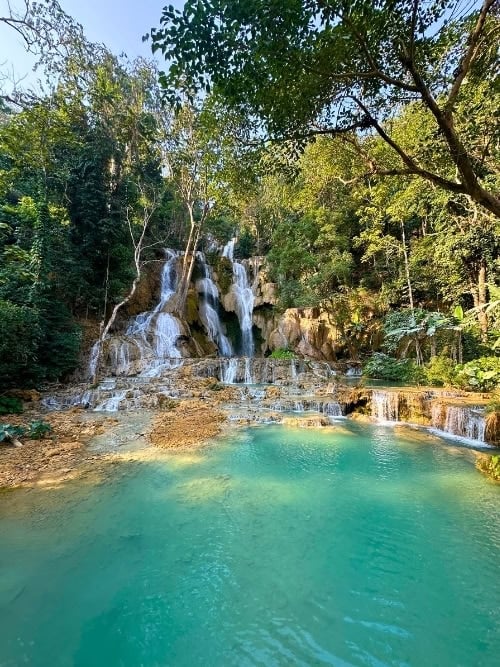
We set off early for Kuang Si Falls, and they exceeded every expectation. The water glows an almost impossible turquoise, so vivid it looks digitally enhanced, set against a backdrop of lush jungle mountains.
The trail up follows a series of smaller cascades that I initially mistook for the main attraction. Each tiered pool was stunning in its own way. But nothing prepared me for reaching the top: massive waterfalls plunging 60 meters through the forest canopy. I’ve never seen anything quite like it. You could easily spend hours just watching the falls.
The best part was hiking down to a swimming spot where you can actually take a dip in those famous turquoise pools and take some gorgeous photos.
Pak Ou Caves

For the next day’s excursion, we boarded a traditional Lao longtail boat decked out in vintage ’70s colors and cushioned seats with open windows for river watching.
As we cruised upstream, the mountains grew more dramatic and small villages appeared along the banks. We docked at the base of a towering limestone cliff and hiked up to a cave entrance, stopping for sweeping views of the Mekong confluence below.
The caves house thousands of Buddha statues placed by pilgrims over the past 600 years. The first cave, Tham Theung, was impressive, but the second, Tham Ting, was extraordinary. My favorites were the small Buddhas I initially missed, tucked into impossible crevices that made you wonder how anyone managed to place them there. The more you looked, the more they appeared throughout the cave, sparkling dimly in hidden corners.
Ban Xang Khong
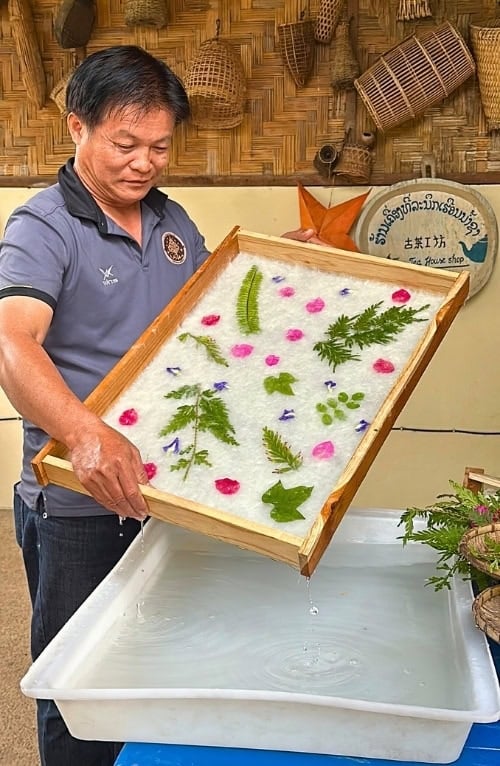
After the caves, we headed to Ban Xang Khong, a traditional craft village about 5 kilometers from Luang Prabang, known for its handwoven silk and saa paper made from mulberry bark.
The papermaking process was fascinating. We got to try it ourselves, spreading out white fibers onto a tray (which was really hard) and decorating our sheets with pressed flowers.
Afterwards came tea time at the Luang Prabang Tea House with various local varieties, including one I was terribly skeptical of: silkworm poop tea. Which, yes, is exactly what it sounds like – tea made from worm droppings. It didn’t taste terrible, sort of grassy, but the concept was slightly unnerving. But as always, I recommend pushing yourself outside your comfort zone and trying these traditional experiences.
We finished with a visit to the textile museum and a stroll around town, watching sheets of handmade paper drying in the sun along the village roads.
Ban Chan Neua

Ban Chan Neua, a traditional pottery village across the Mekong from Luang Prabang, has been making pottery using the same techniques for over 400 years. Today, only six families continue this ancient craft, keeping alive traditions that once supplied pottery to Lao royalty.
We got to try our hand at pottery making, which was infinitely harder than it looked. The demonstration made the process seem manageable, but actually attempting it was a different story. I needed help the entire time, and my instructor couldn’t stop laughing because I simply couldn’t grasp the technique. It was a deeply humbling experience.
Additional Excursions
Additional excursions vary by itinerary and may include the Xayaboury Elephant Conservation Centre, a sanctuary dedicated to ethical elephant preservation. While I didn’t experience this myself, it’s a supposed highlight for many guests.
The cruise also passes through the Xayaboury Dam, giving you an up-close view of this engineering landmark from the water, a unique perspective most travelers never get.
Additional stops feature village walks and traditional Lao dance performances. The journey wraps up with a transfer to either historic Luang Prabang or the capital, Vientiane, depending on your chosen itinerary.
If You Go:

The Bohème offers both three-night and five-night itineraries. Three-night cruises start at $2,310 per person, while five-night options begin at $3,400 per person (based on double occupancy in a Deluxe Suite). Guests booking the longer cruise can depart from either Luang Prabang (downstream) or Vientiane (upstream).
If you’re starting in Luang Prabang, I recommend staying at the Avani+Luang Prabang hotel, not only because that is the pickup location for the cruise, which offers curated excursions like buffalo farm visits, city tours, and early morning monk processions.
While Wi-Fi is available onboard, connectivity can be spotty in remote areas, which is the perfect excuse to truly disconnect and savor the moment.
For more information or to book your Bohème cruise, visit the Mekong Kingdoms website.
Need a hand planning your trip? Here are the sites and services we rely on most, from booking tools to travel products we love.
Inspire your next adventure with our articles below:
- Staying Overnight at the Haunted Lizzie Borden House in Fall River, MA - September 28, 2026
- Skip Oktoberfest: Stuttgart’s Cannstatter Volksfest Is Smaller, Cheaper and Way Less Crowded - September 19, 2026
- Want to Speak Better Spanish on Your Next Trip? Here’s How - September 2, 2026
Planning another trip soon? ✈️
Add GoWorldTravel.com as a preferred source on Google. Click the button below so our local guides, packing hacks, and hidden-gem itineraries always show up first when you search!
Add to Preferred Sources