
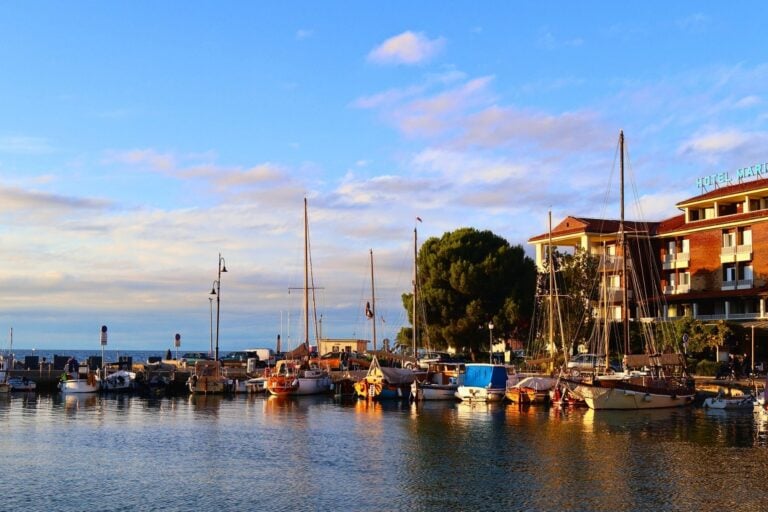

Slovenia has just 47 kilometres of coastline on the Adriatic Sea, sandwiched between Italy to the north and Croatia to the south. The entire area is dripping in Venetian architecture, and its compact size and authenticity are part of its charm.
Tucked gently into a fold of land and almost overlooked by most seaside-goers, Izola offers travellers a quieter alternative to nearby Koper, a busy port town, and Portorož, a glitzy crowd-pleaser.
Between Empires and Itineraries
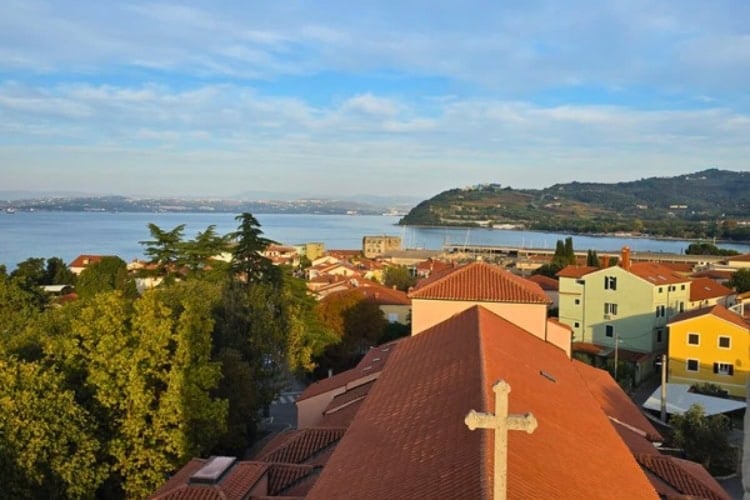
Previously considered a poor relation to its nearby hotspots, Izola has often been overlooked by visitors, but its incredible food and drink scene, chic boutiques, and cheaper prices are starting to turn people’s heads.
This appeal is deepened by its winding old-town streets, which spill gently toward the sparkling Adriatic Sea, revealing a small beach, a marina of bobbing yachts, and countless places to watch the sky burn as the sun sinks into the water.
It’s this quiet, cumulative charm that may explain why Izola was named Europe’s most underrated travel destination for 2026 by Time Out.
Caught between empires and borders, Venetian rule left its mark on the architecture of Izola, while Austro-Hungarian, Italian, and Yugoslav histories gently overlap in its streets, language, and kitchens.
That in-betweenness is precisely its strength. Izola doesn’t perform its history or polish it for visitors; it simply waits for those willing to slow down enough to notice.
Arriving Slowly, On Purpose
We left Rijeka early in the morning on a bus bound for Trieste.
We hadn’t yet decided where we were going to stop that night, as we were planning things spontaneously, but we had clocked the slice of Slovenian coastline on the map, and in the back of my head, that’s where I hoped we would end up.
After a few hours spent exploring beautiful Trieste, having lunch and Aperol on their version of the Grand Canal, and a spot of sunbathing, we turned our thoughts to where to go next. We were looking for somewhere equally charming, historic, and sunny, but a touch quieter.
When I suggested we get on a FlixBus bound for Koper, my husband agreed. It was only 30 minutes away. But we didn’t stop there. Zooming in on the map, we noticed the smaller town of Izola nearby. I remembered an article I’d read about this overlooked seaside gem and felt instantly drawn to it.
We found a lovely hotel with views over the seafront and marina and booked two nights. Less than an hour after leaving Trieste, we arrived in Izola.
Stepping off the bus, our pace light with anticipation, we hauled our luggage the short five-minute walk to the hotel. The moment we hit the streets, it felt like walking into a different air that was calm, welcoming, and warm.
People smiled and greeted each other, pavements were quiet, cars were few, and the town exuded a gentle, relaxed rhythm.
As we walked past stylish restaurants and cafes with outdoor seating only half full, alongside the marina with neatly positioned boats of all sizes, and the glittering blue ocean, I felt my shoulders roll back and my face melt in calm contentedness.
That feeling stayed with me the entire time we were there.
Read More: A Weekend Guide to Rijeka, Croatia: Coffee Bars, Trsat Castle and Adriatic Views
The Radical Act of Taking Your Time
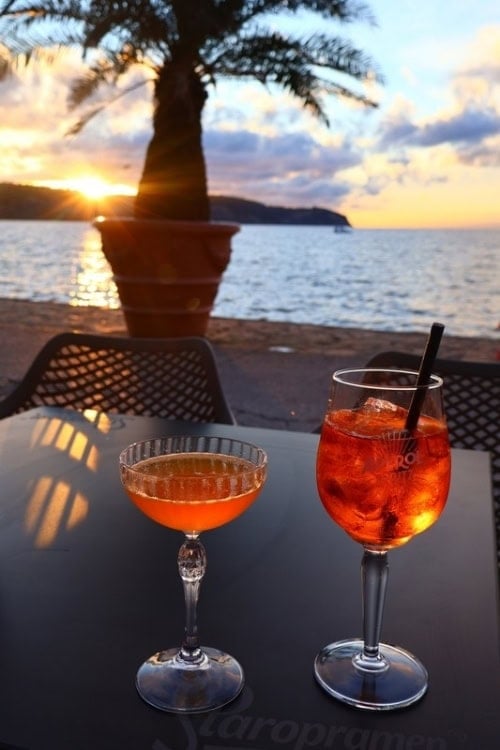
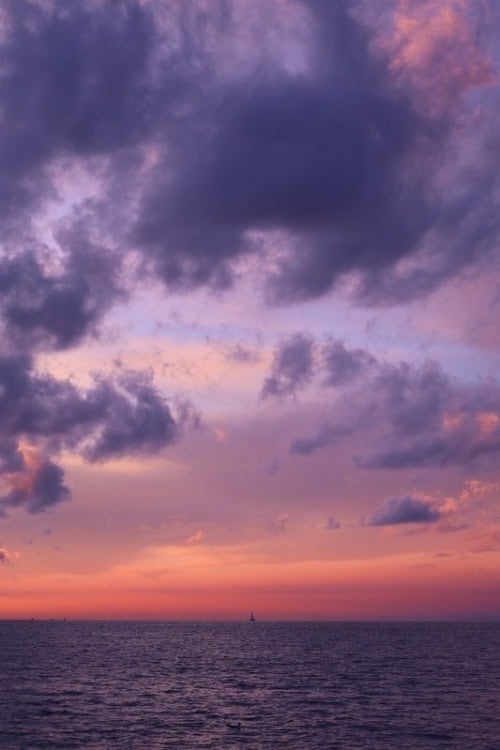
Days spent in Izola are measured in cups of coffee or ice-cream scoops, the time is told by the angle of the sun, and all evenings end by watching an explosion of colours across the sky when the sun sets over the Adriatic.
We found ourselves going on relaxed strolls along the seafront, lingering over lunch, and discovering charming restaurants once the sun had set.
On our first evening there, we went for dinner at an outstanding Italian restaurant called Gostilnica Gušt. We ordered Slovenian wine and sat back to wait for food; we were starving after a day of travelling and exploring Trieste and Izola.
After around twenty minutes, Tom’s meal arrived and mine didn’t. When I looked up at the waiter with enquiring eyes, he shrugged his shoulders and grinned in an irresistible way.
“Your lasagne got burnt, sorry. We put a new one in, but it will be another ten minutes.”
I smiled back, no need to utter “no problem,” as it was written all over my face, and Tom and I couldn’t help grinning at each other. This honesty and charm were so human and so real that we fell instantly in love with the people, the restaurant, and the town.
The delay didn’t matter when we weren’t watching the clock. It is the kind of place where delays are enjoyable, and when time stretches and morphs into something else entirely.
The next day, we got up and decided to go for a walk and see where we ended up.
We started on the seafront promenade and saw on a signpost that you could walk all the way to Koper along the Kolesarska pot Koper–Izola.
It’s a four-mile stretch of promenade for pedestrians and cyclists that traces the path of a historic narrow-gauge railway. So, that’s what we did. We stopped on the way for coffee and for a lie down on the beach to read our books.
Once in Koper, we explored some of the town’s sprawling centre, gazing in awe at landmarks such as the Teatro di Capodistria, Palača Pizarello-Palma, and the narrow streets of Koper Čevljarska ulica.
But the busyness and sheer size seemed to overwhelm us, and we longed for Izola. We got on the next bus back, heading straight to our favourite gelato shop and then sunset cocktail spot to slow back down.
A Reminder of Why We Travel at All
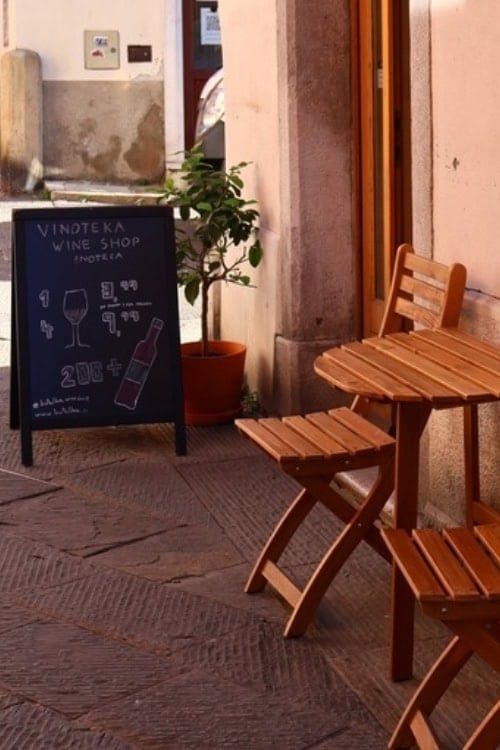
Izola felt like a small and gentle correction to the way so many of us move through the world now. Days there unfolded slowly, shaped by small, human interactions rather than ticking lists.
Breakfast came from a family-run bakery where the same faces appeared each morning. Many of these businesses have been in the same families for generations, with parents, children, and siblings working side by side.
Eating, shopping, and lingering here felt like a conscious choice to support livelihoods, rather than passing through something designed solely for visitors. Shop owners chatted without hurry, fishermen mended nets along the harbour, and nobody seemed concerned with being the next must-see destination.
It reminded me that travel doesn’t have to be about chasing what’s trending, but about choosing places that still belong, first and foremost, to the people who actually live there.
Izola offered space to reconnect with the elements. Time was measured in light rather than schedules; the warmth of the sun on stone walls, the salt on my skin after a swim, the push of a breeze moving through the marina, making the sails rustle.
Evenings gathered around the sea as the sky burned slowly into different shades of sunset, commanding that everyone halt in their tracks to watch nature unfold.
In moments like these, travel feels less like escape and more like remembering how to slow down, how to be present, and why we leave home in the first place.
It’s not to be dazzled, but to feel truly alive.
Read More: Eight Countries, Eleven Days: A Love Letter (and a Reality Check) to Train Travel in Europe
If You Go
- Stay at: Dolcemente Garni Hotel Superior
- Sunset cocktails: Bar Vitaminček
- Award-winning pizza: Casa della Pizza
- Best gelato and pastries: Slaščičarna Jadran pri Ekremu, Saliji Tađedin s.p.
- Bike hire: Rent a bike Izola
- Walk for miles, or hire a bike, to explore in any direction along the coastline, but specifically on the stretch between Izola and Koper. If you want a guided experience, this electric bike tour from Koper is a great way to explore the Slovenian coast.
Need a hand planning your trip? Here are the sites and services we rely on most, from booking tools to travel products we love.
Inspire your next adventure with our articles below:
- Interrail/Eurail: Is It Really Value for Money?
- Serifos: An Enchanting Greek Island in the Western Cyclades
Want to discover more hidden gems and helpful travel tips? Join our free newsletter for the latest travel secrets and travel articles.
We are reader-supported and may earn a commission on purchases made through links in this article.

- Izola, Slovenia: Slow Days and Seaside Strolls on the Adriatic - April 16, 2026
- Fukuoka, Japan: The Coastal City Where Tonkotsu Ramen Was Born and Slow Travel Thrives - March 24, 2026
- Green Travel in Europe: The Joy of Traveling by Train - March 23, 2026
Planning another trip soon? ✈️
Add GoWorldTravel.com as a preferred source on Google. Click the button below so our local guides, packing hacks, and hidden-gem itineraries always show up first when you search!
Add to Preferred Sources