

We hadn’t planned to go Interrailing. We had a two-week gap between housesits, which we do full-time around the world, one ending in the UK, another starting in Switzerland, and a rare pocket of annual leave.
The gap wasn’t long enough for a big intercontinental adventure, but it felt too valuable to waste, and when we spotted Interrail (Eurail) passes on sale, something clicked. We booked two Global “5-day within 1 month” travel passes on a whim for £220 per person.
If you’re from North America, you’ll be looking at a Eurail pass rather than an Interrail pass. The equivalent option is the Eurail Global Pass with 5 travel days within one month, which costs $378 USD per person full price. It works in exactly the same way as Interrail for flexible, multi-country rail travel across Europe.
A Spontaneous Journey

On our trip, we decided to do something completely unlike us: no fixed route, no advance accommodation, no rigid plan. Each morning, we’d decide where to go next and let the rails lead the way.
Over 11 days, that spontaneity carried us through eight countries, across 13 trains, and more than 3,000 kilometres of Europe, all without flying.
Curiosity followed us onto every platform. Tom, my numbers-loving, spreadsheet-building husband, couldn’t help wondering: was this actually good value, or did it just feel good? So he tracked everything: pass costs, seat reservations, buses and what each journey would have cost if we’d booked directly rather than used the pass.
Read More: The Ultimate European Bucket List: 23 Life-Changing Experiences
Is Interrail Actually Cheaper?
We’d never used Interrail before, but we’ve always loved travelling by train because it’s slower, greener, and far more immersive than flying.
So, when we saw Interrail/Eurail passes on sale, a long-standing curiosity finally tipped into action, and we decided to see whether the pass really lived up to the promise.
Because we were travelling at the last minute, crossing multiple borders, and choosing routes as we went, it felt like the best way to test things.
This wasn’t a carefully optimized itinerary built months in advance, but travel as it actually happens, making it the perfect way to see whether Interrail is genuinely good value in practice, not just on paper.
How We Tested It: Tracking Every Fare, Every Route

Tom, our resident accountant, couldn’t help himself. From the moment we booked the passes, he opened a spreadsheet and committed to tracking every single journey we took.
That meant logging not just the Interrail/Eurail pass itself, but every seat reservation, every bus that wasn’t covered, and even the small extras that tend to get forgotten when people talk about travel costs.
He also recorded what each journey would have cost if we’d booked it individually on the day, which was important because this wasn’t a carefully planned trip with advance fares.
We were making decisions in real time, often hours or even minutes before departure, so comparing against last-minute ticket prices gave us a realistic picture of how Interrail performs for spontaneous travel.
We paid £220 per person for a Global Interrail Pass (five travel days within one month), reduced from the usual £275 thanks to a sale. That initial saving of £55 each might not sound dramatic on its own, but it ended up being pivotal.
It lowered the overall cost enough to make the rest of the math work in our favour, and it’s why we’d say confidently that timing your purchase and waiting for a sale can make all the difference when deciding whether Interrail or Eurail is genuinely worth it.
Interrail vs Direct Booking

Including the Interrail passes we bought in the sale, seat reservations for high-speed and cross-border trains (£112.52), buses not covered by the pass (£56.45), and small extras like the occasional taxi (£16.58), our total transport spend came to £627.
Booking the exact same routes individually would have cost £1,495.30. That’s a saving of £868.30 overall (£434.15 per person) across 11 days, 8 countries and 13 trains.
Knowing our transport costs were so low gave us permission to travel differently: to stay somewhere beautiful instead of just somewhere cheap, to book accommodation last-minute without money worries, and to lean into the joy of spontaneity rather than fighting it.
When we decided to stay longer somewhere that we liked or splurge on a place that made the journey more enjoyable, we could do so without guilt.
That’s how we found ourselves in a canal-front four-star hotel in Venice, with our own balcony to watch gondolas glide past at dusk, and in a peaceful apartment on the shores of Lake Bled, waking to mist rising off the water.
Interrail/Eurail didn’t just make the trip cheaper; it improved the quality of our experience. For last-minute, flexible travel, it wasn’t simply good value. It reshaped what was possible for us.
Flexibility vs Cost: What Are You Really Paying For?

What we were really paying for with Interrail/Eurail passes wasn’t just cheaper train tickets, but freedom. The ability to decide where to go on the day, sometimes only hours before departure, completely changed how we travelled.
Without a pass, that kind of spontaneity would have come with eye-watering last-minute fares and constant decisions of whether certain plans were “worth it”.
It’s true that you can often secure cheaper individual tickets by locking in fixed routes months in advance. But that’s a different style of travel altogether, built around certainty rather than curiosity.
Interrail and Eurail come into their own when flexibility isn’t a compromise, but the whole point: when you want to follow the weather, the people you made friends with, your energy levels, or a recommendation from a stranger on a train platform.
Hidden Costs
Interrail isn’t “free travel,” and the pass alone is never the full financial story. Some high-speed and cross-border trains require seat reservations, which added £112.52 to our total, while buses not covered by the pass came to £56.45.
These costs are not hidden in the sense of being secret, but they’re easy to overlook if you assume the pass covers everything.
That said, even with every extra included, right down to small incidentals, the overall cost still came out hundreds of pounds cheaper than booking trains individually.
The key is transparency and planning: knowing where reservations are likely, budgeting for them upfront, and seeing them as part of the real cost of travel rather than an unwelcome surprise.
Read More: Budget-Friendly European Escapes: Discover the Cheapest Countries to Visit in Europe
Who is Interrail Best For?

Photo by Thomas Holmes
Interrail and Eurail are at their best for travelers who value flexibility and movement. If you buy a pass during a sale and travel at the last minute, cross borders frequently, or change plans as you go, the savings can be significant and the experience far less stressful.
It’s especially well-suited to longer trips, multi-country routes, and travelers who enjoy letting a journey unfold organically.
If, on the other hand, you’re planning a single, fixed route months in advance and booking the cheapest advance fares, you may save very little or nothing at all by using the pass.
Interrail isn’t a universal bargain, and it doesn’t try to be. Its real value lies in matching the right kind of traveler with the right kind of trip.
Our Final Verdict: Would We Buy Interrail Passes Again?
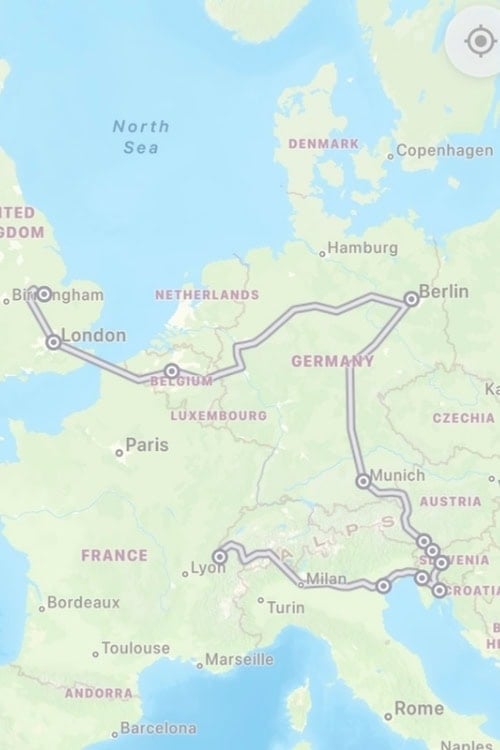
Screenshot by Jessica Holmes
Without hesitation, yes. Interrail gave us something that’s increasingly rare in modern travel: the freedom to decide, to change our minds, and to follow curiosity without constantly checking prices. That freedom is where the real value of these passes lies, and it’s why we’d happily do it all again.
That said, we’d most likely only buy Interrail or Eurail passes again when they’re on sale, as that’s where the value becomes undeniable. At full price, the math tightens, especially if you’re not moving often or crossing borders regularly.
However, with a discount and a flexible mindset, the pass becomes less about stretching every pound and more about unlocking a different way of travelling.
Our spontaneous rail journey carried us to places we’d never heard of before, alongside destinations we’d dreamed about for years. It took us from quiet lakes and overlooked coastal towns to iconic cities that we experienced in an entirely new way.
Somewhere between platforms, tickets, and last-minute decisions, it reignited something we hadn’t realized we were missing: a sense of true freedom, the simple joy of movement, and the quiet thrill of going where the wind – or the next train – takes you.
Get our free Interrail Cost Calculator to work out whether a pass makes sense for your European rail trip, or to track your expenditure whilst on board.
Need a hand planning your trip? Here are the sites and services we rely on most, from booking tools to travel products we love.
Inspire your next adventure with our articles below:
- Eight Countries, Eleven Days: A Love Letter (and a Reality Check) to Train Travel in Europe
- How to Use Eurail to Travel Across Europe: A Eurail Guide
Author Bio: Jessica Holmes is a writer and digital nomad who swapped her career as a police investigator for a life of sustainable travel through housesitting. After years of backpacking and van life, she sought a greener way to explore the world. Her book about her journey so far, The Housesitter’s Guide to the Galaxy, is available on Amazon and Barnes & Noble. Her blog, Hitched and Hiking, documents her travels. Follow her on Instagram: @hitchedhikingandhousesitting.
Want to discover more hidden gems and helpful travel tips? Join our free newsletter for the latest travel secrets and travel articles.
We are reader-supported and may earn a commission on purchases made through links in this article.

- Izola, Slovenia: Slow Days and Seaside Strolls on the Adriatic - April 16, 2026
- Fukuoka, Japan: The Coastal City Where Tonkotsu Ramen Was Born and Slow Travel Thrives - March 24, 2026
- Green Travel in Europe: The Joy of Traveling by Train - March 23, 2026
Planning another trip soon? ✈️
Add GoWorldTravel.com as a preferred source on Google. Click the button below so our local guides, packing hacks, and hidden-gem itineraries always show up first when you search!
Add to Preferred Sources