
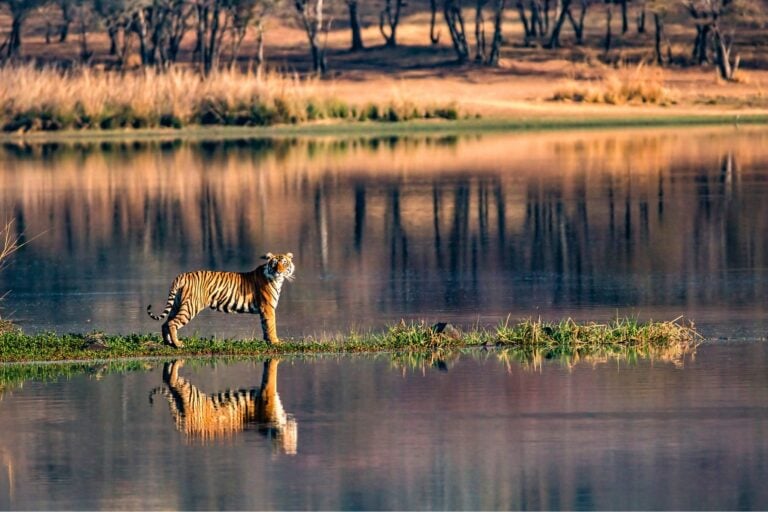
I remember the first time I saw a tiger in the wild. You are bound to remember it all your life.
It was dawn in Pench National Park, near Nagpur.
The wooded grasslands were still wrapped in a pale mist, teak trunks rising pale and straight around us.
Throughout the early morning, the guides across jeeps in the early morning were already coordinating sightings and movements, building an anticipation bordering on belief and certainty.
Sighting the wild is not just a matter of randomness; it is a mix of luck, gratitude of the seekers and the benevolence of the jungle.
Our jeep engine was off. The whole jungle fell quiet, as if prepping us for the moment we were all waiting for.
The guide repeatedly signalled us to not make a sound, while the earth seemed to be holding its breath.
Then the bushes ahead of us rustled. A glimpse of yellow confirmed whatever excitement had built up. A tiger stepped out.
It did not hurry. It did not acknowledge us.
It simply walked across the forest track, its sinewy muscles rolling beneath its fulgurant fur. For a brief second, it turned its head — but moved on with indifference. We were irrelevant.
And in that irrelevance lay a revelation: despite all of man’s conquests, Nature will always have a zeal and spirit that man can never compete with.
But to understand that humility, man needs to come face to face with her mightiest creations – sometimes, in the form of a snow-capped massif, or a breathtaking barrel wave, or even the endless expanse of sand dunes.
Or even sometimes, in the eyes of one of the most majestic animals on the planet: Panthera Tigris.
The surreal feeling doesn’t stop there. Sighting any big cat creates a similar feeling of awe of the raw energy of Mother Nature.
In this regard, India holds a unique record – the one country that is home to nearly all the big cats. India remains one of the rare landscapes where apex predators still rule, making it worth a pilgrimage to hear the call of the wild.
India’s Big Cat Diversity
India: The World’s Most Diverse Big Cat Safari Land
Scientifically, “big cats” belong to the genus Panthera, capable of roaring due to a specialized larynx.
These include the Tiger, the Lion, the Leopard and the elusive Snow Leopard. India is the only country on Earth where you can find all the above species.
The one exception is the American Jaguar – this is often replaced with the cheetah, technically not a big cat — it cannot roar, but purrs — yet its speed and elegance earn it a place in this category.
There are other large cats as well, though they fall outside the elusive club. These include the clouded leopard with its distinct blurred rosettes and found in northeast India, the cougar – native to America, and the serval, native to Africa.
Top Tiger Reserves In India
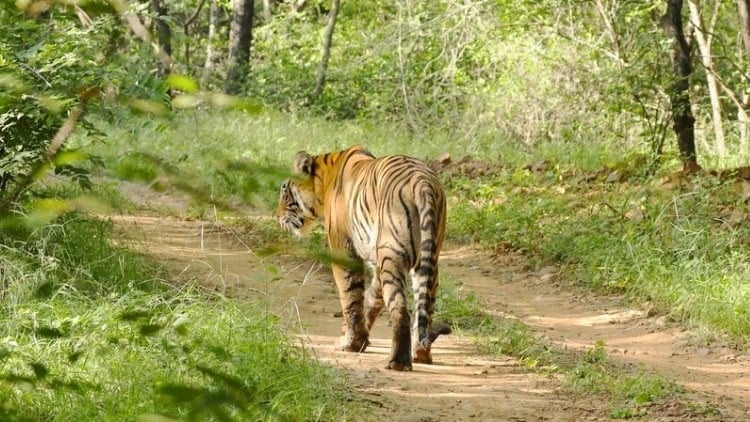
Tigers — The Emperors of the Indian Jungle
The tiger is India’s national animal, and is a symbol of strength, power, and grace. Due to habitat loss, poaching, and human-wildlife conflict, the tiger population has faced significant decline in the past.
In response, India launched various conservation efforts, most notably the Project Tiger initiative in 1973, which has been instrumental in protecting tiger habitats, reducing poaching, and creating tiger reserves across the country.
As a result, India’s tiger population has seen a steady recovery, with current estimates placing the number of tigers at around 3,000 – roughly 70% of the world’s wild tiger population.
What are the best places to see the Indian tiger?
1. Jim Corbett National Park: India’s oldest national park, Jim Corbett, established in 1936 as a tribute to the man who led wildlife conservation in India, is located in Uttarakhand.
Known for its riverine belts along the Ramganga River, it is one of the best places to spot tigers in the wild.
The park’s diverse landscape of grasslands, forests, and hills offers a perfect habitat for Bengal tigers, and it plays a significant role in Project Tiger.
Close to Delhi, infrastructure is superb with world-class resorts dotted outside the National Park, and commendable efforts taken by these institutions around sustainability and conservation.
Nearest Airport: New Delhi – About 250 km away.
2. Kanha National Park: In Madhya Pradesh, Kanha National Park is famous for its rolling meadows and dense forests, which are believed to have inspired Rudyard Kipling’s The Jungle Book.
Home to tigers, leopards, and the endangered barasingha, it offers breathtaking landscapes and is one of India’s top wildlife destinations.
Nearest Airport: Raipur – About 200 km away.
3. Pench National Park and Tadoba Andhari Tiger Reserve: Situated on the Maharashtra–Madhya Pradesh border, Pench is a continuation of Kanha from Madhya Pradesh into Maharashtra.
Together with nearby Tadoba Andhari, Pench has emerged as one of the country’s best tiger spotting locations due to an increasing density of the beast from conservation efforts assuring a high probability of spotting.
Nearest Airport: Nagpur – About 100 km away.
March–June, though hot, is the best time to spot tigers. Winter offers better climate but becomes too foggy for wildlife spotting.
Besides the above hot spots, India has many reserves, including the Sundarbans (West Bengal), Bandhavgarh (Madhya Pradesh), Kaziranga (Assam), Nagarjunsagar–Srisailam (Andhra Pradesh/Telangana), Manas (Assam), Buxa (West Bengal) and Ranthambore (Rajasthan), among others.
Sundarbans Mangrove Tigers
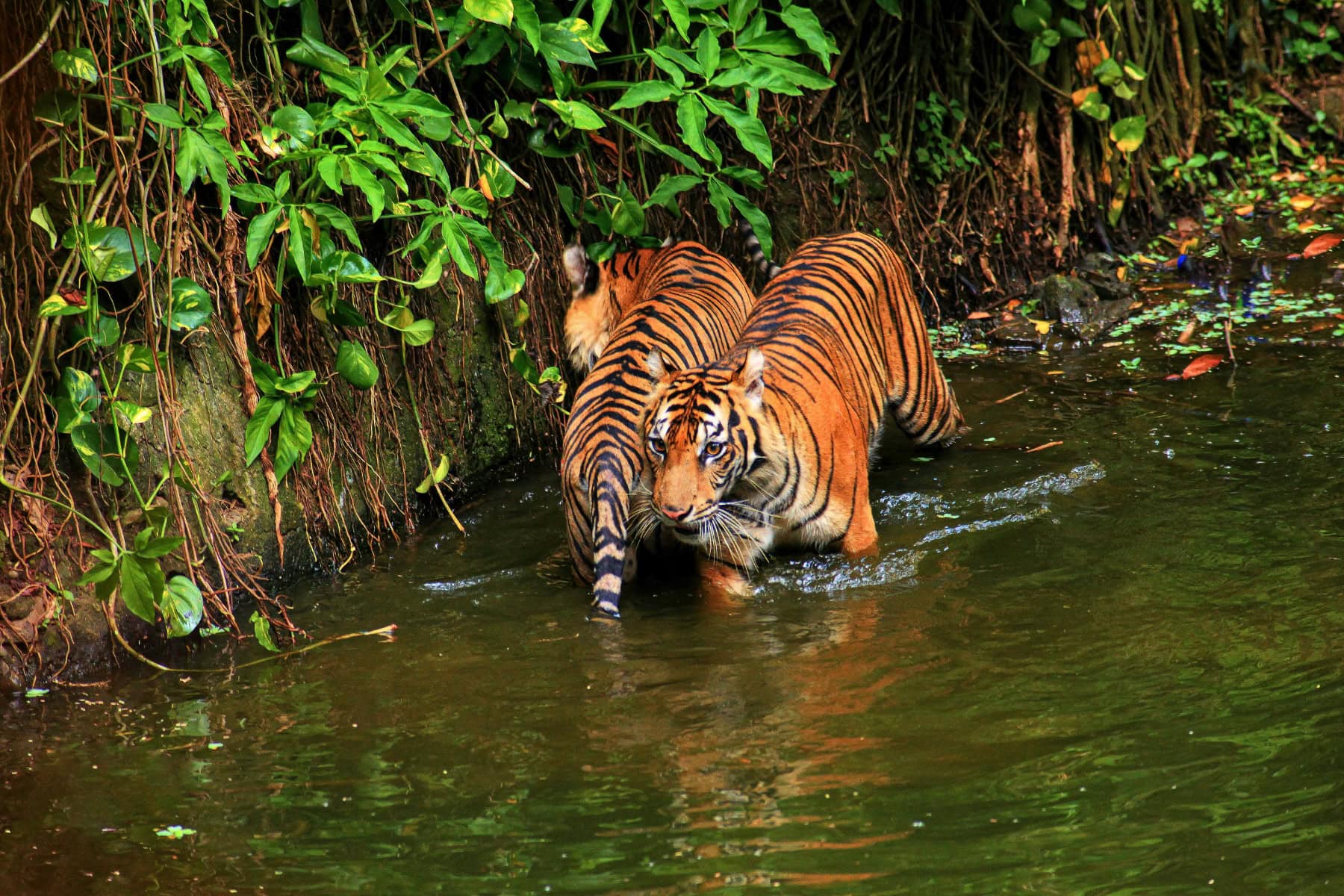
Mangrove Tigers – The Coastal Royalty of the Sundarbans
The Sundarbans mangrove forest, spanning across West Bengal in India and Bangladesh and the world’s largest mangrove forest, is home to the elusive Sundarbans tiger.
It is a rare subspecies of the Bengal tiger found all over India, that thrives in this unique coastal environment. These tigers are well adapted to the region’s salty waters, dense mangroves, and tidal waterways.
Their distinct behavioural traits, such as their swimming skills and ability to navigate through flooded forests, make them one of the most fascinating big cat populations in India.
Due to the challenges of the terrain, sightings can be rare, but the experience of observing these tigers on a boat, or seeing these creatures swim, is unforgettable.
It is equally interesting to talk to the native fishermen and farmers and hear about their tales of adapting to a daily life with these majestic beasts.
Nearest Airport: Kolkata – About 120 km away.
Melanistic Tigers Of Simlipal
Simlipal – The Heart of the Melanistic Tiger
Simlipal National Park in Odisha is known for its breathtaking landscapes of dense forests, waterfalls, and rich biodiversity.
It is also home to a rare and intriguing genetic mutation in tigers: the melanistic tiger, also known as the “black tiger.”
These tigers have thick, merging black stripes that almost entirely obscure their orange fur, and their rarity makes them a special attraction for wildlife photographers and researchers.
Because the Simlipal population is small and isolated from other tiger habitats, inbreeding has caused this rare recessive trait to appear more frequently.
The Odisha government is establishing the world’s first melanistic tiger safari near Baripada to allow the public to see these unique animals in a controlled environment.
Nearest Airport: Bhubaneswar – About 240 km away.
Asiatic Lions in Gir
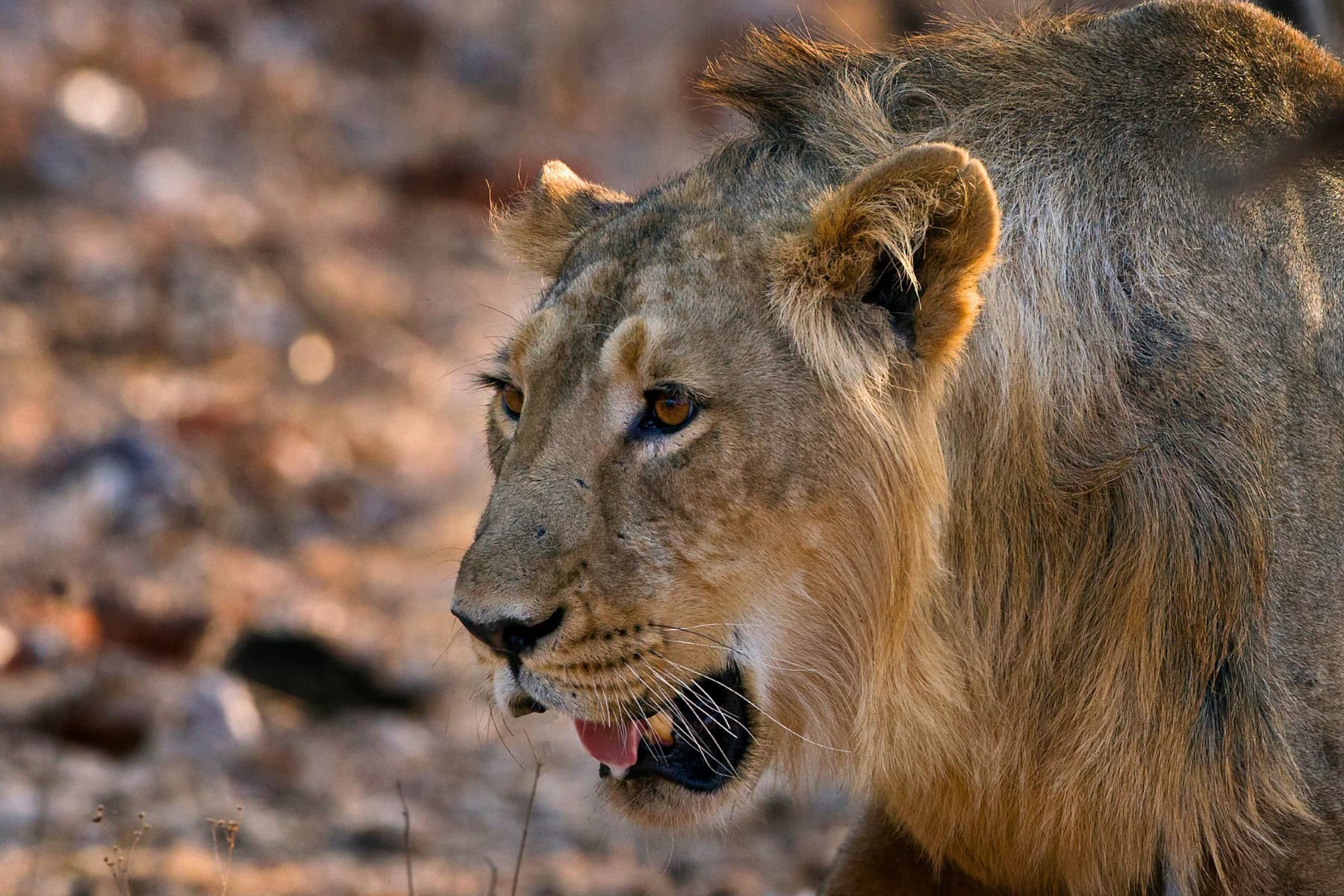
The Lion of Gujarat – The Asiatic King
Unlike the Bengal tiger, the Asiatic lion (Panthera leo persica) is found only in the Gir Forest National Park in Gujarat, making it India’s second-largest big cat after the tiger.
India is the only country where you can see wild lions and wild tigers in the same trip — a geographical marvel.
The Asiatic lion was once widespread across the Middle East and India, but today, it is only confined to this protected area due to desertification and increasing encroachment in other habitats, especially in the Middle East.
This makes India the only land outside Africa that is home to lions. With a much smaller mane and a more compact body than its African counterpart, the Asiatic lion has made a remarkable recovery thanks to decades of conservation efforts.
The Gir sanctuary is the only place in India where you can witness these majestic animals in their natural habitat.
Nearest Airport: Ahmedabad – About 170 km away.
When to go: December–April.
Best Places For Leopards
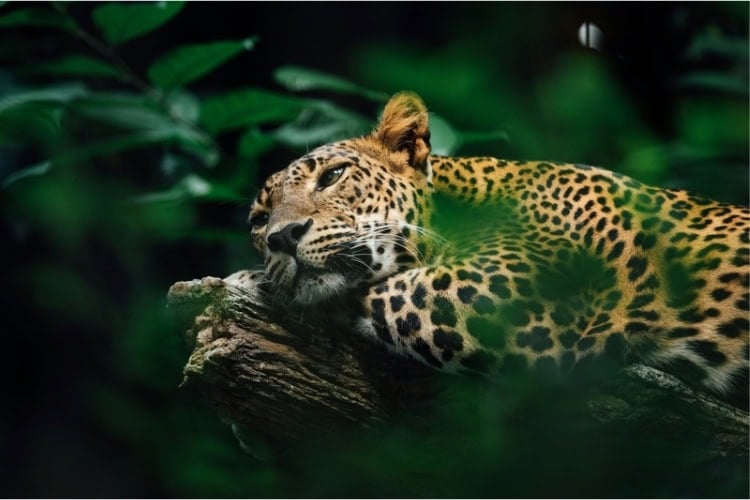
Leopard – The Stealthy Nomads
Leopards are highly adaptable big cats, found across India, from the dense forests of the Western Ghats to the rugged Himalayan foothills.
Known for their spotted coat and remarkable climbing ability, leopards are often elusive and are considered the stealthiest of the big cats.
They are best seen in reserves like Ranthambhore National Park and Jhalana Leopard Safari Park (Rajasthan), where the population is thriving, and sightings are frequent.
Leopards are also found in urban fringe areas, often coming into conflict with human settlements such as in Greater Mumbai near the Sanjay Gandhi National Park.
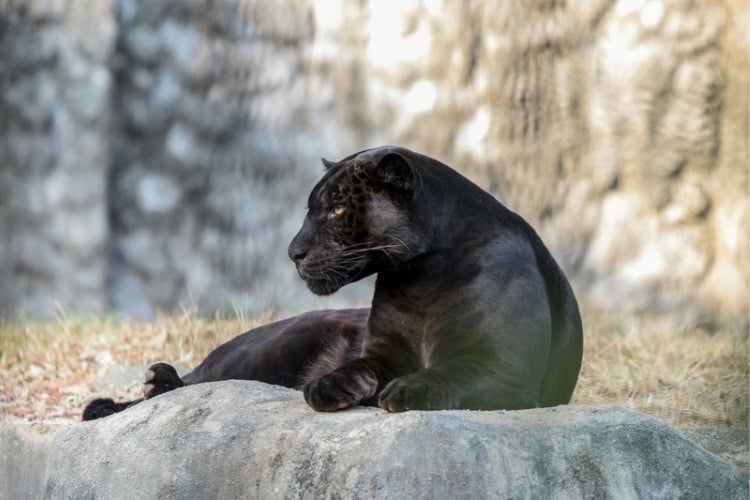
Interestingly, similar to the melanistic tigers, there are melanistic leopards (Remember ‘Bagheera’ from The Jungle Book?). Kabini reserve, close to Bangalore, and the Western Ghats are the best places to spot these black panthers.
Cheetahs In Kuno
Cheetah – India’s Speedster Returns
India has only recently reintroduced the cheetah after a long absence. The cheetah was once found in the Indian subcontinent in abundance but was declared extinct in the 1950s due to hunting and habitat loss.
However, under the Cheetah Reintroduction Project, cheetahs have been brought back from Africa to Kuno National Park in Madhya Pradesh, with plans for their future spread to other suitable habitats.
Known for being the fastest land animal, cheetahs’ graceful, swift movements are a thrilling sight for visitors.
Nearest Airport: Gwalior Airport – About 150 km from Kuno National Park.
Tracking Snow Leopards
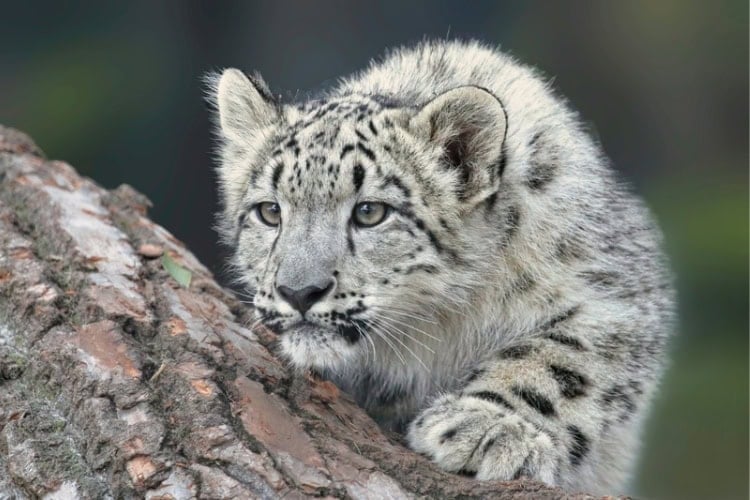
Snow Leopard – The Ghost of the Himalayas
The snow leopard (Panthera uncia) is perhaps the rarest and most elusive of the big cats. Hard to reach their habitats in the first place, snow leopards roam the high-altitude regions of the Himalayas and the Trans-Himalayan regions of India.
They are found particularly in states like Ladakh, Himachal Pradesh, and Uttarakhand. Known for their thick fur and ability to survive in extreme cold, snow leopards are masters of stealth, often seen only by their faint tracks in the snow.
The barren, rugged terrain makes spotting them a challenging but rewarding experience for those who venture into these remote areas. India’s largest national park — Hemis in Ladakh — is the best place to track these majestic creatures.
Nearest Airport: Leh Airport (Ladakh) – About 200 km away for sightings in Ladakh.
Read More: Beyond Kruger: Safari by the Sea in St Lucia, Where Hippos Roam
Other Wild Cats In India
India’s diverse landscapes are not only home to the majestic tigers and leopards but also to a fascinating array of lesser-known feline species.
These include the Clouded Leopard (Namdapha National Park, Arunachal Pradesh), the elusive Caracal (Desert National Park, Rajasthan, and Kutch Desert Sanctuary, Gujarat), and the rare Pallas’s Cat in the high-altitude deserts of Ladakh (Hemis National Park).
Additionally, the Fishing Cat, the state animal of West Bengal, is an emerging success story in conservation efforts.
India’s wildlife is a treasure trove waiting to be explored, and while the full potential of conservation-led tourism is yet to be realized, both the government and local communities are increasingly working towards the twin goals of preserving nature and boosting the local economy.
The conservation of tigers has led the way, but the growing recognition of the need to protect all Big Cats and wild cats bodes well for the future.
However, spotting these magnificent creatures remains a rare privilege. It requires patience, a deep understanding of their habitats, and often multiple visits to the sanctuaries.
And even then, as they say, wildlife is spotted only when the animals themselves decide to reveal themselves to the visitors.
It is not easy, but when you do finally catch a glimpse, it’s an experience that stays with you for a lifetime — one that will remind you time and again of a profound connection between nature and those who seek to appreciate it.
If You Go
Tours:
- Tadoba Andhari Tiger Reserve, Maharashtra: A two-night jeep safari experience based out of Nagpur puts you deep in central India’s tiger country, with a naturalist guide leading three open-vehicle safaris. Reserve your spot on Viator.
Flights: Search flights to major India gateways — Delhi, Mumbai, Kolkata, Nagpur, and Ahmedabad — on CheapOair.
eSIM: Airalo offers India eSIM plans, a practical option for staying connected across multiple parks and regions.
Travel Insurance: Remote wildlife areas and multi-destination itineraries make coverage worth having. Compare plans at Squaremouth or SafetyWing.
Need a hand planning your trip? Here are the sites and services we rely on most, from booking tools to travel products we love.
Inspire your next adventure with our articles below:
- 7 Must-Visit National Parks, UNESCO World Heritage Sites and Conservation Areas Around the Globe
- Pilli Pipa Dhow Safari at Kenya’s Kisite-Mpunguti: Reefs, Dolphins and a Swahili Lunch
Author Bio: Ayan Adak is a consultant by profession who loves traveling, and has been to nearly 30 countries. He likes writing about his travel experiences besides scribbling poetry, short stories and essays.
Want to discover more hidden gems and helpful travel tips? Join our free newsletter for the latest travel secrets and travel articles.
We are reader-supported and may earn a commission on purchases made through links in this article.

- A Weekend in Cambará do Sul: Hiking Brazil’s Itaimbezinho and Fortaleza Canyons - October 26, 2026
- Uzbekistan’s Silk Road Cities: From Tashkent’s Markets to Samarkand’s Registan - October 26, 2026
- Lost in the Fjords: Finding Myself Through Her Eyes - October 26, 2026
Planning another trip soon? ✈️
Add GoWorldTravel.com as a preferred source on Google. Click the button below so our local guides, packing hacks, and hidden-gem itineraries always show up first when you search!
Add to Preferred Sources