

Have you ever heard of fugu, the notorious Japanese pufferfish? Containing a potent neurotoxin called tetrodotoxin in its organs, fugu is one of the world’s most dangerous delicacies.
In Japan, only licensed chefs are legally permitted to prepare it, and a single mistake can be fatal. A few people have died from fugu poisoning in Japan over the past 10 years.
When prepared properly, fugu reveals a refined and delicate flavor. Its unique, springy texture leaves a lasting impression—even for me, as a Japanese writer. I highly recommend trying fugu sashimi.
While many countries (including Australia) ban fugu due to safety concerns, its mysterious allure continues to draw daring gourmets and culinary adventurers from around the world.
For those bold enough to try it, there’s no better destination than Shimonoseki, the undisputed fugu capital of Japan and a place to explore the rich historical legacy.
Shimonoseki Hotels, Ryokan and Places to Stay
A City Built on Fugu

Photo courtesy of Yamaguchi Tourism Association
Shimonoseki is located in western Yamaguchi Prefecture, where over 80% of Japan’s fugu is processed and distributed. Here, fugu isn’t just an occasional luxury—it’s woven into daily life.
Even local elementary school kids learn the “Fuku Dance,” a cheerful number celebrating the fish. (Locals often call fugu “fuku,” a word that also means “good fortune” in Japanese.)
Step into any supermarket in Shimonoseki, and you’ll find fugu sashimi, tecchiri (hot pot cuts), fugu skin salad, fried fugu and even frozen sets for home cooking. In this city, fugu is as familiar as salmon or tuna is elsewhere.
When I was a university student, a friend from Shimonoseki invited me to his hometown during summer vacation. I stayed at his house, and with his family, I enjoyed a variety of fugu dishes they had picked up at a local supermarket. Through those meals, I felt welcomed into the heart of the local community.
Where to Eat Fugu as a Visitor

Most travelers, however, don’t have local friends in Shimonoseki or homes to stay in. That’s why visitors should head to places where they can safely and easily enjoy fugu, thanks to the city’s skilled chefs and rich food culture.
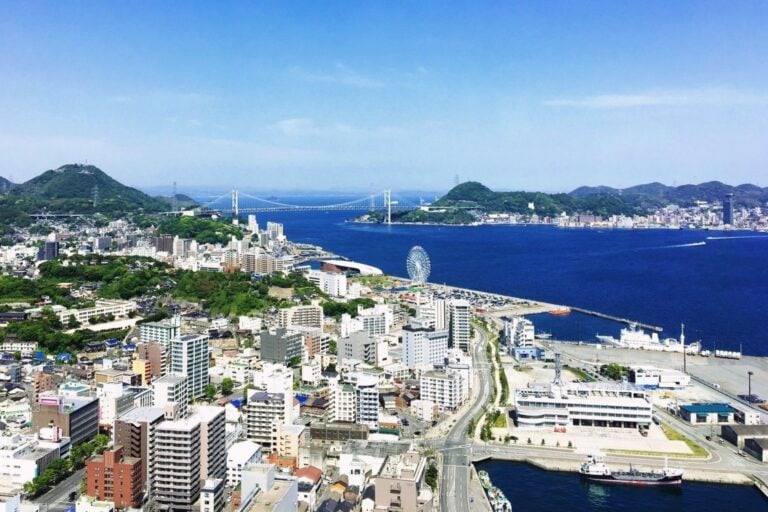
Your fugu journey begins at Karato Market and Kanmon Wharf—both set along the scenic Kanmon Strait. Karato Market offers a special experience—you’ll see fishermen selling their fresh catch directly to locals and tourists alike.

Just a short stroll away is Kanmon Wharf, a waterfront complex filled with restaurants specializing in fugu cuisine, such as torafugu (tiger pufferfish) sashimi, fugu hotpot, deep-fried fugu and fugu skin salad. Many of these dishes use fish sourced straight from the market.
For an added treat, visit the nearby aquarium, which features an impressive number of fugu species swimming gracefully in water tanks.
A Unique Border Town Experience

Another highlight of Shimonoseki is its geography and history. Situated at the southern tip of Honshu—Japan’s main island—the city faces Kyushu across the narrow Kanmon Strait. This unique location has placed Shimonoseki at the center of several pivotal moments in Japanese history.
In 1185, the city was the site of the Battle of Dan-no-Ura, a decisive naval conflict between the Genji and Heike clans that led to the rise of Japan’s first shogunate.
Centuries later, in the 1860s, Shimonoseki again found itself in the spotlight when local samurai fired upon Western ships. This act sparked international retaliation and accelerated Japan’s path toward modernization during the Meiji Restoration.
In 1895, the Treaty of Shimonoseki was signed here, officially ending the First Sino-Japanese War.
When I was a child growing up in the suburbs of Tokyo, my family made an annual trip to Kyushu to visit my father’s relatives—he was born there. Each year, we drove through the historic Kanmon Strait via the 1,068-meter-long Kanmon Bridge.
Just before crossing, my father would always stop at a highway rest area near the foot of the towering bridge. From the parking lot, I would gaze up at its illuminated structure as my father shared stories about Japan’s history. Those moments remain vivid in my memory.
If you’re able to drive in Japan, I highly recommend experiencing the Kanmon Bridge by car. But even if you can’t, Shimonoseki offers many other ways to enjoy its rich transportation heritage linking Honshu and Kyushu by rail and sea.
For a memorable adventure, take a short boat ride or walk through the undersea Kanmon Pedestrian Tunnel.
This nearly 800-meter passage connects Shimonoseki with Mojiko Port in Kyushu. It’s a rare chance to explore two distinct regions of Japan in a single day, enriched by world-class seafood, dramatic coastal scenery and deep cultural roots.
Whether you’re a foodie, a history enthusiast, or both, Shimonoseki is full of stories waiting to be uncovered.
How to Get to Shimonoseki

Though it feels like a hidden corner of Japan, Shimonoseki is easy to reach by train or air.
By Train:
- From Tokyo: Around 5.5 hours (via Shinkansen to Shin-Yamaguchi + local train)
- From Osaka: 2.5 to 3 hours (via Shinkansen to Shin-Shimonoseki + local train)
By Air:
- Fly from Tokyo Haneda to Yamaguchi Ube Airport or Kitakyushu Airport
- Total travel time: 1.5 to 2 hours
- Budget airlines often offer fares between ¥10,000–¥15,000
Besides, Tsunoshima Island, north of the central district of Shimonoseki, is another option, which is a viral spot for SNS pictures.
If you have an international driver’s license or an official Japanese translation of your home country’s license (for certain eligible countries), enjoy a scenic one-hour drive across the bridge to the island.
Inspire your next adventure with our articles below:
Author Bio: Masayoshi Sakamoto is a Japanese writer, translator, and editor living in Toyama, Japan. He is the editor-in-chief of a local magazine, Hokuroku, and was the chief editor of a popular digital business magazine based in Tokyo, bizSPA!.
Want to discover more hidden gems and helpful travel tips? Join our free newsletter for the latest travel secrets and travel articles.
We are reader-supported and may earn a commission on purchases made through links in this article.

- Bonaire, Savored Slow: Cactus Liqueur, Caviar, Donkeys and Shore Diving - October 23, 2026
- Two Colorado Hot Springs Worth the Drive from Denver - October 23, 2026
- Is 55 Too Young for a River Cruise in Europe? - October 23, 2026
Planning another trip soon? ✈️
Add GoWorldTravel.com as a preferred source on Google. Click the button below so our local guides, packing hacks, and hidden-gem itineraries always show up first when you search!
Add to Preferred Sources