
Winter or early spring may not be the obvious seasons for a Danube River cruise, but they offer wonderful benefits: less crowded ports, a smoother trip, and unobstructed views.
AmaWaterways is one of the first river cruise lines on the Danube each year, inviting passengers eager to see the river’s famous blue water on a delightful, if sometimes breezy, trip.
I chose the “Best of the Danube” itinerary on the line’s AmaMagna for a shoulder-season immersion from Budapest to Vienna.
Pre-Tour In Budapest
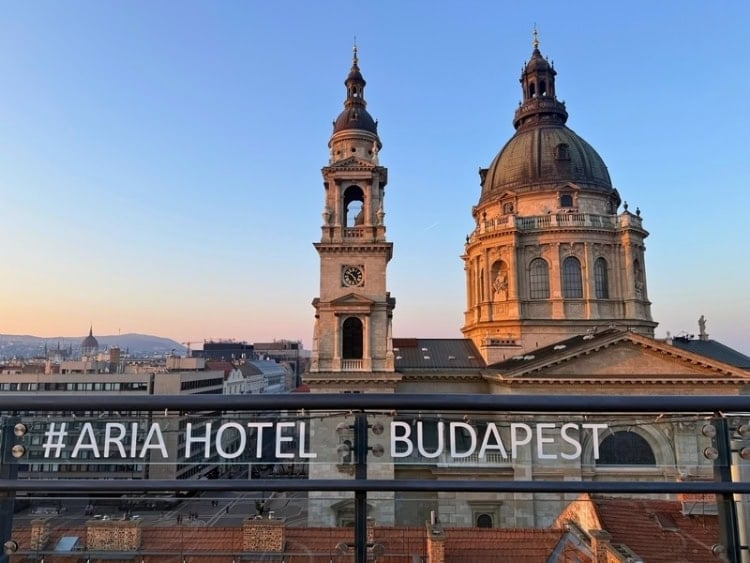
The Danube divides Budapest into two distinct areas: historic Buda and cosmopolitan Pest, once separate cities, now combined. I spent a few days in Hungary’s capital before my cruise, staying at the musically themed Aria Hotel, just steps from St. Stephen’s Basilica.
Strains of Strauss’s Blue Danube filled my head as I entered the boutique property on pedestrian-only Hercegprímás Street. The hotel’s music theme resonates throughout, from a keyboard motif on the lobby floor to live entertainment on the black, bat-like Bogányi piano.
Soft music plays in the rooms, and the music director is on call to answer any questions. Rooms are in four wings (Opera, Jazz, Classical, and Contemporary), each dedicated to a genre, with rooms themed to musical legends.
My purple-accented Aria Signature room referenced the Italian opera composer Gioachino Rossini through art caricatures, a musical carpet design, and a selection of books. A small terrace overlooked the courtyard.
Breakfast unfolds to classical music in the lobby. Overhead, the open central courtyard is crowned by line drawings of musicians, including rockers Mick Jagger and Keith Richards. The Harmony Spa and pool are accessed by a staircase in the corner.
Aria’s High Note SkyBar features rooftop spaces with sweeping views of the basilica and city. The parallel lounge and restaurant areas were perfect for listening to music and sampling Unicum, Hungary’s signature bitter digestif. It’s poured from its rounded, squat bottle.
For coffee, cocktails, or light meals, Café Liszt honors contemporary musicians with wall mirrors signed by Lenny Kravitz, Plácido Domingo, Sting, and more.
Read More: Budapest in 48 Hours: Your Perfect Weekend Guide to Hungary’s Captivating Capital
A City For Walkers
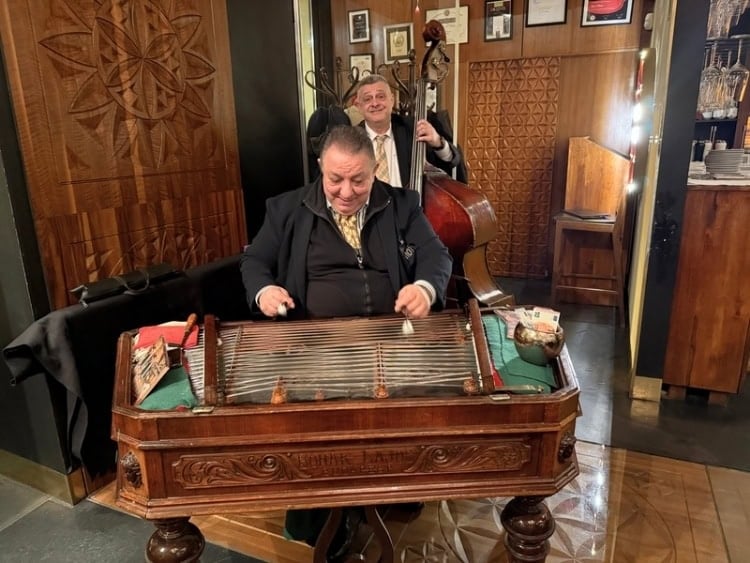
Hercegprímás Street is lined with restaurants and cafés. For our first dinner, we chose traditional Aszú, a delicious introduction to Hungarian standards like goulash, chicken paprikash, and Tokaji wines. Musical accompaniment on a cimbalom, a Hungarian dulcimer, added authenticity.
On other evenings, we eschewed tradition for Spanish tapas at buzzy Tapassio and updated Hungarian fare at Urban Betyár, both within walking distance.
Budapest invites nighttime strolling to the Budapest Eye in Erzsébet Square or along pedestrian-only Váci utca.
Near the stunning Parliament building, Bestsellers bookstore invited lingering with publications in multiple languages. Curious about Budapest’s architecture, I was directed by the helpful owner to books describing the city’s unusual Secessionist style.
My daytime walk started at one end of Váci utca, on Vörösmarty Square. I got an energy boost at Café Gerbeaud, an elegant pastry café evoking the 19th century. With an espresso to accompany, I tucked into Gerbeaud’s classic zserbó, a torte with layers of butter-based pastry, ground walnuts, and apricot jam.
The Great Market Hall sits at the other end, its two floors lined with boutiques, bakeries, and vendors offering sausages, paprika, and pickled vegetables. Exiting the side door, I crossed over the river into hilly Buda.
A hike up Castle Hill led to the unusual Rock Church, Buda Castle, and Fisherman’s Bastion. From this viewpoint, both sides of Budapest spread out before me: the Danube actually appeared blue, and the Parliament was dramatic and clear.
Must-Dos In Budapest
Gellért Thermal Baths
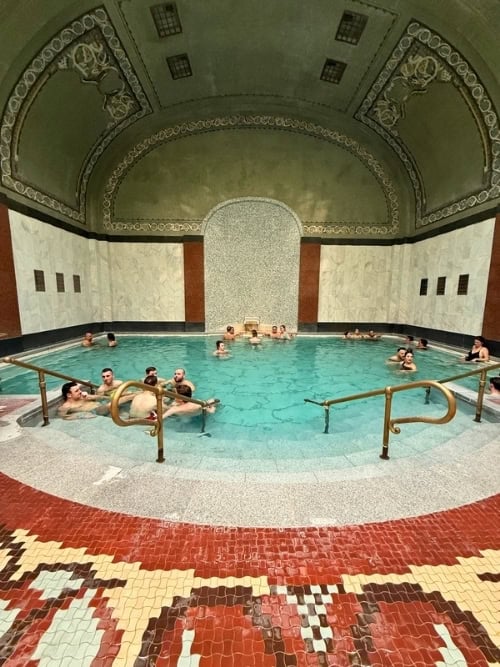
Budapest has no shortage of thought-provoking experiences.
A few hours at the historic Gellért Thermal Baths were both invigorating and relaxing. Even with cool air temperatures, the hot outdoor mineral waters were soothing, banishing any traces of jet lag.
Indoors, the tiled Secession-style architecture, pools, saunas, and steam rooms provided a fascinating glimpse into history. Massages were available in private cabins.
The Jewish Quarter and Dohány Street Synagogue
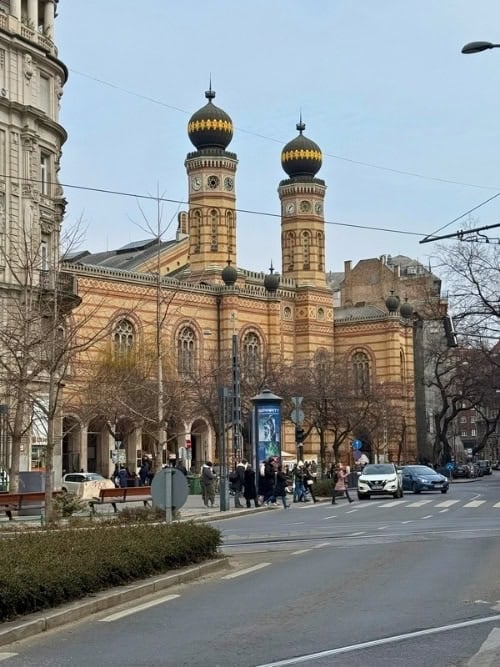
This prepared me for the sobering Shoes on the Danube Bank memorial. The lineup of iron footwear commemorates Hungarian Jews murdered by the Arrow Cross militia and shot into the river during World War II.
One of Budapest’s most interesting areas, the Jewish Quarter, is now home to synagogues, kosher restaurants, and nightlife. Anchoring the neighborhood, the largest Jewish temple in Europe and the second-largest in the world, the Dohány Street Synagogue is an example of extant Moorish architecture. The silver willow tree in its courtyard honors Hungary’s Holocaust victims.
Ruin Bars, Street Food, and Hidden Gems
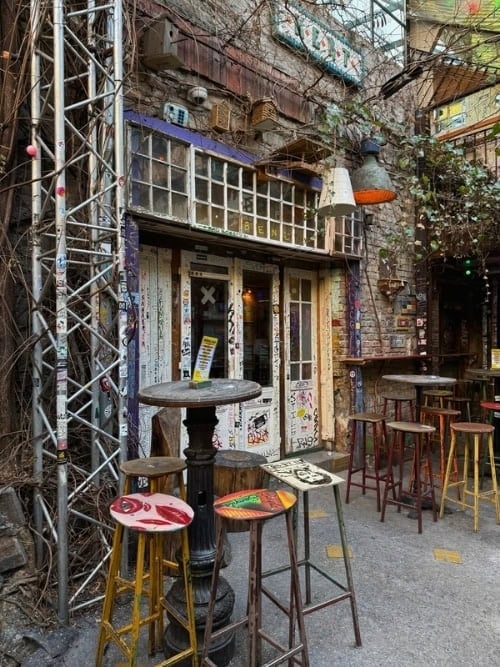
Almost next door, thriving ruin pub Szimpla Kert occupies an unrestored building and invites revelers into history over a beer. Adjacent to a working mikvah, lively Karaván’s food trucks serve lángos and kürtőskalács (chimney cake). I fondly remember the sinful apple strudel version richly drizzled with caramel.
For a peek into old Budapest, stop by 1001 Kefe, where brushes have been made by hand since 1923. I bought one designed to clean piano keys, now also appropriate for computer keyboards.
Bidding farewell to Budapest and craving yet another chimney cake, I headed to the port to begin my Danube adventure.
Onboard The AmaMagna
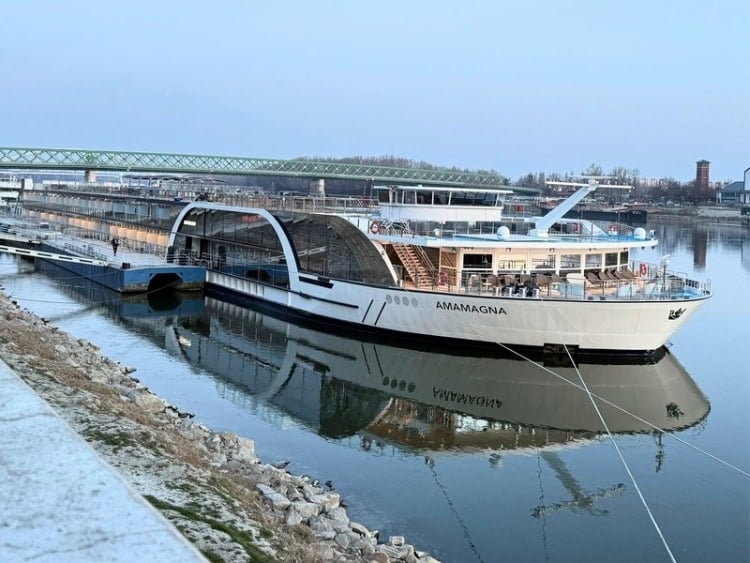
AmaMagna stands out from other riverboats — a sleek, double-wide vessel, especially striking when the river is empty. Spacious staterooms are scattered on three musically named decks.
My room on the Cello Deck had a small balcony for river-gazing. A couch and desk, with quick Wi‑Fi, made it easy to work. The bed was comfortable, the bathroom well-appointed, and the storage ample. Fresh fruit was delivered daily.
On the Violin Deck above, the lounge and settees invited passengers to enjoy a beverage or read with river views.
With the exception of port excursion lunches, all meals are taken in one of AmaMagna’s four restaurants. Reservations ensure everyone can try all. The Main Dining Room was my favorite — fine dining with a view as we glided down the river. Al Fresco offered a glassed-in, panoramic experience.
On the Piano Deck, options included family-style Jimmy’s and the Chef’s Table. I discovered my love of Grüner Veltliner, a crisp Austrian white wine. Austria’s fruit-forward red Blauer Zweigelt was equally appealing.
In Budapest, we toasted over goulash and Esterházy cake. As we moved into Austria, Wiener schnitzel and Käsespätzle were followed by Apfelstrudel mit vanillesauce.
Evenings on AmaMagna were more relaxed than on an ocean cruise. With fewer than 200 guests, it was easy to mingle during the Sip & Sail cocktail hour. Each night began with Cruise Director Martina summarizing the day and previewing the next stop. At times, local entertainers performed on board.
Sailaways were highlights — the view of Parliament’s Gothic spires coming into focus and drifting away was not to be missed. Despite chilly temperatures, everyone gathered on the Sun Deck to watch.
When you weren’t mesmerized by castles and other sites dotting the riverbanks, there were fitness classes led by Damian on the Violin Deck. Massages were also available.
Danube Excursions Overview
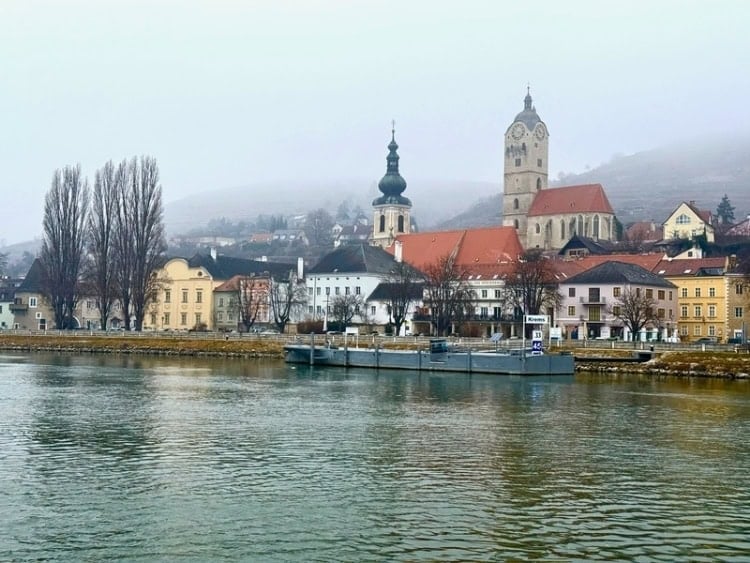
AmaWaterways offers a choice of well-organized, varied excursions at each port. All were included with the cruise but required advance sign-up with limited numbers.
Bratislava, Slovakia
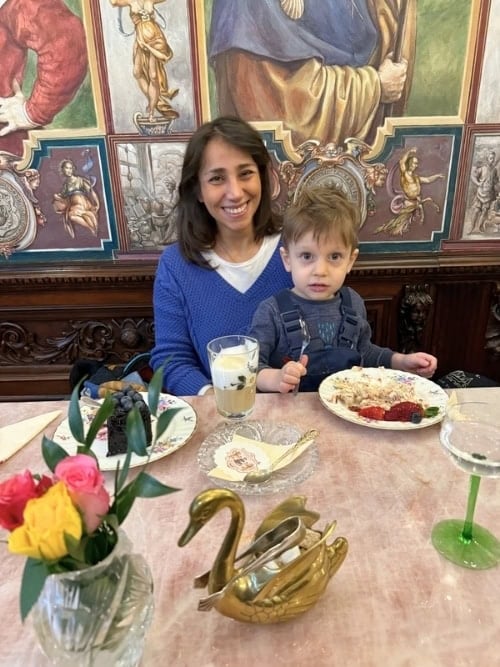
In the off-season, Bratislava shows off its history, architecture, and local flair. The approach along the river offered views of Bratislava Castle, overlooking Old Town and the Danube.
Guests could choose a bike tour or hike to the castle. The history-focused “Coronation City” walking tour was perfect for first-time visitors like me. Bratislava’s Old Town was calm and unhurried. Here, the impressive St. Martin’s Cathedral, Opera House, and quirky sculptures were easy to photograph.
There were no lines for the Ceramel honey shop, and it was a delight to savor the open squares, feeling you had the town to yourself.
Konditorei Kormuth, a historic patisserie with 16th–19th century interiors, was a perfect pause after the tour. Coffee and desserts are served on fine porcelain, with a selection of tortes that would make any Instagrammer drool.
Nearby, the 250-year-old Pharmacy Salvator is now a “living museum” with artifacts also dating to the 16th century.
The Wachau Valley, Austria
There were several options for excursions in the Wachau Valley. I chose a visit to Melk Abbey, a working abbey since 1068, with a dominant presence on a rocky outcrop. As I entered the courtyards and the building, I sensed centuries of monks as I perused manuscripts and admired frescoes.
Later, I visited the tiny village of Dürnstein. I felt like royalty walking by its famous castle. Shops stayed open just for us — another off-season perk — selling local apricot jam and Schnapps, the ultimate chill chaser.
Salzburg, Austria Or Český Krumlov, Czechia
The quiet port of Linz was the base for my next cultural exploration and a morning stop at Café Konditorei Jindrak, the birthplace of the “original” Linzer Torte.
From here, full-day tour options were to Salzburg or Český Krumlov, both equally appealing and making it difficult for me to decide. I hadn’t been to Czechia for many years, so I saved Salzburg for a solo visit at the end of the cruise.
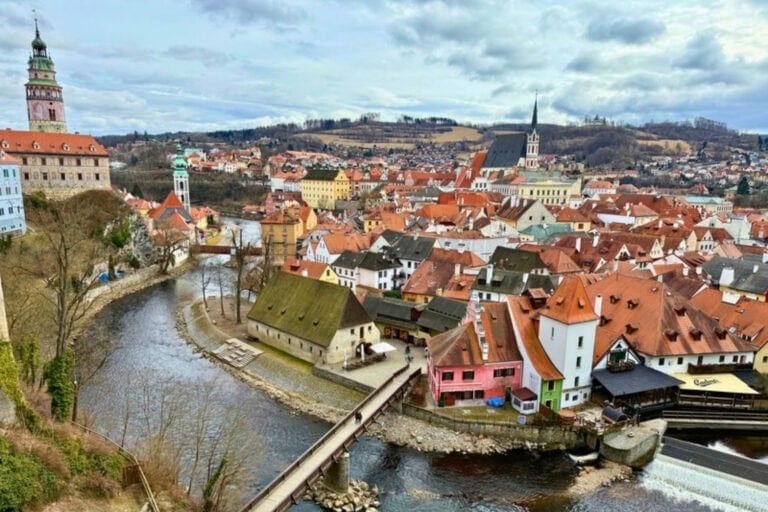
Český Krumlov’s Old Town is a UNESCO World Heritage site, situated along a bend in the Vltava River. Without crowds, the narrow cobblestone streets were easy to navigate.
I stopped for many photos in the courtyard of the restored Bohemian castle and against the fairytale setting of the river. Shopping for blood-red garnets, mined nearby since the Middle Ages, yielded a pair of gorgeous drop earrings. They came with a certificate of authenticity.
At the convivial Svedjk restaurant, named after a character in a popular novel, I ordered a traditional Czech lunch: svíčková, marinated beef with a cream sauce and dumplings. A pilsner lager was served by waitstaff in period attire.
Read More: A True Bohemian Rhapsody: Celebrating Classical Music in Czechia
Vienna: Formal, Art-Driven, Worth Returning
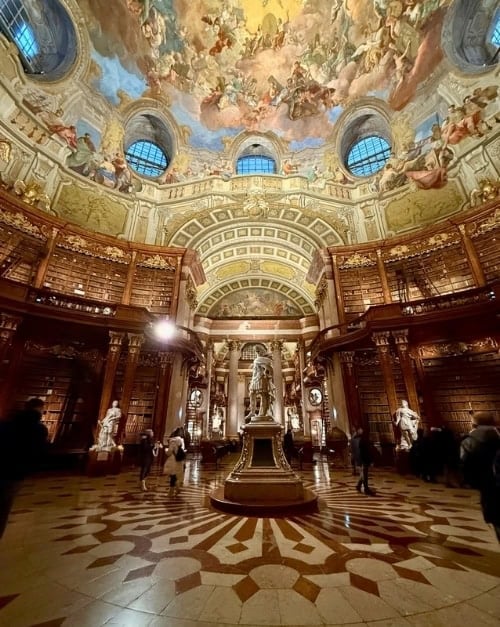
Imperial Vienna was the crown jewel of the cruise. Rich in art, music, gastronomy, and history, Vienna demands time. Happily, AmaWaterways arranged a bus tour and carriage ride upon arrival to provide an overview.
Our guide pointed out stately museums and architecture along Vienna’s Ringstrasse. Landmarks like the Vienna State Opera House, Hofburg Palace, and St. Stephen’s Cathedral left me awestruck. So did the Baroque-style Austrian National Library.
Following my foodie instincts, I headed to Naschmarkt, an open-air food market dating to the 1770s, selling local produce, cheese, and traditional Austrian snacks.
The next day, an excursion to Schönbrunn Palace took me to the Habsburgs’ summer residence. Indoors, the Rococo-designed rooms gave a glimpse into the lifestyle of the beautiful and mysterious Empress Sisi. The gardens were elegant as ever, although bereft of colorful blooms.
With an overnight docking, I crafted an evening adventure, mixing shopping and wandering with a Mozart and Strauss concert at the Haus of Strauss music hall and art gallery.
Read More: How to Spend 3 Days in Vienna Like a Local: Complete Weekend Guide
A Full-Circle Ending And An Extension
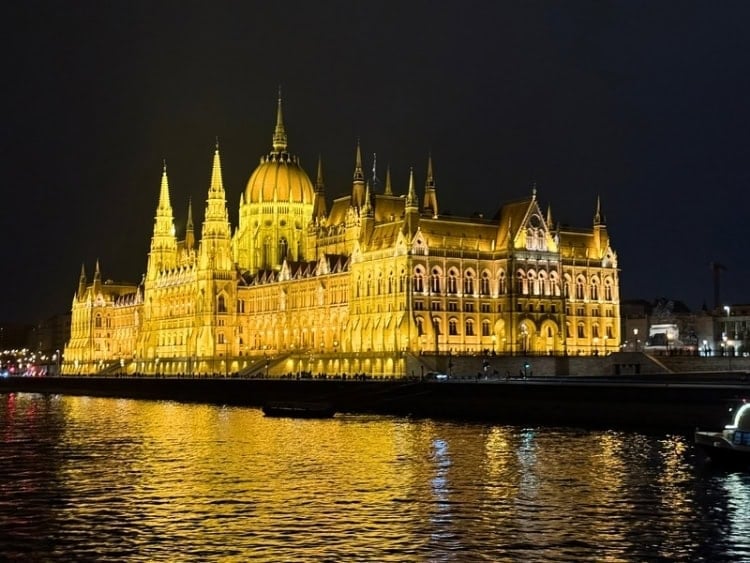
From Vienna, the cruise returned to its endpoint in Budapest. As we approached the city, everyone gathered on deck for the dramatic view of Parliament lit up along the riverbank. This time the water wasn’t blue; it was inkier, taking on the color of the darkened sky.
My last day took me along Pest’s impressive Andrássy Boulevard, modeled on Paris’s Champs-Élysées and flanked by Parisian- and Viennese-influenced buildings. Along the way to this UNESCO World Heritage Site, we passed the striking Hungarian State Opera House, Heroes’ Square, and the House of Terror Museum.
On my own, I returned to this former secret police headquarters. It offered an understanding of Hungary’s frightening 20th-century history under Nazi and Soviet occupations.
Saying farewell to my new crew and cruising friends, I took a taxi to the train station for my extended Danube holiday.
Salzburg, Austria — Mozart And The Sound Of Music
I had saved my winter visit to Salzburg for the end. This time, I spent more time walking outdoors than I had previously, admiring the exterior of Mozart’s birthplace and taking in the quiet of the stunning town.
Mirabell Gardens were somber, and the stairs where the children from The Sound of Music had posed were closed. It was still exhilarating taking the funicular to Hohensalzburg Fortress for an overview of the town and countryside. Uncrowded Residenzplatz, Domplatz, and Mozartplatz felt like they belonged to me personally rather than to the massive tour groups I had seen before.
A peek inside Salzburg Cathedral left me with a strong sense of Mozart — this was where the young composer had written some of his sacred musical pieces. A second preserved interior, St. Peter Stifts Kulinarium, dates from 803 AD. It offered a setting to soak up more history.
While marveling at artifacts and architecture, I enjoyed the eatery’s elaborate presentation of tafelspitz, one of Austria’s most authentic dishes. Served in a beef and vegetable broth alongside grated apples, spinach, rösti, and horseradish, the boiled meat was ideal comfort food for an overcast day.
Another Salzburg institution, Balkan-Grill, lacked the usual high-season queues. I ordered two #1’s, sausage with all the fixings, for a takeaway dinner.
Back To Vienna
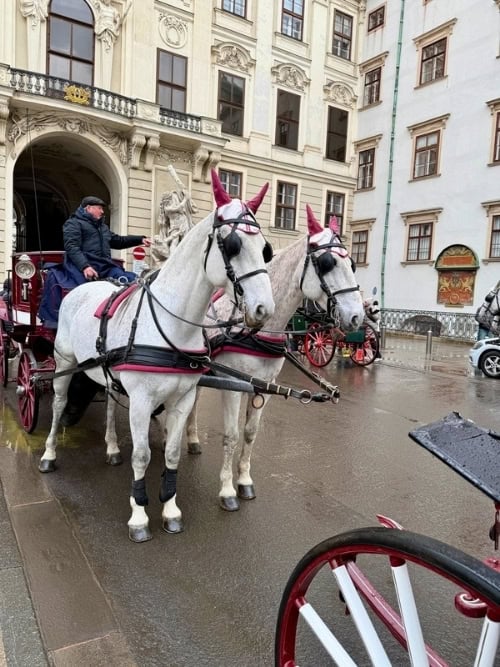
Still jonesing for more of the Imperial City, I returned to Vienna for a few more days of history and the arts. The 1826 Stadttempel is the city’s only synagogue to survive Kristallnacht. Largely because of its integration into a residential block, it endured. A tour here at Vienna’s main active synagogue provided historical context, much like Budapest’s Shoes on the Danube Bank memorial.
Outside the Inner City, Vienna’s Leopoldstadt neighborhood and nearby Karmelitermarkt continue to reflect a vibrancy of Jewish life, now sadly diminished in Budapest.
Museums, Klimt, and the Vienna Philharmonic
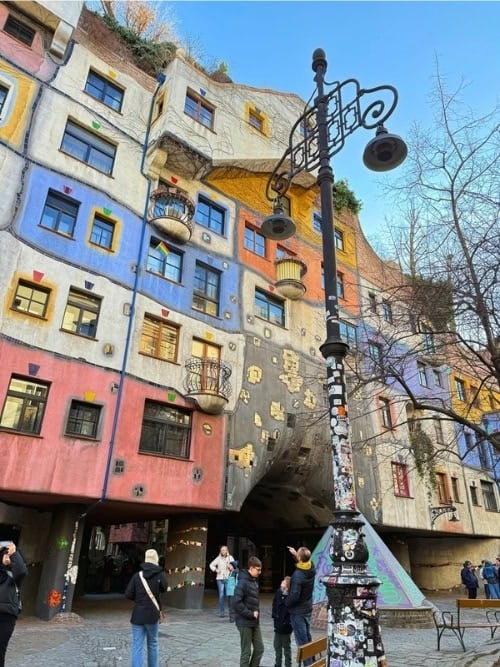
Vienna has a wide variety of art institutions. I hadn’t had time to visit them during our excursions from the cruise, but now I binged.
From the funky Hundertwasserhaus to the Secession Building with Klimt’s massive Beethoven frieze, the museums rewarded off-season visitors. The eclectic Heidi Horton Collection and MuseumsQuartier offered uncrowded access to works by Old Masters and modern artists.
A taxi took me to Belvedere Palace, where Gustav Klimt’s The Kiss and other major works are displayed. Although the gardens lacked brilliant colors at this time, one could imagine the grandeur of the landscaping against the city outline. As in Budapest’s Aria, music was central to my time in Vienna.
Close to my hotel, Park Hyatt Vienna, the Musikverein shone with a performance by the Vienna Philharmonic. Thrilling the pianist in me, the 19th-century Musikhaus Doblinger was a wonderland of sheet music from classical to contemporary.
Eating Through Vienna
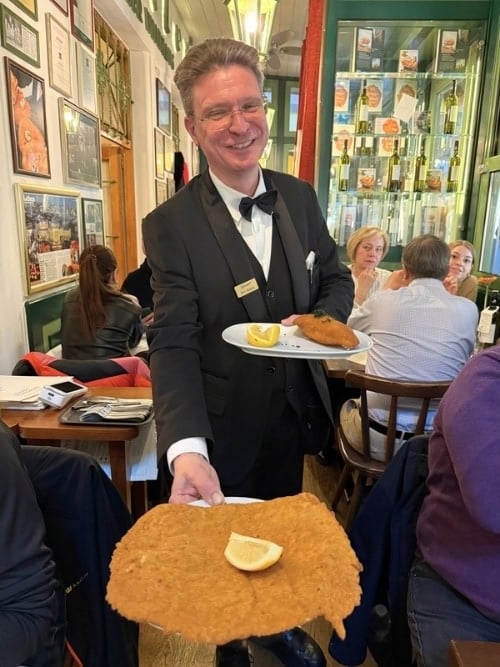
My time on AmaMagna and my visit to Salzburg had given me an introduction to Austrian cuisine. This time I truly indulged. I started with a Viennese breakfast at 1861 Café Schwarzenberg, the oldest café on the Ringstrasse. Rolls, eggs, and a croissant with jam and honey set the tone.
I also managed to fit in a Sacher torte at the elegant Hotel Sacher. After walking off the calories, I snacked mid-morning on fluffy Kaiserschmarrn from legendary Café Demel.
Lunch at Figlmüller brought Wiener schnitzel so large it draped over the edge of my plate. A second tasting of tafelspitz was a white-tablecloth affair at Plachutta, its walls decorated with celebrity diners’ autographs.
For contrast, I dined at modern Do & Co on sushi and pasta, overlooking St. Stephen’s. There, I mingled like a VIP among formally attired men and women attending the Opera Gala that evening. The city’s glamour was not lost on me.
Read More: What Makes Vienna’s Coffeehouses Unlike Anywhere Else
Coda
Along the cruise route, exploring the uncrowded “blue” Danube off-season, the river itself stood out, unobscured by traffic, with towns and cities easy to explore.
Happily, AmaWaterways has recognized the benefit of all this. Their next off-season schedule introduces “City Escapes” with even more exploration time in each port. I’d love that.
River cruises represent a significant investment, and an international itinerary spanning multiple countries makes travel insurance especially worth having. Compare plans at Squaremouth or explore flexible coverage through SafetyWing before you sail.
Inspire your next adventure with our articles below:
- Six Countries, One Cruise: Exploring the British Isles with Viking
- Best Travel Insurance for International Travelers: What to Know Before You Go
Want to discover more hidden gems and helpful travel tips? Join our free newsletter for the latest travel secrets and travel articles.
We are reader-supported and may earn a commission on purchases made through links in this article.

- Where to See New England’s Best Fall Foliage: A Guide to 3 Spectacular Coastal Routes - September 18, 2026
- AmaMagna’s Early-Spring Danube Cruise from Budapest to Vienna - May 8, 2026
- 20 Romantic Escapes You Can Take Any Time of Year - January 12, 2026
Planning another trip soon? ✈️
Add GoWorldTravel.com as a preferred source on Google. Click the button below so our local guides, packing hacks, and hidden-gem itineraries always show up first when you search!
Add to Preferred Sources