
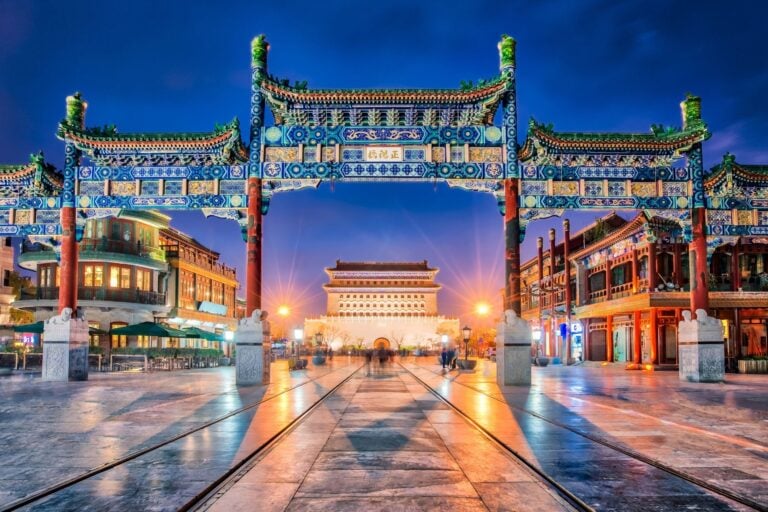
My first introduction to Beijing came through the 2008 Olympic Games. Like millions around the world, I watched a city present itself as the face of a rising China: a city of soaring skyscrapers and futuristic architecture.
As the years passed, that futuristic image only grew stronger, reinforced by stories of China’s rapid urban transformation.
So when I finally arrived in Beijing in 2025, I expected a city defined by its modernity.
Instead, I discovered a place of remarkable contrasts, where glass towers and high-speed rail exist alongside palace walls and centuries-old alleyways that tell the story of China’s imperial past.
A City Of Contrasts
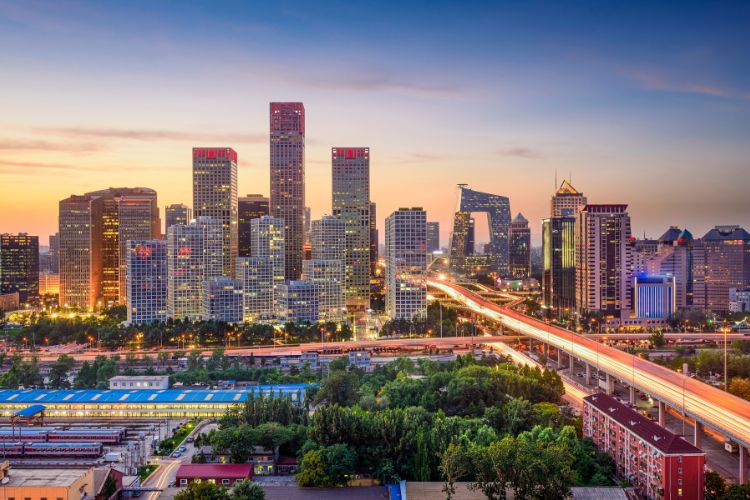
Few cities have reinvented themselves as profoundly as Beijing. With a history stretching back more than 3,000 years, it has evolved through kingdoms, dynasties, and revolutions, transforming from the seat of emperors into the political heart of one of the world’s most influential nations.
Yet beneath its modern skyline lies the remarkably intact blueprint of China’s last imperial capital.
For nearly five centuries, the Ming and Qing emperors shaped Beijing according to principles of hierarchy, cosmology, and political order.
Today, travellers can still follow that same imperial axis, walking through palaces, temples, gardens, and historic neighbourhoods that once revolved around the Son of Heaven.
The Imperial Axis
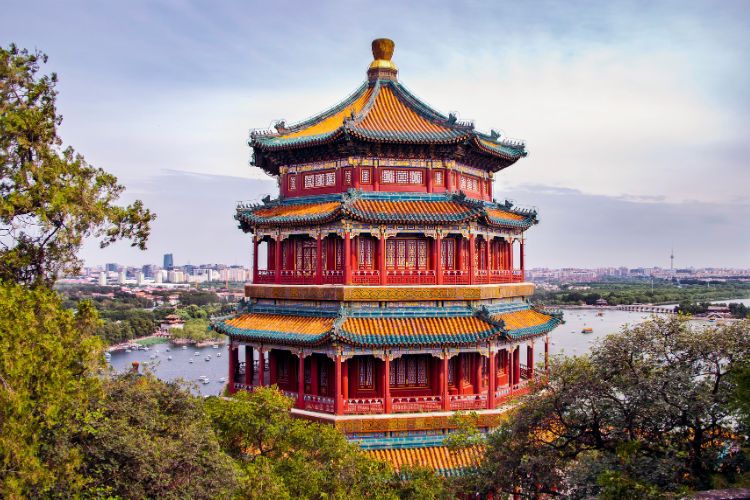
To understand imperial Beijing is not simply to visit its monuments, but to walk through the living framework of an empire.
For centuries, Chinese rulers believed that the emperor governed under the Mandate of Heaven. Revered as the Son of Heaven, he stood between the celestial and earthly realms, entrusted with preserving harmony across the empire.
The imperial capital was designed as more than a seat of power. It became a reflection of the heavens themselves, where every palace, temple, and ceremonial avenue reinforced the emperor’s divine right to rule. A grand north–south axis anchored the city, with the Dragon Throne at its symbolic heart.
From this central spine stretched palace halls, ceremonial gates, temples, and ritual altars, each positioned with remarkable precision to reflect hierarchy, balance, and cosmic order.
Walking through Beijing today, that remarkable blueprint remains intact, inviting you to experience the same imperial framework that once governed the Chinese empire.
Tiananmen Square
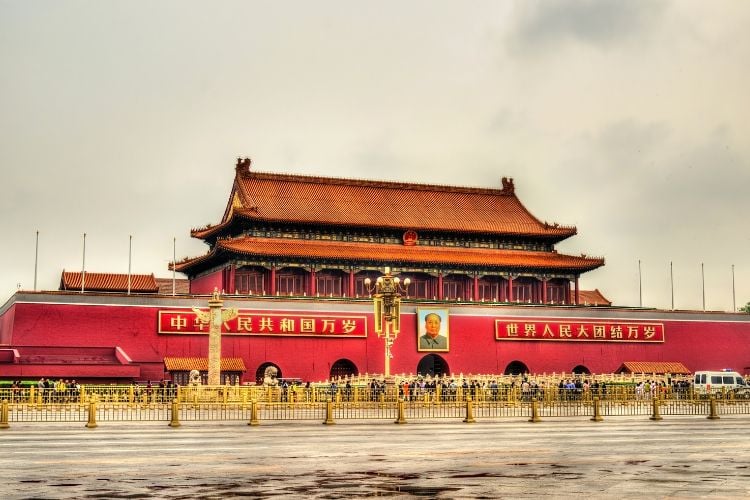
Before entering the Forbidden City, I crossed Tiananmen Square, one of the largest public squares in the world. Knowing the history that had unfolded here made the vast open space feel even more imposing.
Few places in China have witnessed as many turning points in history as Tiananmen. It has stood at the threshold of an empire, watched the last dynasty fall, seen a republic rise, and become the stage for some of the defining moments of modern China. Crossing it felt like walking between centuries.
Long before Tiananmen Square became the political heart of modern China, it served as the ceremonial forecourt to the Forbidden City, where imperial processions, state rituals and official proclamations unfolded before the people.
Beyond the Gate of Heavenly Peace lay a very different Beijing: the imperial capital where emperors ruled beneath the Mandate of Heaven for nearly five centuries. Leaving the vast openness of the square behind, I stepped through the Meridian Gate and into the world of the emperors.
The Forbidden City
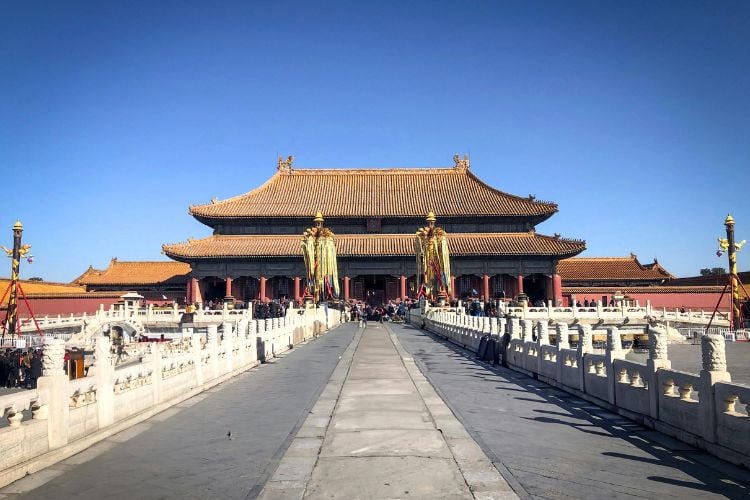
As I stepped through the towering Meridian Gate, the bustling roar of modern Beijing gave way to an almost sacred silence. It felt like being led into a secret.
Before me stretched a vast courtyard of weathered grey stone, its surface polished by centuries of footsteps. The sheer scale of the space was humbling, making me feel remarkably small. Standing there, it wasn’t difficult to imagine how ministers and foreign envoys must have felt approaching the emperor centuries ago.
Directly ahead stood the Hall of Supreme Harmony, perched atop a three-tiered marble terrace where emperors once presided over the empire’s most important ceremonies. Its sweeping roof, glazed in imperial yellow, shimmered beneath the afternoon sun. Every gate, courtyard, and roofline was designed to reinforce the majesty of the throne.
As I wandered deeper into the palace, the vast ceremonial courtyards gave way to the quieter Inner Court, where the emperors and their families once lived. Beyond the monumental halls lay private residences, shaded gardens and intimate courtyards, hidden from ministers, officials and ordinary citizens alike.
Here, the palace felt less like an imperial monument and more like a secluded world reserved for the emperor and his household. It was here, more than anywhere else, that the name Forbidden City truly began to make sense.
Leaving the residential quarters behind, I entered the Imperial Garden. After the palace’s vast courtyards and imposing halls, its ancient cypress trees and elegant pavilions offered a welcome moment of stillness before stepping back into modern Beijing.
Jingshan Park Views
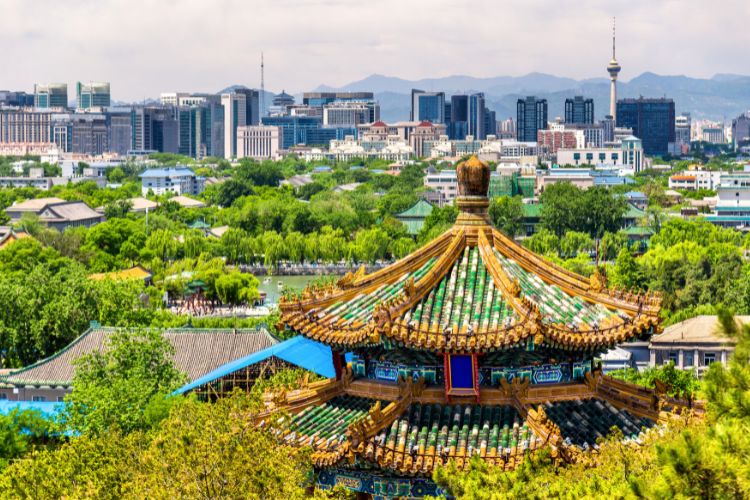
Exiting through the northern gate, I crossed the road to Jingshan Park and climbed to the hilltop alongside a few fellow travellers I had just met.
From the top, the Forbidden City unfolded in perfect symmetry, its golden roofs stretching along the city’s north–south axis before disappearing into the modern skyline.
Looking across Beijing, the centuries-old blueprint became unmistakable, reminding me that beneath the city’s glass towers and busy avenues still lies the enduring legacy of China’s last imperial capital.
Temple Of Heaven
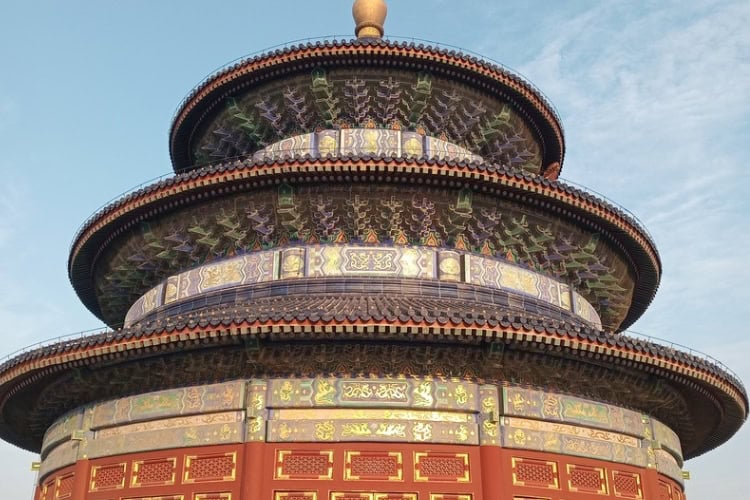
Photo by Shivika Singh
Having explored where emperors ruled, I travelled south to the Temple of Heaven, where they prayed.
The gardens surrounding the Temple of Heaven were full of life. Elderly locals practised tai chi beneath ancient cypress trees, children chased one another along the pathways, while groups of friends gathered to sing, dance, and chat beneath shaded pavilions.
Yet as I approached the Hall of Prayer for Good Harvests, that lively atmosphere seemed to fade into the background. Standing before its soaring blue-tiled roof, the temple felt almost sacred, its quiet serenity untouched by the bustle just beyond its walls.
Every winter, the emperor travelled here to pray for a good harvest, believing that the prosperity of the empire depended on maintaining harmony between heaven and earth. Standing before the Hall of Prayer, I felt as though the weight of centuries had never truly disappeared.
Beijing Hutongs
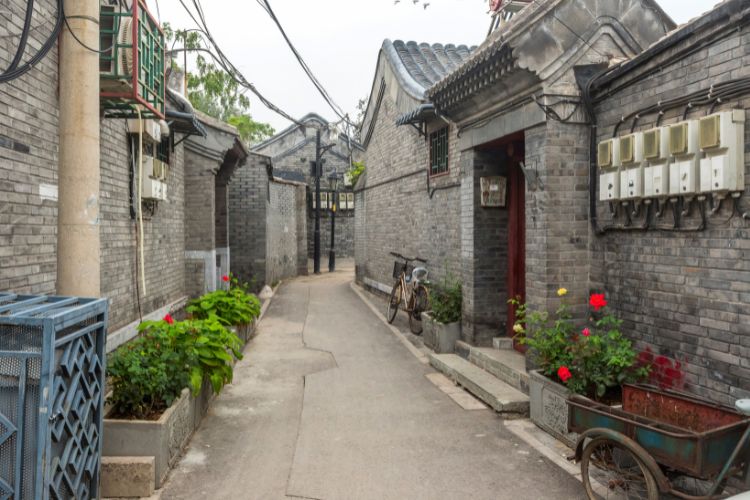
After a short metro ride, I arrived at the Bell and Drum Towers, once Beijing’s official timekeepers during the Ming and Qing dynasties. The square around them buzzed with activity. Young women dressed in exquisite hanfu paused to pose for photographs while street performers entertained passing crowds.
Curious to see what lay beyond the crowds, I ventured into the maze of narrow lanes behind the towers.
These were Beijing’s famous hutongs, historic residential neighbourhoods of narrow alleyways and traditional siheyuan courtyard homes that have shaped everyday life in the capital for centuries.
While the city’s palaces tell the story of emperors, the hutongs reveal how generations of ordinary Beijingers have lived, worked, and built communities.
Within moments, the broad public square gave way to winding alleys lined with tiny cafés, family-run restaurants, and neighbourhood shops.
As evening fell, the softly lit lanes preserved the feeling of another era. Elderly residents chatted outside their front doors, neighbours gathered over tea, and the aroma of sizzling dumplings and grilled skewers drifted through the air.
It was starting to feel less like a tourist attraction and more like stepping into the everyday rhythm of the city.
Enchanted Evenings
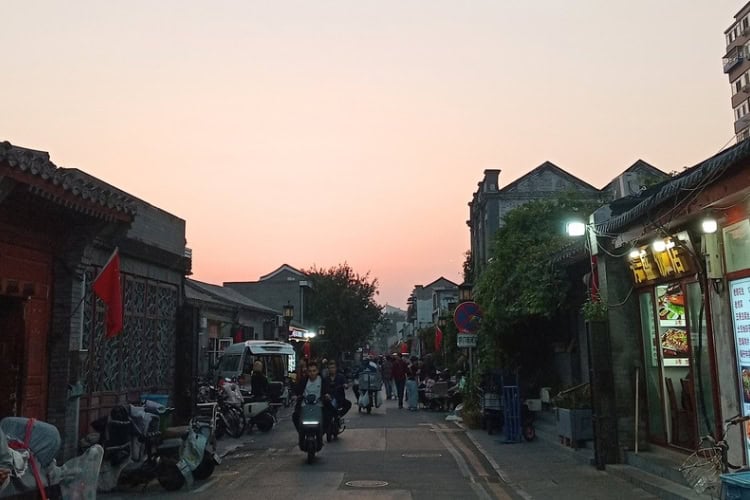
I had originally planned to spend just a couple of hours exploring the neighbourhood. Instead, I found myself lingering well past midnight, wandering wherever the next alley happened to lead.
To my surprise, the hutongs never seemed to grow quiet. Every turn revealed something different: a hidden teahouse, a tiny noodle shop, or a family-run eatery with only a handful of tables. It was here that I settled into a small restaurant for an individual hotpot, one of the most memorable meals of my trip.
Afterward, I wandered the neighbourhood once more, taking one last slow walk through the lantern-lit alleys before returning to my hotel.
It didn’t take long to realise that the hutongs were not a place to rush through. They were meant to be wandered, savoured, and lived, if only for an evening.
The following evening, I came back just before sunset. This time, I wandered without a destination until I found a quiet spot beside Houhai Lake.
As the sun slipped behind the tiled rooftops and the first lights began to shimmer across the water, I found myself lingering once again, in no hurry to leave. It was then that I realised sometimes a place simply speaks to us. Not because of one monument, one meal, or one unforgettable view, but because, somehow, it makes us feel at home in a place that once felt unfamiliar.
Those are the places we return to, again and again. I knew then that Beijing would be one of mine.
If You Go
Best Time to Visit: April to May and September to October offer the most comfortable weather for exploring Beijing, with mild temperatures and clear skies. Winters can be bitterly cold, but they also bring smaller crowds, making it an excellent time to visit popular attractions without the usual rush.
Getting Around: Getting around Beijing is as straightforward as navigating any other major city. The city’s extensive metro network is the fastest and most affordable way to reach its major attractions. Stations are clearly signposted in both Chinese and English, and the system is clean, efficient, and remarkably easy to navigate, even for first-time visitors.
Where to Stay: Beijing is a vast city, so the best neighbourhood depends on the kind of trip you’re planning. For first-time visitors, Wangfujing is an excellent base due to its central location and easy access to the city’s major attractions along the Central Axis. During my visit, I stayed near the 798 Art District, Beijing’s creative hub, known for its contemporary art galleries, independent cafés, and vibrant atmosphere. It’s a great choice for travellers looking to experience a more modern, artistic side of the city while remaining well connected by metro.
Planning Ahead: Several of Beijing’s most popular attractions require advance reservations, particularly on weekends and public holidays. Forbidden City Visitors must book online in advance (tickets typically release seven days ahead) through the official channel, and international visitors need real-name registration matching the exact passport used at entry. Be sure to carry your passport, as it may be required for entry and ticket verification at major sites.
Inspire your next adventure with our articles below:
- Shanghai’s Best Budget Bites: From Shengjian Bao to Hairy Crab Dumplings
- Where Traditional Japan Still Lives: Inside Takayama’s Time-Capsule Streets
Author Bio: Shivika Singh is a UK-based writer and Editor-in-Chief of the student-led publication Empoword Journalism. Currently travelling across Asia and Europe on a gap year, she is particularly interested in stories that explore the intersection of travel, culture and literature.
Want to discover more hidden gems and helpful travel tips? Join our free newsletter for the latest travel secrets and travel articles.
We are reader-supported and may earn a commission on purchases made through links in this article.

- Slow Down on Corfu: A Perfect Day at Kontogialos Beach - October 21, 2026
- Fort Lauderdale’s New Era: The Best Places to Stay, Eat, and Explore Around Pier Sixty-Six - October 21, 2026
- 11 Incredible Reasons to Visit Fairbanks, Alaska This Winter - October 21, 2026
Planning another trip soon? ✈️
Add GoWorldTravel.com as a preferred source on Google. Click the button below so our local guides, packing hacks, and hidden-gem itineraries always show up first when you search!
Add to Preferred Sources