
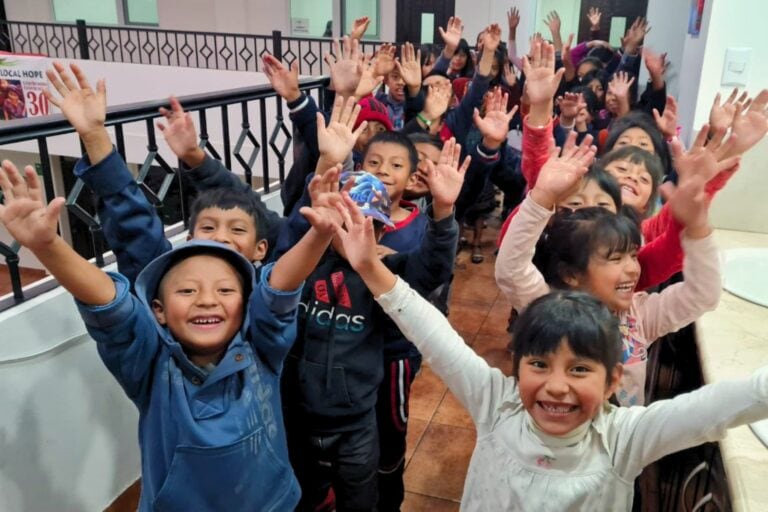
From the moment the van door slid open, schoolchildren grabbed our hands with delight, pulling us into the Xela AID complex, where they sang and danced for us. It didn’t take long for them to persuade us to join in, my feet tripping over each other as I struggled to match the footwork of children a third of my size.
My eyes began to well up, a lump forming in my throat, overwhelmed by the sweetness of these children coming from a world far apart from anything I’d ever known. We were not only welcomed into a beautiful Guatemalan community but trusted enough to stay, to help in small ways, and most of all, to learn from them.
Life in San Martín Chiquito
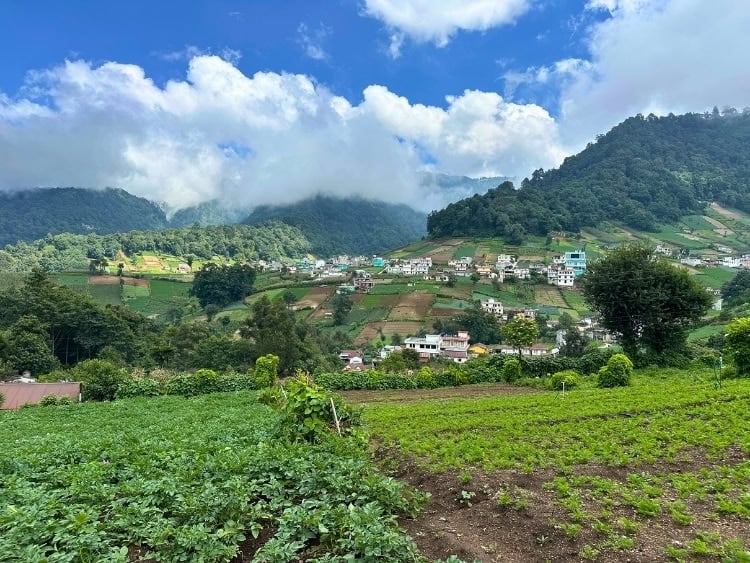
After spending a week in touristy Antigua, my friend, Lauryn and I slipped into another side of Guatemala entirely: San Martín Chiquito, a small village resting in the Guatemalan Highlands, shrouded in mist. Small houses dot the valley, with large plots of farmland dominating the landscape.
Here, agriculture is the lifeblood of the community, providing the bulk of the town’s jobs. Unfortunately, it is not enough. Unemployment is high, and those who are employed barely make enough to live. Infrastructure is limited, with the nearest hospital being an hour away. Only 60% of the population has cars, which limits access to basic necessities, including healthcare, education and a police force.
Out of necessity, the community takes a lot into its own hands, and what I observed was the antithesis of the life I know in the States. Local committees and neighbors take responsibility for the community’s safety. Those who commit crimes are not tolerated and become outcasts.
In the States, a honking car raises my blood pressure, signaling that something could go awry. In San Martín, honking is no more than a greeting, a way of recognizing one another’s humanity and shared lifestyle. Even walking through the village, there wasn’t a single person who didn’t greet us with a buenos días. This was a community of resilience, finding ways to cope and ultimately defy the poor hand they were dealt.
A day into our stay, we saw what the hardest version of that looks like. It is not uncommon for large families to live in one-room shacks with dirt floors and corrugated metal roofs, with little access to safe drinking water and other basic needs. Jobs are few and far between, health problems are rampant and their needs are real and immediate. This has been an ongoing struggle for decades, with few resources and little infrastructure to address it.
The Founding of Local Hope
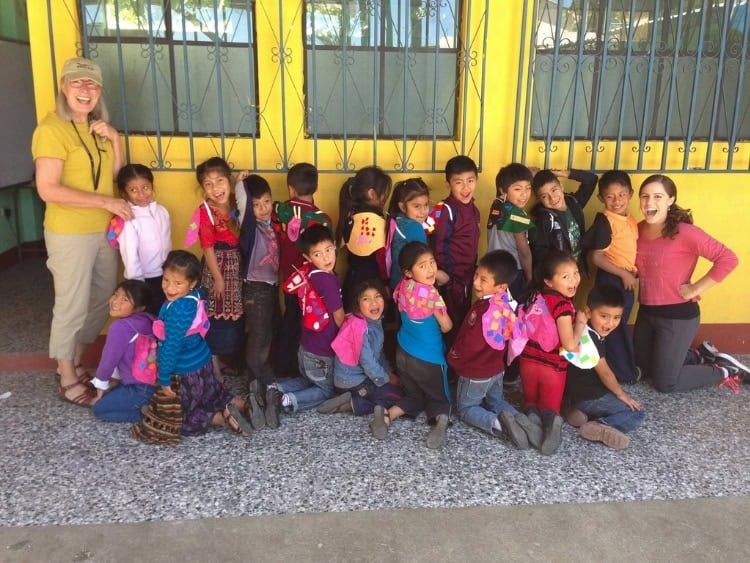
Then along came Leslie Baer Dinkel, a young professional who visited Guatemala in the early 1990s with the simple intention of improving her Spanish. Instead, she found herself in the middle of a raging civil war, one that had spent decades targeting the indigenous Mayan communities of rural Guatemala. She couldn’t look away from what she witnessed, and it completely altered the course of her life.
With the support of a friend, she founded Local Hope, known in Guatemala as Xela AID (pronounced “Shay-la”), in 1992, starting with emergency medical aid and building a single school. It didn’t take long to understand that handouts weren’t the answer. Real change meant education, self-reliance and leadership that came from within the community itself.
More than three decades later, the organization has delivered over $8 million in support across education, healthcare, clean environment initiatives and emergency relief, always with the goal of equipping the community to sustain itself, rather than creating reliance on outside help.
How Local Hope Serves the Community
Education

In the same space where the schoolchildren danced for us resides the school itself, built as an enclosed courtyard building that feels communal and accessible. Classrooms and facilities line each level, all opening onto a central atrium where kids gather and play.
Each floor has a mission, supporting children of different ages and needs. There is a Montessori program for young children, specialized classes for kids with special needs, training for children who didn’t thrive in formal education environments, and a leadership program for teens that includes business training.
With only 1% of San Martín owning computers, the computer lab is essential, offering free basic training and formal government courses to community members of all ages. A study center provides additional tutoring for elementary-aged children struggling in school. And while school attendance in San Martín is now mandatory, with 95% of children enrolled, access alone doesn’t guarantee quality.
The Montessori Program
Lauryn and I were particularly amazed by the Montessori program. We had both attended Montessori schools as children, and walking into that classroom felt unexpectedly personal. Child-sized furniture, wooden towers, sandpaper letters, puzzles. Lauryn was beaming while she reminisced, recognizing and rediscovering classroom materials from her own childhood. The weight of it hit both of us. Kids here, in this small Guatemalan village, getting the same experience we had. It is not something this community would have had access to without Local Hope.
Staff Who Started as Students
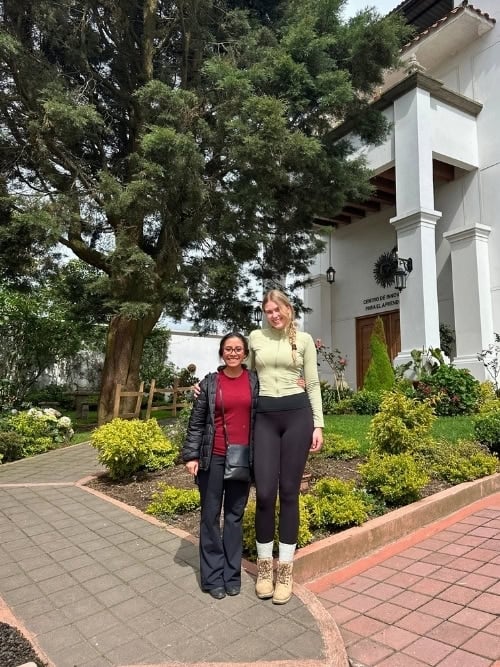
Meeting the Local Hope staff, we learned that many of them went through the programs themselves. Maria Julia, who was our exceptional guide throughout our visit, learned English, business and computer skills through Local Hope and is now one of the organization’s key leaders. She shared so much with us about what it was like to grow up in San Martín, how it has evolved and what the community means to her. She is direct evidence that the program is working exactly as intended. Spending time with her made me think hard about what I am actually doing with the privileges I have been handed.
Adult Literacy
Education doesn’t stop at childhood either. Adult literacy classes are open to the broader community, with the majority of students being women. For generations, many women in San Martín were expected to marry young, and formal education simply wasn’t considered for them. The literacy program is quietly changing that.
Food Security
Food security is another issue Local Hope addresses head-on. Many children arrive having not eaten, largely because families who grow food often sell it rather than eat it. Local Hope runs a kitchen on site, serving over 200 hot meals a week alongside regular nutrition drinks.
Healthcare
Learning is not possible if basic health needs go unmet, which is why the medical center sitting adjacent to the school building is just as essential as the classrooms beside it. Ever expanding, it houses a pharmacy, consultation rooms, a waiting room, an X-ray room and weekly dental and optometry services. All services are free for students, and for those who cannot pay, the clinic doesn’t charge.
For communities too far to make the drive, Local Hope brings the care to them. Mobile clinic days deliver deworming medication and basic medical services directly to the most remote villages in the region. For those who can’t travel at all, home visits are available, a critical lifeline in a community with no ambulances.
Mental health is perhaps the most quietly urgent need of all. Awareness of mental health has only recently taken hold in the United States, and it arrived even later in communities like San Martín. Local Hope employs a psychologist who works with children, teachers and parents, and currently has a 25-person waitlist.
Staying and Volunteering with Local Hope
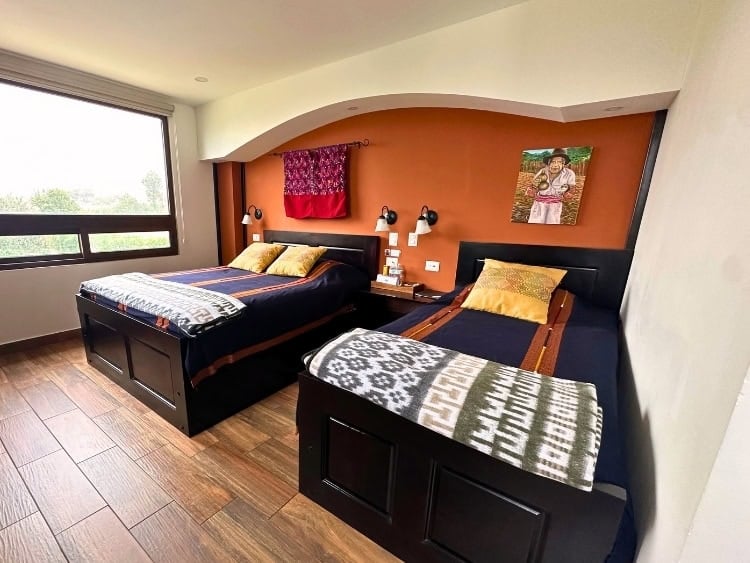
In 2021, Local Hope opened an eco guest house on the top floor of its education building, designed with the notion that meaningful volunteering can coexist with a comfortable stay. Handwoven blankets made by local Mayan artisans are folded neatly on the beds, and just outside the windows, rows of cabbage fields stretch across the hills. It is quiet, simple, and delightfully cozy.
During our time, Lauryn and I learned to build a basic water filtration system, assemble food bags, and help construct a chicken coop. The work itself was meaningful, but what stayed with me most was seeing its direct impact on the communities.
Into the Community
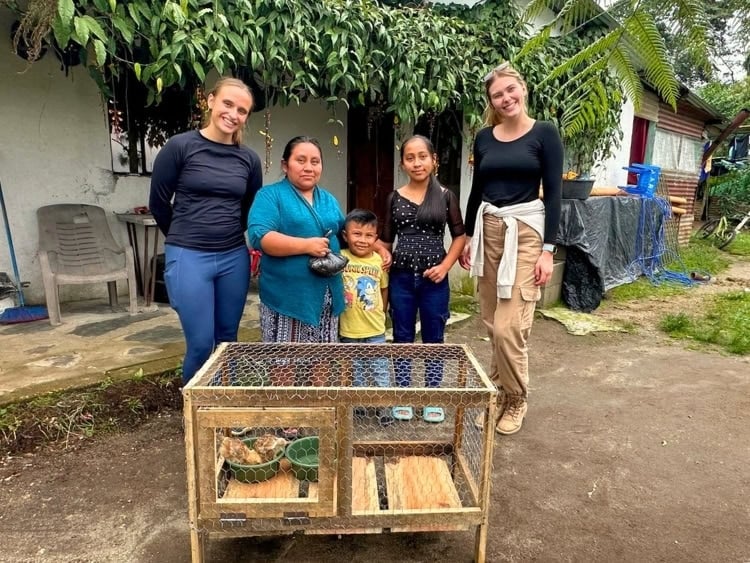
The community we visited was about half an hour away, a hill peppered with small shacks rooted in the mud, with children running around and mothers going about their day. We walked from home to home, delivering everything we had put together: food bags filled with shelf-stable staples, deworming medication and water filtration systems. Small, but essential resources.
We carried the bags between us, taking turns handing things over, exchanging smiles that felt both warm and hesitant. You could sense the weight many of these families were carrying, even in the brief moments we shared.
One of the most memorable visits was to the family whose chicken coop we had built. We helped set it up in their yard, carefully placing the tiny chicks inside one by one. That single coop can create a steady source of food and even income for that family.
As we hiked along muddy paths between homes, kids would run toward us, laughing and curious. At first, I didn’t understand the excitement, but then it clicked. Visitors are rare here. Seeing a foreigner, particularly a gringa of towering proportions like myself, is a novelty.
Beyond Volunteering
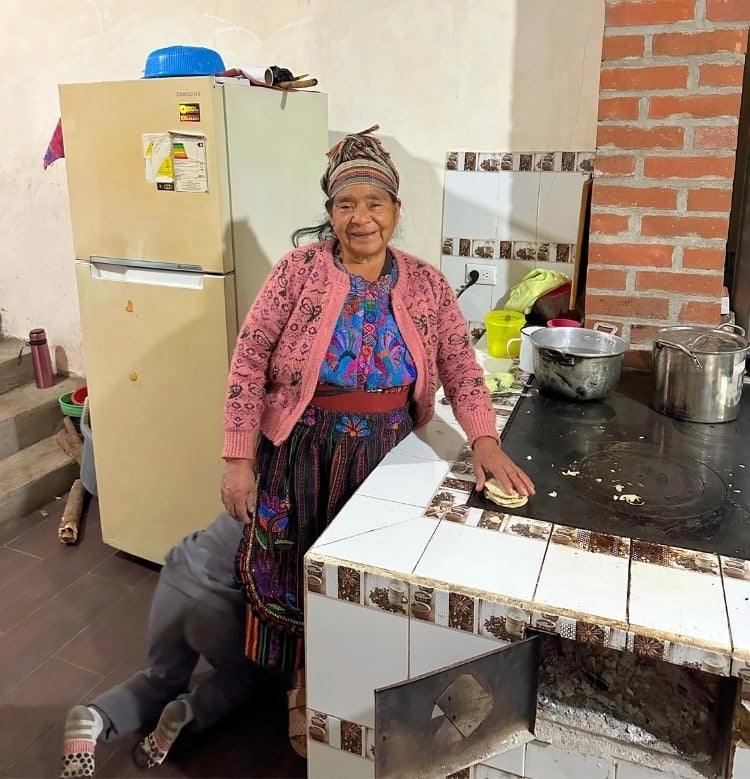
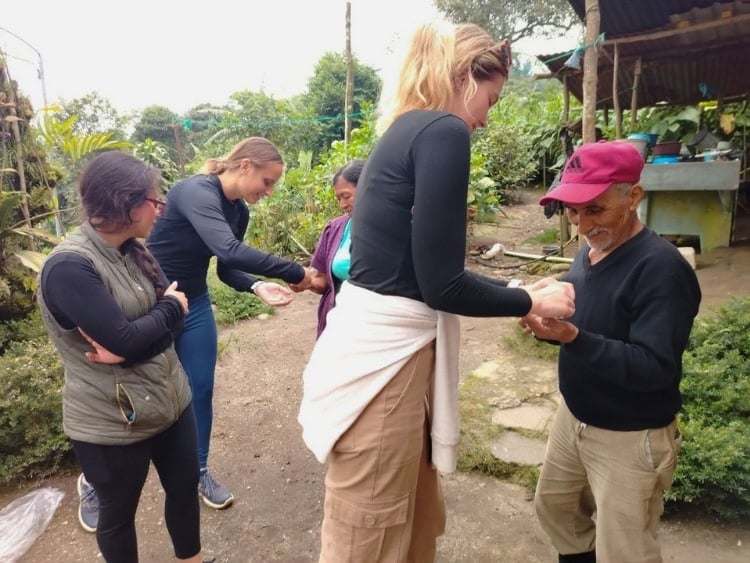
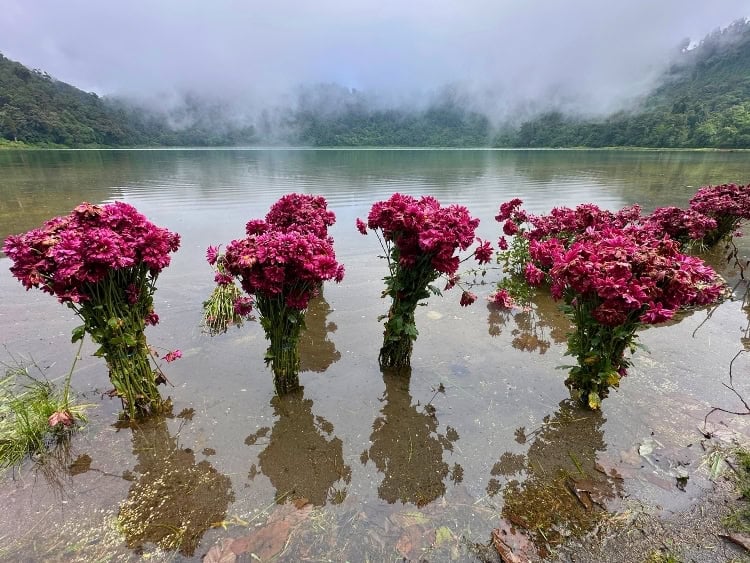
Outside of volunteering, we were invited into other parts of daily life. Lauryn and I learned how to make tortillas alongside local Mayan women who spoke only Mam, communicating mostly through gestures and laughter. We tried weaving, which turned out to be deeply humbling, and hiked to the sacred Mayan lake, Chicabal, with views of the surrounding lush rainforest and active volcanoes.
What Travel Is Supposed to Do to You
When we travel, we invite ourselves into others’ cultures and spaces, and we so rarely center the narrative around anyone but ourselves. After this trip, I will forever be more intentional about where I go, how that impacts others and what I can do to help when the opportunity arises, even in small ways.
It is a privilege to see the world and dip into other people’s ways of living, one that continues to open my eyes in ways I never expected. Visiting San Martín and being exposed to a facet of humanity I had only ever read about cracked something open in me. I came home with a profound and uncomfortable realization: I want to travel with others in mind, decentering myself and use whatever platform I have for good.
San Martín is a community of utmost resilience, and those who pass through, even for a short while, can feel it. To see the light in the eyes of children being given opportunities that kids like me never had to think twice about, knowing they are part of a generation that will shape and change their own community. That is what travel is supposed to do to you.
If You Go
The Eco Guest House at San Martín is bookable directly through xelaaid.org. Rooms are $91.34 per night and include breakfast for two, with options for traditional lunch and dinner by arrangement. Trust us, you want those meals. The food is freshly made, hearty and was one of the highlights of our stay. The guesthouse accommodates individuals, couples, families and small groups, with adjoining rooms available.
Most volunteers stay as part of organized group programs. Local Hope offers several options depending on your timeline and goals. A 7 or 9-day turn-key service trip includes accommodations, transportation and most meals.
A two-week all-inclusive package is available for those who want a deeper commitment. For more flexibility, the Build Your Own Trip option lets individuals or group leaders customize dates and activities. Full-day and overnight packages are also available for shorter stays. Details and registration for all packages can be found at give.localhope.org/trips.
If you’re unable to visit but still want to support the organization, Local Hope accepts donations here, and every dollar goes directly toward the education, health and economic development programs that are changing lives in San Martín.
Inspire your next adventure with our articles below:
- Escaping the 9-5: A Month Living Off-Grid in Costa Rica
- Baby Sea Turtle Release in Mexico: A Meaningful Experience
Want to discover more hidden gems and helpful travel tips? Join our free newsletter for the latest travel secrets and travel articles.

- Ghosts, Wild West History and Cowboy Culture in Cheyenne, Wyoming - October 8, 2026
- Staying Overnight at the Haunted Lizzie Borden House in Fall River, MA - September 28, 2026
- Skip Oktoberfest: Stuttgart’s Cannstatter Volksfest Is Smaller, Cheaper and Way Less Crowded - September 19, 2026
Planning another trip soon? ✈️
Add GoWorldTravel.com as a preferred source on Google. Click the button below so our local guides, packing hacks, and hidden-gem itineraries always show up first when you search!
Add to Preferred Sources