
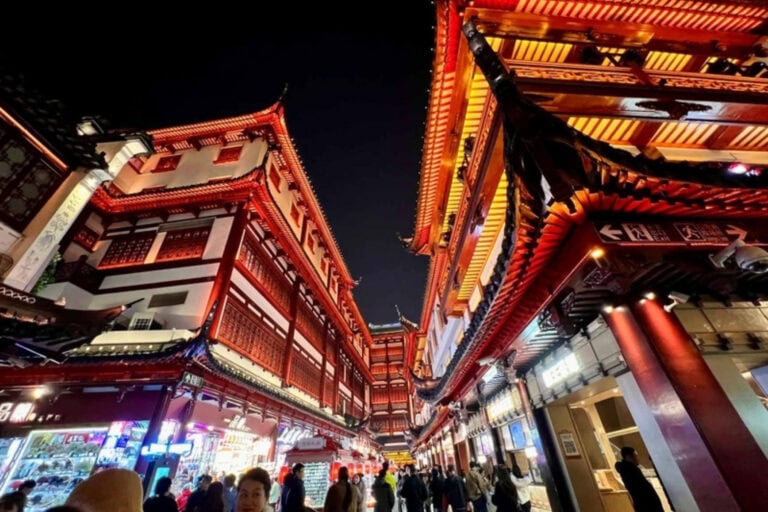
Shanghai is often painted as a playground for the wealthy, all towering skyscrapers and sky-high prices. Before landing in Shanghai, friends had warned me that my wallet would take a beating.
But trust me, you don’t need a fortune to eat well here. If you know where to look, you can hunt down authentic and even Michelin-recognized flavors for just a few dollars.
Ready to eat your way through the city without emptying your wallet? Let’s dive into the best budget-friendly bites Shanghai has to offer.
1. Shengjian Bao
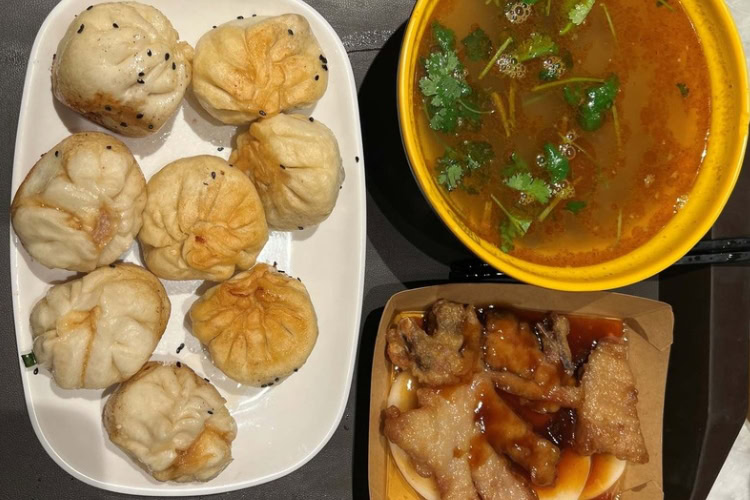
Our first culinary epiphany happened at Da Hu Chun (大壶春), an unassuming joint with a Michelin Guide mention. Unlike the delicate, steamed soup dumplings most travelers are familiar with, Da Hu Chun specializes in Shengjian Bao, pan-fried soup dumplings with a much thicker, yeasted dough.
The dining room was loud and frantic. Eating a Shengjian Bao is a high-stakes exercise in physics. I carefully nibbled a small hole in the thick, pillowy top, let the steam escape, and sucked out the rich, savory pork broth.
The interior meat was tender and deeply comforting, but the real star was the contrast of the base—shatteringly crisp and embedded with toasted sesame seeds. It felt like someone took the soul of a delicate soup dumpling and infused it with the comforting energy of a midnight street market.
Address: Da Hu Chun (大壶春), 136 Sichuan Middle Road, Huangpu District, Shanghai
Estimated Price: $3–$4 per plate (usually 4 generous buns)
2. Hairy Crab Xiao Long Bao
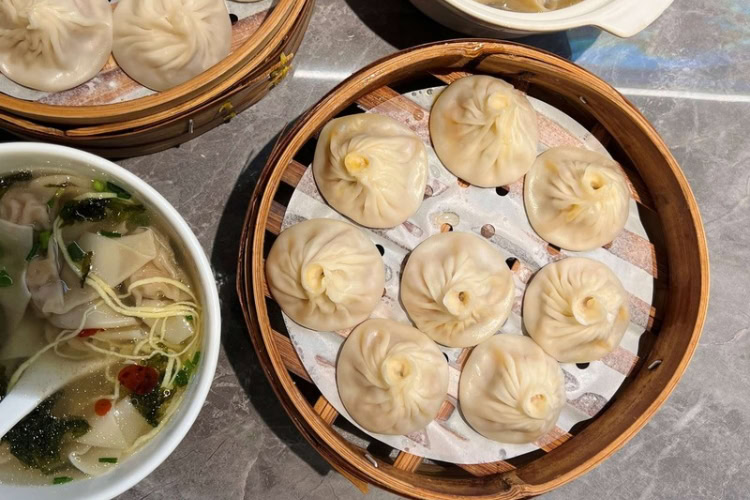
A few days later, while wandering through the historic, tree-lined streets near the Jing’an Temple, we hit a human wall. A massive, slow-moving queue wrapped tightly around a modest storefront with a simple red sign: Lai Lai Xiao Long (莱莱小笼).
When a restaurant in Shanghai has a line that long, consisting entirely of neighborhood regulars, you don’t ask questions; you get in line.
As we edged closer to the door, we noticed the distinctive Michelin green plaque on the glass. When our bamboo basket arrived, the dumplings looked almost translucent, their delicate skins sagging under the weight of the rich broth within.
Using my chopsticks, I gently lifted one by its pleated crown, cradled it in a wide spoon, and added a few slivers of fresh ginger, soaked in dark rice vinegar.
The first bite was an explosion of pure umami. The rich, velvety sweetness of the crab roe cut beautifully through the savory pork broth. We didn’t even look at each other before raising our hands to order a second basket.
Address: 506 Wujiang Road (near Jing’an Temple district), Shanghai
Estimated Price: $7 per steamer basket
3. Crab Roe Noodles
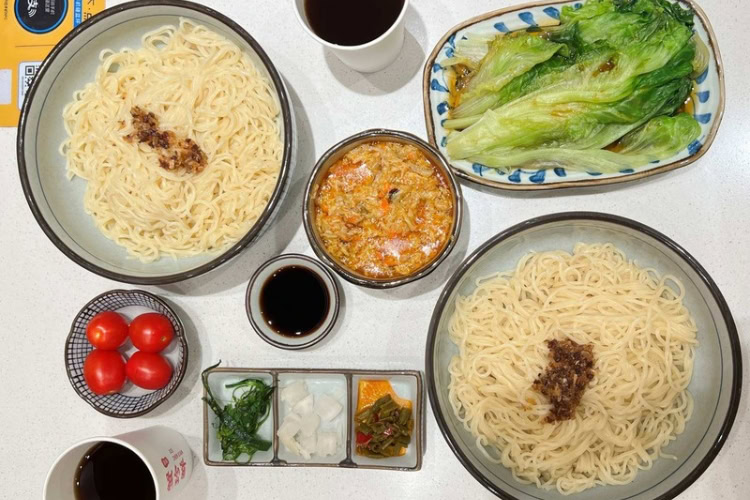
You cannot talk about Shanghai food culture without talking about the city’s obsession with hairy crab (Da Zha Xie). Traditionally, these crabs are harvested from nearby lakes during the autumn months when the roe is at its richest. In upscale establishments, a single crab dish can easily clear $100.
Determined to experience this seasonal phenomenon without draining our travel fund, we followed a tip from a local blogger and headed into the basement of a modern shopping mall. We found a clean, fast-casual counter serving thick bowls of traditional hairy crab noodles.
It was our most expensive meal of the trip, which made us laugh given the sheer luxury of what was placed in front of us.
The noodles came drenched in a golden, velvety sauce made entirely from fresh crab meat and rich, buttery roe. Each strand of the chewy, hand-pulled noodles carried the deep, oceanic sweetness of the crab.
Address: Food Court Basement, Reel Mall, 1601 Nanjing West Road, Jing’an District, Shanghai
Estimated Price: $12 per person
4. Palmiers
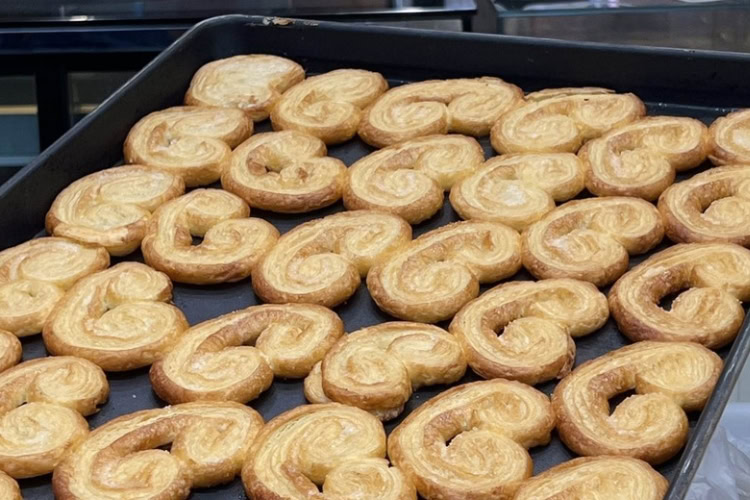
Not everything in Shanghai requires a seat and a pair of chopsticks. While walking along the neon-lit pedestrian stretch of Nanjing Road, an overwhelming aroma of toasted sugar and European butter completely hijacked our senses. It led us to a local bakery line where people were buying boxes of Palmiers (locally known as butterfly cookies).
While originally a French pastry, Shanghai has adopted and perfected the palmier over the decades. The local version is incredibly light, featuring dozens of micro-layers of flaky, golden pastry coated in a perfectly caramelized glaze. It wasn’t cloyingly sweet, just rich, oily-rich in butter, and intensely satisfying.
Pro tip: always buy them fresh from the counter rather than the pre-packaged gift boxes to ensure you get that maximum, melt-in-your-mouth crunch. We bought a box intended to last the week; it didn’t survive the subway ride back to our hotel.
Address: Nanjing East Road Pedestrian Street, Huangpu District, Shanghai
Estimated Price: $3–$5 per box
5. Qingtuan
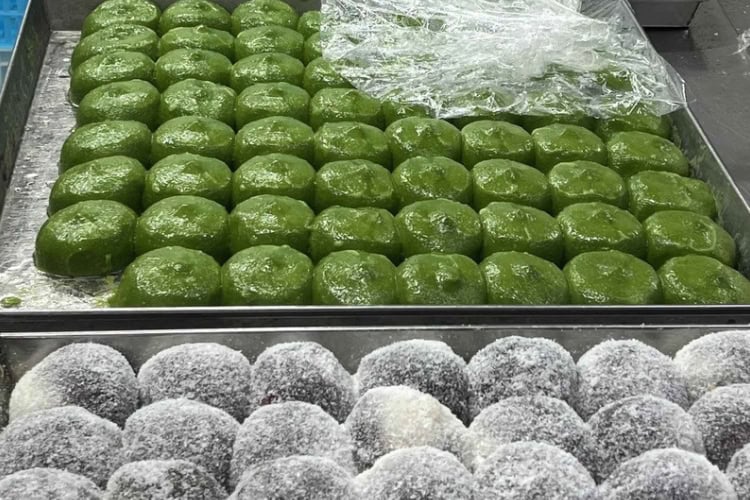
Just a few blocks away, still on Nanjing East Road, we encountered another massive crowd outside Shen Dacheng (沈大成), a certified “Chinese Time-Honored Brand” that has been operating since 1875.
Through the open kitchen window, workers were rapidly hand-shaping vibrant, emerald-green dough balls.
These are Qingtuan, sweet green glutinous rice balls colored with mugwort juice. While they offer various fillings, ranging from sweet red bean paste to modern savory twists, we opted for the salted egg yolk and pork floss filling.
The texture was incredibly chewy and satisfying, while the filling provided a brilliant contrast of savory, powdery pork floss and the rich, salty creaminess of the egg yolk.
Address: 636 Nanjing East Road, Huangpu District, Shanghai
Estimated Price: $0.50–$2 per piece
If You Go
Getting around: Shanghai’s Metro system is incredibly clean, cheap, and easy to navigate with English signage. Buy a 3-day pass at any station to hop between food neighborhoods seamlessly.
Paying for food: Cash and international credit cards are rarely used in small Shanghai eateries. Before you arrive, download Alipay or WeChat and link your international credit card. Scanning QR codes at the counter or table is the standard way to order and pay for street food.
Search the menu in advance: If you are worried about language barriers or hidden costs at small local spots, download Baidu Maps (or use Google Maps with a reliable VPN). You can search for these restaurants ahead of time to preview their digital menus, look at photos of the dishes, and check recent customer reviews. It takes away all the financial guesswork so you can walk in feeling completely confident.
When to visit: If you want to experience the absolute best of the hairy crab season (including the crab noodles and Xiao Long Bao mentioned above), plan your trip between October and December, when the crabs are harvested fresh daily.
Need a hand planning your trip? Here are the sites and services we rely on most, from booking tools to travel products we love.
Inspire your next adventure with our articles below:
- What to Eat in Barcelona: 8 Must-Try Local Dishes
- In Search of the Freshest Latte in the Heart of Brazil’s Coffee Fields
Author Bio: Huyen Tran is a curious traveler with a lifelong passion for exploring the world. She loves telling travel stories through words and photographs, capturing the spirit of every place she visits. You can find more of her journeys on TikTok.
Want to discover more hidden gems and helpful travel tips? Join our free newsletter for the latest travel secrets and travel articles.
We are reader-supported and may earn a commission on purchases made through links in this article.

- El Nido, Philippines: The Islands I Came For, the People Who Made Me Stay - September 30, 2026
- A Guide to Noodles in Vietnam: How to Slurp Like a Local - September 30, 2026
- Travel Guide to Japan - September 29, 2026
Planning another trip soon? ✈️
Add GoWorldTravel.com as a preferred source on Google. Click the button below so our local guides, packing hacks, and hidden-gem itineraries always show up first when you search!
Add to Preferred Sources