
Ever since I was a youngster and a garter snake squiggled its way across my path, I have carried an intense fear of snakes.
The memory is vivid; the sudden movement, my dramatic leap backward, and the lifelong agreement that I made with myself to admire reptiles strictly from a very safe distance.
Yet somewhere between gilded spires and sacred chants during this temple tour in Bangkok, I find myself reconsidering everything I thought I knew about snakes, and perhaps even whispering a wish that would change our relationship forever.
Meeting Siri: Our Keeper of Stories
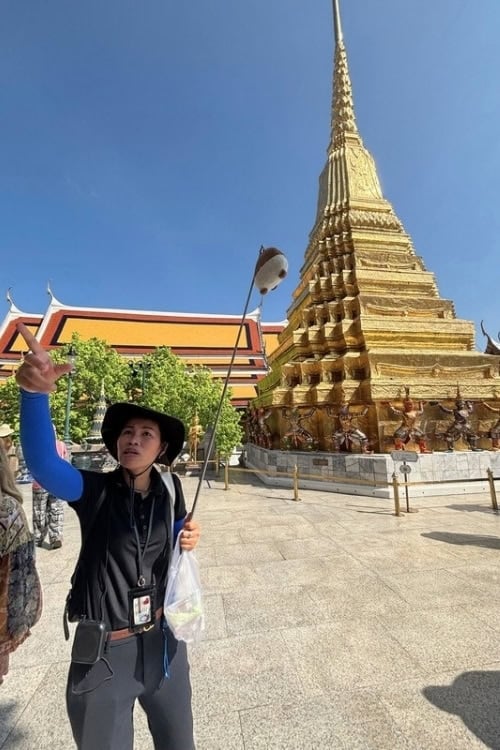
My husband and I join a small guided tour on a warm Bangkok morning led by Siri, a sweet, energetic local whose enthusiasm could power the city’s endless tuk-tuks.
Petite but unstoppable, she greets us with a wai (palms pressed together) and a smile that suggests we are about to learn far more than expected.
“I promise,” she laughs, adjusting her sunhat, “by the end of today you will understand Thailand — at least a little.”
Joining us are two delightful couples from San Francisco, instant travel companions bonded by jet lag, curiosity, and a shared admiration for the unpredictable magic of travel.
Leaving the bustle of Chang Pier behind, we follow Siri toward the temple gates, golden spires emerging between modern buildings as she begins unfolding Thailand’s story, a nation deeply shaped by Buddhism, monarchy, and mythological symbolism.
“Thailand has never been colonized,” she tells us proudly. “Our temples hold our identity — our kings, our religion, our stories.”
The Grand Palace: The King’s Temple
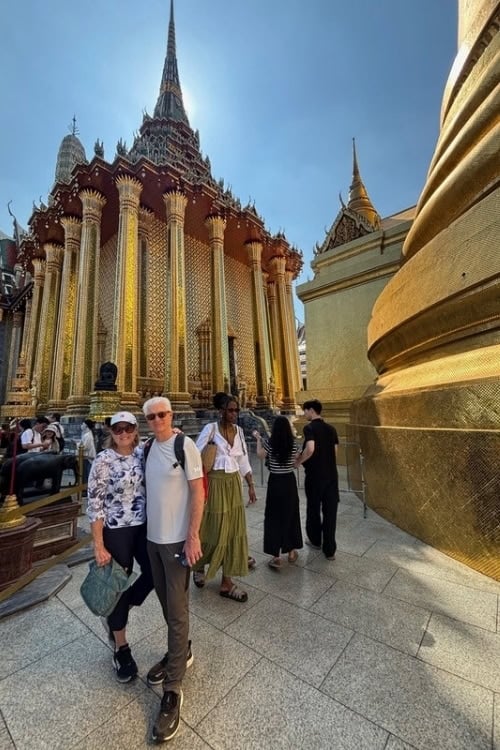
The Grand Palace rises from Bangkok’s historic heart like a vision dipped in gold. Built in 1782 by King Rama I, it served as the royal residence and administrative center for generations of Thai monarchs. Today, it remains one of Thailand’s most sacred sites.
Inside the palace complex lies Wat Phra Kaew, the Temple of the Emerald Buddha — often called the King’s Temple.
No photograph prepares you for the brilliance: mirrored mosaics shimmer under tropical sun, golden chedis pierce the sky, and mythological guardians stand watch at every turn.
The Symbolism of Snakes
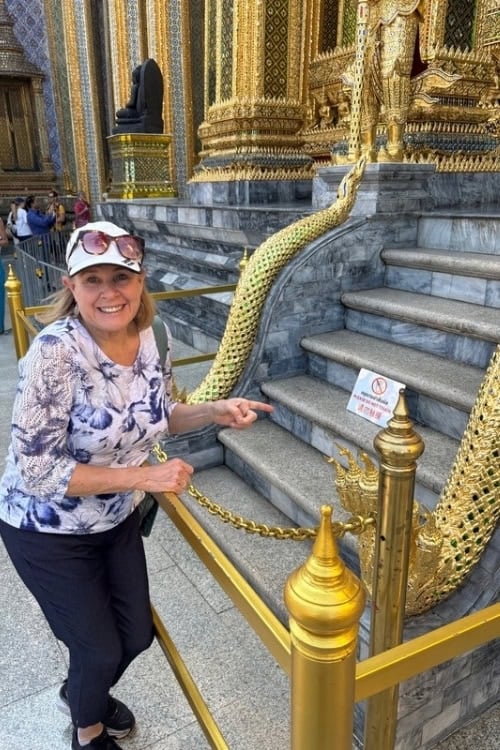
And everywhere, unmistakably, are snakes. Serpents curve along stair railings, coil around temple roofs, and stretch protectively across entrances in elaborate carvings. These were Nagas, Siri explained — sacred serpent beings deeply rooted in Buddhist and Hindu mythology.
“In our belief,” she says, gesturing toward a multi-headed serpent guarding a staircase, “the Naga protects Buddha and connects earth and water. It brings fertility, protection, and good fortune.”
Legend tells that after Buddha achieved enlightenment, a great Naga king rose from beneath the earth, spreading his hood to shield Buddha from a violent storm. Since then, the serpent symbolizes protection, prosperity, and spiritual awakening.
I stare at the intricate carving, equal parts fascinated and uneasy.
“You see?” Siri smiles knowingly. “Not scary. Very lucky.”
Inside the temple, visitors move quietly, shoes are removed, and shoulders are covered. The Emerald Buddha, carved from a single block of jade, sits high above us, serene and impossibly radiant.
Here, Siri explains, visitors may make one wish. “One wish only,” she says gently. “Make it meaningful.”
One wish. I fold my hands, close my eyes, and immediately break the rules.
Instead of choosing just one, I bundle together every lingering health concern, every hope for continued healing, every wish for strength, happiness, and longevity — essentially presenting the gods with what could only be described as a spiritual grocery list. Surely, I reason silently, divine beings appreciate efficiency.
“I hope they accept combination wishes,” I whisper to my husband afterward.
He grins. “It’s worth a try.”
Crossing The River To Wat Arun
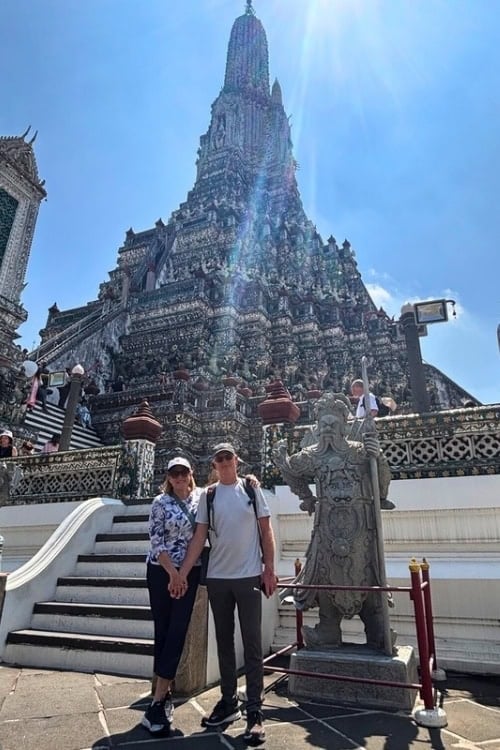
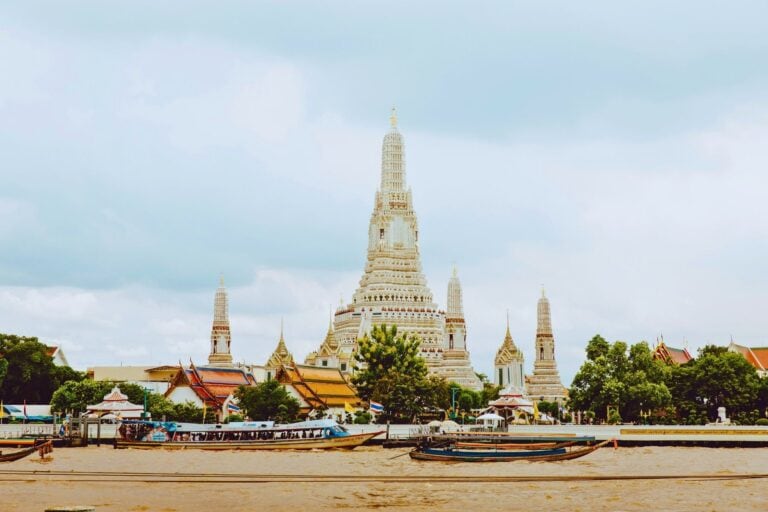
Next, we cross the Chao Phraya River toward Wat Arun, the Temple of Dawn, its porcelain-covered towers rising elegantly against the sky.
Unlike the gold-heavy grandeur of the Grand Palace, Wat Arun feels airy and luminous. Built during the Ayutthaya period and later expanded by King Rama II, its central prang (tower) represents Mount Meru, the cosmic center of the universe in Buddhist cosmology.
Up close, the temple reveals extraordinary detail: millions of pieces of broken Chinese porcelain and seashells embedded into floral patterns that sparkle in sunlight.
And again — the Nagas appear. Stone serpents line staircases, their bodies flowing like waves frozen in motion.
“The Naga is bridge between worlds,” Siri explains. “Water and land, human and divine. It protects sacred places and guides believers toward enlightenment.”
Climbing the steep steps, I find myself less fearful, more curious. The serpent imagery no longer feels threatening; instead, it seems protective, almost reassuring.
Perhaps symbolism changes perspective. Or perhaps jet lag softens lifelong phobias.
Wat Pho: The Reclining Buddha
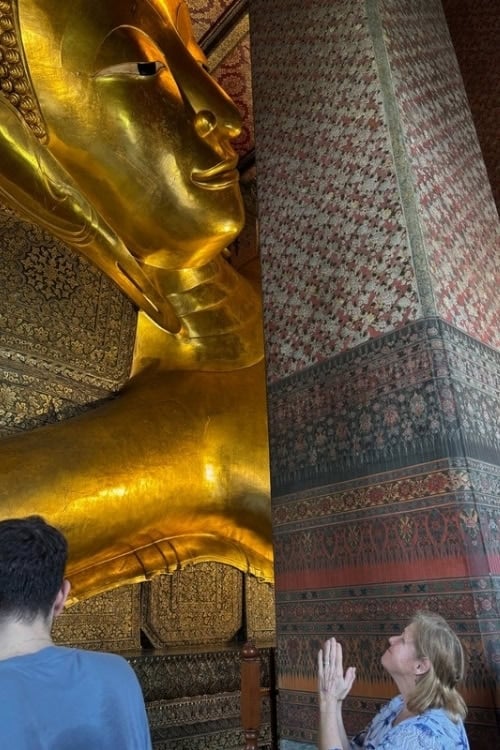
Our final stop is Wat Pho, Bangkok’s oldest temple complex and home to the legendary Reclining Buddha. If the Grand Palace dazzles and Wat Arun inspires, Wat Pho humbles.
The moment we enter the hall, conversation fades. Stretching 46 meters long, the golden Reclining Buddha shimmers before us; peaceful, immense, impossibly graceful.
Mother-of-pearl inlays decorate the soles of his feet, illustrating sacred symbols of enlightenment.
“This Buddha represents passing into nirvana,” Siri says softly. “Peace after the journey.”
Monks live nearby while visitors drop coins into rows of bronze bowls, each gentle clang echoing like a meditation bell.
By now, after hours of stories about Nagas and their blessings, the serpent symbolism has settled into my thoughts. The snake, once my symbol of fear, has transformed into something entirely different: protection, renewal, good fortune.
We are told we could make another wish here.
I stand beneath the shimmering gold figure, hands pressed together, and smile at the irony of what comes next.
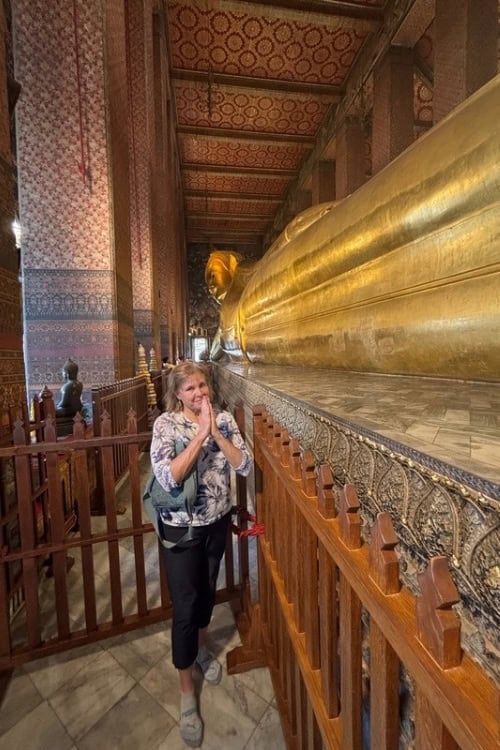
After hearing repeatedly how the sacred serpent grants fortune and fulfills wishes, I make perhaps the most unexpected prayer of my life. I wish to gain a genuine passion for all snakes, believing that if I can embrace the creature said to grant blessings, perhaps all wishes thereafter might naturally follow.
It feels both absurd and oddly profound. My husband raises an eyebrow when I tell him.
“You?” he laughs. “A snake enthusiast?”
“Let’s not rush things,” I reply. “Baby steps.”
“Well,” I said, “if enlightenment requires compromise, I’m willing to negotiate.”
Lessons Beyond The Temples
As we leave Wat Pho, Bangkok buzzes around us; river boats hum while traffic pulses and horns echo through the streets behind us. The sacred calm of the temples gives way to the restless rhythm of the city, ancient belief existing comfortably beside modern life.
Siri gathers our group one last time.
“Thailand teaches balance,” she says. “Fear and respect exist together. When we understand something, we stop fearing it.”
Her words linger long after we say goodbye.
The temples of Bangkok are undeniably magnificent — masterpieces of architecture, history, and devotion.
Yet what stays with me most is not simply their beauty, but the stories embedded within them: symbols meant to guide believers toward reflection and growth.
Travel often promises new sights, new flavors, and new stories. Occasionally, it offers something quieter but more lasting — a shift in perspective.
Somewhere between gilded temples and sacred serpents, my lifelong fear softens into understanding.
I may never become a true snake enthusiast, but thanks to one extraordinary day in Bangkok’s temples, I now see them not as creatures to fear, but as symbols of protection, renewal, and possibility.
And if the Naga truly grants wishes, perhaps mine has already begun.
Getting There And Around
- River Ferry: The easiest and most scenic route is via the Chao Phraya Express Boat.
- Disembark at Chang Pier (Tha Chang) for the Grand Palace and Wat Pho.
- Cross the river by local ferry to reach Wat Arun.
- Taxis and Grab rides are widely available, but traffic can be heavy.
Temple Dress Code Rules
All three temples are active religious sites. Respectful attire is required.
Wear:
- Covered shoulders
- Pants or skirts below the knee
- Closed or secure footwear (easy to remove)
Temple Etiquette Essentials
- Remove shoes before entering sacred buildings.
- Keep voices low and phones on silent.
- Never point feet toward Buddha images — feet are considered the lowest part of the body in Thai culture.
- Avoid touching monks (especially women).
- Photography is allowed in most outdoor areas but may be restricted inside certain halls.
Best Time To Visit
- Early morning (8:30–10:00 a.m.) offers cooler temperatures and smaller crowds.
- Bangkok heat builds quickly by midday — bring water, sunscreen, and a hat.
- Guided tours provide valuable cultural context that greatly enriches the experience. This tour has over a thousand 5-star reviews and covers all the spots mentioned in this article.
Need a hand planning your trip? Here are the sites and services we rely on most, from booking tools to travel products we love.
Inspire your next adventure with our articles below:
- Why These 3 Asian Countries Should Be on Every Traveler’s Bucket List
- Why Luang Prabang Is One of Southeast Asia’s Most Captivating Towns
Author Bio: Since 1996, while freelancing, Jane Cassie has had thousands of articles published. Her stories have appeared CNN Magazine, Northwest Travel, New York Daily News, Chicken Soup For The Soul, Dreamscapes, Air Canada In-flight, Cottage Life, Epicure and Travel, just to name a few. She has been a regular contributor to Spa Life, INNspire, North American Inns Magazine, Cottage, and Inspire Magazines.
Want to discover more hidden gems and helpful travel tips? Join our free newsletter for the latest travel secrets and travel articles.
We are reader-supported and may earn a commission on purchases made through links in this article.

Planning another trip soon? ✈️
Add GoWorldTravel.com as a preferred source on Google. Click the button below so our local guides, packing hacks, and hidden-gem itineraries always show up first when you search!
Add to Preferred Sources