
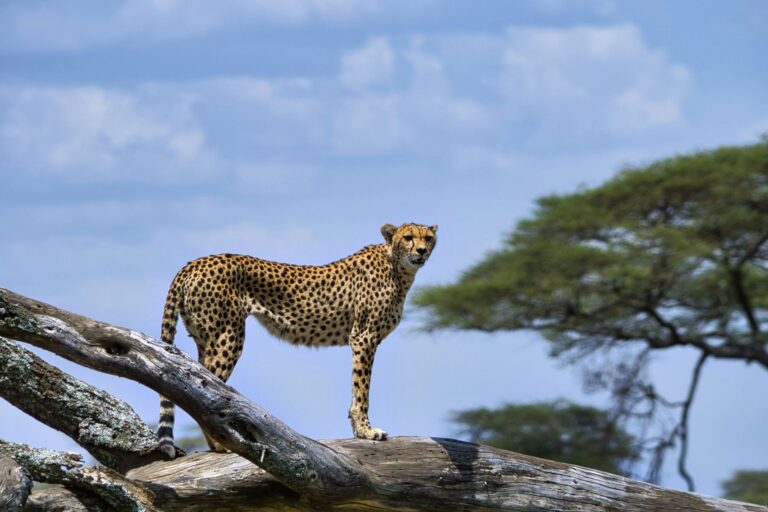

Bordering eight countries and bordered by the warm waters of the Indian Ocean, Tanzania is one of Africa’s most captivating destinations. It hosts some of the world’s most iconic landscapes and spectacular wildlife migrations.
From the towering, snow-capped summit of Mount Kilimanjaro to the endless golden plains of the Serengeti and the turquoise shores of Zanzibar, Tanzania offers a wild, diverse experience that still feels profoundly untamed.
Yet many travelers arrive knowing little beyond the word “safari.” What they often find is a country that moves at its own steady pace, unhurried, generous, and unforgettable.
A 7-Day Safari Tour: A Balanced Introduction
For those new to Tanzania or limited on time, a 7-day African safari tour with Aardvark Expeditions provides a carefully balanced introduction to the country’s ecological and cultural richness.
It combines several must-see destinations, Tarangire, the Serengeti, and Ngorongoro Crater, into a manageable itinerary, paced to allow for meaningful wildlife encounters without feeling rushed. This tour gives first-time visitors a taste of its wild heart and a solid foundation for deeper exploration later.
Arusha: The Gateway Town
Most northern safari routes begin in Arusha, a lively town nestled in the shadow of Mount Meru and Kilimanjaro. Arusha serves as both a practical launch point and a cultural primer for the days ahead. Here, travelers can settle in, recover from long flights, and soak up a bit of local flavor.
The town is known for its bustling markets and friendly locals, and offers opportunities to visit nearby coffee plantations or Maasai craft markets. This brief immersion helps ease the transition from urban life to the rhythms of the African bush.
Accommodations range from comfortable lodges to boutique hotels, setting a welcoming tone before the adventure begins.

Tarangire National Park: Elephants and Baobabs
Your first major stop is Tarangire National Park, often overshadowed by the more famous Serengeti, but a highlight in its own right. Known for its towering baobab trees and seasonal swamps, Tarangire supports some of East Africa’s largest elephant herds.
Spotting elephants lumbering beneath ancient baobabs is one of the park’s most iconic sights.
In addition to elephants, Tarangire’s diverse ecosystem is home to giraffes, lions, buffalo, zebra, and over 500 bird species, including colorful lilac-breasted rollers and stately kori bustards.
What sets Tarangire apart is its relative tranquility; it tends to attract fewer tourists, allowing for quieter, more contemplative game drives. This can be a welcome contrast to the crowds elsewhere and offers excellent photo opportunities.
The park’s best time to visit coincides with the dry season (June to October), when wildlife congregates around remaining water sources, making sightings more predictable.

Olduvai Gorge: Where Human History Begins
Between Tarangire and the Serengeti lies Olduvai Gorge, a deep ravine in the Great Rift Valley often called the “Cradle of Mankind.” It’s here that paleoanthropologists Louis and Mary Leakey uncovered fossils of early hominids, rewriting the story of human evolution.
While not a traditional safari highlight, a stop at Olduvai Gorge and its small museum adds a profound dimension to your journey. Standing in this landscape, where our earliest ancestors once roamed, puts the surrounding wilderness into a broader context of deep time and human origins.
For some, it’s a humbling reminder that Tanzania’s story is not just one of wildlife but also the roots of humanity itself.

The Serengeti: Wilderness at Its Most Dramatic
No safari in Tanzania is complete without visiting the Serengeti, a vast expanse of rolling plains, kopjes (rocky outcrops), and savanna that is arguably Africa’s most famous wildlife reserve.
But rather than lingering in the popular central Serengeti, this tour takes you to the northern Serengeti’s Kogatende region, one of the park’s least crowded and most dramatic corners.
This area is a key crossing point during the annual Great Migration, when over a million wildebeest, accompanied by zebra and gazelle, attempt to cross the perilous Mara River.
Witnessing this spectacle, a chaotic, adrenaline-fueled moment where crocodiles lie in wait and lions prowl the banks, is a bucket-list experience.
Yet it’s important to recognize that the timing of the river crossings can be unpredictable, often lasting only a few weeks between July and September. There’s no guarantee of seeing the crossing, but if you do, it’s an unforgettable natural drama.
Beyond the riverbanks, Kogatende’s open grasslands and rocky hills support a rich predator population, including lions, leopards, cheetahs, and hyenas, making every game drive potentially rewarding. The region’s remoteness means fewer vehicles and a more intimate connection to the wild.
Accommodations here are usually luxury tented camps, offering privacy, comfort, and stunning views, perfect for relaxing after long days on safari.

Ngorongoro Crater: An Ecosystem Like No Other
The journey culminates in the Ngorongoro Crater, the world’s largest intact volcanic caldera and one of Africa’s most spectacular wildlife arenas. Just ~10 miles across, the crater supports an exceptionally dense population of animals, including elephants, lions, hippos, hyenas, and buffalo.
It’s also one of the best places to spot the endangered black rhino, though sightings remain rare and require patience. Soda lakes attract flocks of flamingos, while the acacia woodlands offer shelter to countless smaller species.
Ngorongoro’s enclosed geography means animals are concentrated, allowing for high wildlife density and dramatic encounters.
But with this popularity comes early morning starts and increased vehicle traffic, conditions that can detract from the wilderness feeling. Still, it’s a fitting grand finale for your week in Tanzania.
What to Expect and Consider
A 7-day safari tour in Tanzania balances iconic wildlife viewing with cultural insights and logistical practicality. It’s designed for travelers who want to experience the country’s highlights without committing to the months some devote to deeper exploration.
That said, Tanzania is a complex, dynamic place. Wildlife encounters depend heavily on season and luck.
Roads can be rough, and the rhythm of the bush is often slow and punctuated by waiting. But for many, this measured pace, punctuated by moments of breathtaking spectacle, is exactly the point.
Planning your trip with flexibility, an open mind, and realistic expectations will help you get the most from Tanzania’s unparalleled wilderness, and perhaps inspire you to return for an even richer experience.
Inspire your next adventure with our articles below:
Want to discover more hidden gems and helpful travel tips? Join our free newsletter for the latest travel secrets and travel articles.
We are reader-supported and may earn a commission on purchases made through links in this article.

- Cruising Greenland Is the World’s Most Beautiful Gamble - October 21, 2026
- Bukhara, Uzbekistan: The Silk Road City Where History and Art Thrive - October 20, 2026
- Hoi An, Vietnam: A Local’s Guide to the Ancient Town, An Bang Beach and Must-Try Dishes - October 20, 2026
Planning another trip soon? ✈️
Add GoWorldTravel.com as a preferred source on Google. Click the button below so our local guides, packing hacks, and hidden-gem itineraries always show up first when you search!
Add to Preferred Sources