

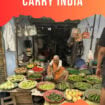
I’d been traveling to India for over a decade when I finally understood what real strength looked like. Not in a palace or on a camel safari, but on a dusty street in Jaipur, the sun glaring down so fiercely that even the air seemed to ache.
It was midday, and the city pulsed with heat and sound — horns, hawkers, tuk-tuks weaving like a river through chaos.
I was walking through a side street on the edge of the Pink City when I saw her: a woman, not much older than me, balancing an enormous basket of gravel on her head. No gloves, no boots, just bare hands, a faded sari and a scarf wrapped around her face to keep out the dust.
Her ankles were thick with silver bangles; her eyes met mine for the briefest moment, not pleading, not angry. Just… there. Steady. Alive. That moment changed everything.
Understanding the Real India

I’ve visited India six times over thirteen years. I’ve taken sleeper trains across states, spent weeks in the slums of Kolkata, and run tours introducing Westerners to the soul of Rajasthan.
I thought I understood India — the beauty and the burden of it. But that day, I realized I had only been looking at the surface. The real story — the real India — is being carried, quite literally, on the backs of its women.
The Invisible Backbone

In Jaipur, like in so many parts of the country, women are the invisible backbone. They sweep the streets, cook the meals, raise the children, feed the cows, carry the firewood and haul the building materials.
Yet you rarely see them in the front of shops or behind the counter. Even in the luxury fashion houses — where embroidery and block prints are traditionally women’s work — it’s men who get the praise and the paychecks. A man pours the chai, a man handles the sales, and a man signs the deal.
Meanwhile, his sister is likely at home, cooking for ten on a wood fire and managing the unrelenting expectations of her husband’s mother. I’ve met women in their twenties who look fifty, their backs already bent from years of carrying children, water and burdens we’ll never see.
And yet, they are proud. They are powerful. They are beautiful.
The Resilience of Rajasthani Women

Photo by Diane Sneddon
Rajasthani women wear their stories in full color. Even in the poorest areas, you’ll find saris in electric pinks and blazing oranges, anklets that jingle as they walk, and arms stacked with bangles that glint in the sun.
It’s not for anyone else. It’s not fashion. It’s resilience. It’s identity. And it’s everywhere.
I’ve sat with women in slum communities who, with little more than scraps of fabric and a shared sewing machine, produce the most intricate embroidery and patchwork I’ve ever seen.
These women are artisans, not just craftswomen, but cultural bearers. They pass down stitches like heirlooms. They keep their communities afloat with micro-economies powered by skill, not charity.
Facing Endless Barriers
But the barriers they face are endless. Access to healthcare is patchy at best. Menstruation products are scarce, expensive and taboo. Education — while more available now than ever — often stops at primary school for girls.
A girl’s future, in many households, still lies in how well she can cook and how early she can marry.
Every day is a quiet fight for survival. A fight for space on the road, where traffic doesn’t slow for pedestrians. A fight for respect in homes where men make the rules. A fight against the stares of men, some curious, some predatory, as they walk their children to school or collect water from a well that may or may not work that day.
And yet… they show up. Every day.
Stories of Strength and Survival

One of the women I’ve grown closest to in Jaipur runs a small fabric workshop tucked behind a busy street. She’s a fiercely determined entrepreneur — quiet, but commanding — and the sole breadwinner in her family.
Her husband is unwell, and her young son attends school nearby. She employs other local women to help cut and sew textiles, teaching them not just a trade, but a path toward self-reliance. For many of them, it’s the first time they’ve earned their own income.
But carving out independence in a deeply patriarchal society is never easy. After long days spent in a stifling, un-airconditioned workspace, she returns home to cook dinner, pick up her son, and manage the constant demands of her mother-in-law.
Still, she considers herself lucky. Her mother supported her ambitions. She learned English. She built something of her own.
“My best friend wasn’t so lucky,” she once told me. “All she ever wanted was to wear a sleeveless dress — not to impress anyone, just to feel the air on her skin. Just to choose for herself.”
And in that small, human longing, I understood the quiet rebellion that so many Indian women live every day — not for grand gestures, but for the right to simply be.
That hit me like a truck.
Empathy and Recognition

As a Western woman, I’ve had to earn respect in male-dominated workplaces, but I’ve never had to justify wanting an education. I’ve never had to ask permission to leave the house. I’ve never been blamed for my own safety. I’ve never had to navigate daily life in clothes that cover my body from head to toe, in 45-degree heat, just to protect my dignity.
Traveling in India has given me incredible moments of wonder — the golden light over the desert, the chaos of Delhi markets, the stillness of dawn at the Taj Mahal. But the most profound part has always been the women.
The women who hold families, traditions, and whole communities together. Those who work in silence and laugh in private. Who fight, quietly, to make sure their daughters have more.
A New Perspective
I now walk through Jaipur with different eyes. I still marvel at the architecture and the colors, but I look closer. I look for the women behind the scenes — stirring pots, sewing garments, lugging bricks, carrying culture.
And every time I catch one of their eyes, I try to offer something more than a nod. I offer recognition. Because they are not just strong, they are the reason this country stands.
Need a hand planning your trip? Here are the sites and services we rely on most, from booking tools to travel products we love.
Inspire your next adventure with our articles below:
Author Bio: Diane Sneddon is the visionary behind Samsara Lifestyle, lady start-up lifestyle and travel company dedicated to fostering meaningful connections between Australian travelers and the vibrant local communities of Jaipur, India. Samsara Lifestyle offers immersive tours that emphasize cultural exchange and social impact, particularly through partnerships with the Chahat Foundation. These small tours provide travelers with the opportunity to observe and support assistance programs for children and women in need, engaging in organized activities and sharing meals with local families. Diane’s approach is rooted in compassion and community, ensuring that each interaction is respectful and enriching for all involved.
Want to discover more hidden gems and helpful travel tips? Join our free newsletter for the latest travel secrets and travel articles.
We are reader-supported and may earn a commission on purchases made through links in this article.

- Fall Day Trips from Vancouver: 7 Scenic Walks Worth the Drive - September 15, 2026
- Laos for Backpackers: Vientiane, Vang Vieng and Luang Prabang on a Slow-Travel Route - September 15, 2026
- Why “Just Immerse Yourself” Won’t Teach You Spanish, No Matter How Long You Stay - September 15, 2026
Planning another trip soon? ✈️
Add GoWorldTravel.com as a preferred source on Google. Click the button below so our local guides, packing hacks, and hidden-gem itineraries always show up first when you search!
Add to Preferred Sources
Brilliant article.