
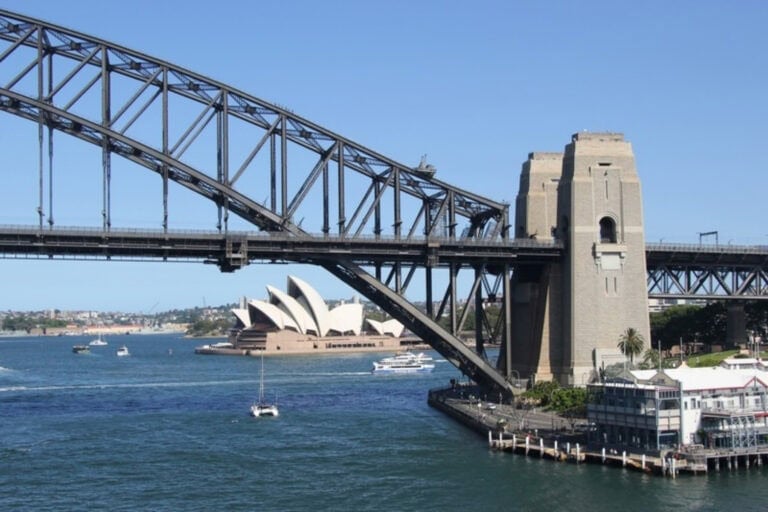

The moment our ship pulled away from the Cruise Terminal, a low, unmistakable blast of the ship’s horn echoed across Sydney Harbour. A quiet thrill set in.
It was early evening, and I leaned against the rail of the topmost deck to take in the sumptuous views. We slowly drifted beneath the Harbour Bridge, then eased past the Opera House, its white sails glowing in the late afternoon light.
I had taken ferries across these emerald waters multiple times, but this time the scale felt luxurious and grand. We bid farewell to the Opera House as the steely bridge towered overhead, watching as a sentinel, while the ship glided underneath. The city paused just long enough to watch us leave.
As the sail-away horns faded, a warm summer breeze rolled across the deck and the harbour opened out in front of us. The ocean stretched wide and uninterrupted. With it came that unmistakable feeling that our 10-day oceanic voyage had truly begun.
Exotic Destinations

We would be cruising to the east, somewhere between Australia, New Zealand, and Fiji, to the exotic Melanesian countries of Vanuatu and New Caledonia.
I chose to travel with Carnival Cruise Line aboard Carnival Adventure. Other operators such as Princess Cruises, Royal Caribbean and Oceania Cruises also offer voyages from Australia and New Zealand to these Pacific destinations.
By nightfall, the city lights melted behind us. All that remained were the gentle swell of the waves and the comforting hum of the engines underneath us.
I must admit, my excitement reminded me of the explorations of early-day adventurers such as James Cook, La Perouse, Bougainville and Abel Tasman, who crisscrossed these waters. And, in turn, inspired countless classics such as Coral Island, Moby Dick, and Robinson Crusoe.
About Vanuatu, New Caledonia

Vanuatu and New Caledonia are island nations in the southwest Pacific, close to Australia and New Zealand. They form part of Melanesia, a culturally rich region known for its deep Indigenous heritage, linguistic diversity and rich coral reefs.
Melanesia more broadly stretches from Papua New Guinea through the Solomon Islands, Vanuatu, New Caledonia and Fiji. It is distinguished from neighboring Polynesia by its darker-skinned population.
Days at Sea
There is something about the comfort and ease of a cruise that makes traveling feel like luxury. Point-to-point transportation is taken care of and food is a cornucopia of choices. It is completely up to you how much of a James Cook you want to be at every pit stop.
What fascinated me the most was the sense of exhilaration every time the cruise approached a new island at the start of the day. At the same time, there was a sense of calming down, drink in hand, and watching the same island slip by at sunset as the cruise moved out in search of new lands.
The days at sea before our first port were a gentle adjustment to life on board. At first, it felt indulgent to have nowhere to be and nothing to do but watch the horizon roll by. Mornings slipped into afternoons marked by lazy coffee breaks, deck walks, and the slow rhythm of the ship.
But as the novelty wore off, those long stretches of open water occasionally edged toward boredom. A reminder that sea days require you to surrender your usual sense of momentum.
Filling Time
However, what filled the gap was the sheer range of things to do, if you chose to look for them, all organized by the Cruise operator.
Tai chi sessions unfolded on the open deck at sunrise. This was followed by meditation classes and art workshops that drew surprisingly large crowds.
Dance lessons, trivia quizzes and talks on the history and geography of the Pacific dotted the daily program. It created a casual structure to the day without ever feeling demanding.
The ship also offered more energetic distractions, such as a large swimming pool on the topmost deck, crowned by a zipline humming overhead. Meanwhile, shaded loungers, a bar and an ice-creamery made it very easy to lose track of time.
Then there was the aspect of dining that was, at the very least, indulgent. Three options for fine-dining à la carte and one buffet restaurant that was open nearly all day long, with amazing sea views, gave ample opportunity to indulge the taste buds (and gain a fair bit of weight).
Somewhere between activity and rest, the days began to blur in the best possible way. By the time land finally appeared on the horizon, it felt less like waiting had passed and more like we’d already begun to unwind.
First Stop – Nouméa, New Caledonia: Paris of the Pacific

After three days at sea, our first port stop was Nouméa, the capital of New Caledonia. New Caledonia is a French territory in the southwest Pacific Ocean, east of Australia. Politically, it has a distinctive status with a degree of autonomy while remaining linked to France.
New Caledonia was first sighted by Europeans in 1774. British explorer Captain James Cook landed there (on his second voyage to the Pacific) and named it “Caledonia” after Scotland.
It was later claimed and brought under French control in 1853. France formally annexed the islands under Admiral Auguste Febvrier-Despointes on behalf of Napoleon III.
Despite our luxuries, we could collectively appreciate the first sight of land. Many of us headed to the deck for the views. No different, perhaps, from sailors of the 15th century, eagerly anticipating land for fresh provisions, human company and a sense of mysterious adventure after months at sea.
When the cruise docked, we were given 6 hours to spend as we chose, with a hard deadline to return on board by 4 pm.
Stepping ashore felt like arriving somewhere both exotic and familiar. With its French-inspired boulevards, colourful cafes, Parisian Notre-Dame churches and vibrant café culture, it was easy to see why Nouméa is often dubbed the “Pacific Paris”.
I wandered cobblestone streets lined with jacaranda trees, pausing for a pain au chocolat and coffee at a sidewalk table, feeling the warming sun on my shoulders.
Later, I thought of learning more about the local Kanak indigenous culture. It sounded a lot like Aboriginal traditional culture back in Australia.
A Cultural Lesson

I decided to visit the Jean-Marie Tjibaou Cultural Centre, where the art and displays offered a deep and respectful glimpse into the local culture. It was a beautiful counterpoint to Nouméa’s European elegance.
The Cultural Centre is named after Jean-Marie Tjibaou, a Kanak political leader, cultural activist, and intellectual from New Caledonia. Tjibaou played a central role in the struggle for Kanak identity and self-determination.
The Centre houses massive, curved structures, often described as shells or huts. It is inspired by traditional houses and village forms.
Rising dramatically along the peninsula, these tall wooden structures echo the scale and spirit of ancestral architecture while being reinterpreted through contemporary engineering.
Their form reflects Kanak cosmology and social organization, symbolizing growth, protection, and continuity between past, present and future.
Indigenous Woodcraft

It serves as a space for exhibitions, performances, research and community activities. It symbolizes both cultural resilience and dialogue between tradition and modernity.
I spent a good couple of hours wandering through the centre. Here I learned more about the culture and admired a splendid exhibition of indigenous woodcraft and photographs taken in the deep heartlands of the islands.
I then decided to head back to ‘Paris’ and amble for some time along the renowned beaches of Nouméa.
Nouméa’s beaches are known for their calm turquoise waters, soft white sand and easy access from the city. This makes them a central part of daily life.
Lined with palm trees and promenades, connected with excellent roads, beaches like Anse Vata and Baie des Citrons offer safe swimming and water sports. In addition are vibrant sunset views, with cafés and restaurants just steps away.
Protected by a coral reef, the lagoon remains gentle and clear. This gives Nouméa a relaxed, island feel that blends urban energy with tropical beauty.
I spent the next few hours soaking in the tropical paradise of Anse Vata before heading back before 4 pm, to wrap up the first pit-stop on the Pacific.
Cool drink in hand, standing on the deck, there was a beautiful sense of relaxation as we watched the Cruise chug out of the Harbour, bidding adieu to the sunset in Nouméa.
Île des Pins: A Tropical Reverie

Our next stop the following day was the enchanting Île des Pins (Island of Pines), a smudge of paradise in the Coral Sea.
The island was named by James Cook himself after the towering pine trees, now known as Cook Pines. Rolling off the tender onto pristine white sand, I felt as if I’d stumbled onto a postcard.
The shimmering white sands of Kuto Bay and Kanumera Bay, very close to the disembarkation point, will make you feel as if you can lounge just there the entire day. But I chose to explore the island a bit before submitting to the allure of these beaches.
My chosen destination for the day was the island’s crown jewels, the natural pool at Oro Bay. Oro Bay is a serene haven of crystal-clear, turquoise waters framed by lush tropical vegetation and soft white sand.
Shallow streams meander through the surrounding greenery, guiding visitors gently into the warm lagoon. The water is so transparent that the vibrant underwater life can be seen in stunning detail.
Immediately, I put on my snorkel and mask and swam around for a full two hours. It felt almost like I was swimming in a large aquarium. I was enchanted by playful clownfish weaving through swaying anemones, majestic giant clams nestled on the sandy bottom and colorful coral gardens sprawling everywhere.
While the bay is naturally tranquil, cruise passengers flocked here in droves, with many a familiar face. It felt as if the entire class had come to party. Laughter, splashing, and the buzz of shared excitement filled the air.
The combination of warm, inviting waters, vibrant marine life and a lively, joyful crowd created an unforgettable, almost magical experience at Oro Bay’s natural pool.
Quiet Time

Toward the later part of the day, I remembered the allure of Kanumera Bay and its long arc of beach curled like a crescent moon against the turquoise water. I headed back to sit there quietly under the shade of the spindly pines that gave the island its name.
Relaxing there, I recognized a pattern. The first part of the day ashore was all about exploring, making long trips, and indulging in adventure. The second part was more about unwinding on tropical sands, while keeping a close eye on the 4 pm deadline.
Back on the cruise, my appetite was on overdrive after a day of swimming and snorkelling. The smorgasbord of dishes further whetted that appetite. I indulged my inner glutton without guilt, knowing very well I had earned my calories for the day.
Lifou: Reef, White Sand and Local Heart

The next day, we headed to our third island, Lifou. It was our last stop in New Caledonia, but one filled with star attractions. The drill was clear – adventure to the farthest corners first. Therefore, we headed to Luécila Beach on the other end of the island.
I was immediately struck by its stunning white sands and the raw, untouched beauty of the remote Pacific. The beach stretches like a pristine ribbon between the turquoise lagoon and swaying palms, with hardly another soul in sight (except for your cruise comrades).
Swimming in its calm, clear waters felt like a private slice of paradise. I did feel like Robinson Crusoe, knowing very well we had come to one of the farthest extremes of the Pacific’s wilderness.
Next stop was Jinek Bay, where snorkelling along the edge of the New Caledonia Barrier Reef. The world’s second-largest reef was simply mesmerizing.
It was good to notice local guides and volunteers present, carefully supervising visitors to ensure we didn’t damage the delicate reef. A gentle reminder of the responsibility that comes with witnessing such natural wonders.
Milestones

While swimming here, I recalled my experiences at the Great Barrier Reef. The record-keeper in me realized with glee that I had now ticked off the two largest reefs on the planet. It was an exhilarating milestone.
Before leaving Lifou, we also visited the Church of Our Lady of the Assumption (Mother Mary), a charming local landmark with simple white walls and a serene interior.
It stands as a quiet cultural touchstone amid the island’s natural splendor, offering a glimpse into the heart and traditions of the Kanak people.
I headed back to the cruise early that day. This time, I found a hidden spot on the ship’s stern for one of the most memorable sunsets on the trip.
Pina Colada in hand, it was sheer delight to watch the ship depart from one of the loveliest islands of the Pacific.
Vanuatu: Port Vila and Hideaway Island Delights

After another day at sea, it was time for us to tick off yet another hard-to-visit country: the Melanesian archipelago of Vanuatu.
Formerly known as the New Hebrides, it had a unique colonial history as a condominium jointly administered by Britain and France from 1906 until independence in 1980.
The name of the country translates to “the land that stands” or “independent land.” This reflects the country’s assertion of sovereignty and identity after gaining independence.
Today, traces of colonial history can be found deeply embedded in English, French and the local lingua franca, Bislama, being widely spoken.
The next morning, we arrived in Vanuatu’s Port Vila, its tropical warmth greeting us like an old friend. Here, the pace was relaxed but lively, a kaleidoscope of local markets, colorful crafts and friendly laughter.
Hideaway Island
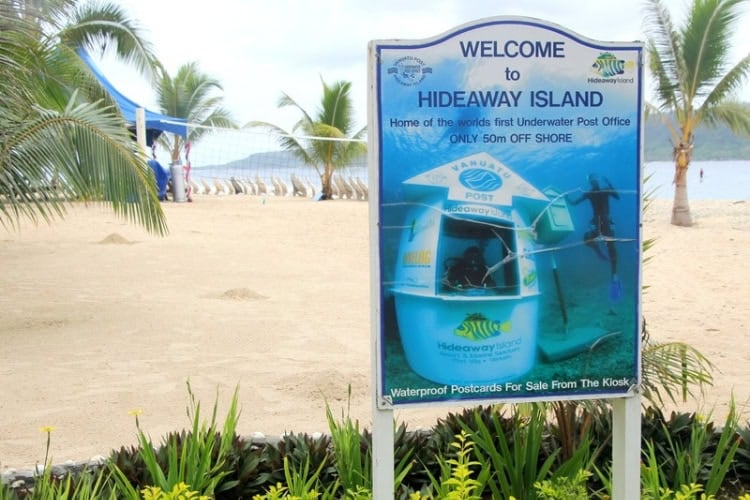
Our first adventure from Port Vila was a quick trip to Hideaway Island, just off the coast. It is a small, idyllic islet famous for its marine sanctuary and the popular underwater post office.
Surrounded by calm, crystal-clear waters, it’s a paradise for snorkelers and divers. Here they can explore vibrant coral gardens teeming with tropical fish, sea turtles and anemones.
The island’s sandy beaches and shaded palm groves provide a perfect spot to relax. Meanwhile, adventurous visitors can swim down to the submerged mailbox, send waterproof postcards and experience one of the world’s most unique postal services.
Next, we journeyed inland to explore the lush waterfalls of Efate. Hidden within the tropical rainforest, the cascades tumbled into clear natural pools, inviting us for a refreshing dip.
Walking along the winding trails, the air was alive with the sound of rushing water, birdsong and the scent of damp earth and wildflowers.
Sacred Caves
Finally, we explored the Caves of the Queen (Les Grottes de la Reine), an impressive network of limestone caves carved over millennia.
Inside, stalactites and stalagmites created an almost otherworldly landscape. The echoing chambers and narrow passages felt like stepping into a hidden kingdom beneath the earth.
Guided by local stories and legends, we learned about the cultural significance of the caves. They were once considered sacred by the local Ni-Vanuatu people. According to tradition, the caves were used by a chief’s daughter or queen, who would retreat there for safety, meditation, or ritual.
The chambers and tunnels were considered mystical and associated with spiritual protection and rites of passage for young women in the community.
Later, under a swaying palm at a beachside stall, I sipped kava, the local ceremonial drink. Slightly earthy and oddly uplifting, it seemed to mirror the spirit of Vanuatu itself — unpretentious, warm and unmistakably Pacific.
Port Vila was unfortunately also the last stop on our Pacific voyage. We were meant to visit Mystery Island, famed for its pristine white beaches and secluded snorkel spots.
However, rounding the bend into the harbour that morning, we were met with a stubborn blow of southerly winds and unhelpful sea swells. This meant the captain had to announce we’d have to skip it. A reminder that even paradise bows to nature’s whims.
Homeward Bound

As the cruise steered back toward Sydney, the days at sea gave me time to reflect on all I’d seen. The French charm of Nouméa, the hidden reefs around Île des Pins and Lifou and the warm smiles of Vanuatu’s islanders.
Each port held its own magic, from snorkelling kaleidoscopic reefs to sipping local kava and cocktails. This allowed me to take home memories of one faraway corner of the Pacific. A paradise perhaps unseen had it not been for the cruise.
If You Go
Carnival Cruise Line, Princess Cruises, and Royal Caribbean all operate South Pacific itineraries round-trip from Sydney, typically running 8–10 nights with stops in Vanuatu and New Caledonia. If you’re flying into Sydney to join the cruise, check CheapOair for flights.
Stay connected: Wi-Fi at sea is limited and expensive — pick up an Airalo eSIM before you leave. The Oceania regional plan covers both Vanuatu and New Caledonia, so you’ll have data ready when the ship pulls into port.
Travel insurance: The author’s Mystery Island stop was cancelled due to weather — a good reminder that even the best itineraries can change. Compare plans at Squaremouth or go with SafetyWing for flexible international coverage.
Best time to go: April through November for drier weather and calmer seas. Summer sailings are warmer but more humid.
What to pack: Reef shoes, a snorkel mask, sunscreen, light layers for evenings on deck, and a daypack for shore days.
Need a hand planning your trip? Here are the sites and services we rely on most, from booking tools to travel products we love.
Inspire your next adventure with our articles below:
- Breathtaking Journeys: The World’s Top 8 Scenic Cruises
- Exploring New Zealand and Australia by Cruise Ship Aboard the Viking Orion
Author Bio: Ayan Adak is a consultant by profession who loves traveling and has been to nearly 30 countries. He likes writing about his travel experiences besides scribbling poetry, short stories and essays.
Want to discover more hidden gems and helpful travel tips? Join our free newsletter for the latest travel secrets and travel articles.
We are reader-supported and may earn a commission on purchases made through links in this article.

- Language Learning Travel Guide - September 12, 2026
- Safari Travel Guide - September 12, 2026
- Luxembourg City in 24 Hours: Essential Sights, Views and Cafés - September 12, 2026
Planning another trip soon? ✈️
Add GoWorldTravel.com as a preferred source on Google. Click the button below so our local guides, packing hacks, and hidden-gem itineraries always show up first when you search!
Add to Preferred Sources