
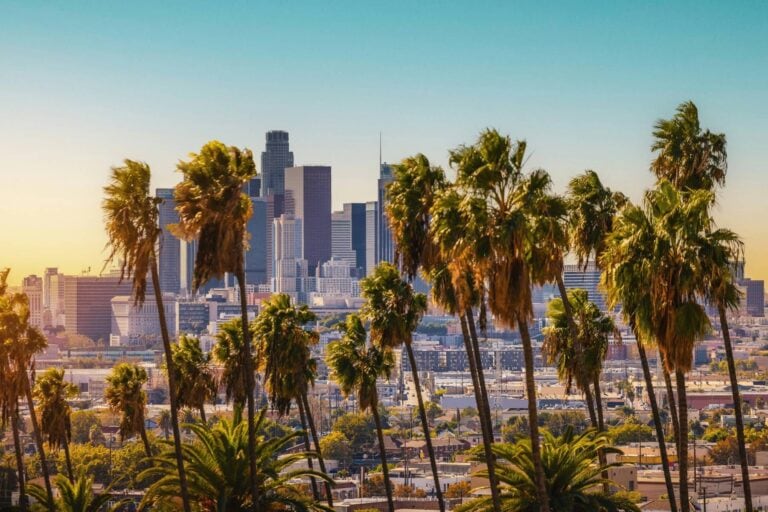
I’ve been to Los Angeles more times than I can count, and for most of those trips, I did what everyone does: I rented a car, I made a list, I drove from one end of the city to the other trying to see everything.
I hit the Getty in the morning, Griffith Park in the afternoon, dinner in Silver Lake, drinks in WeHo, and arrived back at my hotel at midnight feeling like I’d accomplished something. I had not. I had simply been moving very fast through a city that deserved more patience than I gave it.
The trip that changed my understanding of LA was the one where I stopped doing that. I picked one neighborhood, booked a suite with a proper soaking tub, and gave myself permission to stay in a ten-block radius for three days.
I ate at the same coffee shop two mornings in a row. I walked the same street at different times of day and noticed how it changed.
By the third morning, I understood something about Los Angeles that the windshield tours had never taught me: this city rewards stillness in a way that almost no other American metropolis does, precisely because it is so easy to be still here when you let yourself.
What follows is not a sightseeing guide. It’s a neighborhood-by-neighborhood case for slowing down, and for finding the kind of hotel suite that makes slowing down feel like the point of the trip rather than a concession to exhaustion.
Santa Monica and Venice: The Westside on Its Own Clock
Santa Monica averages 284 sunny days per year, but the mornings I remember most from the westside are the gray ones. Between May and July, the marine layer rolls in from the Pacific overnight and doesn’t burn off until late morning, turning the whole coastline into something hushed and atmospheric. Locals call it June Gloom.
Visitors who arrive expecting relentless California sunshine sometimes find it disappointing. I find it the best possible weather for walking slowly and thinking about nothing in particular.
The boardwalk between Santa Monica and Venice is 22 miles long in its full extension north and south, but the central stretch between the two neighborhoods is the one worth knowing. At 7 a.m. on a weekday, it belongs almost entirely to locals: runners, cyclists, older men playing chess at the permanent tables near the pier.
By 10 a.m., the tourists have arrived and the character shifts. That two-hour window in the morning is the westside at its best, and having a hotel within walking distance of the water means you can catch it before it disappears.
Santa Monica’s Wednesday and Saturday farmers’ markets at Arizona Avenue consistently rank among the best in Southern California.
The spring strawberries from local farms, the citrus through the winter months, the variety of prepared foods from vendors who have held their spots for years — it’s one of those markets where you buy more than you intended because everything looks too good to pass up.
The right suite on the westside tends to have a few things in common:
- Upper floor positioning that gets you above the street noise, which on Ocean Avenue can be significant after dark
- Private outdoor space or at minimum a window worth sitting near in the morning
- In-room bath amenities that go beyond the standard, since the whole logic of a westside slow trip is built around having somewhere comfortable to return to after the beach
- Side street location rather than the main boulevard, which makes a real difference for sleeping
Rates in Santa Monica run higher than almost anywhere else in the metro. A quality suite typically falls between $350 and $600 per night, with weekend premiums beyond that. October and November, after the summer crowds thin and before the holidays begin, offer the best combination of good weather and reasonable availability.
West Hollywood and Beverly Hills: Indulgence as a Legitimate Itinerary
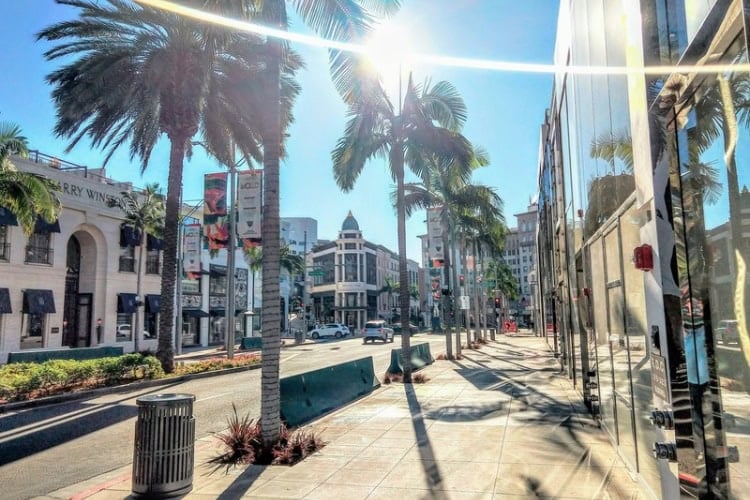
West Hollywood covers 1.87 square miles and contains more hotel rooms per capita than almost any other city in California. That concentration of accommodation has produced genuine competition, which means the quality of the suites here tends to be exceptional even by Los Angeles standards.
I’ve stayed in WeHo twice for leisure and both times the experience was almost entirely determined by the room I booked.
There’s a version of West Hollywood that is loud and social and designed for people who want to be seen on a rooftop at 11 p.m. And there’s another version, available in the same zip code, that is genuinely quiet and restorative and built around the idea that luxury means not having to do anything you don’t want to do.
The second version requires finding the right property, but it exists.
Beverly Hills sits adjacent and operates at a slightly different frequency. The streets are wider and quieter, the hotels have been refining the art of the long stay for decades, and the whole neighborhood has a residential quality that most visitors miss because they’re driving through rather than walking around.
On foot, Beverly Hills is surprisingly human-scaled. The blocks around Doheny and Sunset in the early evening, when the light is coming in low from the west, are among the more pleasant urban walks I’ve taken in any American city.
The in-room amenities at the better properties in this corridor are consistently excellent: deep soaking tubs, separate rainfall showers, bath programs with actual options, the kind of bed linens that make you reconsider your choices at home. For a trip organized around deliberate rest rather than activity, this neighborhood delivers.
Silver Lake and Los Feliz: Los Angeles Without the Performance
There is a version of Los Angeles that exists entirely for other people’s consumption, and then there is Silver Lake.
I had a conversation on my last visit with a woman who had lived in the neighborhood for nine years and still talked about it the way people talk about a place they’re afraid might disappear. The coffee shops were still independently owned.
The restaurants were still hard to get into because the food was actually good, not because someone had photographed the interior. The Silverlake Reservoir, a 2.2-mile walking loop at the center of the neighborhood, was still predominantly used by people who lived nearby rather than people who had driven in to experience it.
For a slow trip, Silver Lake and Los Feliz offer something the more famous LA neighborhoods sometimes can’t: the sensation of being in a place rather than at an attraction.
The Eastside has absorbed a significant portion of the city’s creative and artistic community over the past two decades, and that presence manifests in small, cumulative ways throughout the neighborhood. Record stores with strong curation. Bookshops that host events. Murals that change every few months on the same walls.
The hotels here are boutique by necessity rather than by branding. The neighborhood would reject a 300-room resort the way a body rejects a foreign object.
What you find instead are converted residential buildings, independently operated inns, small properties where the staff have genuine opinions about where to eat dinner and are willing to share them. For travelers who want to understand a city rather than photograph it, this is where to stay.
Downtown LA: The Part of the City Most People Get Wrong
I dismissed downtown Los Angeles for years based on a received opinion I had never bothered to test. Then I spent three nights there and extended my stay twice.
Los Angeles traces its origins to a Spanish colonial settlement founded in 1781, a history that the freeways and the entertainment industry have obscured but never fully erased.
It is physically present in the streets around El Pueblo de Los Ángeles, in the civic buildings along Spring Street, in the Broadway Historic District where twelve movie palaces built between 1910 and 1931 still stand, several of them recently restored to something close to their original condition.
The hotels that have moved into historic downtown buildings offer something the newer properties elsewhere cannot replicate: genuine architectural character. Double-height lobbies with original terrazzo floors. Ornate ceilings that were designed by people who believed ceilings deserved that kind of attention.
Views from upper floors across a roofscape of water towers and Art Deco cornices, with the San Gabriel Mountains visible on clear days after rain in a way that feels almost implausible from the middle of a major city.
Before booking my last Los Angeles downtown stay, I spent time on TubHotels to confirm that the suite I was looking at had the jacuzzi actually inside the room rather than in a shared spa facility, which is a distinction that downtown listings in particular tend to obscure.
It saved me the usual back-and-forth of calling the hotel to verify something that should have been clear from the listing.
Weekend stays in DTLA have a particular quality because the neighborhood empties of its weekday population and becomes genuinely quiet. Room rates run 20 to 30 percent lower than comparable suites in WeHo or Santa Monica.
The Metro connects downtown efficiently to almost every other neighborhood on this list. It is, by any reasonable measure, the most underrated base of operations for a slow Los Angeles trip.
Pasadena: Twenty Minutes Away, Several Degrees Quieter
The Gold Line takes twenty-two minutes from Union Station in downtown to Memorial Park in Old Pasadena, and in those twenty-two minutes, the character of Los Angeles changes completely.
Pasadena is green in a way the rest of the city, perpetually conscious of drought, mostly isn’t. The Arroyo Seco runs along its western edge. The San Gabriel Mountains form a backdrop that, on clear winter mornings after rain, looks almost theatrical in its precision.
The streets of Old Pasadena are genuinely walkable in a way that gets used as a model for urban planning discussions about Southern California, and the independent retail and restaurant scene along Colorado Boulevard has the kind of established, unhurried quality that most cities spend decades trying to build.
The hotels here tend toward the historic and the residential in character. Properties that feel like a well-run inn rather than a corporate hotel, where the breakfast courtyard is shaded by a mature fig tree and the neighborhood outside is quiet enough to sleep with the window open.
The Huntington Library and Botanical Gardens represent one of the genuinely great cultural institutions in Southern California, with 120 acres of curated garden that can absorb an entire slow afternoon without effort. The Japanese Garden alone is worth the trip from wherever you happen to be staying in the city.
For travelers who want proximity to Los Angeles without full immersion in its intensity, Pasadena is the answer that most guidebooks understate.
How to Actually Find the Right Suite
A few things worth knowing before committing to any of these neighborhoods:
- Pick one base and stay there. The biggest mistake LA visitors make is trying to cover too much ground. Three nights in Silver Lake teaches you more about the city than three nights split between five neighborhoods ever will.
- Book three weeks out minimum for weekend stays, particularly in WeHo and Santa Monica, where the better boutique suites fill early and don’t come back at the same price.
- Tuesday through Thursday stays offer better availability, quieter properties, and rates that are often 15 to 25 percent lower than weekend pricing across all five neighborhoods on this list.
- Use the Metro more than you think you need to. The Gold Line, the Red Line, and the Expo Line connect most of these neighborhoods efficiently enough that a car is genuinely optional for a slow trip built around one area.
- Ask the hotel for a specific room recommendation when you call to confirm your booking. Staff at boutique properties almost always know which rooms are quieter, have better light, or sit above the street noise. That knowledge is free if you ask for it.
The Larger Argument
Los Angeles is genuinely one of the best cities in America for a certain kind of slow, intentional travel. The size that makes it overwhelming also means that each neighborhood functions as a self-contained world with its own character and pace. The sprawl that makes driving exhausting makes walking in a small radius surprisingly pleasant.
The hotel stock, particularly in the boutique and independent category, has improved substantially over the past decade to the point where the suite itself can be the reason for the trip rather than just a place to sleep.
The version of LA that most visitors experience, the one seen from a car window between scheduled attractions, is real but incomplete. The other version, the one lived at walking pace over three or four unhurried days in one corner of the city, is the one worth making the trip for.
It just requires choosing a neighborhood, booking the right room, and giving yourself permission to stay in it longer than feels strictly necessary.
That permission, it turns out, is the whole point.
Want to discover more hidden gems and helpful travel tips? Join our free newsletter for the latest travel secrets and travel articles.
We are reader-supported and may earn a commission on purchases made through links in this article.

- Darwin, Australia’s Northernmost Capital, Combines Vibrant Markets, Waterfront Life and Access to Kakadu and Litchfield - October 25, 2026
- Paarl: South Africa’s Secret Winelands Escape Where You Can Stay in Historic Wine Tanks - October 25, 2026
- A Quest for the Best Frango Assado in Portugal’s Algarve - October 24, 2026
Planning another trip soon? ✈️
Add GoWorldTravel.com as a preferred source on Google. Click the button below so our local guides, packing hacks, and hidden-gem itineraries always show up first when you search!
Add to Preferred Sources