


I’ll admit it — when I first heard the name Kuala Terengganu, I had to look it up on a map.
And even after spending a few days there, I still can’t pronounce it properly. (For the record, it’s kwä´le terĕng-gä´noo.)
But mispronunciation aside, this under-the-radar gem on Malaysia’s east coast is one place that deserves to be better known.
An East Coast Secret
The state of Terengganu stretches along Malaysia’s northeast coast, its 225 kilometers of shoreline kissed by the South China Sea.
Between stretches of palm-lined beaches and emerald rice fields, the coastal capital of Kuala Terengganu quietly hums with daily life — a refreshing contrast to the country’s more touristed western side, like Langkawi.
Sandwiched between the Terengganu River and the sea, the city’s small downtown core is a gentle blend of old and new.
There are hints of modernity in the occasional high-rise, but the rhythm here remains unhurried.
Our guide, Raja, smiles when I comment on the relaxed pace. “There’s very little crime here,” he says with pride. “No pickpocketing, just peace-loving people.”
He’s right. There’s an easy friendliness that seems to permeate everything — from the bustling market stalls to the temple courtyards perfumed with incense.
Bartering and Banter at Pasar Payang
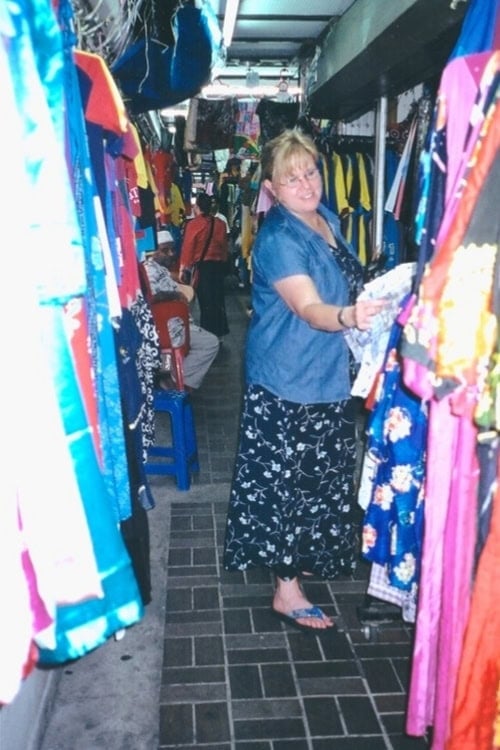
We begin our explorations at the beating heart of the city: Pasar Payang, the central market.
The sprawling bazaar is packed floor to ceiling with color and commotion.
“Bartering is totally expected,” Raja warns. “Thirty percent off is good. Forty is a steal. If you smile, maybe more!”
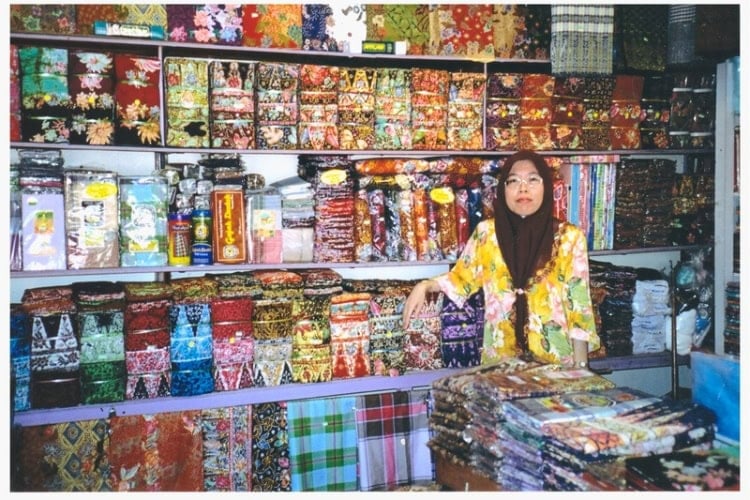
Rows of shimmering silks and songkets — handwoven brocades traditionally worn at weddings — cascade from vendor stalls, while polished brassware and woven rattan baskets spill into narrow aisles.
Around every corner, a kaleidoscope of color tempts the eye.
On the ground level, the air shifts from sweet to savory. We wander through mounds of mangoes, papayas, and prickly-skinned durians.

One wizened vendor, with a face as wrinkled as the fruit he’s hacking open, grins as he offers a sample. “Tastes like heaven, smells like hell,” he laughs. He’s not wrong.
Finding Calm in Chinatown

From the market, we meander toward the city’s Chinatown — a stroll of only a few blocks, but a world away in atmosphere.
Here, the streets narrow to cozy lanes lined with colorful shophouses that lean together like old friends.
Their wooden shutters and colonial facades whisper of centuries past, when Chinese traders first settled along this coast.
Under a pagoda-shaped roof, we find the Ho Ann Kiong Temple, one of the oldest and most cherished Chinese temples in Terengganu.
The air is thick with incense and prayer. Red lanterns sway gently in the humid breeze as worshippers bow before intricately carved altars.
Though rebuilt several times since its original construction in 1801, the temple remains a spiritual cornerstone of the community.
I pause for a moment to take it all in — the flickering candles, the soft murmurs, the sense of history alive in every corner.
Terengganu State Museum Highlights
Our next stop is a few kilometers away: the Terengganu State Museum, a complex so vast it feels like a small village.
Spread across 27 hectares of manicured gardens, the museum’s design mirrors traditional Malay architecture, with stilted Islamic rooftops and sweeping gables.
Inside, ten galleries showcase everything from archaeological treasures to contemporary art.
The maritime and fisheries sections highlight the region’s deep connection to the sea, while outdoor exhibits feature traditional stilt houses — each a glimpse into daily life from another era.
It’s a captivating walk through time, one that deepens my appreciation for this quiet corner of Malaysia and its layered heritage.
Batik: Wax and Color

But culture here isn’t confined to museums. A short drive away, at the Sutera Semai Centre, we discover the living art of batik-making.
Inside a large open studio, colorful bolts of silk drape from the ceiling like sails.
Beneath them, artists work deftly with wax, pencil, and dye — a process that’s as mesmerizing as it is meticulous.
“Outlines are drawn by hand,” one artisan explains as she dips a tool into molten wax. “Then we add color, one layer at a time.”
I watch as vibrant florals bloom across the fabric, each piece transforming from blank silk to wearable art.
Within minutes, I’m convinced I can’t leave without buying a souvenir.
By the time we depart, I’m carrying a scarf, a shirt, and a handkerchief — proof of my weakness for handcrafted beauty.
Panoramas from Bukit Puteri
Our final stop of the day brings us quite literally to new heights.
We climb the 200-meter hill to Bukit Puteri, a 19th-century fortress that once guarded the city.
The path winds past cannon remnants and weathered stone walls before opening to a sweeping view of Kuala Terengganu and the South China Sea beyond.
From up here, the patchwork of red rooftops, emerald palms, and turquoise water feels almost painterly.
Fishing boats bob lazily in the harbor, and the late-afternoon sun casts a golden hue over everything below.
It’s the perfect place to pause — to absorb not only the view but also the rhythm of a city that manages to be both deeply traditional and quietly modern.
Why It’s Worth the Trip
Kuala Terengganu may not make it onto most Malaysian itineraries, but perhaps that’s part of its charm.
It offers a wealth of culture without the crowds, history without the hype, and hospitality without the hustle.
After a day spent wandering its markets, temples, and coastal paths, I realize that this is Malaysia at its most authentic — where smiles are genuine, traditions are alive, and time seems to slow just enough for you to catch your breath.
So, where the heck is Kuala Terengganu? It’s tucked on the east coast of Malaysia, where rivers meet the sea, batik blooms like wildflowers, and strangers quickly become friends.
Whether you can pronounce it or not, it’s a name — and a place — worth remembering.
Need a hand planning your trip? Here are the sites and services we rely on most, from booking tools to travel products we love.
Inspire your next adventure with our articles below:
- The Ultimate Guide to a Bali Backpacking Trip
- A Journey to Central Java Where History and Charm Await
Author Bio: Since 1996, while freelancing, Jane Cassie has had thousands of articles published. Her stories have appeared CNN Magazine, Northwest Travel, New York Daily News, Chicken Soup For The Soul, Dreamscapes, Air Canada In-flight, Cottage Life, Epicure and Travel, just to name a few. She has been a regular contributor to Spa Life, INNspire, North American Inns Magazine, Cottage, and is a regular contributor to Inspire Magazines.
Want to discover more hidden gems and helpful travel tips? Join our free newsletter for the latest travel secrets and travel articles.
We are reader-supported and may earn a commission on purchases made through links in this article.

- Bukhara, Uzbekistan: The Silk Road City Where History and Art Thrive - October 20, 2026
- Hoi An, Vietnam: A Local’s Guide to the Ancient Town, An Bang Beach and Must-Try Dishes - October 20, 2026
- Why Cape Town’s Kloof Street Was Ranked the Coolest Street in Africa - October 20, 2026
Planning another trip soon? ✈️
Add GoWorldTravel.com as a preferred source on Google. Click the button below so our local guides, packing hacks, and hidden-gem itineraries always show up first when you search!
Add to Preferred Sources