
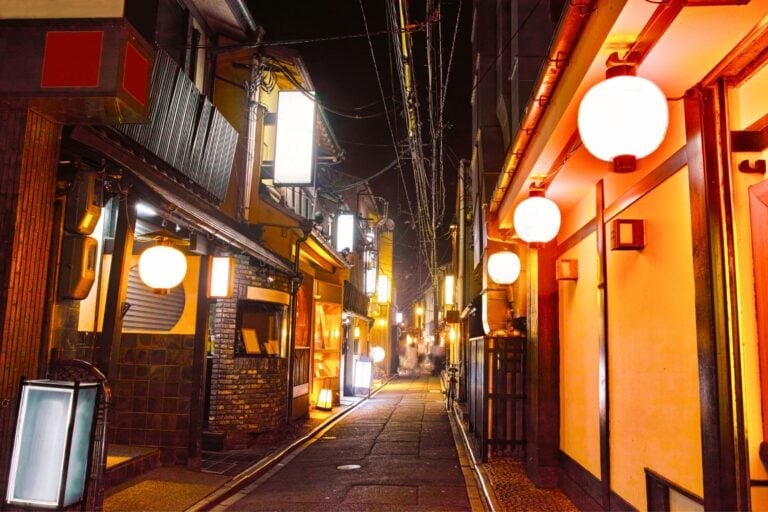

The first thing I noticed when I walked in was the smoke. It reminded me of my student days in Greece in the early 2000s, cafés and bars that smelled of cheap tobacco, university corridors, and long political conversations.
I’d grown up surrounded by that kind of haze, but I hadn’t expected it in Japan. It clashed with the image I had in my head. The idea that people still smoked indoors felt almost anachronistic. I nearly turned back.
But I didn’t.
The Bar that Caught My Attention
“A legendary dive bar that embodies the essence of late-night jazz,” my guidebook had said. I’d marked it on my list months before arriving in Japan.
It was mid-afternoon, raining hard. I’d just had lunch at an izakaya on Pontocho Alley and was wandering aimlessly through downtown Kyoto, foolishly without an umbrella.
Then I found the narrow staircase, climbed up the stairs, and saw the sign on the door: Jazz in Rokudenashi. I liked the name; specific, slightly strange, the kind you remember after you’ve left a place like a song, or the smell of smoke in your jumper.
Stepping Inside
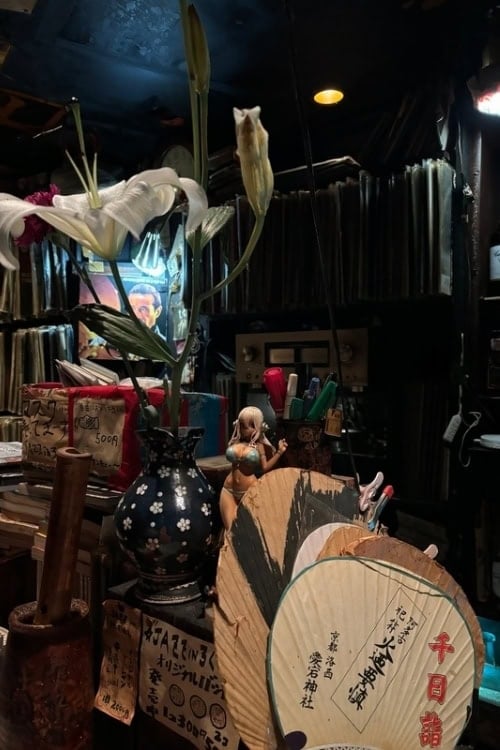
Inside, it was barely bigger than a living room. Half a dozen seats at the counter, a couple of tiny tables. Two foreign women sat at the far end; I took the other, three stools away.
My spot was right by a payphone that probably still worked. On the counter beside it lay a half-lit cigarette, the kind that could’ve been a joint anywhere else, but not in Japan. A burnt match lay next to a handwritten menu, and above it, a faded Che Guevara poster.
I ordered a whisky highball, that’s what people drank in Japan, and what I’d started drinking too. Before coming here, I hadn’t cared for whisky unless it was in a cocktail. Now I had rules: Hibiki before dinner, Yamazaki after.
Enigmatic Atmosphere
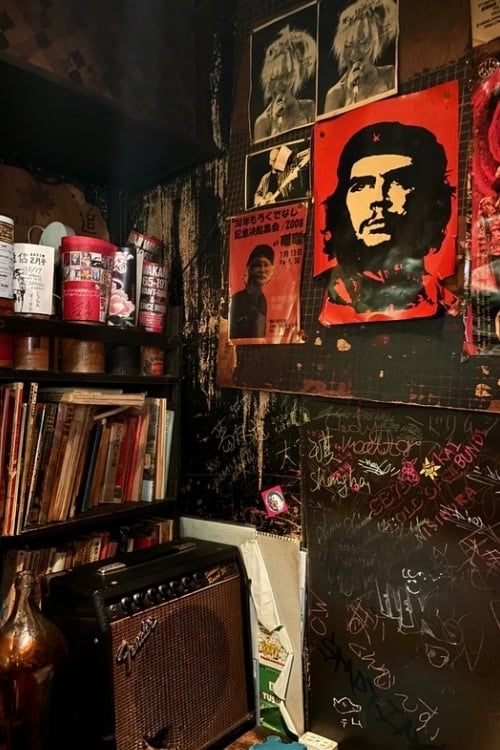
I’d read that they hosted live sessions once or twice a month, but sitting there in that cramped, smoky room, I couldn’t imagine how.
There was no stage, no space for drums. Maybe a duo, at best. I wondered how they even afforded it; six or seven customers a night couldn’t possibly cover the cost.
The place was beautifully cluttered, dusty, dim, full of bric-à-brac and thousands of vinyl records stacked behind the counter.
The bartender, a man in his forties with a weary stillness about him, moved like he’d been there forever. If he liked you, he might take a request.
He wasn’t one of those over-friendly European bartenders who pretend to remember your name; he was distant in a way that made you aware of your own voice when you spoke.
He was smoking when I arrived. The record playing was Max Roach Quartet Live in Tokyo, Vol. 1. The album cover stood on the counter, like a silent rule: don’t interrupt the music. People came here to listen, not to talk.
Musical Requests and Discoveries
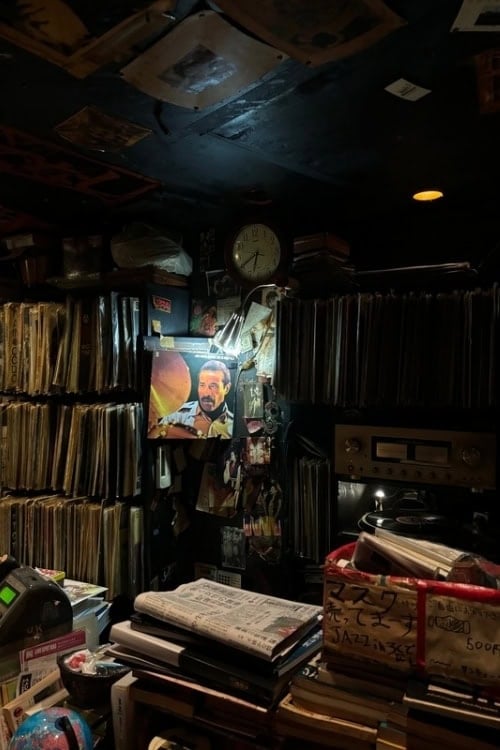
The women at the bar asked for something different, a Japanese folk record from the 1960s. The bartender nodded, disappeared behind the counter, and came back with it.
The sound that followed was raw and ghostly. They seemed to know about that scene, the underground Kyoto folk movement, the kind of thing you might stumble across online now, half rediscovered, half myth.
The bartender wasn’t the owner, I later learned. The owner was older, a drummer from Kyoto’s old scene.
The name Rokudenashi roughly means good-for-nothing, once used for the ’60s kids who drifted through university, smoking and playing records instead of studying.
The place felt like a time capsule from that world, all dust, defiance, and poetry.
A Glimpse into Kyoto’s Culture
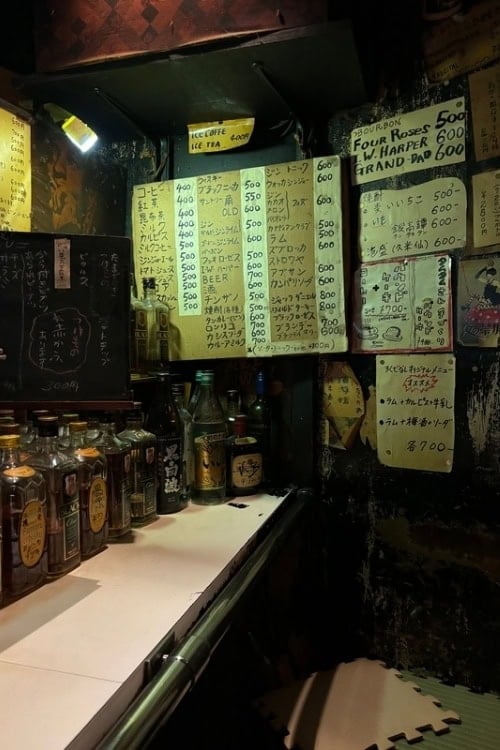
I finished my highball quickly and made the mistake of ordering another. Between the whisky, the heavy air, and the rain outside, I started to drift off. That’s when the two women turned around.
One of them said something about a photograph. I nodded, half-awake, only to realize she meant my T-shirt, not me.
I was wearing a faded Sushi Blues T-shirt from a little sushi shop in Hanalei, on Kauai’s north shore. It was a place that once hosted live blues nights and felt like the kind of spot that could only exist on a tropical island.
The restaurant is long gone now, but the shirt remains, a small relic of a place that lives on only in memory. She had a serious camera, not tourist gear. She took her picture and turned back to her conversation.
Music and Nostalgia
The music shifted. Maki Asakawa. A jazz and blues singer from Japan’s underground scene: smoky, mournful, hypnotic. I’d never heard her before, but I’ve noticed her records since, flipping through bins in Tokyo and Osaka.
The album covers are almost always black-and-white, minimalist, mysterious, like the woman herself.
Departing Reflection

The bartender lit another cigarette. The ashtray was already full. A couple came in and sat beside me, young, confident, completely at home. I was surprised; I’d assumed no one under thirty would tolerate a place like this. But they looked like regulars.
A few more people followed: an older man squinting through the smoke, then a foreign couple, then another pair, French, I think, who lasted all of five minutes before leaving. It filled up again soon after.
By the time I left, the place was full, not that it took much. The air was thick enough to chew. I don’t think there’s been fresh air in there since they opened in 1978, though the website still claims it’s their fortieth anniversary, frozen in 2018, like everything else.
It felt older than that, though. Older than its own memory. Inside, there was no sense of time. You stepped in from the bright street, and the world outside disappeared.
Final Moments

Photo by Alex Chatziagorakis
From my corner seat, I noticed the ceiling plastered with old posters and flyers, layers upon layers of another era. Even the light was tinted amber, like it had soaked up forty years of nicotine.
On the far wall, the bartender was selling baka T-shirts, fool, in bold black kanji. When I asked for one, he reached under the counter and handed me a sealed package. I was relieved; the ones on display looked like they’d been aging in smoke since the Carter administration.
The bathroom was absurdly small, half the size of an airplane cubicle. You had to step in sideways and back out the same way. Somehow, it fit the place perfectly.
When I finally stepped outside, the night air hit me like a slap. My clothes reeked of tobacco and whisky. The rain had stopped, but the streets glistened, reflecting the city lights.
On my way to dinner, I felt a little drunk, a little dazed. One thought kept looping through my head: I needed a shower. I couldn’t possibly sleep with that smell in my hair.
If you’re curious about Kyoto’s underground nightlife, there’s a great small-group tour that stops at hidden bars, cozy izakayas, and a couple of classic listening spots.
Need a hand planning your trip? Here are the sites and services we rely on most, from booking tools to travel products we love.
Inspire your next adventure with our articles below:
- 20 Japanese Customs Every Visitor to Japan Should Know
- Visiting Markets in Japan: A Fun Introduction to Japanese Cuisine
Author Bio: Alex Chatziagorakis is a Greek-born, London-based psychiatrist and travel writer. His work has been featured in Go World Travel Magazine and The Guardian and he regularly publishes on his blog, TravelingPsychiatrist.com.
Want to discover more hidden gems and helpful travel tips? Join our free newsletter for the latest travel secrets and travel articles.
We are reader-supported and may earn a commission on purchases made through links in this article.

- Language Learning Travel Guide - September 12, 2026
- Safari Travel Guide - September 12, 2026
- Luxembourg City in 24 Hours: Essential Sights, Views and Cafés - September 12, 2026
Planning another trip soon? ✈️
Add GoWorldTravel.com as a preferred source on Google. Click the button below so our local guides, packing hacks, and hidden-gem itineraries always show up first when you search!
Add to Preferred Sources